
Can You Build Lighting into a Retaining Wall?
Retaining wall lighting can be built directly into the block during construction. Here's how it works, what it costs to plan for, and where it makes the most sense.
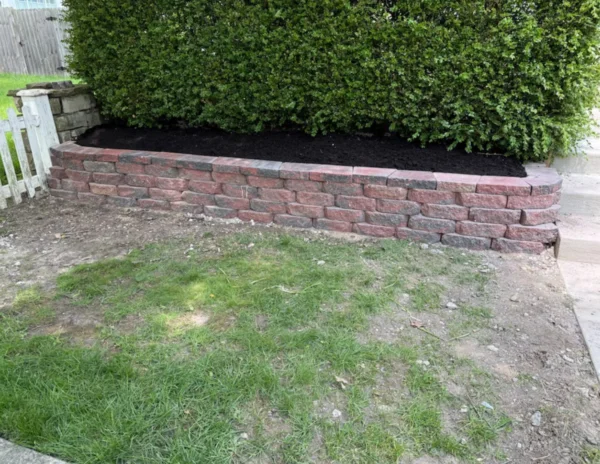
Yes, retaining wall lighting can be built directly into the wall itself, not just added on top with a plug-in fixture afterward. Small low-voltage lights get set into the block joints or cap stones as the wall goes up, wired through conduit that runs behind the face and down to a transformer.
It's one of the more practical upgrades we get asked about on a wall project, because the wiring is so much cleaner when it's planned before the first block goes down. Retrofitting a finished wall is possible, but it means drilling into installed block or running exposed cable, which never looks as clean.
If you're planning a new retaining wall this year, this is worth deciding before construction starts.
How does lighting actually get built into a wall?
Most integrated wall lights sit in a horizontal joint a course or two below the cap, facing outward or slightly down. The fixture body gets set into a gap left between blocks, and a short lead wire runs back through the wall core to a conduit line.
That conduit typically runs down the back of the wall, buried alongside the drainage gravel, to a junction point where it connects to the low-voltage wiring for the rest of the property. A transformer, usually shared with other landscape lighting circuits, powers the run.
This only works cleanly if it's planned before the wall is built. Once block is mortared or the gravel backfill is compacted, adding a conduit path means real demolition.
Where should the lights actually go?
Fixture placement depends on how tall the wall is and what's happening around it. On a low seat wall bordering a patio, lights near the top edge give a soft glow that also marks the edge for foot traffic.
On a taller retaining wall along a driveway or slope, lights spaced every few feet at a lower course can wash light down the face without glaring into anyone's eyes. Steps built into a wall almost always benefit from a light at each tread.
- Seat walls: light near the cap for ambiance and edge visibility
- Driveway or slope walls: lower-course fixtures aimed down the face
- Wall steps: one light per tread or every other tread
- Corners and transitions: a fixture to mark direction changes at night
What fixtures hold up in a wall long-term?
Fixtures built for masonry installation are rated for the moisture and freeze-thaw cycling that happens inside a wall face. A fixture that isn't rated for that environment can fail faster once water gets behind the lens.
We generally recommend fixtures with a solid metal housing and a sealed lens rather than anything with exposed connections. Replacement matters too. A fixture that can be pulled and swapped without disturbing the block saves a lot of hassle years down the road.
Does this add much to the cost of the wall?
The wiring and conduit work adds cost, but it's modest compared to running the same wiring after the wall exists. Most of the added cost is the fixtures themselves plus the labor to set them into the block pattern as it's built.
If budget is tight, you can still run conduit sleeves through the wall during construction and add fixtures later, even if you don't light every gap on day one. That keeps the option open without committing to the full fixture cost right away.
How does this connect to the rest of your outdoor lighting?
Wall lighting works best as part of a broader landscape lighting plan rather than a standalone feature. Tying it into the same transformer and control system as your path and bed lights means everything turns on and off together and matches in color temperature.
If you're already planning a retaining wall project, it's worth having the lighting conversation at the same site visit, since the trench work and wiring plan affect how the wall gets built.
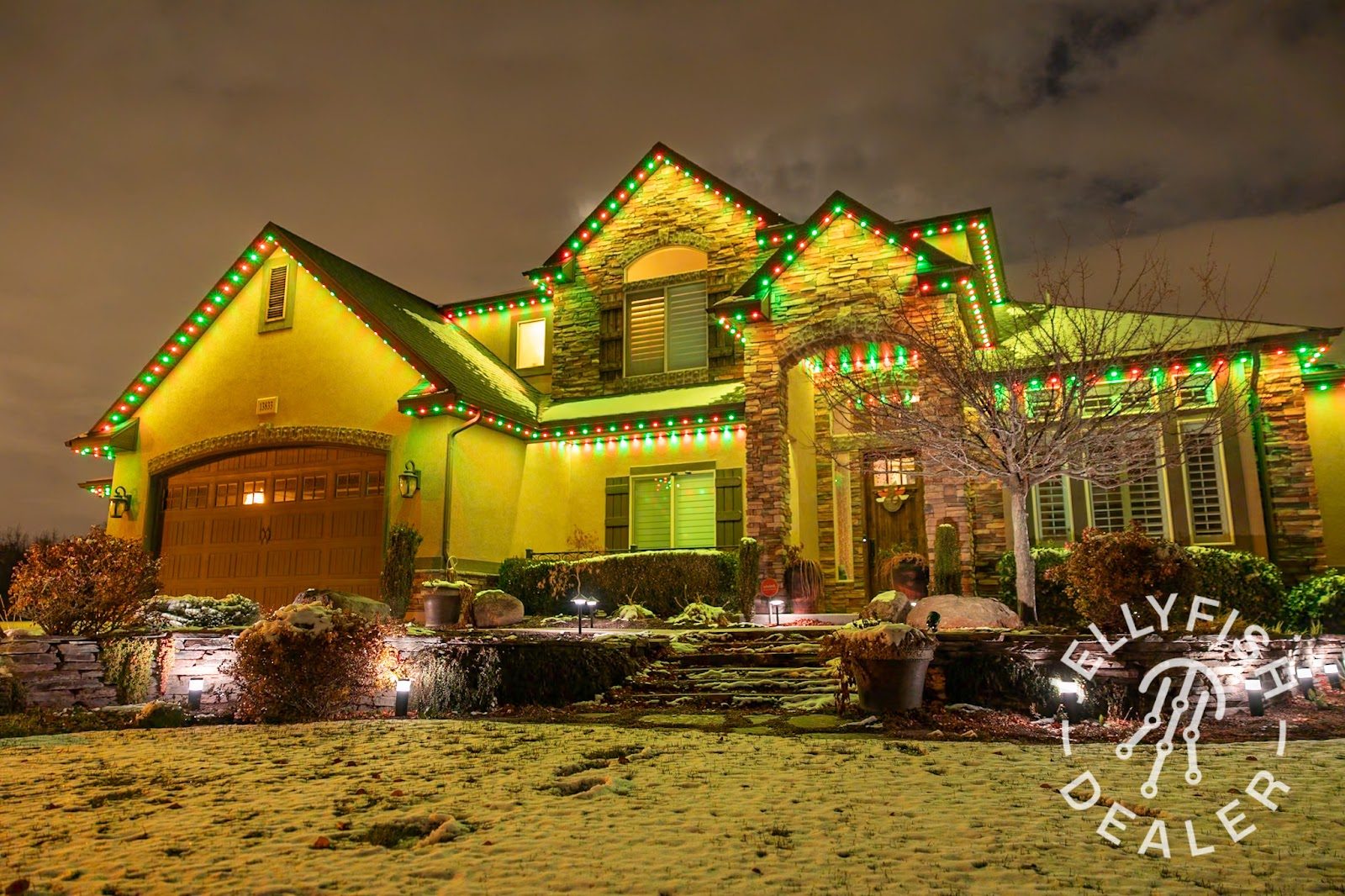
What about existing walls that weren't built with lighting in mind?
You still have options. Surface-mounted fixtures, uplighting from the ground at the base of the wall, or cap-mounted lights that sit on top of the block instead of inside it can all light a wall without demolition.
The look isn't quite as seamless as fully integrated lighting, but a well-placed uplight at the base of a wall reads very similarly at night, since you're not seeing the fixture itself, just the light it throws.
Frequently asked questions
Can lighting be added to a wall that's already built?
Yes, though it usually means surface-mounted or cap-mounted fixtures instead of lights recessed into the block face. Running new conduit behind an existing wall typically requires removing at least the top courses.
What voltage do wall lights run on?
Low-voltage, typically 12-volt, systems are standard for retaining wall lighting. That keeps the wiring safe to handle and inexpensive to run compared to line-voltage alternatives.
Do wall lights need much maintenance?
Not much. Occasional lens cleaning and checking that fixtures haven't shifted after freeze-thaw cycles is about it. LED fixtures rated for outdoor masonry use hold up for years with minimal attention.
Will the lights be too bright at night?
Not if they're sized and aimed correctly. Wall lighting is meant to be subtle, a soft wash or edge glow rather than a bright point source, so fixture selection and aiming matter more than raw output.
The bottom line
- Integrated wall lighting is planned before construction, not bolted on after
- Fixture placement should match how the wall is used, not just look symmetrical
- Masonry-rated fixtures with sealed lenses last longest inside a wall face
- Running conduit sleeves during construction keeps future lighting options open
- Existing walls can still get lit with surface or ground-mounted fixtures
Planning a retaining wall this season?
Talk to us before construction starts if you want lighting built into the wall itself. We'll walk the site and plan the wiring alongside the block layout.
Explore retaining walls