
Retaining Walls, Ponds, and Water Features: Choosing the Right Hardscape Project
Choosing the right hardscape project between a retaining wall, pond, or water feature depends on your yard's grade, goals, and maintenance appetite. Here's how to decide.
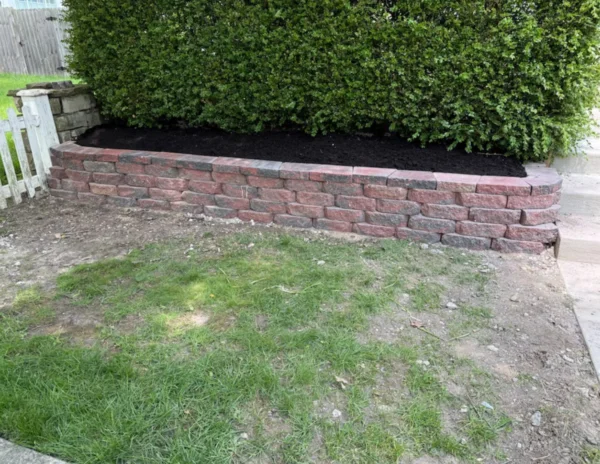
Choosing the right hardscape project usually comes down to what problem you are solving: a sloped or eroding yard points toward a retaining wall, a desire for ambient sound and visual interest points toward a water feature, and an interest in fish and a more immersive garden points toward a pond. Most homeowners have some idea of the general direction but are unsure how to weigh the tradeoffs.
We get calls that start as one of these three and sometimes end up as a different one, or a combination, once we walk the property and talk through goals.
This post breaks down when each option makes the most sense so you can walk into a retaining wall, pond, or water feature consultation with a clearer starting point.
Start with the problem, not the product
It helps to separate whether you have a functional problem, like a slope that is eroding or a yard that is hard to use because of grade changes, from a desire to add a feature purely for enjoyment. These point in different directions.
A retaining wall is fundamentally a structural solution. It holds back soil, creates usable flat space, or manages a grade change that is otherwise a maintenance headache or safety concern.
Ponds and water features, by contrast, are additions rather than fixes. Nobody needs a pond to solve an erosion problem, though a wall built to manage a slope can sometimes incorporate one as part of the same project.
When a retaining wall is the right call
If you are dealing with a sloped yard that washes out during heavy rain, a hillside that is difficult to mow or plant, or a drop-off near a patio or driveway that needs to be managed safely, a retaining wall is usually the starting point for the conversation.
Walls also create usable flat terrace space on a property that otherwise has none, which is valuable if you want a patio, garden bed, or play area on a sloped lot.
We cover sizing and planning considerations in more detail in our post on small retaining wall projects, since even modest walls involve real engineering decisions.
When a water feature makes more sense than a pond
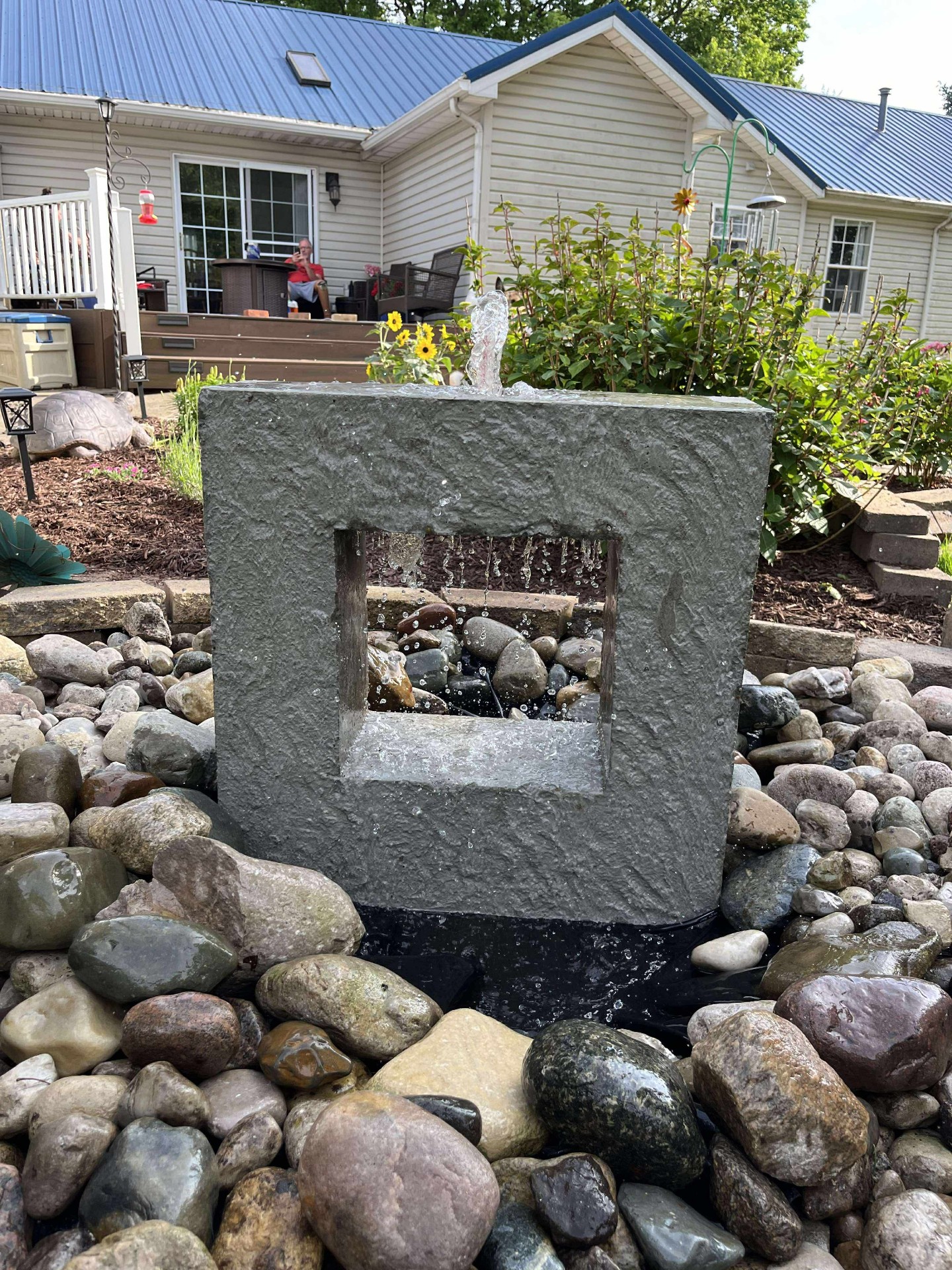
A water feature, like a fountain or a small recirculating waterfall, is a good fit if you want ambient sound and visual movement without the ongoing biological maintenance a stocked pond requires. These typically involve less filtration complexity and no fish care.
Water features also tend to fit smaller spaces better, including patios or a corner of a yard where a full pond footprint would not work.
If your primary interest is sound and atmosphere rather than an ecosystem you actively maintain, a water feature is usually the lower-maintenance choice between the two.
When a full pond is worth the extra commitment
A pond, especially one stocked with koi or other fish, is a bigger commitment in terms of filtration, water quality management, and seasonal care than a fountain or water feature. It is the right choice if you specifically want fish, a wildlife-friendly water garden, or a larger, more immersive water feature as a focal point.
Filtration needs to be sized correctly for the pond's volume and fish load, which is a common point where DIY ponds run into trouble later. We cover this in more detail in our guide on pond filtration.
If you are drawn to the idea of a pond mainly for the visual and sound benefits, and less to the idea of fish care and water testing, it is worth seriously considering a water feature instead.
Can these be combined into one project
Yes, and this is more common than people expect. A retaining wall built to manage a slope can incorporate a small waterfall or stream feature as part of the same structure, turning a purely functional wall into a focal point as well.
Similarly, a pond or water feature built near a grade change often needs some retaining wall work anyway to manage the surrounding soil, so the two get bundled into one project regardless.
If you are drawn to more than one of these ideas, mention that during your consultation rather than assuming you have to pick just one.
- A sloped yard with erosion: start with a retaining wall consultation
- Want ambient sound with low maintenance: consider a water feature
- Want fish and a fuller water garden: consider a pond, with filtration sized correctly
- Slope plus water interest: ask about combining a wall and water feature in one project
Budget and maintenance as deciding factors
Beyond the functional differences, budget and how much ongoing maintenance you want to take on are the two biggest practical factors. A retaining wall, once built, requires very little ongoing maintenance beyond periodic inspection.
A water feature needs occasional cleaning and seasonal startup and shutdown, but far less than a stocked pond, which needs regular water testing, filter maintenance, and seasonal care for the fish.
Talking through your realistic appetite for upkeep during the consultation helps steer the decision as much as the visual outcome does.
Frequently asked questions
Which is more expensive: a retaining wall, a pond, or a water feature?
This depends heavily on size and materials for each. A small water feature is often less expensive than a full retaining wall or pond, but a large wall or an elaborate water feature can cost more than a modest pond. We provide project-specific estimates during a consultation.
Can a retaining wall include a water feature built into it?
Yes. It is common to incorporate a small waterfall or stream feature into a retaining wall built to manage a slope, combining the structural and aesthetic goals into one project.
How much maintenance does a pond really need compared to a fountain?
A stocked pond needs regular water quality testing, filter maintenance, and seasonal fish care. A fountain or recirculating water feature needs occasional cleaning and seasonal startup and shutdown, considerably less ongoing work.
Do I need a retaining wall if my yard just has a mild slope?
Not necessarily. A mild, stable slope may not need a wall at all. Walls make the most sense for erosion issues, unusable grade changes, or creating flat terrace space.
The bottom line
- Retaining walls solve grade and erosion problems; ponds and water features are primarily additions.
- Water features offer sound and visual interest with less maintenance than a pond.
- Ponds require ongoing filtration and water quality management, especially with fish.
- Walls and water features can be combined into a single project when a slope and water interest overlap.
- Maintenance appetite and budget should factor into the decision as much as appearance.
Not sure which hardscape project fits your yard
We can walk your property and talk through whether a wall, pond, or water feature makes the most sense for your goals.
Get a free quote