
Retaining Wall Drainage 101: Why Water Is What Kills Walls
Retaining wall drainage is the single biggest factor in whether a wall lasts for decades or fails within a few years. Here's how proper drainage actually works.
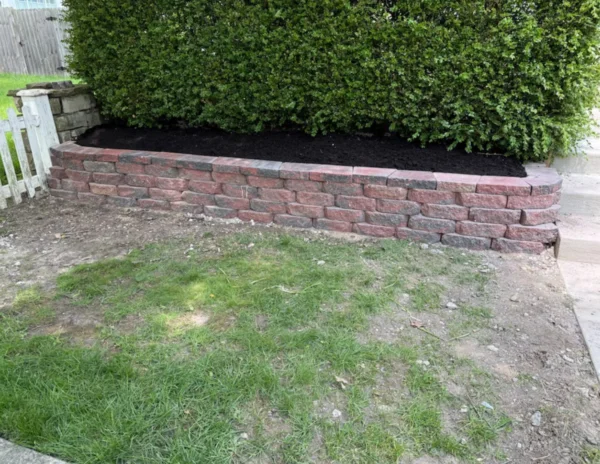
Retaining wall drainage matters more than almost any other factor in whether a wall holds up over time, because trapped water behind a wall creates hydrostatic pressure that pushes outward against the structure. Most retaining wall failures trace back to water management, not the block or material itself.
This is one of the most important things to understand before building or evaluating a retaining wall, whether you are hiring it out or considering doing it yourself.
This post covers how drainage is supposed to work, common mistakes, and warning signs that an existing wall has a drainage problem.
Why water pressure is the main enemy of a retaining wall
Soil that becomes saturated with water is significantly heavier and exerts more lateral pressure than dry soil, and that pressure pushes directly against the back of a retaining wall. Over time, repeated saturation and pressure cycles can cause a wall to bulge, lean, or eventually fail outright.
This is true regardless of how well the wall itself is built. A structurally sound wall with poor drainage behind it is still at serious risk, while a well-drained wall has a much better chance of holding up over decades.
This is why drainage is not a secondary detail in retaining wall construction. It is one of the central engineering considerations, alongside the wall's structural design.
What proper drainage behind a wall typically includes
A standard drainage approach uses clean, angular gravel backfill directly behind the wall, which allows water to move down through the soil rather than pooling against the wall face. This gravel zone is typically separated from the surrounding native soil with a filter fabric to prevent fine soil particles from clogging the gravel over time.
Many walls also include a perforated drain pipe at the base of the gravel zone, which collects water and channels it out to daylight at a low point, away from the wall and the area it is protecting.
Together, these elements are designed to move water through and away from the wall system instead of allowing it to build up and create pressure.
- Clean, angular gravel backfill directly behind the wall
- Filter fabric separating gravel from native soil
- Perforated drain pipe at the base, directed to a safe outlet point
- Weep holes or gaps in the wall face for supplemental drainage release
Weep holes and wall face drainage
Some wall systems, particularly certain segmental block designs, include gaps between blocks or dedicated weep holes that allow a small amount of water to escape through the face of the wall rather than relying entirely on the base drain pipe.
This is a supplemental measure, not a replacement for proper gravel backfill and a base drain. A wall relying only on face drainage without addressing the soil behind it is still vulnerable to pressure buildup.
Not every wall type or design includes this feature, and whether it applies depends on the specific block or material system used for your wall.
Common drainage mistakes we see
The most common mistake is backfilling with the same native soil that was excavated, rather than clean gravel, especially on clay-heavy sites like much of Northwest Ohio. Native clay soil holds water and compacts poorly, defeating the purpose of a drainage zone.
Another common issue is a drain pipe that either was not installed or was installed without a clear path to daylight, meaning water collects at the pipe but has nowhere to actually go.
Grading at the top of the wall is also frequently overlooked. If the ground behind the wall slopes toward it rather than away, surface water gets funneled directly into the backfill zone, overwhelming the drainage system faster than it was designed to handle.

Signs an existing wall may have a drainage problem
A wall that is bulging, leaning outward, or has visibly shifted blocks is showing signs of pressure buildup, which is very often a drainage issue rather than a structural material defect. This is worth having evaluated before the wall progresses to a more serious failure.
Persistent wet staining or efflorescence, a white mineral deposit, on the wall face can also indicate water moving through the wall in ways that suggest the drainage system is not managing it effectively.
Standing water or persistently soggy soil at the base of a wall, especially after rain has stopped elsewhere in the yard, is another sign worth investigating.
Why this matters even for smaller walls
It can be tempting to think a short wall does not need the same drainage attention as a tall one, but the same physics apply regardless of height. A small wall with poor drainage can still fail, just potentially with less dramatic consequences than a taller wall.
We discuss this more in our post on small retaining wall projects, since proper drainage is one of the reasons small walls are not proportionally cheaper than larger ones.
According to general guidance from soil and civil engineering resources, including material published by university extension services, managing water behind any retained soil structure is considered fundamental to its long-term stability, not an optional upgrade.
Frequently asked questions
Can I use the soil I dug out as backfill behind my wall?
This is not recommended, especially with clay-heavy soil common in Northwest Ohio. Clean, angular gravel backfill drains far better and reduces the risk of pressure buildup behind the wall.
How do I know if my existing wall has a drainage problem?
Bulging or leaning sections, visible shifting of blocks, persistent staining, or standing water at the base are all signs worth having evaluated.
Do all retaining walls need a drain pipe?
Most benefit from one, especially taller walls or walls holding back significant soil volume. The specific drainage design depends on wall height, soil type, and site conditions.
Is drainage really necessary for a very short wall?
Yes. The same water pressure physics apply regardless of wall height, so drainage should not be skipped just because a wall is short.
The bottom line
- Water pressure behind a wall, not the block material, is the leading cause of wall failure.
- Proper drainage includes gravel backfill, filter fabric, and often a perforated drain pipe.
- Native clay soil should not be used as backfill directly behind a wall.
- Bulging, leaning, staining, or standing water are signs of a drainage problem worth evaluating.
- Drainage matters regardless of wall size and should never be skipped to cut cost.
Concerned about drainage on an existing or planned wall
We can evaluate your site or an existing wall and talk through what proper drainage looks like for your specific soil and grade.
Explore retaining walls