Landscape Design for Wooded Lots in Monclova and Whitehouse
Monclova landscape design for wooded lots means working with existing tree cover rather than clearing it. Here's how to plan beds, lighting, and access.
Monclova landscape design on a wooded lot works differently than a fully open, sun-exposed yard, since existing tree cover shapes almost every decision from plant selection to bed placement. A lot of properties in Monclova and neighboring Whitehouse sit on lots with significant mature tree canopy, which is an asset worth designing around rather than clearing away.
Shade tolerance, root competition, and dappled light patterns all factor into what actually grows well under and around established trees.
This post covers how to approach landscape design on a wooded lot without fighting the trees that make the property appealing in the first place.
Why wooded lots need a different plant palette
Standard foundation plantings and sun-loving perennials often struggle under significant tree canopy, since they simply do not get enough direct light to perform the way they would in an open yard. A wooded lot needs a plant selection built around partial shade and dappled light instead.
Hostas, ferns, astilbe, and other shade-tolerant perennials tend to do well in these conditions, along with shrubs like hydrangea varieties bred for part shade rather than full sun.
During a landscape design consultation on a wooded property, we spend more time mapping actual light patterns across the yard than we would on an open lot, since shade coverage often varies significantly from one side of the house to another.
Working around root competition from mature trees
Large, established trees have extensive root systems that compete heavily with nearby plantings for water and nutrients, which limits what can be planted directly under a dense canopy. Digging close to a mature tree's root zone can also damage the tree itself if not done carefully.
Plant beds on wooded lots often work better set slightly back from major trunks, using naturally occurring gaps in the canopy rather than trying to force plantings into heavily rooted areas.
Raised beds or container plantings are sometimes a better option directly under dense canopy where in-ground planting is not practical.
- Choose shade-tolerant perennials and shrubs suited to dappled or partial light
- Avoid digging directly into major root zones near mature trunks
- Use natural canopy gaps as focal points for bed placement
- Consider raised beds where root competition makes in-ground planting difficult
Designing beds around natural clearings
Most wooded lots have at least a few natural clearings where more light reaches the ground, whether from a gap in the canopy or the edge of the tree line near a driveway or patio. These clearings are usually the best spots for a more traditional planting bed with a wider plant selection.
Rather than trying to create uniform coverage across the whole yard, it often makes more sense to concentrate more intensive plantings in these naturally lit areas and use simpler groundcover or mulch in the deeper shade.
This approach also tends to look more natural on a wooded lot than a heavily manicured design that ignores the existing tree structure.
Why mature trees are often the best lighting feature
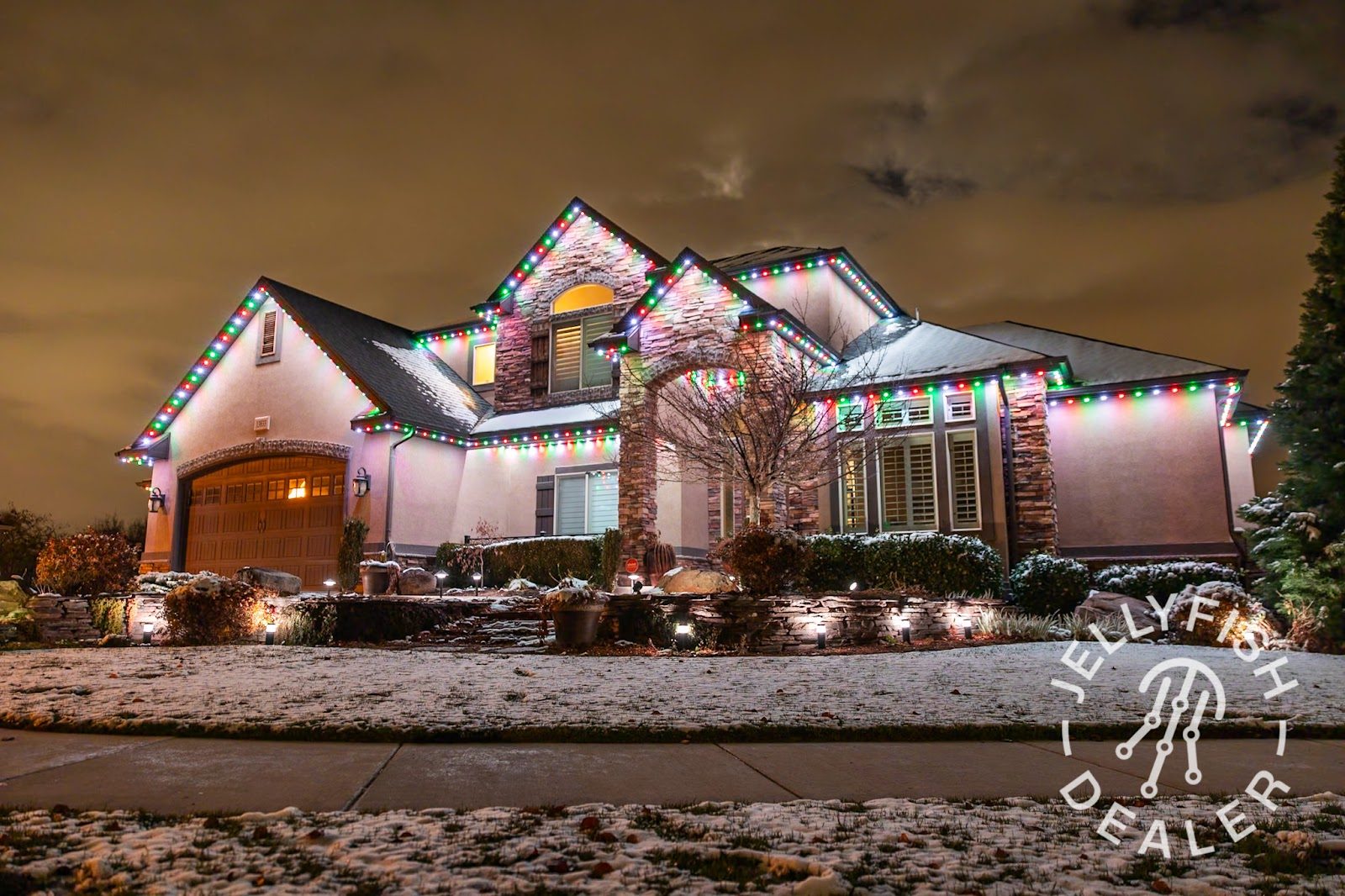
On a wooded lot, mature trees themselves are frequently the strongest candidate for lighting, more so than any planting bed could be. Uplighting a large oak or maple's trunk and lower canopy creates a dramatic effect that is hard to replicate with smaller plantings.
Landscape lighting on a wooded property often focuses more heavily on select trees along a driveway or near the house, rather than the broad, even bed lighting more common on open lots.
This also tends to be a practical choice, since large trees are already established and do not require years of growth to become a strong visual feature the way a newly planted specimen tree would.
When some clearing still makes sense
Not every part of a wooded lot needs to stay fully wooded. Homeowners often want a defined patio, fire pit area, or open lawn space for kids or pets, which sometimes requires selectively removing a few trees or heavy underbrush.
This is a reasonable trade-off as long as it is planned deliberately, keeping the strongest and healthiest trees while opening up specific areas for usable outdoor space.
Combining this kind of selective clearing with trimming of remaining trees can also improve light penetration to nearby beds without requiring full removal.
Drainage considerations specific to wooded lots
Wooded lots in Monclova and Whitehouse sometimes have drainage patterns affected by root systems and leaf litter accumulation, which can create wetter spots than an open lot with the same soil type. This affects which plants will actually thrive in certain areas.
The Ohio State University Extension has regional guidance on shade gardening and woodland plant selection that can help match specific plants to the moisture and light conditions found on a given property.
If a section of your wooded lot stays consistently damp, it is worth mentioning during your design consultation so plant selection accounts for it directly.
Frequently asked questions
Do I need to remove trees to have a good landscape design?
Not necessarily. Most wooded lots can be designed around existing tree cover, using natural clearings for more intensive plantings and shade-tolerant options elsewhere. Selective clearing for usable space is sometimes reasonable but not required.
What plants actually grow well under mature trees?
Shade-tolerant perennials like hostas, ferns, and astilbe, along with part-shade shrub varieties, tend to do well. The exact mix depends on how much light actually reaches specific areas of your yard.
Can landscape lighting work well on a heavily wooded lot?
Yes, often very well. Mature trees themselves make strong uplighting candidates, sometimes more dramatic than smaller plantings would be, and this is frequently the focus of a lighting plan on wooded properties.
Will tree roots be damaged by planting beds nearby?
They can be if beds are dug too close to major root zones near the trunk. We generally set beds back from major trunks and use natural canopy gaps rather than digging into heavily rooted areas.
The bottom line
- Wooded lots need shade-tolerant plant selections rather than standard sun-loving picks.
- Root competition means beds should avoid digging close to major trunks.
- Natural canopy clearings make the best spots for more intensive planting beds.
- Mature trees are often the strongest lighting feature on a wooded property.
- Selective clearing for usable space is reasonable when planned deliberately.
Design your wooded lot with the trees, not against them
We can walk your Monclova or Whitehouse property and plan beds and lighting around your existing tree cover.
Explore landscape design