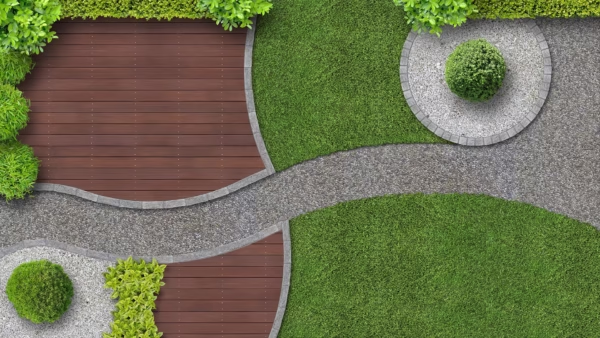
Four-Season Landscape Design: Structure That Holds Up in Ohio Winters
Four-season landscape design plans for structure and interest through Ohio winters, not just peak summer bloom, using evergreens, bark, and hardscape as the backbone.
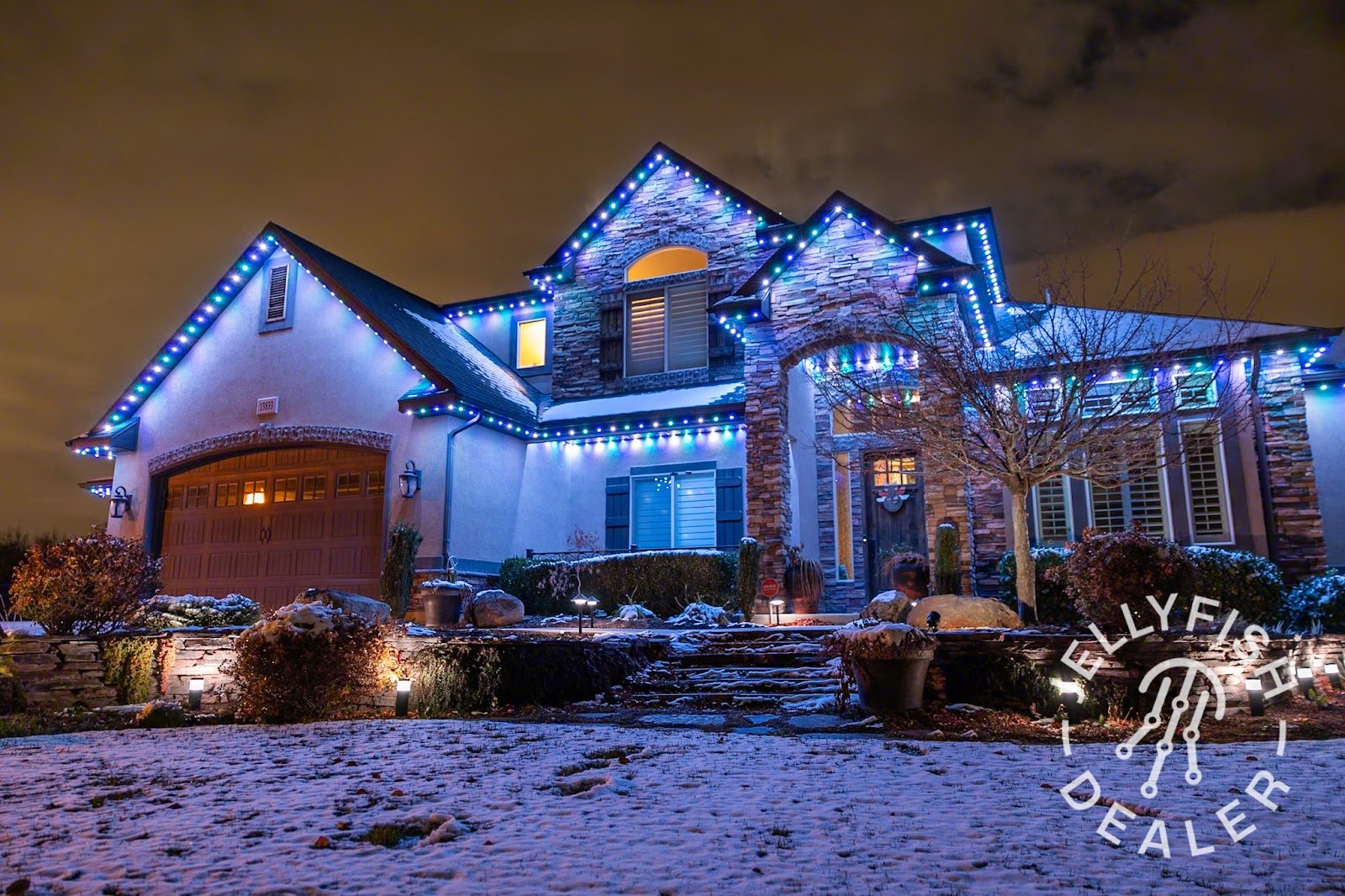
Four-season landscape design plans a yard so it still has visual structure and interest in January, not just during peak summer bloom, which matters in Northwest Ohio where winter runs several months out of the year. A design built entirely around flowering perennials looks great for a few weeks and bare or messy the rest of the time.
The trick is layering elements that hold their shape or color through winter, evergreens, structural shrubs, interesting bark or branch patterns, and hardscape, underneath the seasonal color that comes and goes with the growing season.
This post covers what actually provides winter interest in an Ohio climate and how to build a plan that looks intentional in every season, not just the warm ones.
Why summer-only planting falls short
Many residential landscape plans lean heavily on perennials and flowering shrubs chosen for a strong summer show, which makes sense given how much outdoor time happens during warm months. The tradeoff is a yard that goes mostly dormant and visually flat for the four or five months of an Ohio winter.
Since winter dieback removes most perennial foliage entirely, a design without a structural backbone underneath the seasonal plants can look genuinely bare rather than intentionally minimal. That is the gap four-season design is meant to close.
This does not mean giving up on summer color. It means adding a layer of plants and materials that carry the design through the rest of the year so summer bloom is an addition, not the entire plan.
Evergreens as the structural backbone
Evergreen shrubs and trees are the most direct tool for winter structure since they hold foliage and shape year-round rather than dying back. Boxwood, arborvitae, and various juniper varieties are common choices in Ohio landscapes because they handle the regional winter climate reliably.
Placement matters as much as species selection. Evergreens used as anchor points at corners, near entries, or framing a bed give the whole design a sense of structure that stays consistent even when everything else around them is dormant.
The Ohio State University Extension publishes regional guidance on plant selection and hardiness that is a useful reference for choosing evergreens suited to Northwest Ohio's specific conditions.
Winter interest beyond evergreens
Bark texture and branch color contribute more to winter interest than most homeowners initially expect. Red twig dogwood, for example, displays bright red stems that stand out clearly against snow, and certain birch and maple varieties have bark patterns that are more visible once leaves have dropped.
Ornamental grasses left standing through winter rather than cut back in fall add movement and texture, catching wind and light in a way that a bare bed cannot. Seed heads on certain perennials, left uncut, serve a similar purpose while also providing some food source for birds through the colder months.
These elements do not replace evergreens as structural anchors, but they add variety so a winter landscape is not just green shrubs against bare ground.
- Red or yellow twig dogwood for stem color visible against snow
- Ornamental grasses left standing through winter for texture and movement
- Birch or certain maple varieties for visible bark pattern once leaves drop
- Seed heads left uncut on select perennials for winter texture and bird activity
Hardscape carries more weight in winter
With plant coverage at its lowest point in winter, hardscape elements, retaining walls, pathways, patios, and defined bed edges, become more visually prominent than they are in summer when plants soften and partially cover them. A well-built retaining wall or clearly edged bed reads as intentional structure even with nothing growing in front of it.
This is part of why hardscape quality matters across the whole design, not just for its functional role. In winter, hardscape essentially becomes the primary visual layer of the yard by default.
If your existing hardscape looks worn or poorly defined, winter is when that becomes most noticeable, since there is less plant material to distract from it.
Lighting fills the gap when days are short
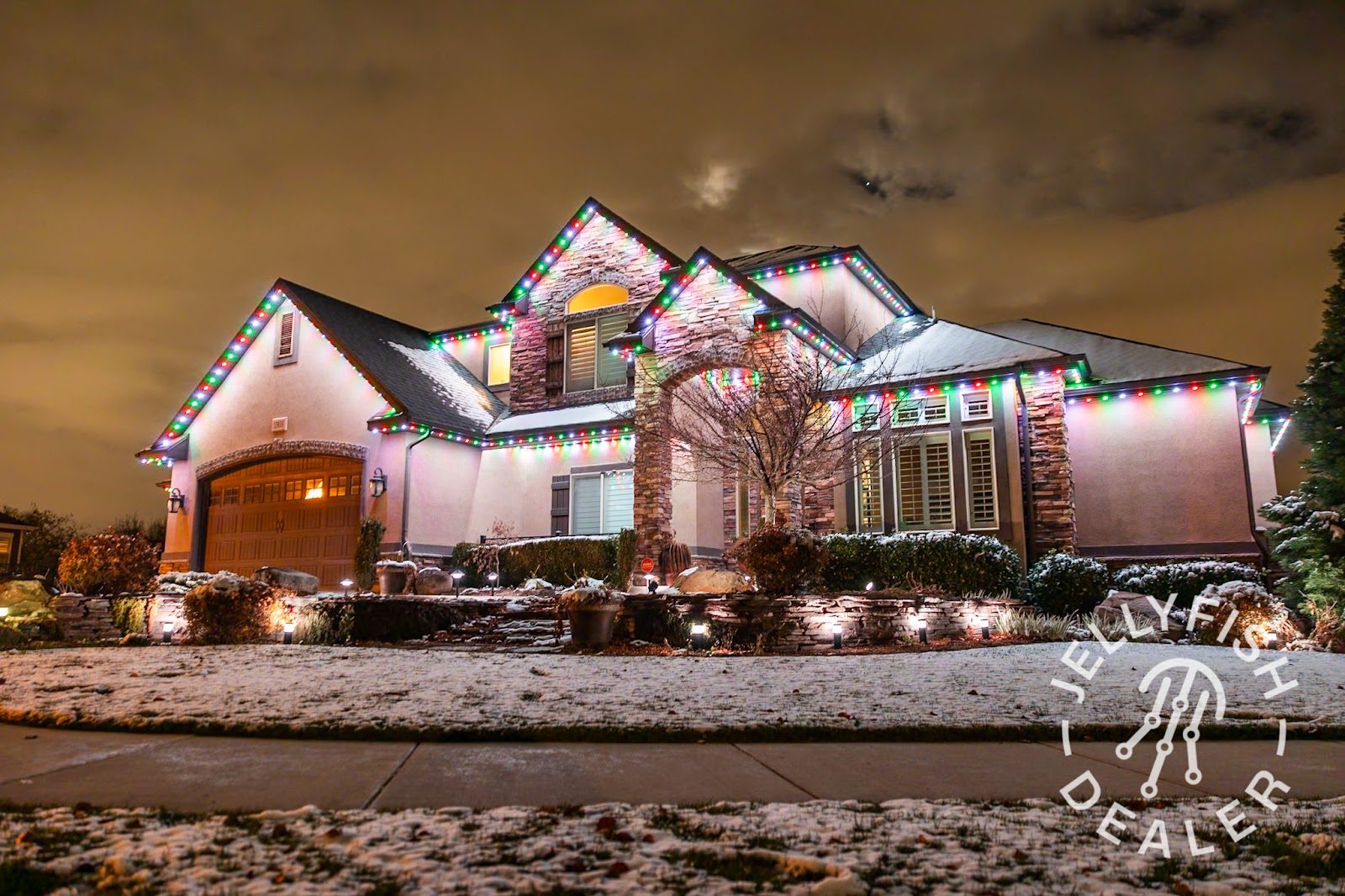
Ohio winters bring both fewer daylight hours and more darkness during the times people are actually home and outside, which makes landscape lighting more relevant in winter than many homeowners initially assume. A well-lit evergreen or a clearly lit pathway edge extends the visual interest of a four-season design into the hours when it is actually dark outside.
Uplighting on evergreens in particular pairs well with a four-season plan, since those are the plants staying in place and looking consistent through the winter months when the lighting effect matters most.
If you are planning a four-season landscape design from scratch, it is worth having the lighting conversation at the same time as the planting plan, rather than as a separate later project, so both are designed with the same winter-visibility priorities in mind.
Planning layers by season
A practical way to build a four-season plan is to walk through each season and make sure something in the design is doing visual work during it: evergreens and hardscape for winter structure, early bulbs and blossoming shrubs for spring, full perennial bloom for summer, and grasses, seed heads, and fall foliage color for autumn.
This layered approach means the yard always has something going on rather than several weeks of peak interest followed by long stretches of visual flatness.
During a landscape design consultation, we can walk through your existing plantings and identify which seasons are already covered well and which ones need more structure added.
Frequently asked questions
What plants work best for winter structure in Northwest Ohio?
Evergreens like boxwood, arborvitae, and various junipers are common, reliable choices for the regional winter climate, along with structural shrubs like red twig dogwood for added color.
Should I cut back ornamental grasses and perennials in the fall?
Leaving grasses and select perennial seed heads standing through winter adds texture and visual interest, and provides some food source for birds, rather than cutting everything back in fall.
Does hardscape really matter that much for winter appearance?
Yes. With plant coverage lowest in winter, hardscape elements like retaining walls, patios, and bed edges become more visually prominent by default, so their quality and design matter year-round.
Is it worth adding landscape lighting as part of a four-season plan?
It is worth considering together, since Ohio winters bring more darkness during the hours people are actually home, and lighting extends a design's visual interest into those hours.
The bottom line
- A four-season plan avoids the bare, flat look many yards get through Ohio's long winter.
- Evergreens and hardscape provide the structural backbone that holds through winter.
- Bark color, standing grasses, and seed heads add variety beyond plain evergreens.
- Hardscape quality matters more visually in winter when plant coverage is lowest.
- Landscape lighting extends design interest into the darker hours common in winter.
Want a yard that looks intentional in every season
We can evaluate your current plantings and build a plan that holds up through Ohio winters, not just peak summer.
Explore landscape design