
Native Plants for Northwest Ohio Landscape Design
Native plants for Northwest Ohio landscape design tend to handle our clay soil and seasonal swings with less fuss. Here's what to know before choosing your bed plan.

Native plants for Northwest Ohio landscape design are worth considering because they are adapted to our region's clay-heavy soil, humid summers, and cold winters without needing constant intervention. That does not mean every bed should be all-native, but it is a factor worth weighing when picking a plant palette.
A lot of homeowners ask about native plants after a non-native selection struggled in their yard, whether from soil drainage, deer pressure, or just not being suited to our climate zone.
This post covers what native actually means in this context, some options that tend to do well locally, and how to blend them into a broader landscape design plan.
What we mean by native in this area
Native generally refers to plants that occurred naturally in the Northwest Ohio and Southeast Michigan region before widespread cultivation, as opposed to plants bred or imported from other climates. These species evolved alongside our specific soil types, rainfall patterns, and winter conditions.
That history means many native plants tolerate our region's dense clay soil and periods of standing water in spring better than ornamentals bred for looser, well-drained soils elsewhere.
It is not a strict rule that native always outperforms non-native. Plenty of well-adapted ornamentals also do fine here, but native species have a track record specific to this exact climate.
Common native options that work in home landscapes
Several native perennials and shrubs show up regularly in landscape plans for this area because they handle our conditions well and are also available through regional nurseries.
These are not the only options, and what fits your yard depends on sun exposure, drainage, and the overall style of the design, but they are a reasonable starting point for a conversation.
- Coneflower and black-eyed Susan for sunny beds with long summer bloom
- Little bluestem and switchgrass as structural, low-maintenance ornamental grasses
- Serviceberry as a native small tree with spring bloom and fall color
- Ninebark as a native shrub tolerant of clay soil and varying moisture
- Wild bergamot and asters for pollinator-friendly late-season color
Native plants and deer pressure in this region
Deer are a real factor for a lot of yards around Perrysburg, Sylvania, and the surrounding areas, and native does not automatically mean deer-resistant. Some native species, like coneflower, get browsed just as readily as ornamentals.
Others, like ninebark and many ornamental grasses, tend to see less deer damage, though no plant is fully deer-proof when pressure is high enough.
If deer have been a persistent issue on your property, mention it during your design consultation so plant selection accounts for it directly rather than guessing after the fact.
Blending native plants into a structured design
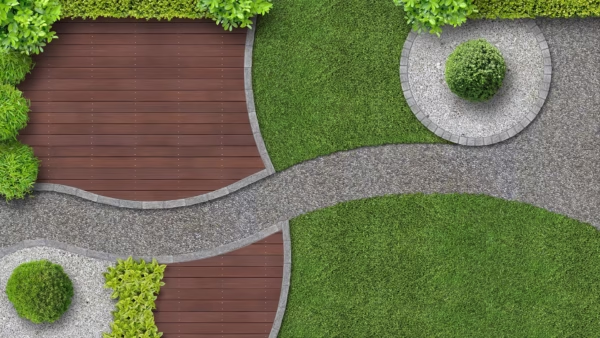
A common misconception is that native plantings look wild or unkempt compared to a traditional foundation planting. In practice, native perennials and grasses can be arranged in the same structured, layered way as any other bed, with clear edges, intentional spacing, and repetition.
We often mix natives with well-established ornamental shrubs so the bed reads as designed rather than as a meadow, while still gaining the soil and climate benefits natives bring.
The balance depends on your preferences. Some homeowners want a mostly native bed for ecological reasons, while others just want two or three native species worked into an otherwise traditional layout.
Soil and drainage considerations before planting
Even native plants have preferences, and matching the plant to the specific spot in your yard still matters. A native species that tolerates wet feet is a poor match for a raised, sunny slope, and vice versa.
Northwest Ohio's clay soil tends to hold water longer than sandier soils, which can be an advantage for moisture-loving natives and a challenge for drought-tolerant species without some soil amendment or bed grading.
The Ohio State University Extension publishes regional plant guides that are a useful reference if you want to research specific species before your design consultation.
How this fits into a full landscape design project
Native plant selection is one part of a broader design conversation that also includes bed layout, mulch, lighting, and overall style. We do not treat it as a separate add-on service, just as one consideration in the plant list.
If a native-focused design interests you, mention it early in the process so we can prioritize regional species during plant selection rather than defaulting to standard nursery stock.
For yards near the water or with heavier drainage needs, native plants can also pair well with grading work or a nearby water feature if that is part of your plan.
Frequently asked questions
Are native plants more expensive than standard nursery plants?
Not inherently. Cost depends on the specific species, size, and availability rather than whether a plant is native. Some natives are readily available at regional nurseries at comparable prices to ornamentals.
Do native plants need less watering?
Established native plants generally need less supplemental watering than many ornamentals once they are settled in, since they are adapted to local rainfall patterns. New plantings of any kind still need regular watering the first season.
Will an all-native yard look messy?
Not if it is designed with structure in mind. Native perennials and grasses can be arranged with clear edges and intentional spacing just like any other landscape style.
Can I mix native and non-native plants in the same bed?
Yes, this is common. Many designs blend a few native species with well-adapted ornamentals to balance appearance, maintenance, and ecological benefit.
The bottom line
- Native plants are adapted to Northwest Ohio's clay soil and climate without much extra intervention.
- Deer resistance varies by species even among natives, so mention deer pressure during design.
- Native plantings can be structured and formal, not just informal or wild-looking.
- Matching plant to specific site conditions still matters even with native species.
- A blended native and ornamental palette is a common, practical approach.
Interested in a native-friendly landscape plan
We can build native species into your design alongside the layout, mulch, and lighting choices that fit your yard.
Explore landscape design