Why Landscape Design and Lighting Should Be Planned Together
Landscape design and lighting work best when planned together from the start, not added on separately. Here's why sequencing matters for beds, paths, and fixtures.
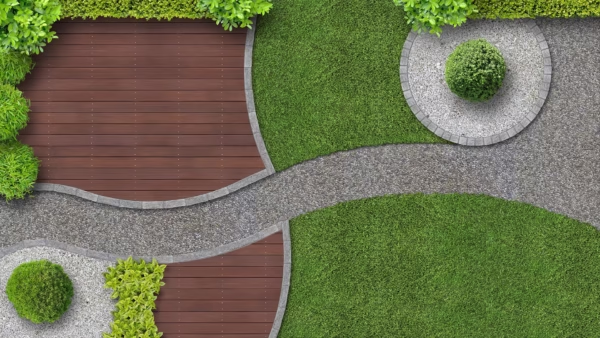
Landscape design and lighting go together better when they are planned in the same conversation rather than as two separate projects a year apart. A bed layout decided without lighting in mind often ends up with fixtures wedged between plants after the fact, instead of placed where they actually highlight the design.
We see this most with homeowners who plant first and call about landscape lighting later, only to find that the ideal fixture spot is now root-bound or blocked by a shrub that filled in bigger than expected.
This post walks through why sequencing the two together, even loosely, saves rework and gets a better result on both ends.
What goes wrong when lighting is an afterthought
The most common issue is fixtures placed too close to a plant that was small at installation but has since grown into the light. A well-head that made sense next to an 18-inch shrub becomes buried and blocked once that shrub reaches its mature size a few seasons later.
The reverse also happens. A bed gets planted with dense, layered plantings and there is no clear path left to run wire back to a transformer without cutting through root systems or lifting mulch across the whole bed.
Neither problem is a disaster, but both mean more labor and more disruption to established plants than if lighting had been part of the original layout.
How we think about plant selection with lighting in mind
During a landscape design consultation, we ask about lighting goals early because it affects which plants make sense in certain spots. A specimen tree or an ornamental grass with strong vertical form is a good uplighting candidate, while a low groundcover generally is not.
Spacing between plants also matters. Beds designed with slightly more room around focal plants make it easier to place a well light without crowding the root ball or having the fixture disappear once the plant fills in.
This does not mean every bed needs to be planned around lighting. It means the plants you intend to feature at night should be selected and placed with that use in mind from the start.
Why wire runs are easier to plan before mulch goes down
Low-voltage wire for landscape lighting typically runs along the edge of beds or is buried a few inches under the mulch line, connecting fixtures back to a transformer, often mounted near an outdoor outlet or garage. Planning that route before beds are finished means the wire can follow a logical path instead of snaking around plants that are already in the ground.
It also makes future maintenance simpler. If a fixture needs to be moved or a wire needs to be traced for a repair, having a documented layout from the design phase saves time compared to guessing at buried wire location years later.
This is one of the practical reasons we prefer at least a conversation about lighting before a bed is fully planted, even if the actual lighting install happens later.
Sequencing options that still work if budget is a factor
You do not need to install landscaping and lighting in the same week or even the same season. A lot of homeowners design the full plan up front, install the landscaping first, and add lighting the following year once the plants have had a season to settle in.
What matters is that the lighting plan exists on paper before the landscaping goes in, so bed layout and plant choices do not conflict with where fixtures will eventually go.
If you already have mature landscaping and are only now considering lighting, that is still workable. We will design around the existing beds rather than against them, but a design done together from the start generally gives more flexibility.
- Discuss lighting goals during the initial design consultation, even if install is a future phase
- Choose focal plants with mature size and form in mind for lighting
- Leave slightly more room around specimen plants intended for uplighting
- Plan wire routing before beds are mulched, even if fixtures go in later
What this looks like for a typical front-yard project
A common front-yard project pairs foundation plantings with a few specimen trees or grasses near the entry, plus a walkway lined with lower plantings. In this layout, the specimen pieces are usually the uplighting candidates, and the walkway plantings stay low enough that path lights along the edge do not get shaded out as things grow.
We map out fixture locations on the same sketch as the plant layout so both are considered against each other, not on separate documents drawn up months apart.
That single sketch becomes the reference point for both the landscape design crew and the lighting crew, even if they are on-site in different seasons.
When it makes sense to hold off on lighting entirely
Some homeowners genuinely do not want landscape lighting and just want a well-designed yard during the day. That is a completely reasonable choice, and it does not mean you did anything wrong by skipping the lighting conversation.
The only real cost of skipping it is that if you change your mind in a few years, the lighting design has to work around whatever the landscaping has become by then, which is a normal and manageable situation, just a slightly less flexible one.
According to Ohio State University Extension's guidance on landscape planning, thinking through long-term plant size at the design stage benefits the whole yard, not just future lighting.
Frequently asked questions
Do I need to install lighting at the same time as landscaping?
No. You can design both together and install landscaping first, adding lighting a season or more later. What matters most is planning the layout with both in mind from the start.
Can lighting still be added to an already-mature landscape?
Yes. We design around existing beds and plant placement regularly. It just means fixture options are shaped by what is already there rather than planned from a blank layout.
Which plants work best for uplighting?
Specimen trees and plants with strong vertical or structural form, like ornamental grasses or small ornamental trees, tend to uplight well. Low groundcovers generally do not show much effect from uplighting.
Does wiring damage plant roots if lighting is added later?
It can be more disruptive than if planned ahead, since wire may need to be routed around established root systems. It is usually manageable, just more careful work than running wire before planting.
The bottom line
- Design landscaping and lighting in the same planning conversation, even if installed in separate phases.
- Choose and place focal plants with their eventual lighting role in mind.
- Plan wire routing before beds are mulched to avoid future disruption.
- You can install landscaping first and lighting later without losing this benefit, as long as both were designed together.
- Existing mature landscapes can still get lighting, just with fewer placement options.
Planning a new landscape bed or a lighting addition
We can design your plantings and your lighting together so neither one works against the other later.
Explore landscape design