
Volcano Mulching: Why Piling Mulch Around Trees Hurts Them
Volcano mulching, piling mulch high against a tree trunk, can cause rot, pests, and root problems. Here's why it happens and how to mulch trees correctly.
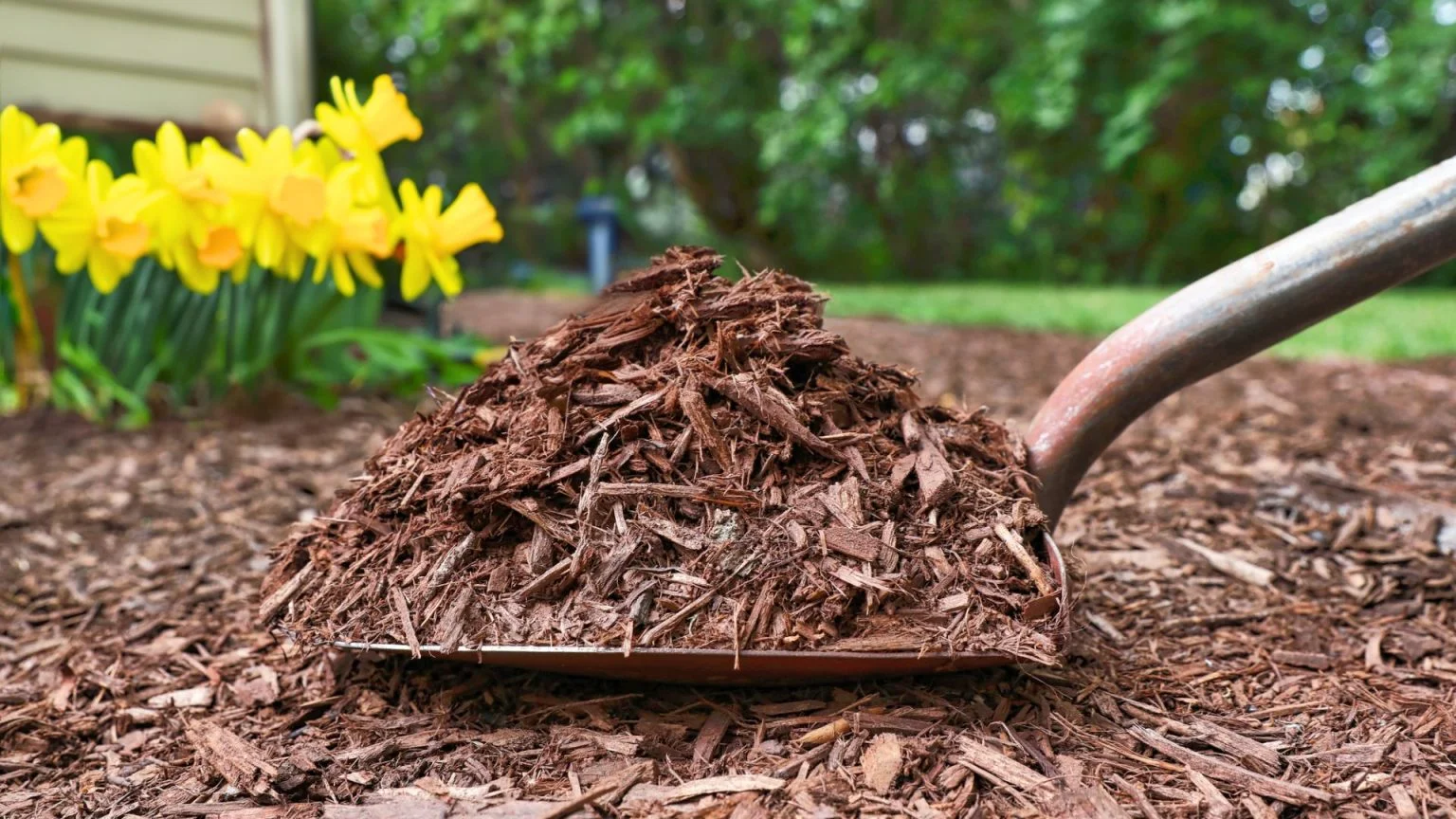
Volcano mulching is the practice of piling mulch in a tall cone against a tree's trunk, and it is one of the most common mulching mistakes we see on residential properties. It looks tidy at first, but it creates conditions that can genuinely harm the tree over time.
This is not a minor cosmetic issue. Mulch piled against bark traps moisture against the trunk, which can lead to rot, pest problems, and root systems that grow incorrectly.
This post explains what actually goes wrong with volcano mulching and what a correctly mulched tree ring should look like instead.
What volcano mulching actually looks like
Volcano mulching gets its name from the shape: a cone of mulch piled high against the trunk, sometimes a foot or more deep, tapering down and out from the base of the tree.
It is common because it looks deliberate and neat from a distance, and it is a fast way to cover a lot of ground around a tree without much shaping or edging work.
The problem is not the amount of mulch used across the bed, it is specifically the contact between mulch and bark at the base of the trunk.
Why moisture against the trunk is a real problem
Tree bark at the base of the trunk is not designed to stay constantly wet the way soil or roots are. Mulch piled against the trunk holds moisture against the bark long after rain, which softens it and creates an entry point for fungal decay and rot.
Once bark starts to break down at the base, the tree's ability to move water and nutrients through that section of trunk is compromised, and the damage is not something that reverses once it starts.
This kind of damage often goes unnoticed for a while because it is hidden under the mulch pile itself, which makes early volcano mulching mistakes harder to catch than more visible problems.

How it affects root growth
Trees naturally grow roots outward and downward, seeking soil moisture and stability. When mulch is piled deep against the trunk, some roots grow up into that mulch layer instead, since it is a moist, loose environment close to the surface.
Roots that develop in mulch rather than soil are less stable and more exposed to temperature swings and drying out, which can weaken the tree's overall root structure over time.
This is a slower-developing problem than bark rot, but it compounds the longer volcano mulching continues year after year.
Pests and rodents drawn to piled mulch
A deep mulch pile against a trunk creates a sheltered, moist environment that some insects and rodents use as cover, including species that chew bark or burrow near the trunk base.
This is more of a secondary effect than the primary damage mechanism, but it adds another reason volcano mulching causes more harm than a flat, properly spaced mulch ring.
Correctly spaced mulch does not eliminate pest activity entirely, but it removes the direct, sheltered contact point at the trunk that makes volcano mulching worse.
What correct tree mulching looks like instead
A properly mulched tree ring is flat, roughly 2 to 3 inches deep, and pulled back a few inches from the trunk so bark is not in direct contact with mulch at all.
The ring can still extend out to the tree's drip line for weed suppression and moisture retention benefits, since the width of the ring is not the problem, only the depth and contact at the trunk.
According to Ohio State University Extension's guidance on tree mulching, keeping mulch away from the trunk is one of the simplest and most impactful corrections homeowners can make.
- Keep mulch 2 to 3 inches deep across the ring
- Pull mulch back a few inches from direct trunk contact
- Extend the ring out to the drip line rather than piling it higher at the trunk
- Check existing tree rings each season for buildup that has crept back toward the trunk
Fixing existing volcano mulching
If a tree already has a mulch volcano built up, the fix is usually straightforward: pull the mulch back from the trunk and redistribute it into a flatter ring rather than removing it all and starting over.
Check the bark at the base once mulch is pulled back. Some staining or softness is common and often resolves once the area can dry out properly, but visible rot or fungal growth is worth mentioning to an arborist.
We address this as part of routine mulch and trimming visits, since it is a quick correction once you know what to look for.
Frequently asked questions
Is a little mulch touching the trunk really a problem?
Occasional light contact is less concerning than a tall pile held against the bark for months. The main issue is sustained moisture trapped against the trunk over time, not brief incidental contact.
How do I know if volcano mulching has already damaged my tree?
Look for soft, discolored, or peeling bark at the base once mulch is pulled back. Minor staining often improves once the area dries out, but visible decay is worth having an arborist look at.
Can I just remove all the mulch around my tree instead?
You do not need to remove mulch entirely. A flat, properly spaced ring a few inches deep still provides moisture retention and weed control benefits without the trunk contact problem.
How often should I check for mulch buildup at the trunk?
Checking once a season, especially before a mulch refresh, is a reasonable habit since mulch can gradually shift back toward the trunk over time even after a correct initial application.
The bottom line
- Volcano mulching traps moisture against bark and can cause rot over time.
- It also encourages roots to grow into the mulch layer instead of the soil.
- Piled mulch can shelter pests and rodents near the trunk base.
- Correct mulching is a flat ring a few inches deep, kept off the trunk itself.
- Existing volcano mulching can usually be corrected by redistributing the mulch, not full removal.
Get your tree rings and beds mulched correctly
We apply mulch at the right depth and keep it off trunks so your trees stay healthy season after season.
Explore mulch services