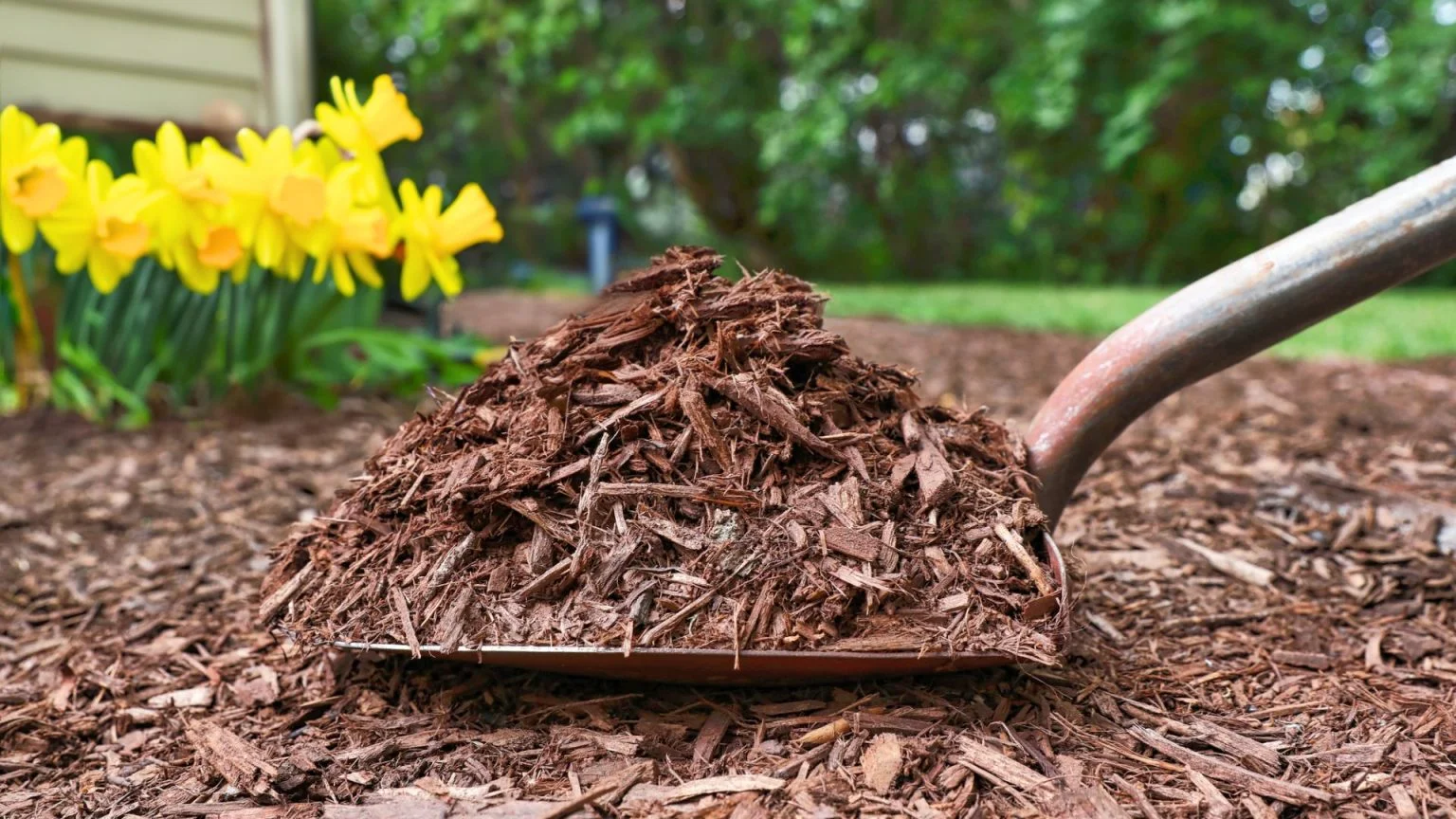
Dark Hardwood vs. Dyed Mulch: Which Holds Color Longer?
Comparing hardwood vs dyed mulch for color retention, cost, and how each performs in Northwest Ohio beds over a full season.
Hardwood vs dyed mulch comes down to a tradeoff between natural aging and consistent, longer-lasting color. Natural dark hardwood mulch starts rich and fades toward gray over months, while dyed mulch holds a specific color longer but comes from different source material.
Homeowners often ask which one is the better choice, but the honest answer depends more on what you want the bed to look like a year from now than which product is objectively better.
This post breaks down how each performs, what dye actually does and does not do, and which situations favor one over the other.
What dye actually does to mulch
Dyed mulch is wood chips coated with a colorant, typically iron oxide for reds and browns or carbon-based dyes for black, applied to the wood surface rather than soaked all the way through. The dye protects the surface color from UV fading for longer than untreated wood.
Underneath the dye, the wood is still decomposing at a similar rate to natural mulch. The color holding up does not mean the material underneath is lasting significantly longer in terms of function.
This distinction matters because a bed can look freshly colored while the actual mulch layer has thinned or broken down more than the surface color suggests.
How natural hardwood mulch ages over a season
Undyed hardwood mulch starts with a rich brown color from fresh-cut wood and fades progressively toward gray or silver as sun and moisture break down surface tannins. This process is faster in full sun and slower in shaded beds.
Some homeowners like this natural aging look, since it reads as a more organic, less manicured appearance over time. Others find the faded look means the bed needs a refresh sooner than they would like.
Natural mulch generally costs less than dyed products since it skips the dye application process, which is a factor worth weighing against how much the color fade actually bothers you.

Which one actually lasts longer
In terms of color, dyed mulch tends to hold its intended shade for close to a full year before fading becomes noticeable, compared to a few months for natural hardwood in full sun.
In terms of the mulch's physical function, weed suppression and moisture retention, both products break down at a comparable rate since dye is a surface treatment, not a preservative.
If your main concern is how the bed looks between refreshes, dyed mulch has an advantage. If your main concern is overall mulch performance, the two are closer to equal.
Common concerns about dyed mulch and plant health
A frequent question is whether dye harms plants or soil. Reputable dyed mulch products use colorants considered safe for landscape use, and the dye itself sits on the wood surface rather than leaching significantly into soil in normal use.
The bigger concern with any dyed mulch is sourcing. Mulch made from recycled or unknown wood sources occasionally raises questions about contaminants, so buying from a supplier who can speak to their wood source matters more than the dye itself.
We only use mulch from sources we trust for both wood quality and dye consistency, which avoids most of the concerns that come up around lower-quality dyed products.
Choosing based on your bed's sun exposure
Beds in full sun all day will show color fade faster regardless of mulch type, which makes dyed mulch's longer color retention more noticeable as a benefit in those spots.
Shaded beds fade more slowly either way, so the practical difference between natural and dyed mulch is smaller in those areas, and natural mulch's lower cost might make more sense there.
If your property has a mix of sun and shade beds, it is reasonable to use dyed mulch in the more visible, sun-exposed areas and natural mulch elsewhere.
- Full sun, high-visibility beds: dyed mulch holds color longer
- Shaded or less visible beds: natural mulch performs similarly for less cost
- Beds near patios or entries: color consistency often matters more
- Beds refreshed less than once a year: dyed mulch shows less fade in the meantime
How this fits into an overall bed maintenance plan
Whichever mulch type you choose, the refresh schedule should account for functional mulch depth, not just color, since both products break down at a similar physical rate underneath.
If you are working with us on a broader mulch plan for the season, we can walk through which product fits each bed based on sun exposure and how often you plan to refresh.
For beds that are part of a larger landscape design refresh, matching mulch color to the rest of the plant and hardscape palette is worth factoring in alongside the fade question.
Frequently asked questions
Is dyed mulch bad for plants?
Reputable dyed mulch products are considered safe for landscape use, with dye applied to the wood surface rather than leaching heavily into soil. Wood source quality matters more for plant safety than the dye itself.
Does dyed mulch decompose slower than natural mulch?
Not significantly. The dye affects surface color retention, not the underlying decomposition rate of the wood, so both types break down at a comparable pace.
Which mulch is better for a front entry bed?
Dyed mulch often makes sense for high-visibility, full-sun beds since it holds a consistent color longer between refreshes.
Can I mix dyed and natural mulch across different beds?
Yes, this is common and reasonable. Many properties use dyed mulch in visible, sunny areas and natural mulch in shaded or less prominent beds.
The bottom line
- Dyed mulch holds its color longer than natural hardwood, especially in full sun.
- Both mulch types decompose at a similar functional rate underneath the surface.
- Wood source quality matters more for plant safety than whether mulch is dyed.
- Sun exposure is a good factor for deciding where to use each type.
- Refresh schedules should track mulch depth and function, not just color.
Not sure which mulch fits your beds
We can walk your property and recommend the right mulch type bed by bed based on sun exposure and how you want it to look.
Explore mulch services