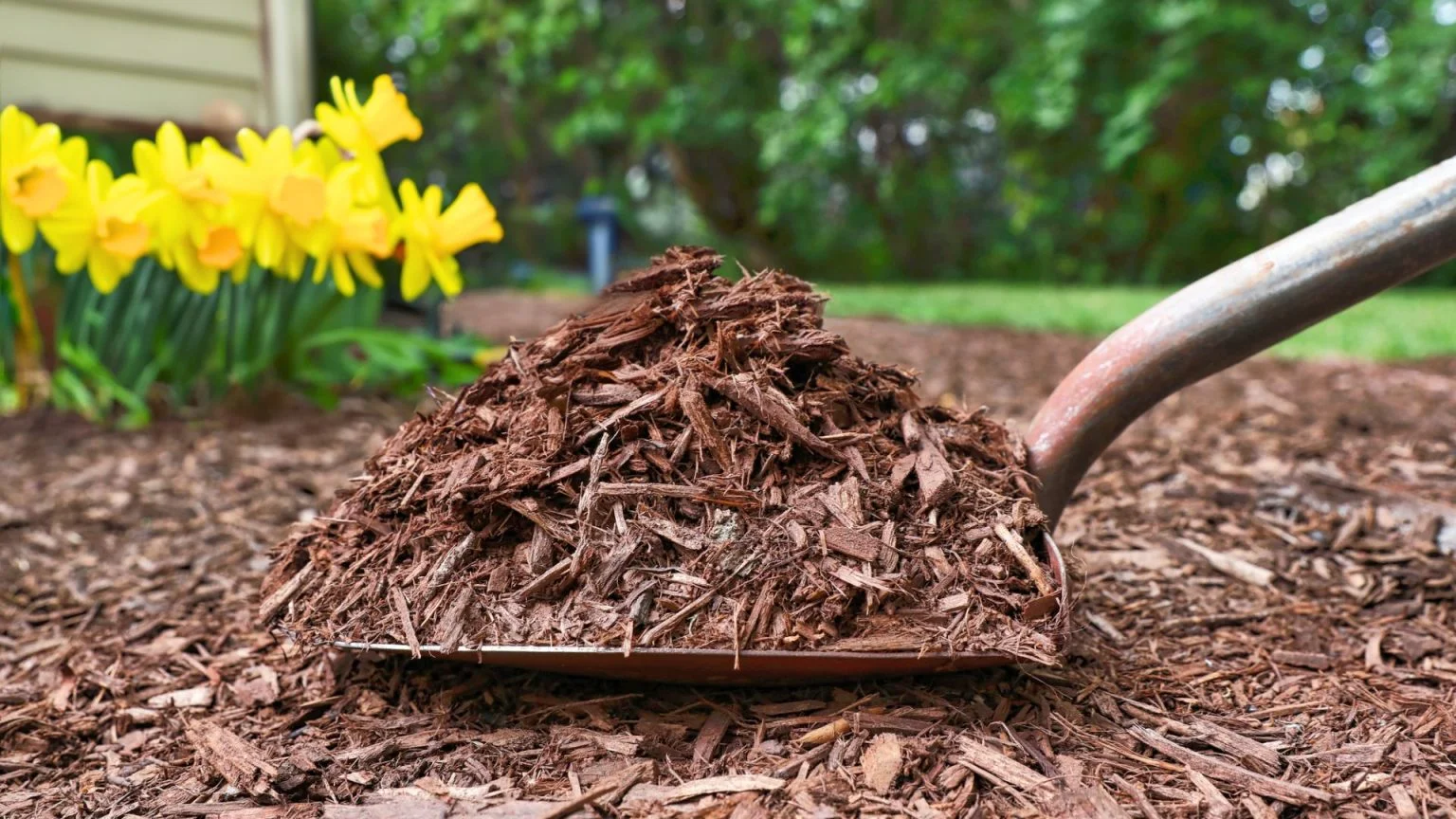
Should You Use Landscape Fabric Under Mulch?
Landscape fabric under mulch can reduce weeds short-term but creates long-term issues in many beds. Here's when it makes sense and when to skip it.

Landscape fabric under mulch is one of the more debated choices in bed prep, and the honest answer is that it helps in some situations and causes problems in others. It is not a universal upgrade, and it is not a mistake either, depending on the bed.
A lot of homeowners assume fabric is a standard part of mulching, since it is often sold alongside mulch and marketed as a weed barrier. In practice, it works better in some bed types than others.
This post covers where landscape fabric genuinely helps, where it creates more problems than it solves, and what alternatives exist for weed control under mulch.
What landscape fabric is actually designed to do
Landscape fabric is a woven or spun-bond material laid over soil before mulch is applied, intended to block light from reaching weed seeds in the soil below while still allowing some water and air through.
In theory, this reduces weed germination from below while mulch on top handles weed seeds that land from above. In practice, the fabric only addresses one source of weeds and does nothing to stop windblown or bird-dropped seeds germinating in the mulch layer itself.
Over time, as mulch breaks down into fine organic material on top of the fabric, weeds can root directly into that decomposed layer, sending roots down through the fabric's weave anyway.
Where fabric tends to cause more problems than it solves
In planted perennial or shrub beds, fabric makes it harder to divide plants, add new ones, or let groundcovers spread naturally, since every planting change means cutting through the fabric.
Fabric can also restrict water infiltration over time, especially cheaper, less permeable products, which can leave soil underneath drier than it should be even with regular watering.
As mulch breaks down on top and mixes with wind-blown soil and organic debris, weeds often end up rooting in that top layer anyway, defeating much of the fabric's purpose within a couple of seasons.

Where fabric genuinely makes sense
Fabric performs better under rock mulch in low-plant-density areas, like a gravel path border or a bed with widely spaced shrubs and minimal perennial planting, where the lack of frequent digging means the fabric stays intact longer.
It also works reasonably well in utility areas, like around a mechanical unit or under a dry creek bed feature, where the goal is long-term weed suppression in a spot that will not be replanted often.
In these lower-maintenance, lower-plant-density contexts, fabric's downsides matter less since there is less need to dig into the bed regularly.
- Rock mulch beds with sparse planting
- Utility or equipment pad areas
- Dry creek beds or drainage features
- Pathways bordered by mulch or rock rather than plants
Alternatives to fabric for weed control
A properly maintained mulch layer, 2 to 3 inches deep and refreshed on a reasonable schedule, blocks a large share of weed germination on its own without the downsides of fabric underneath.
Dense planting is another effective approach. Beds with less exposed soil between plants naturally suppress weeds by shading the ground and leaving less open space for seeds to establish.
For persistent weed problems, spot treatment or hand-pulling on a regular schedule tends to be more effective long-term than relying on fabric to do all the work.
What happens when fabric is removed from an established bed
If you are dealing with an older bed that has fabric already installed and it has started to show through or cause problems, removal is possible but takes some care, especially around established plant roots that may have grown into or around it.
In most cases, we cut fabric away in sections rather than trying to pull large sheets out from under mature plantings, since that limits root disturbance.
Once removed, a fresh mulch layer at proper depth generally performs the weed-suppression job without needing fabric replaced underneath.
How we approach this during bed prep
When we prep a bed as part of a landscape design project, we evaluate whether fabric fits the specific bed type rather than applying it by default everywhere.
For most planted perennial and shrub beds, we skip fabric and rely on proper mulch depth and plant spacing instead. For rock beds or utility areas, we discuss fabric as a reasonable option.
If you already have fabric in a bed and are not sure whether to keep it, mention it during a mulch visit and we can evaluate the specific situation.
Frequently asked questions
Does landscape fabric stop all weeds?
No. It reduces weed germination from seeds in the soil below, but does not stop weeds from rooting in the mulch layer on top as it breaks down over time.
Can I plant new perennials in a bed that has landscape fabric?
Yes, but it requires cutting through the fabric for each new planting, which adds extra labor and can be awkward around established roots nearby.
Is fabric a good idea under rock mulch?
Fabric tends to work better under rock mulch, especially in areas with sparse planting, since there is less need to dig into the bed regularly.
Should I remove old landscape fabric from my beds?
Not necessarily. If it is not causing visible problems, it can often stay. If it is showing through mulch or interfering with plant growth, removal in sections is usually manageable.
The bottom line
- Landscape fabric reduces some weeds but does not eliminate them entirely.
- It makes future planting and bed changes more difficult in perennial beds.
- Fabric fits better under rock mulch or in low-plant-density areas.
- Proper mulch depth and dense planting are effective weed control on their own.
- Existing fabric can be removed in sections if it starts causing problems.
Not sure if your beds need fabric
We can evaluate your existing beds and recommend a mulch and weed control approach that fits each one.
Explore mulch services