Permanent Lighting for Historic Homes in Tiffin and Fostoria
Tiffin outdoor lighting on historic homes needs a careful approach to trim, roofline shape, and material. Here's how permanent lighting fits older homes.
Tiffin outdoor lighting on the area's historic homes runs into a few things newer construction does not: older rooflines with more complex trim, original materials that need careful handling, and sometimes historic district guidelines about visible exterior changes.
Tiffin and Fostoria both have a good number of well-preserved older homes, from Victorian-era houses to early twentieth-century construction, many with the kind of architectural detail that actually makes permanent lighting look great once installed thoughtfully.
This post covers what to expect when adding permanent lighting to a historic home in this area.
Why historic rooflines take more planning
Victorian and early twentieth-century homes common in Tiffin and Fostoria often have more complex rooflines than modern construction, including multiple gables, dormers, turrets, or decorative trim that a simpler ranch or colonial roofline does not have.
This complexity is not a problem for permanent lighting installation, but it does mean more time spent mapping the track route during a site walk to make sure every angle and transition is planned before installation begins.
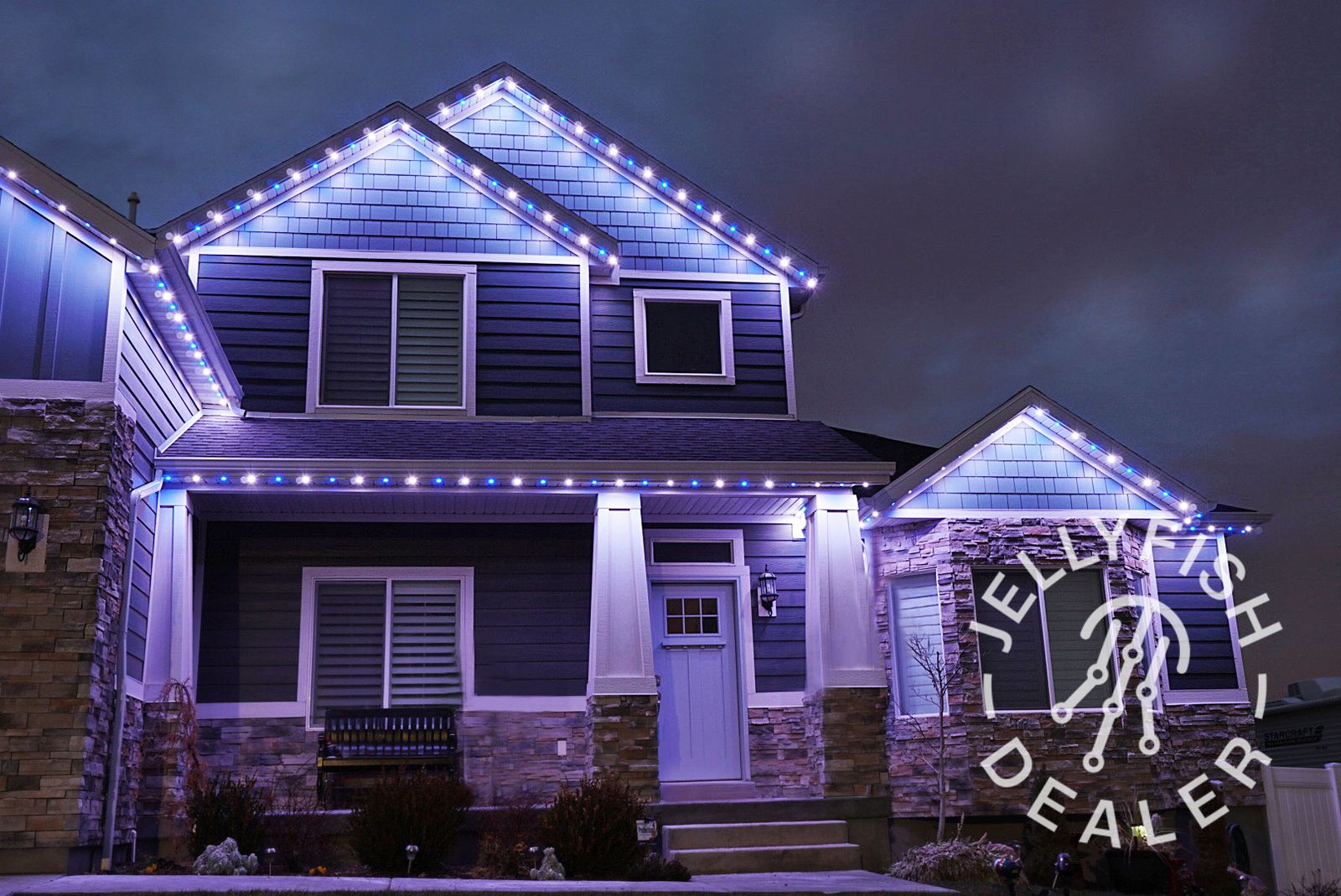
The Jellyfish system uses aluminum track cut and shaped to follow a home's specific roofline, which handles this kind of architectural detail well once the layout is properly mapped.
Working carefully with original trim and siding
Older homes sometimes have original wood trim or siding that is more delicate than modern vinyl or fiber cement materials, particularly if it has not been recently restored or replaced. Mounting hardware needs to account for this, using attachment methods that do not damage or compromise aging material.
This is one of the reasons a careful site walk matters more on a historic home than on new construction, since the installer needs to identify what condition the trim is actually in before deciding how to mount track securely.
In cases where trim is in rough shape or has been replaced with incompatible material in a past renovation, that is worth flagging during the consultation so mounting options can be discussed directly.
Checking historic district guidelines before installation
Some areas of Tiffin and Fostoria fall within recognized historic districts, which can have guidelines about visible exterior changes to a home's facade. Permanent lighting track, while relatively unobtrusive during the day, is still worth checking against local guidelines before committing to an installation.
This is generally not a major obstacle, since permanent lighting track sits along existing roofline and trim rather than altering the structure itself, but it is worth a quick check with local historic preservation guidelines if your home falls within a designated district.
If you are unsure whether your property is in a historic district, Tiffin and Fostoria's local planning offices are the best resource to confirm before scheduling an install.
Why architectural detail pays off with permanent lighting
Homes with more architectural detail, like decorative gingerbread trim, turrets, or multiple roof pitches, tend to look especially good with permanent roofline lighting once installed, since the lighting follows and highlights that detail rather than just outlining a plain rectangular roofline.
This is one of the more rewarding aspects of installing permanent lighting on older homes in this area. The added complexity that takes more planning time on the front end often results in a more visually interesting final look than a simpler modern roofline would produce.
Homeowners in Tiffin and Fostoria with these kinds of historic details are often pleasantly surprised by how much the lighting brings out architectural features that are easy to overlook during the day.
Combining permanent lighting with landscape lighting on historic properties
Many historic homes in this area also have established, mature landscaping that pairs well with landscape lighting alongside a permanent roofline install. Large old trees, foundation plantings that have had decades to mature, and sometimes original stonework all make good lighting candidates.
Combining both creates a cohesive nighttime look across the whole property rather than just the roofline, which suits the overall character of an older, established home.
As with any combined project, it helps to plan color temperature consistently across both systems so the roofline and the landscaping below it complement each other rather than clashing.
- Map track routes carefully around gables, dormers, and decorative trim
- Use mounting methods appropriate for original wood trim condition
- Check historic district guidelines before scheduling installation
- Pair roofline lighting with landscape lighting for a cohesive look on mature properties
What to expect during a historic home site walk
A site walk on a historic home usually takes a bit more time than a standard consultation, since the installer needs to assess trim condition, map a more complex roofline, and note any areas that need special handling.
We will walk the full exterior with you, discuss any concerns about original materials, and talk through track routing options before finalizing a plan.
This extra attention up front is what keeps the installation from causing any unintended damage to a home's original character, which matters more here than it would on a newer property.
Frequently asked questions
Can permanent lighting damage original trim on a historic home?
It should not if mounted correctly. A careful site walk assesses the condition of original trim so mounting methods can be adjusted appropriately, avoiding damage to delicate or aging material.
Do I need approval to install permanent lighting in a historic district?
It depends on your specific district's guidelines. Permanent lighting track is generally unobtrusive since it follows the existing roofline, but it is worth checking with local planning offices if your home falls within a designated historic district.
Does a complex roofline cost more to light than a simple one?
It typically takes more planning time to map track around gables, dormers, and trim, which can affect project scope. A site walk gives a clearer picture of what a specific home's roofline requires.
Does permanent lighting look good on Victorian-style homes?
Often very good. The architectural detail common on Victorian and early twentieth-century homes tends to look especially striking once outlined with permanent lighting, more so than a plain modern roofline.
The bottom line
- Complex historic rooflines need more planning time but often look great once lit.
- Original trim condition affects mounting approach and should be assessed carefully.
- Check historic district guidelines before scheduling an installation.
- Pairing roofline lighting with landscape lighting suits mature, established properties.
- A thorough site walk protects a historic home's original character during installation.
See what permanent lighting looks like on your historic home
We'll walk your property, assess the trim and roofline, and map out a plan that respects the home's character.
Explore permanent lighting