Permanent LED vs. Landscape Uplighting: Where Should Your Budget Go First?
Permanent LED vs landscape uplighting comes down to what effect matters most to you first. Here's how to think through budget priority between roofline and ground lighting.
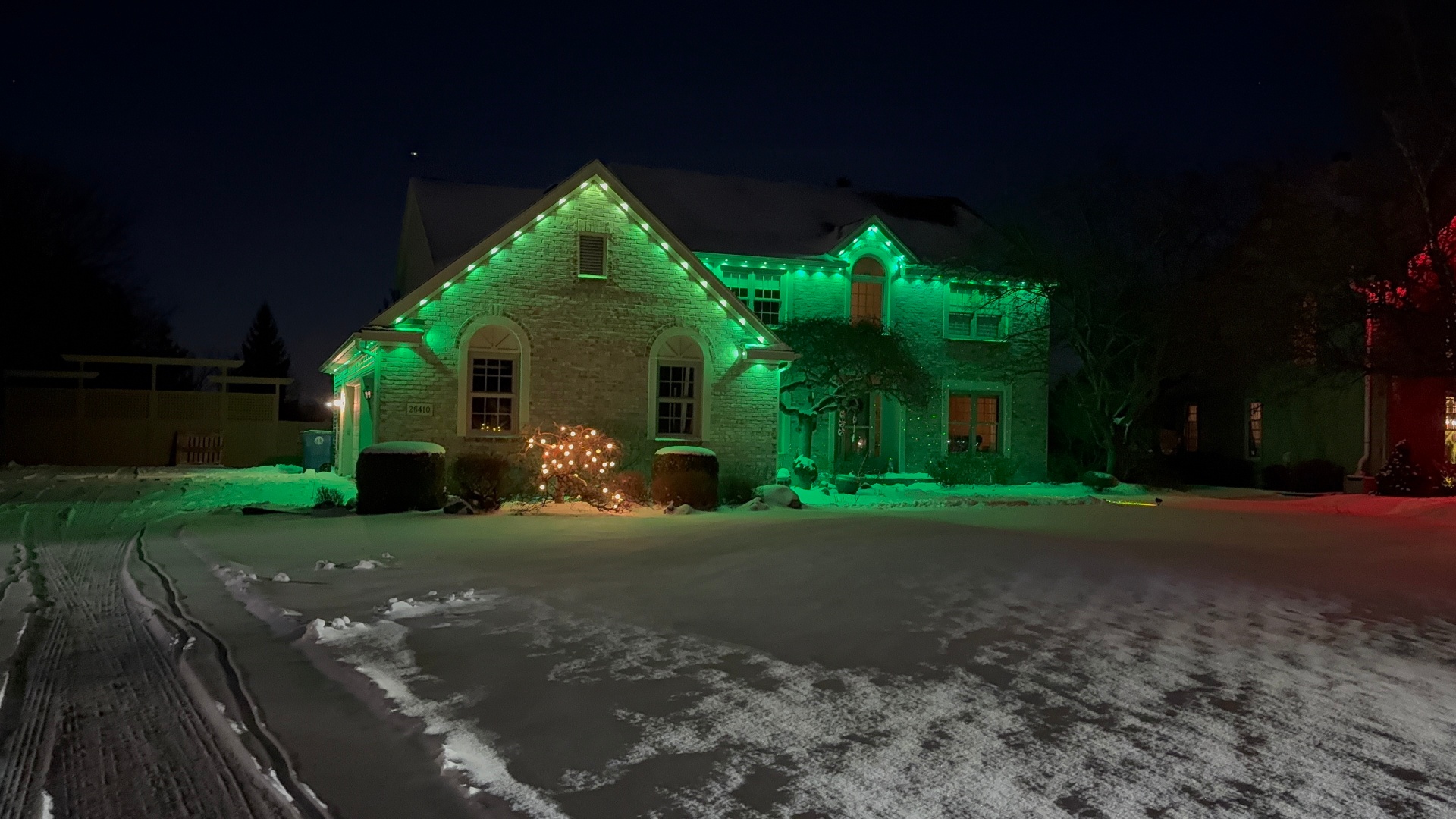
Deciding between permanent LED roofline lighting and landscape uplighting for your budget comes down to which visual effect matters more to your home right now, since both serve different purposes rather than competing for the exact same result. Permanent LED systems define the architecture of the home itself, while landscape uplighting highlights trees, plants, and ground-level features.
This is a common question during quote conversations, especially from homeowners who cannot do both projects in the same year and want to know which one to prioritize between permanent lighting and landscape lighting.
Here is a framework for thinking through the decision based on your specific property and goals.
What each system is actually designed to do
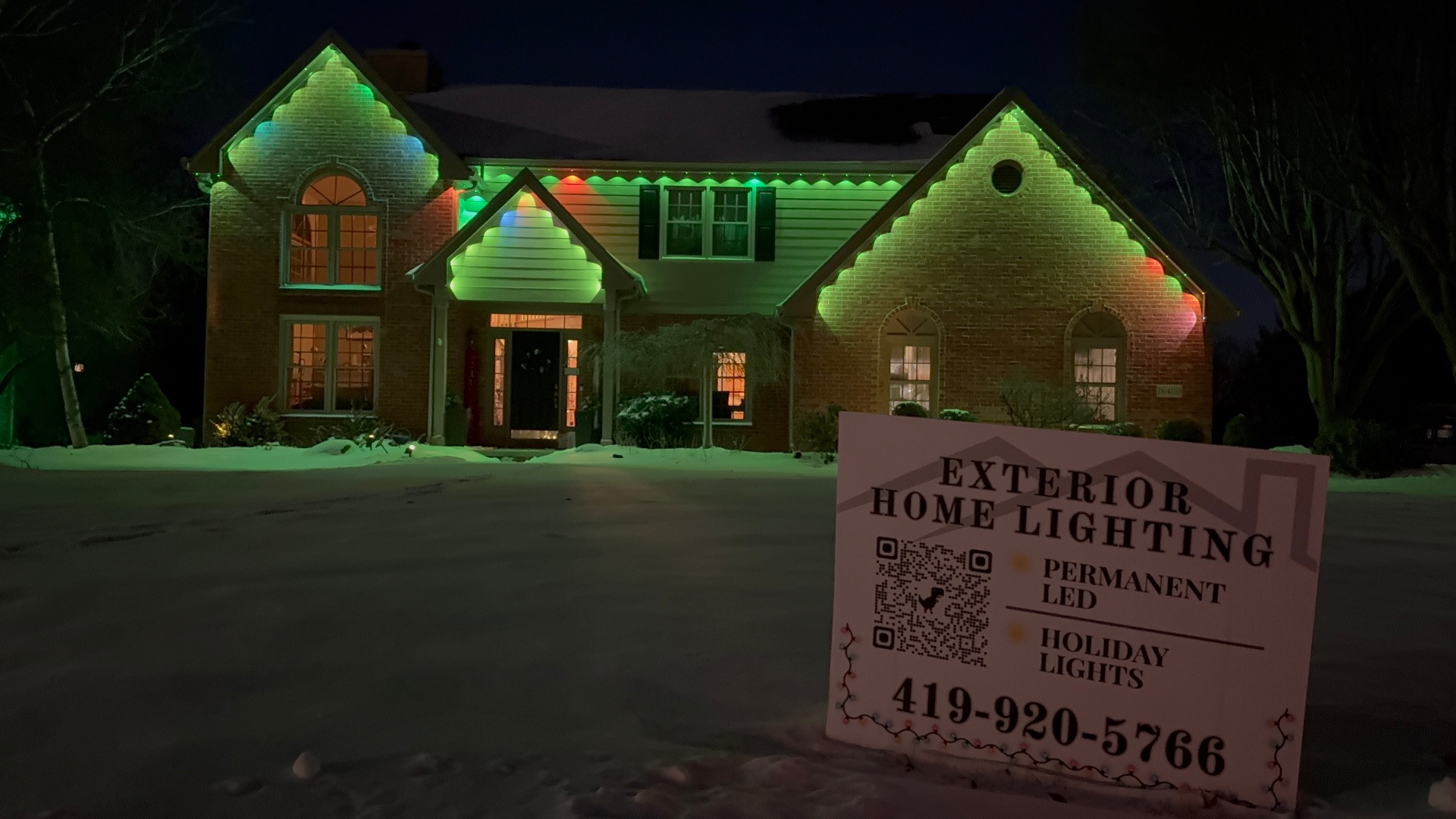
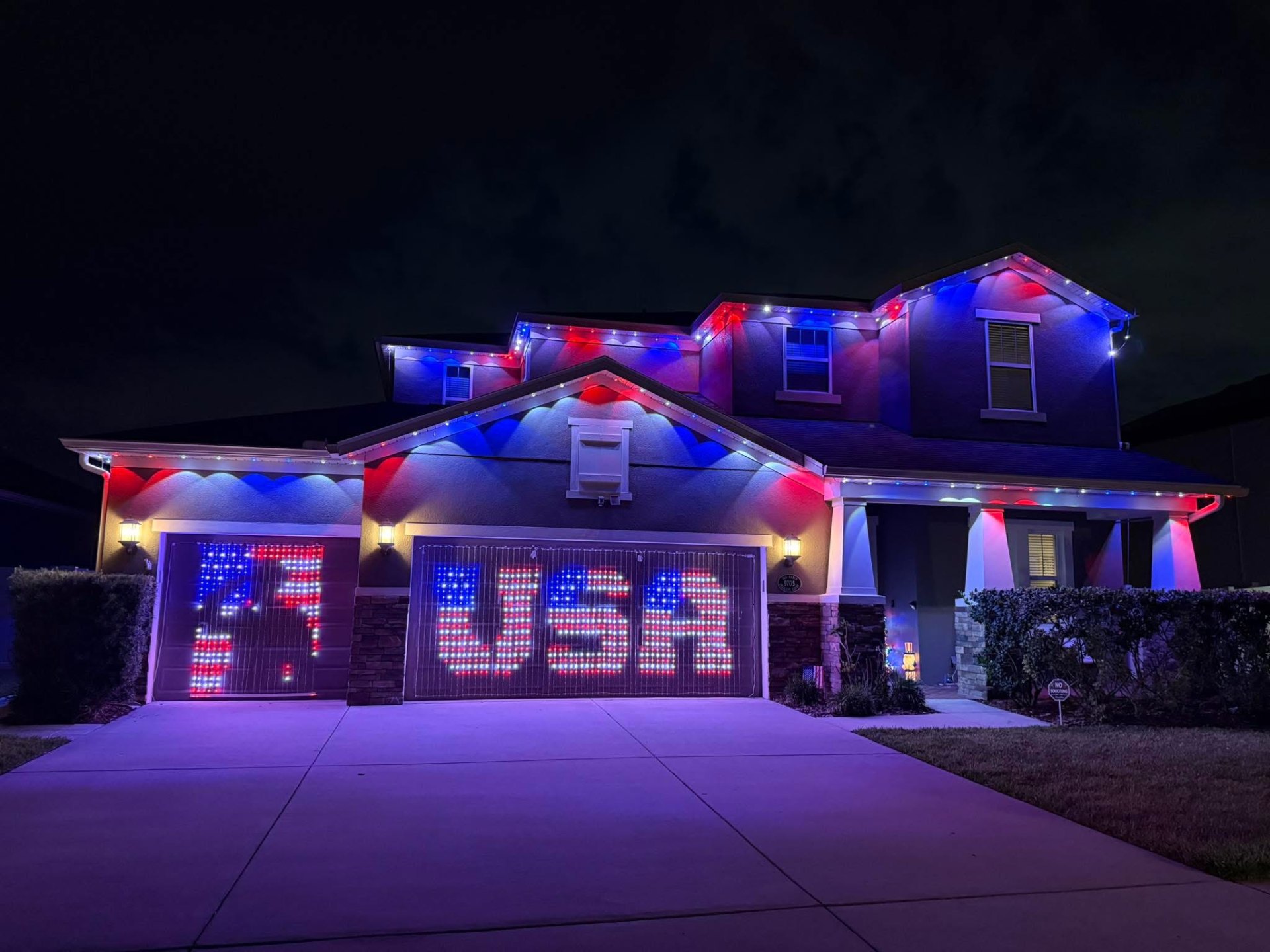
Permanent LED roofline lighting, like Jellyfish or Govee track systems, runs along the edges of the roof, gables, and sometimes windows, outlining the shape of the home itself. It is controlled through an app and can run daily, for holidays, or for special occasions without needing manual setup each time.
Landscape uplighting is a ground-level system with individual fixtures placed at the base of trees, shrubs, or architectural features, aimed upward to create shadow and depth rather than outlining a continuous shape. It is a more traditional, subtler style of lighting compared to a full roofline system.
Neither is a replacement for the other. They address different parts of the property and create different visual effects after dark.
When permanent LED makes more sense as a first project
If your home has strong architectural lines, like distinct gables, a pitched roof, or interesting trim details, but relatively simple or new landscaping, permanent LED lighting gives you a bigger visual return relative to what you are working with. There is more architecture to define than mature plants to highlight.
Permanent LED is also the better first choice if you want lighting that works for holidays, sports team colors, or everyday use without needing separate holiday lighting installed and removed each year. The versatility of an app-controlled system covers a wider range of use cases from one investment.
Homeowners focused mainly on curb appeal from the street, rather than backyard ambiance, also tend to get more immediate impact from a roofline system since it is visible from a distance in a way that ground-level lighting is not.
When landscape uplighting makes more sense as a first project
If your property already has mature trees, established garden beds, or a specimen plant that stands out during the day, uplighting brings that same feature to life at night in a way that a roofline system cannot replicate. A large, well-formed tree lit from below can be a strong visual anchor for the whole yard.
Uplighting also tends to be the better choice for homes with simpler rooflines or architecture that does not lend itself to a dramatic outline effect, since there is less architectural detail for a roofline system to define.
If your priority is backyard ambiance, entertaining space, or highlighting a specific feature like a pond or water feature, landscape lighting addresses that directly while a roofline system does not.
Thinking about cost per visual impact
Permanent LED systems generally cover the full linear footage of a roofline, which for most homes is a larger overall project scope than a handful of uplighting fixtures around a couple of specimen trees. This does not mean one is inherently better value, just that the projects are typically different in scale.
A smaller landscape lighting project focused on two or three key features can be a lower-cost way to add meaningful nighttime appeal if a full roofline system is not in the current budget.
The right comparison is not raw cost but the visual impact per dollar for your specific property, which depends heavily on your home's architecture and existing landscaping rather than a general rule that applies to every house.
How most homeowners end up phasing both
It is common for homeowners to install one system first and add the other in a following season once budget allows, rather than deciding one is permanently off the table. Doing permanent LED first, then adding landscape uplighting later, or the reverse, are both reasonable paths.
If you already know you want both eventually, mentioning that during your first quote conversation helps us think about how the two systems will work together visually, even if only one is installed right away.
Neither system depends on the other technically, so there is no wrong order from an installation standpoint, only a preference based on what matters most to you first.
- Strong architecture, simple landscaping: permanent LED first is often the better return
- Mature trees and established beds, simpler roofline: uplighting first often has more impact
- Want year-round versatility for holidays and events: permanent LED covers more use cases
- Want to highlight a specific specimen tree or backyard feature: uplighting addresses that directly
- Budget allows for both: consider sequencing so lighting decisions inform each other
Getting a quote that compares both options directly
Since the right answer depends heavily on your specific property, the most useful next step is a free quote that walks your home and gives you a real sense of both options side by side rather than guessing from general advice. Seeing an actual proposed layout for each makes the tradeoff much clearer than comparing them abstractly.
The U.S. Department of Energy publishes general guidance on LED lighting efficiency that applies to both permanent roofline and landscape lighting systems, since both typically use LED fixtures for their lower energy use compared to older lighting technology.
Whichever you choose first, both are reasonable long-term investments in how your home looks after dark, and neither closes the door on adding the other later.
Frequently asked questions
Can I install both permanent LED and landscape uplighting at once?
Yes, many homeowners do both together, especially if a full property refresh is planned. Doing both at once also gives more opportunity to design them to complement each other visually.
Which one adds more resale value?
This varies by property and market, and we do not make specific value claims either way. Both are visible curb appeal improvements, with permanent LED generally more noticeable from the street and uplighting more noticeable up close.
Does landscape uplighting need to be redone if I add permanent LED later?
No, they operate independently. Adding one after the other does not require redoing the existing system, though you may want to adjust settings or scenes so both work well together visually.
Is one system more expensive to maintain than the other?
Maintenance needs differ mainly because landscape uplighting fixtures sit at ground level and can be affected by mulch, plant growth, or lawn equipment, while roofline systems are less exposed to that kind of everyday disturbance.
The bottom line
- Permanent LED lighting emphasizes architecture, while landscape uplighting emphasizes plants and features.
- Homes with strong architecture and simple landscaping often benefit more from permanent LED first.
- Mature trees and established beds often get more impact from uplighting first.
- Cost and impact should be compared for your specific property, not by general rule.
- Many homeowners eventually install both, phased across separate projects.
Not sure which lighting project to prioritize
Get a free quote that walks through both options for your home so you can compare them side by side.
Request a free quote