Can You Match Warm White Porch Lights with Jellyfish Lighting?
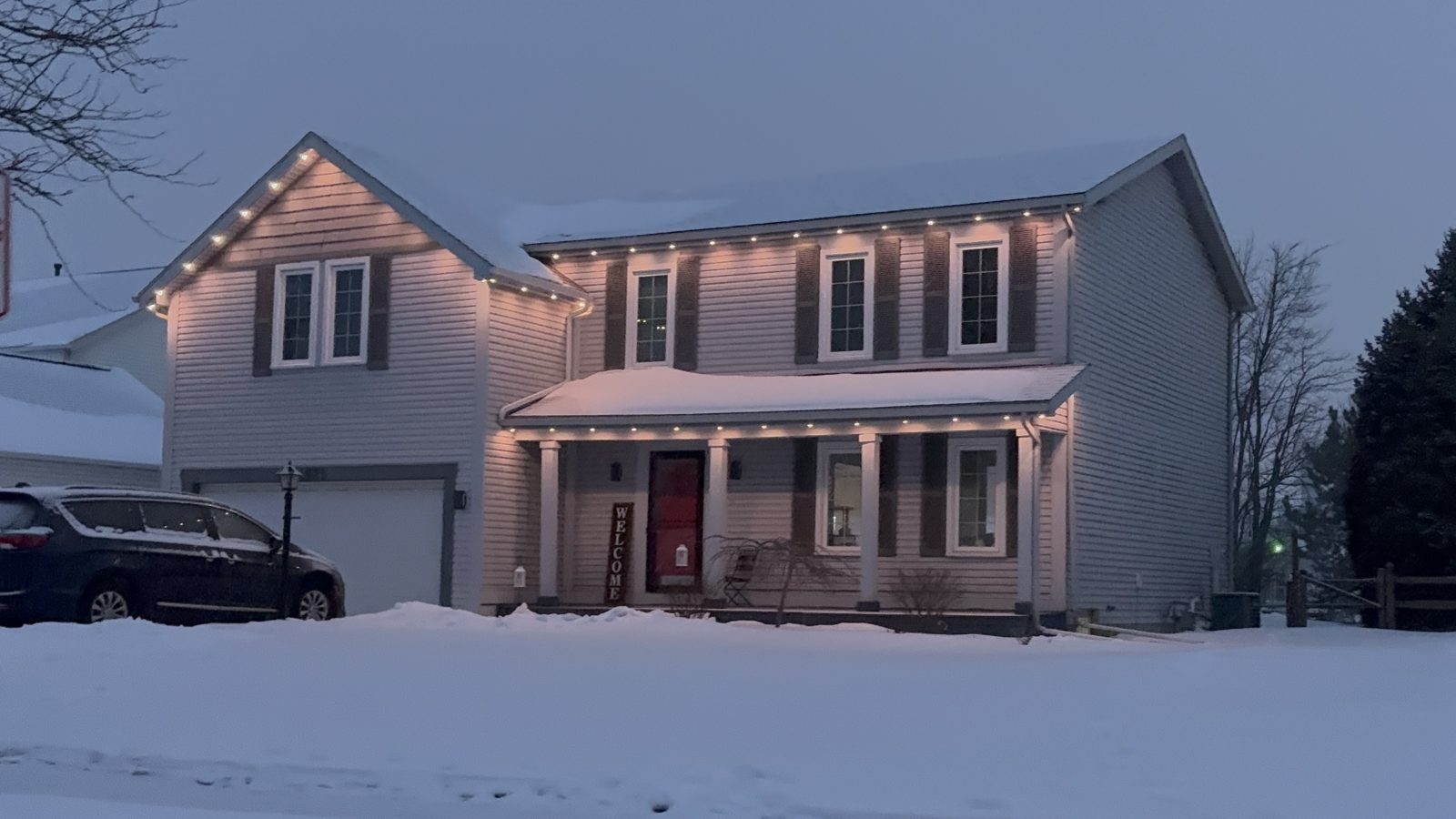
Yes, Jellyfish lighting can match warm white porch lights closely enough that the roofline and porch read as one consistent look after dark.
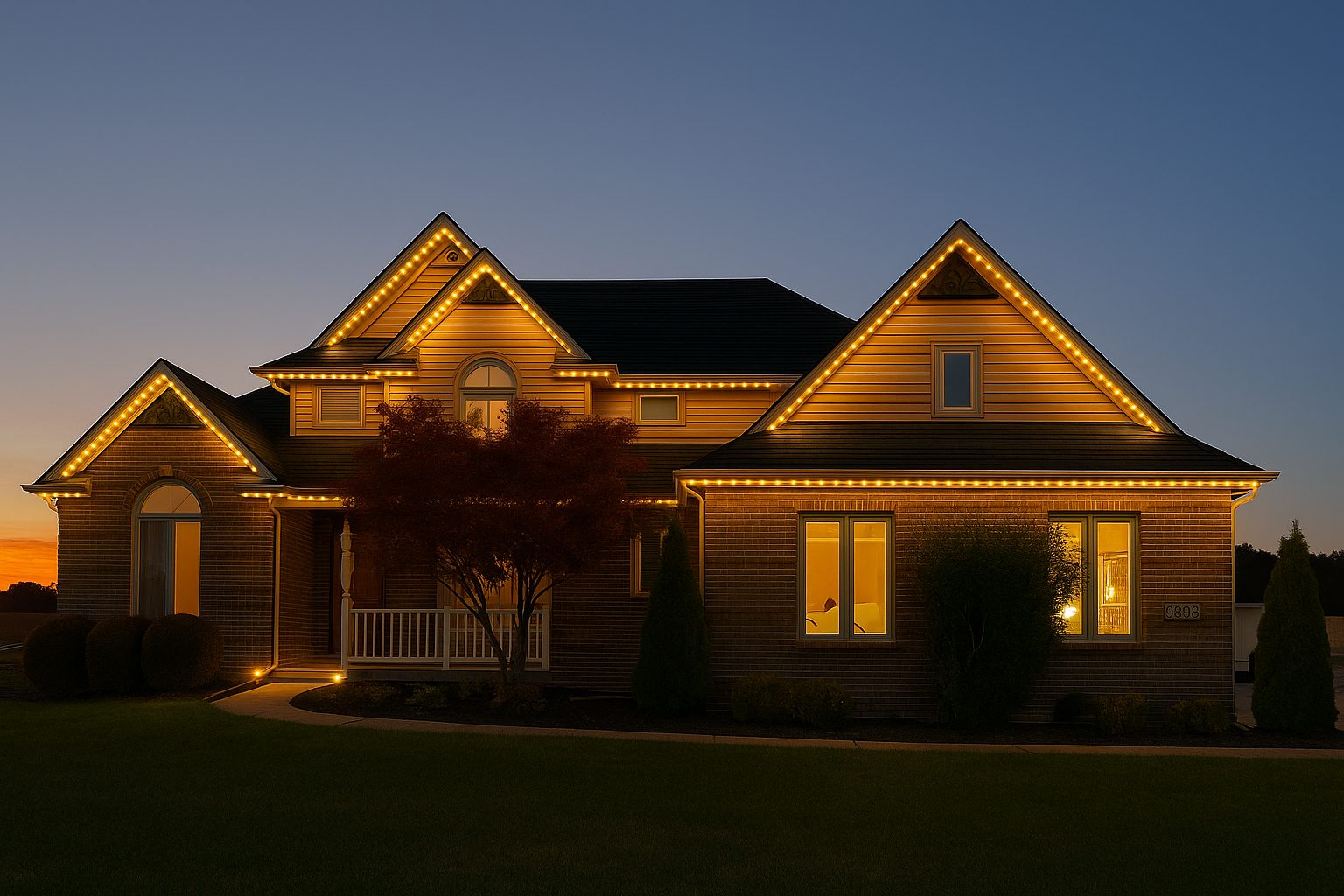
Matching warm white porch lights with Jellyfish lighting is one of the most common requests we get during a site walk. Most porch fixtures use bulbs somewhere in the 2700K to 3000K range, and the Jellyfish app can dial in a warm white in that same range so the roofline light and the porch fixture read as one continuous glow rather than two competing light sources.
The trick is not just picking 'warm white' from the app and hoping for the best. It takes a short side-by-side comparison on site, sometimes adjusting brightness as much as color, to get a close match.
This post walks through how warm white color temperature works, how we dial it in against your existing porch fixtures, and where an exact match is not realistic.
Why color temperature is the starting point
Color temperature, measured in Kelvin, describes how warm or cool a white light appears. Lower numbers like 2700K look amber and cozy, while numbers up around 5000K look closer to daylight. Most builder-grade porch fixtures and older incandescent bulbs sit in that lower, warmer range.
Jellyfish lighting fixtures are LED and can be tuned to specific white values in the app, including warm white settings intended to sit close to that same 2700K-3000K neighborhood. That overlap is what makes a reasonably close match possible in the first place.
The U.S. Department of Energy notes that LED color temperature is adjustable by design in a way older bulb types were not, which is part of why this kind of matching became realistic once LED roofline systems became common.
What actually happens during setup
When a homeowner wants the roofline to blend with existing porch lights, we bring up the warm white options in the app and compare them against the porch fixture at night, adjusting until the two look like they belong together. This is a visual call made on site, not something calculated from a spec sheet alone.
Brightness is part of the comparison too. A porch bulb dimmed low next to a bright roofline run can look mismatched even if the color temperature itself is close, so we often adjust brightness alongside color.
This process usually takes a few minutes once the Jellyfish lighting system is powered on and connected, since it is just a matter of toggling through a few settings while looking at both lights together.
Where an exact match gets harder
Porch fixtures with frosted, seeded, or amber glass shift the color of the light passing through the lens, which means the bulb's rated color temperature is not always what you see on the ground. In those cases we match to what your eye actually sees, not the bulb's label.
Older incandescent porch bulbs also shift warmer as they dim, a trait LED does not replicate the same way, so an extremely dim vintage porch light can be tough to match precisely at full brightness.
In practice, most homeowners are happy with a close, cohesive match rather than a pixel-perfect one, especially once both lights are seen together rather than side by side in isolation.
Should you replace the porch fixture instead?
Some homeowners choose to swap in a new warm white LED bulb in the porch fixture itself rather than trying to match an old incandescent bulb. This can make the match closer since both light sources become LED-based warm white.
This is not something we require, and plenty of homes keep their existing porch fixtures and bulbs as-is. It is simply an option worth mentioning if a truly seamless match matters a lot to you.
If you are weighing a full landscape lighting refresh alongside the roofline system, our landscape lighting team can also look at path and accent fixtures for color consistency at the same time.
- Compare the roofline warm white setting against the porch light at night, not during the day
- Adjust brightness, not just color temperature, for the closest visual match
- Frosted or amber lenses shift visible color from the bulb's rated Kelvin value
- Swapping to a warm white LED porch bulb can tighten the match further
- A cohesive look is realistic; an exact match is not guaranteed
How this looks across different home styles
On a brick colonial with a single warm porch sconce, matching the roofline warm white to that sconce usually reads as one unified glow across the whole front elevation. On homes with several different porch and garage fixtures, each running slightly different bulbs, we usually pick the most prominent fixture to match against rather than trying to average several different tones.
Homes near Perrysburg and Toledo with a lot of brick or stone often look best with a warm white that leans slightly amber, since it complements the masonry tone rather than competing with it.
If you are still deciding between a warm white default and a fuller color system, our Jellyfish versus Govee comparison covers how each system handles white light quality.
Getting it right from the first night
The best time to fine-tune a warm white match is the evening of installation, once it is dark enough to see both lights together clearly. We walk the front of the house with you at that point so any adjustment happens while we are still on site.
If your preference changes later, for instance switching to a slightly cooler white in winter for a cleaner look against snow, that is a quick change in the app rather than a new service call.
Getting the match right up front avoids the more common complaint we hear, which is not that the color is wrong exactly, but that it feels slightly off compared to the rest of the house.
Frequently asked questions
Can Jellyfish lighting match any porch light color?
It can get close to most warm white porch fixtures in the 2700K to 3000K range. Unusual or heavily tinted porch lenses can make an exact match harder, but a cohesive look is still achievable.
Do I need to replace my porch light to get a good match?
No. Most homes keep their existing porch fixture as-is. Replacing the bulb with a warm white LED can tighten the match further, but it is optional.
Will the match stay consistent over time?
The Jellyfish LEDs hold their color output over time. If your porch bulb ages or shifts color as incandescent bulbs sometimes do, you may notice a small difference that a bulb swap can fix.
Can I adjust the warm white setting myself after installation?
Yes. Warm white brightness and tone are adjustable in the app any time, so you can fine-tune the match yourself if your porch fixture changes later.
The bottom line
- Most porch fixtures fall in a warm white range Jellyfish can closely match.
- Matching is done visually on site, comparing both lights together after dark.
- Brightness matching matters as much as color temperature.
- Frosted or tinted porch lenses can shift the visible color from the bulb's rating.
- A cohesive, unified look is realistic for nearly every home style.
Get a warm white that matches your home
We compare your roofline lighting against existing fixtures on site so the whole front of your house reads as one consistent glow.
Explore Jellyfish lighting