How to Install Outdoor Lighting on House
Learn how to install outdoor lighting on a house, from planning your rooflines to mounting track, wiring, and setting up app control.
Installing outdoor lighting on a house means measuring your rooflines, choosing between a permanent LED track system or traditional fixtures, mounting everything to the fascia or soffit, and wiring it back to a controller or transformer. The right approach depends on whether you want year-round permanent lighting or a seasonal display.
We install permanent lighting on homes across Perrysburg, Toledo, and Sylvania, and this guide covers the process end to end for anyone planning their own project or comparing quotes.
Here's what actually goes into lighting up a house the right way.
What should you light first?
Walk around your house at dusk and note which features stand out or feel dark and unwelcoming, like the front entry, a roofline that catches the eye from the street, or architectural details like columns or stonework. This becomes the basis for your lighting plan.
Most homeowners start with the roofline since it defines the overall silhouette of the house at night, then add accent lighting for entryways, columns, or landscaping afterward.
If you're planning a full exterior lighting project, consider landscape lighting for ground-level features alongside roofline lighting for the most complete look.
Permanent track lighting versus traditional fixtures
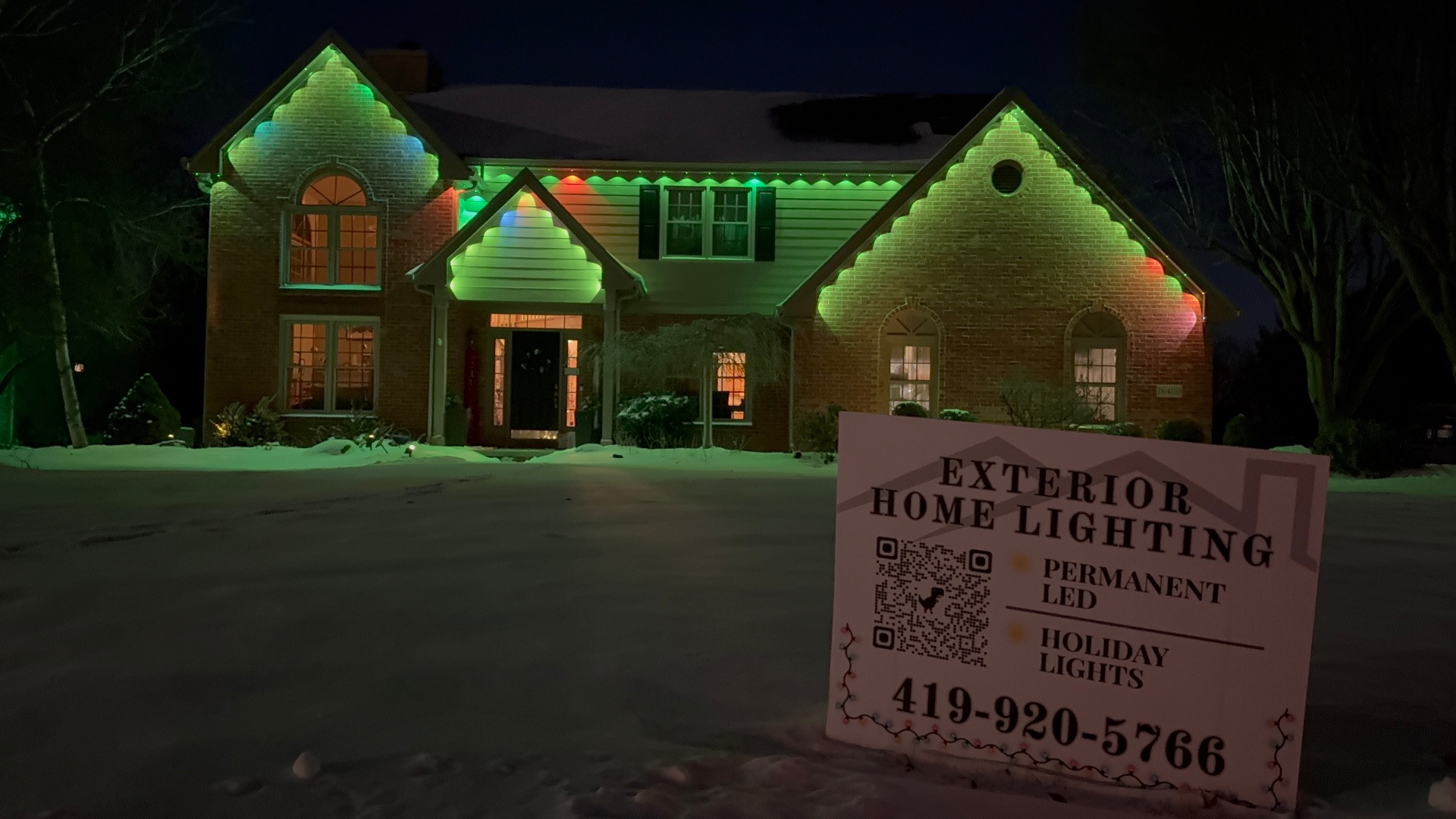
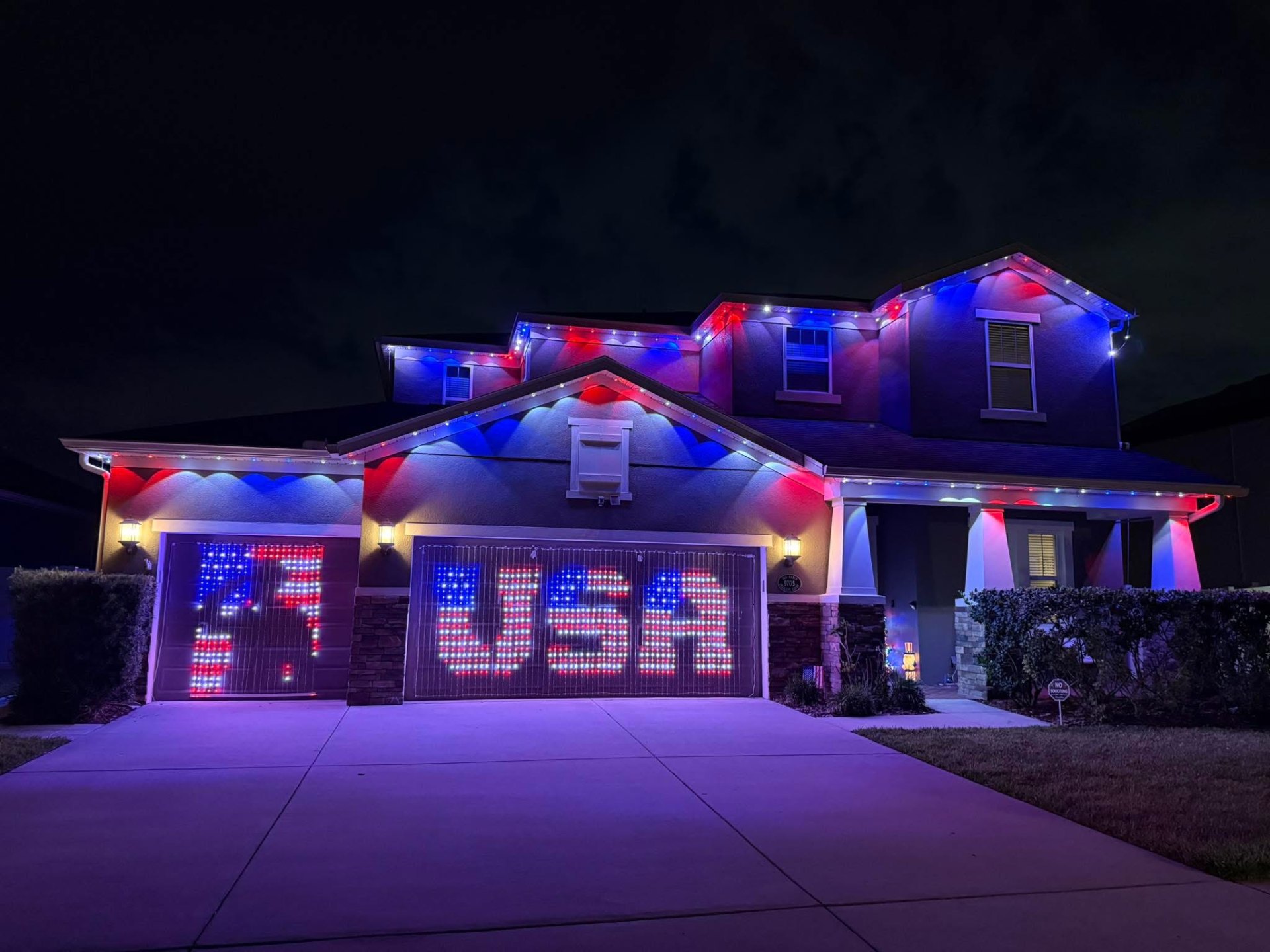
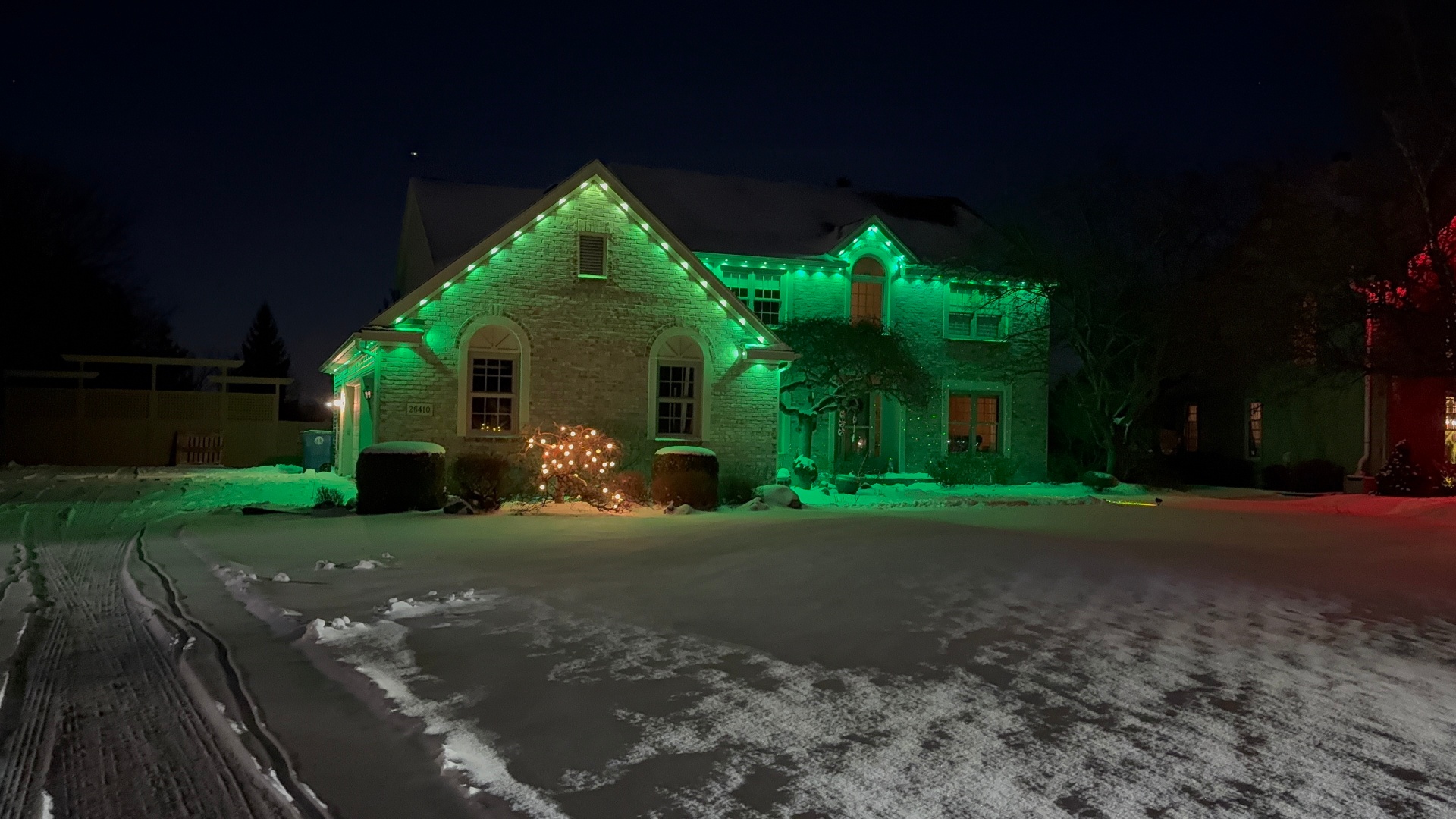
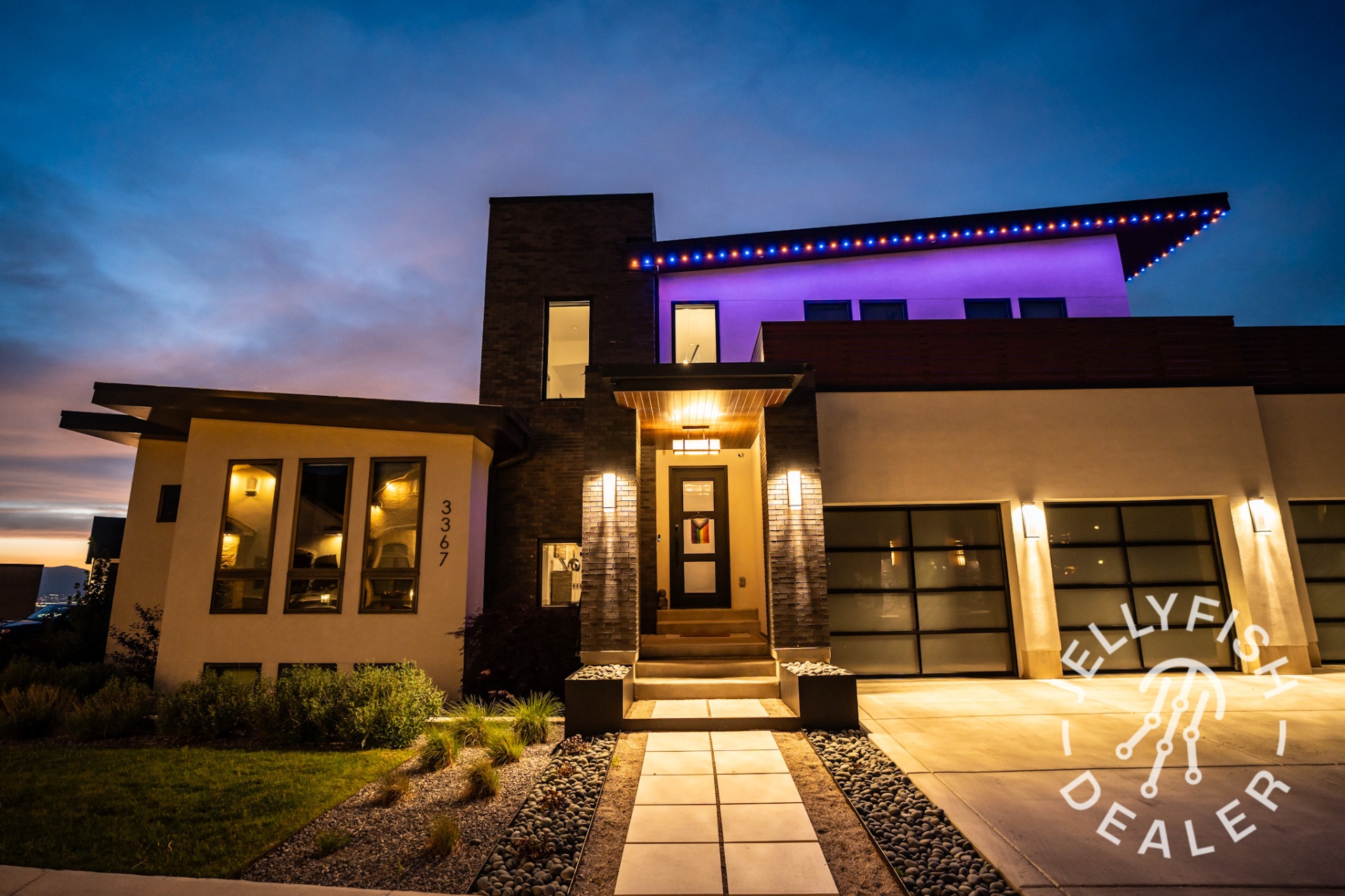
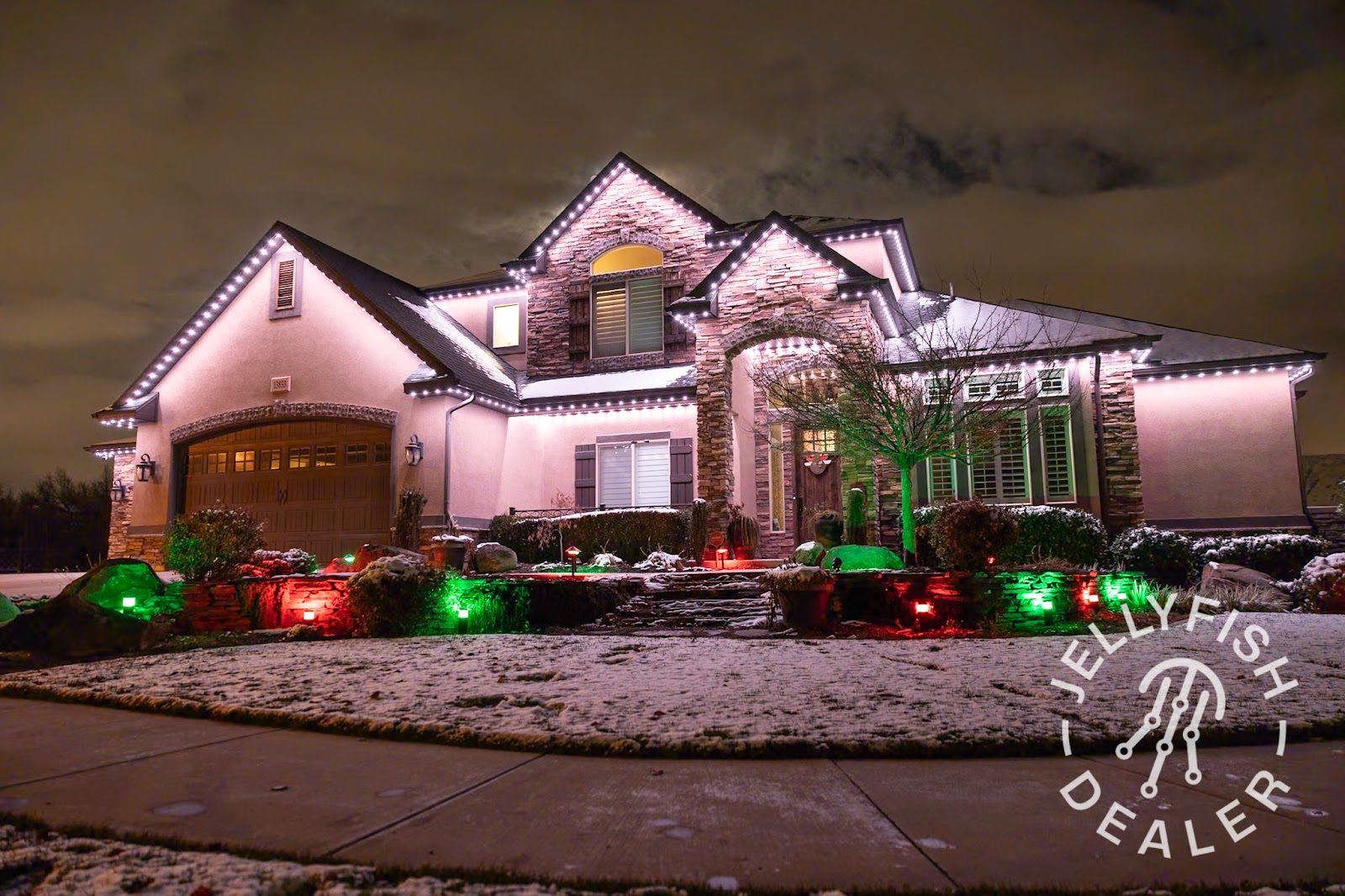
Permanent LED track lighting mounts under the fascia and runs year-round, controlled through an app for warm white daily use and colors for special occasions. It's the lowest-maintenance option once installed.
Traditional fixtures, like uplights or wall sconces, are a good fit for specific architectural accents but don't offer the same flexibility as a full roofline system with app control.
If you mainly want lighting for the holidays without a permanent installation, holiday lighting service is worth considering instead, since it avoids the up-front cost of a permanent system.
How do you mount lighting to the fascia or soffit?
Clean the mounting surface first, then attach clips or brackets at consistent spacing along the run, keeping the height and angle uniform so light output looks even once it's dark. Corners need dedicated connector pieces rather than forced bends.
Check that mounting points avoid gutter hangers and downspout brackets, so future gutter maintenance doesn't disturb the lighting system.
For homes with dormers, bay windows, or other irregular rooflines, plan the layout section by section rather than assuming one continuous straight run.
How should wiring be routed and protected?
Route wiring to stay hidden behind gutters, trim, or downspouts wherever possible, avoiding any exposed cable visible from the street or yard. Use weatherproof connectors at every joint rather than tape or exposed splices.
Plan your total fixture load against your transformer or controller's capacity before finalizing wiring runs, since overloading a single run can cause dimming at the far end.
For larger homes, more than one controller or transformer may be needed to cover the full roofline without overloading any single circuit.
- Hide wiring behind trim, gutters, or downspouts
- Use weatherproof connectors at every joint
- Balance fixture load across multiple runs if needed
- Mount controllers or transformers in protected, accessible locations
Where should the controller or transformer go?
It needs access to a standard outlet and should sit somewhere protected from direct rain and sun, like under an eave or inside a garage, while still staying accessible for future troubleshooting. A poorly placed controller is one of the most preventable causes of system issues down the line.
If you're adding both roofline lighting and landscape lighting to the same project, you may need separate transformers for each, which is worth planning during your initial site walk.
Label or note where each controller is located and what it powers, especially if you have multiple systems for different areas of the property.
How do you finish app setup and testing?
Once everything is mounted and wired, connect the controller to your Wi-Fi through the manufacturer's app, name zones by location, and save a few default scenes like warm white and a couple of color options for special occasions.
Test the full system after dark before considering the project finished, checking for dim spots, gaps at corners, or sections that didn't connect properly.
Set up dusk-to-dawn scheduling if you'd like the lights to turn on automatically, so you're not manually toggling the app every evening.
Should you hire a professional or do it yourself?
DIY installation works for smaller projects or simpler systems like a Govee track kit, especially if you're comfortable with basic electrical work and detail-oriented about weatherproofing and corner transitions.
Professional installation is worth it for larger homes, complex rooflines, or if you want the cleanest possible finish without spending your own weekend on it. We handle measuring, mounting, wiring, and app setup as part of one visit.
The Ohio State University Extension points to good outdoor lighting design as a factor in curb appeal and home value, which is worth keeping in mind whether you go the DIY or professional route.
Frequently asked questions
How much does it cost to install outdoor lighting on a house?
Cost depends on the linear footage of your roofline, the system you choose, and whether you go DIY or professional installation. We provide a specific quote after measuring your home in person.
Can outdoor lighting be added to an older home?
Yes, permanent LED track and traditional fixtures can both be mounted to most fascia and soffit types, including older homes, as long as the trim is in reasonably good condition.
How long does installation take?
Most single-family homes take about a day for a full roofline installation, including mounting, wiring, and app setup. Larger or more complex homes may take longer.
What's the difference between roofline lighting and landscape lighting?
Roofline lighting covers the house itself, typically along the fascia or soffit, while landscape lighting covers ground-level features like trees, walkways, and garden beds. Many homeowners combine both for a layered look.
The bottom line
- Start by identifying the specific features you want to highlight before choosing a system.
- Permanent track lighting offers year-round flexibility that traditional fixtures can't match.
- Wiring should be hidden, properly rated, and balanced against total fixture load.
- Controller and transformer placement affects both looks and long-term reliability.
- Testing the full system after dark before finishing catches most issues early.
Ready to light up your house the right way?
We'll measure your rooflines, recommend the right system, and handle installation from start to finish.
Get a free lighting quote