How to Hide Outdoor Lighting Wires
Learn how to hide outdoor lighting wires with routing, conduit, and low-voltage techniques that protect curb appeal and keep wiring safe.

Hiding outdoor lighting wires comes down to routing them behind trim, through conduit, or below grade instead of running them exposed across siding or mulch. The goal is a finished look where you see the light, not the cord feeding it.
We deal with this on every job, whether it's a permanent roofline system, landscape lighting, or a homeowner's existing DIY setup that needs cleaning up.
Here's how wire routing actually works on real homes, and the mistakes that make wiring visible after the fact.
Why wire routing gets overlooked
Wiring is the part of a lighting project nobody sees in the finished photos, so it's tempting to rush it. But a wire stapled across a soffit or looped over a downspout is the first thing that gives away a DIY job versus a professional one.
On permanent roofline lighting, the wire run from the transformer to the track needs a planned path before the first bracket goes up, not a patch job after the lights are already mounted.
How roofline systems conceal wiring
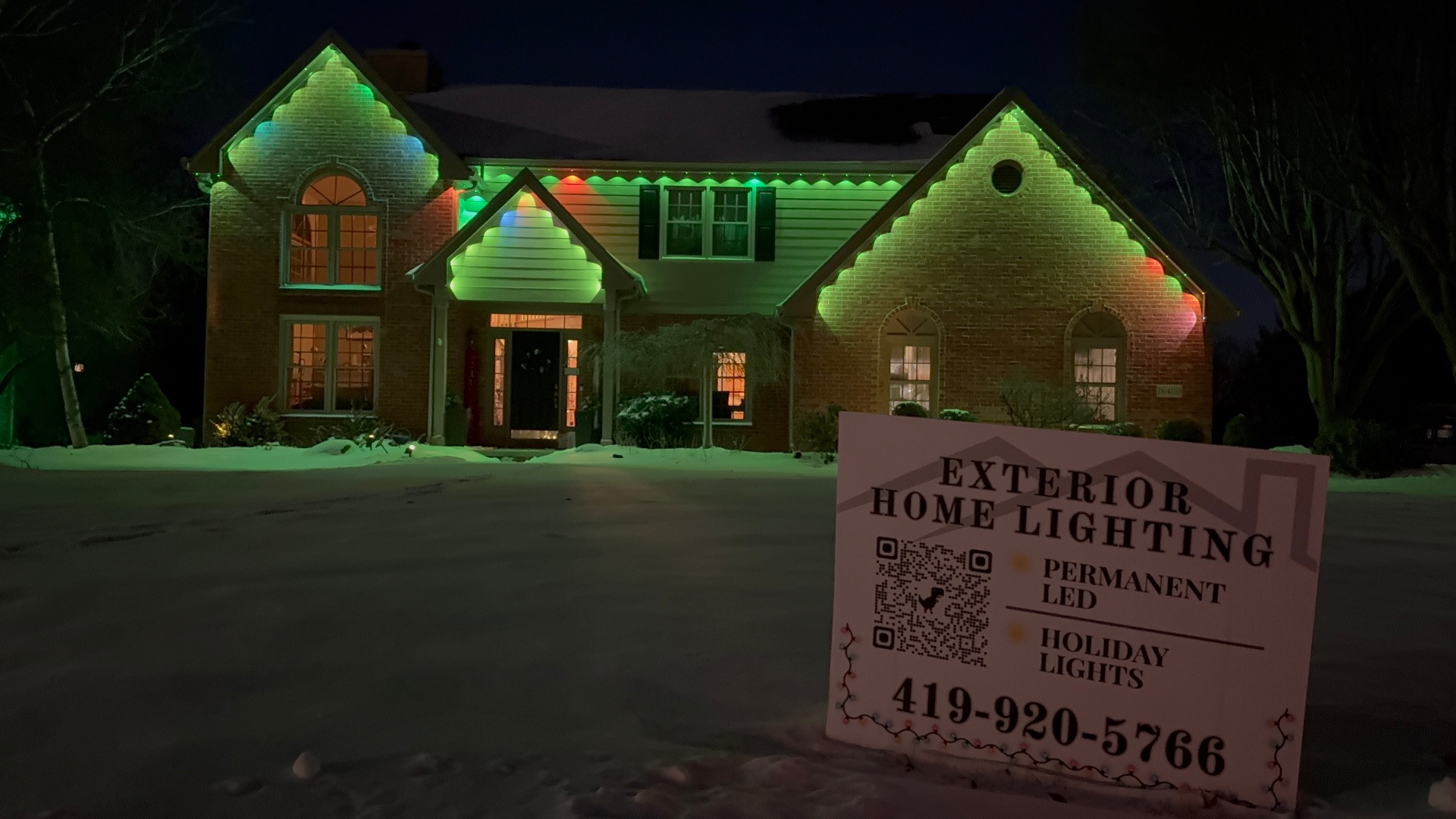
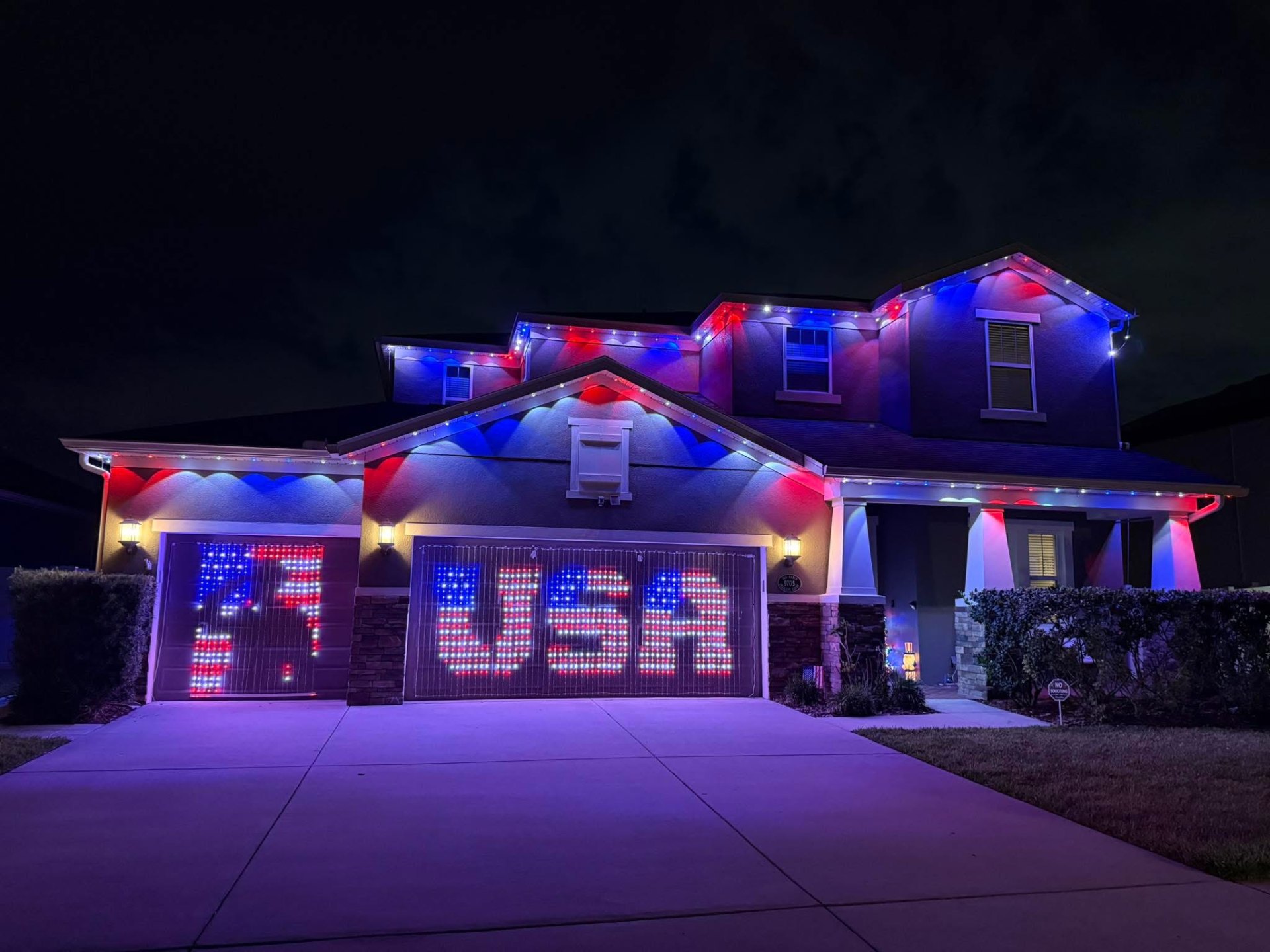
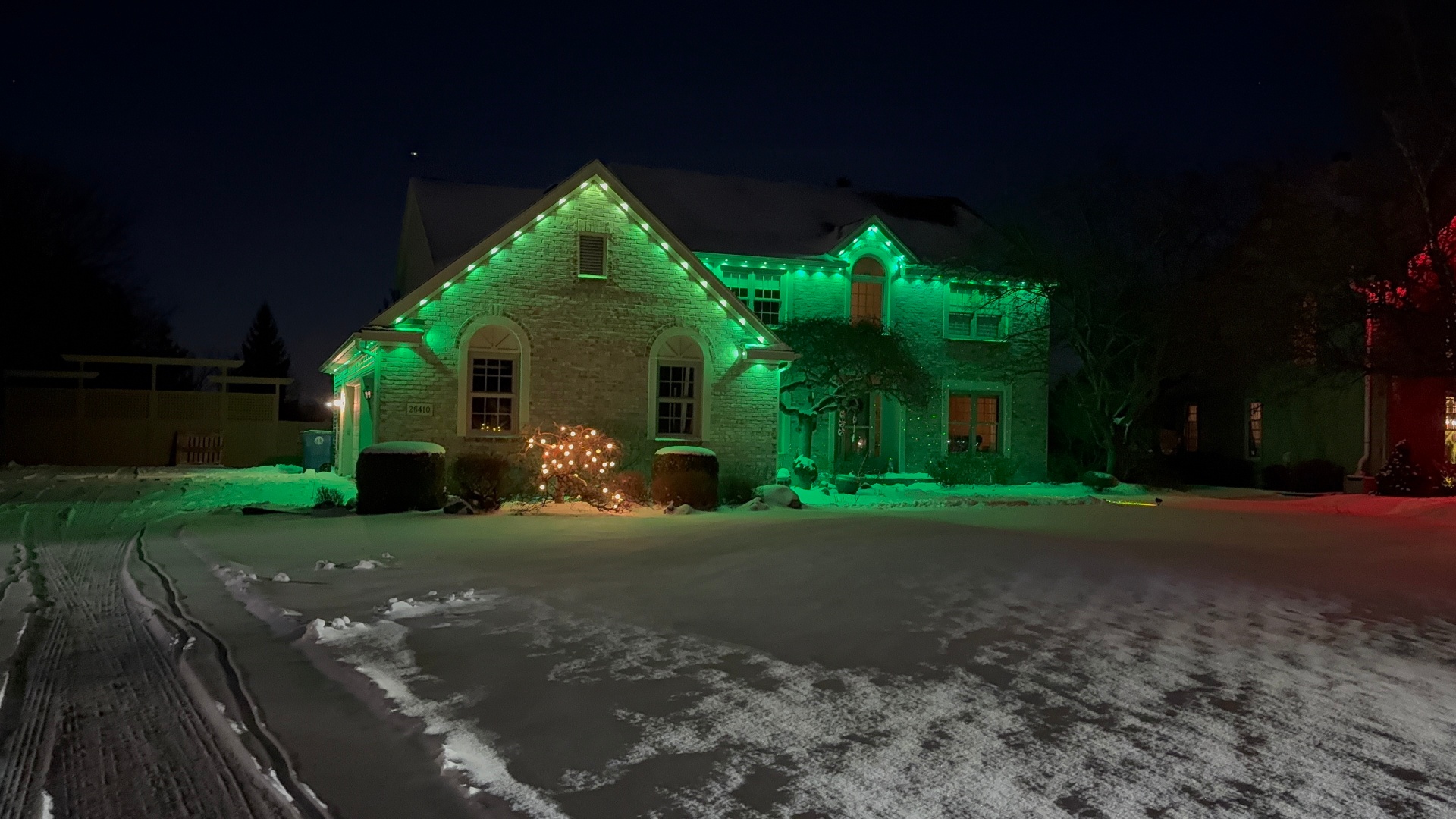
For Jellyfish lighting and other permanent roofline installs, wire typically runs inside the track itself along the fascia, then drops through an existing soffit vent or a small, sealed penetration into the attic where the transformer and hub live.
Using an existing vent instead of drilling new holes keeps the roofline intact and avoids extra points where water could get in. When a new penetration is unavoidable, it should be sealed properly, not just caulked over.
How landscape and path lighting wiring works
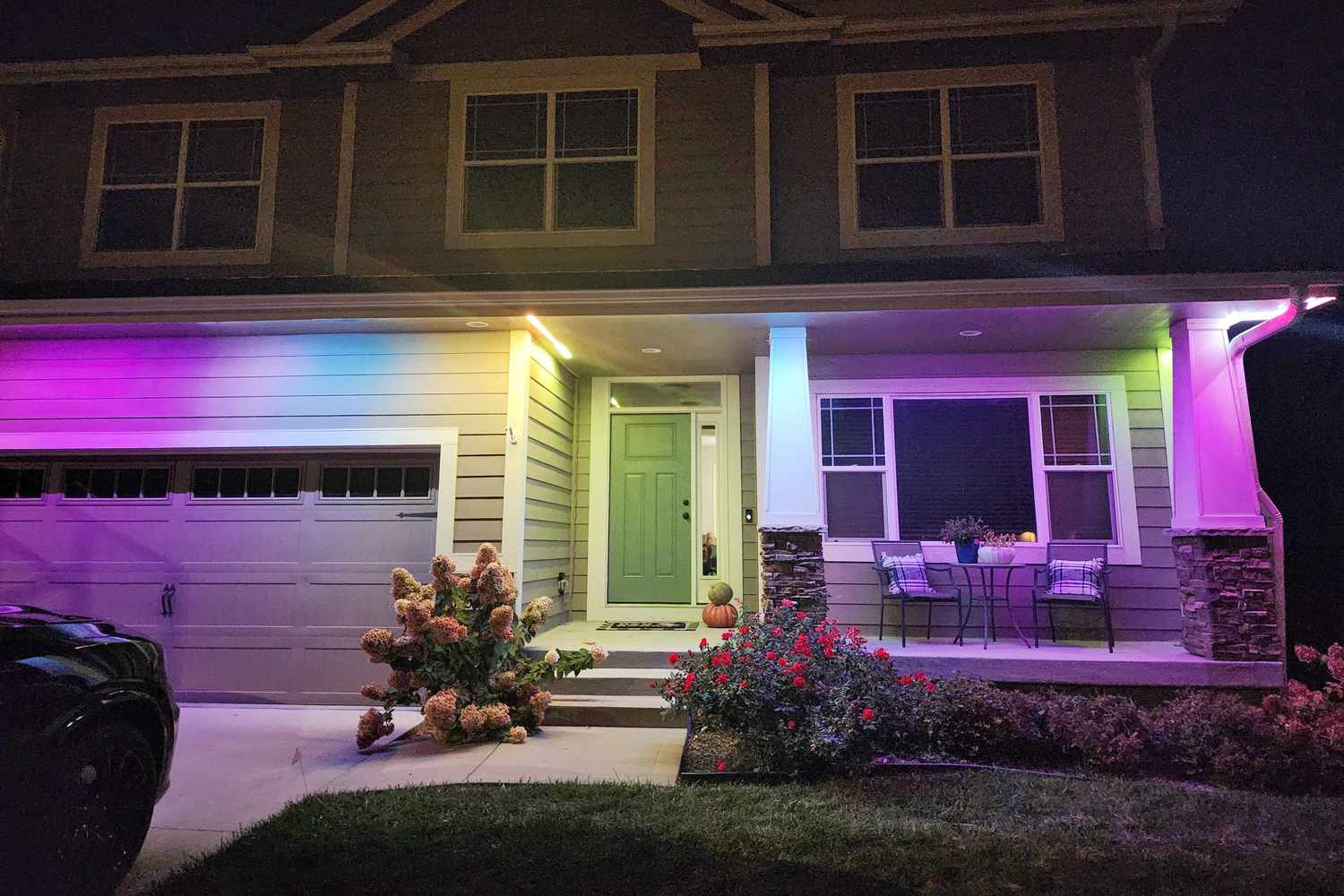
Landscape lighting runs on low-voltage wire buried a few inches below grade, usually along bed lines or under mulch, so it's invisible once the beds are finished. Low voltage matters here because it lets us route wire shallow and safely without the code requirements of line-voltage burial.
Wire crossing a lawn or walkway should be buried, not laid on top and covered loosely, since foot traffic and mowers will eventually expose a shallow run.
- Bury low-voltage wire a few inches deep along bed edges and under mulch
- Route wire under walkways through a short section of conduit or sleeve
- Keep junctions inside waterproof connectors, not wrapped in electrical tape
- Plan transformer location before digging any trenches
Where a transformer and junctions should live
A transformer needs to be near a power source, protected from direct weather, and accessible for future service. Garages, covered porches, and attics are common spots for roofline systems, while landscape transformers often mount to an exterior wall under an eave.
Junction boxes should be labeled and accessible, not buried where you'd have to dig up a bed to troubleshoot a single fixture later.
Common mistakes that leave wires visible
The most common issue we fix on other people's installs is wire run along the outside of trim with plastic clips, which is visible in daylight and degrades in UV over a season or two. Another is running wire across a lawn instead of around it, which turns into a tripping hazard and a mower problem.
A less obvious mistake is skipping a wiring diagram or plan altogether, which makes future troubleshooting slow because nobody remembers which wire feeds which zone.
What this means for DIY versus professional installs
If you're installing a self-install kit like Govee track kits, plan your wire path before mounting anything, and use the same principles: route behind trim where possible, use existing openings, and keep transformers accessible.
For larger or more visible runs, especially anything touching your main roofline, a professional site walk from Hamilton Home Accents catches routing issues before they become permanent.
How this affects long-term maintenance
Well-routed wire is also easier to service. If a connector fails behind a track panel that's accessible, it's a quick fix. If wire is buried without a plan or hidden behind something that requires demolition to reach, a small issue becomes an expensive repair.
This is one reason we document wire routing on every install, so a future service call, ours or anyone else's, doesn't start with guesswork.
Frequently asked questions
Is it safe to bury outdoor lighting wire directly in the ground?
Low-voltage lighting wire can be buried a few inches deep without conduit in most residential applications, though local code and specific product ratings should be checked. Line-voltage wiring has stricter depth and conduit requirements.
Can I hide wires without drilling into my house?
Often yes. Existing soffit vents, gaps behind trim, and gutter lines can route wire without new penetrations. A site walk identifies which of those options exist on your specific home.
What happens if a hidden wire fails later?
A well-planned route keeps junctions and connectors accessible, so a failed section can be found and fixed without tearing into finished trim or landscaping. This is why wiring documentation matters at install time.
Do I need an electrician for outdoor lighting wiring?
Low-voltage lighting typically does not require a licensed electrician, but the transformer's connection to your home's power should meet code. Line-voltage work, like a new dedicated circuit, generally does need one.
The bottom line
- Route wire behind trim, through existing vents, or below grade instead of exposed on surfaces.
- Low-voltage wire is easier and safer to conceal than line-voltage wire.
- Plan transformer and junction locations before installation starts, not after.
- Buried wire under lawns and walkways should use proper depth or conduit.
- Good routing also makes future troubleshooting faster and cheaper.
Get a lighting plan that hides the wiring from day one
We plan wire routing before we mount anything so your install looks finished, not patched together.
Request a free quote