Canal-Town Lighting Design in Grand Rapids, Ohio
Grand Rapids Ohio lighting projects often involve historic homes near the canal district, where lighting needs to respect older architecture. Here's our approach.
Grand Rapids Ohio lighting work often centers on the town's historic character, especially for homes near the canal and downtown district where architecture dates back well over a century. Lighting these homes takes a different eye than a newer subdivision build.
The goal for most historic Grand Rapids homeowners is subtle, warm lighting that highlights architectural detail without looking modern or out of place against original trim and masonry.
This post covers how we approach lighting historic homes in a small canal town like Grand Rapids, including what tends to work and what we generally avoid.
What makes Grand Rapids homes different to light
Grand Rapids has a concentration of homes from the canal era, many with original wood trim, masonry chimneys, and architectural details that newer construction does not have. Lighting design for these homes benefits from working with those details rather than covering them up with an overly bright or colorful display.
We spend more time during the walkthrough identifying which architectural features are worth highlighting, like a distinctive porch overhang or decorative trim, compared to a newer home where the roofline itself is usually the main feature.
This does not make the install more complicated in a bad way, it just changes where the emphasis goes.
Working with original trim and masonry
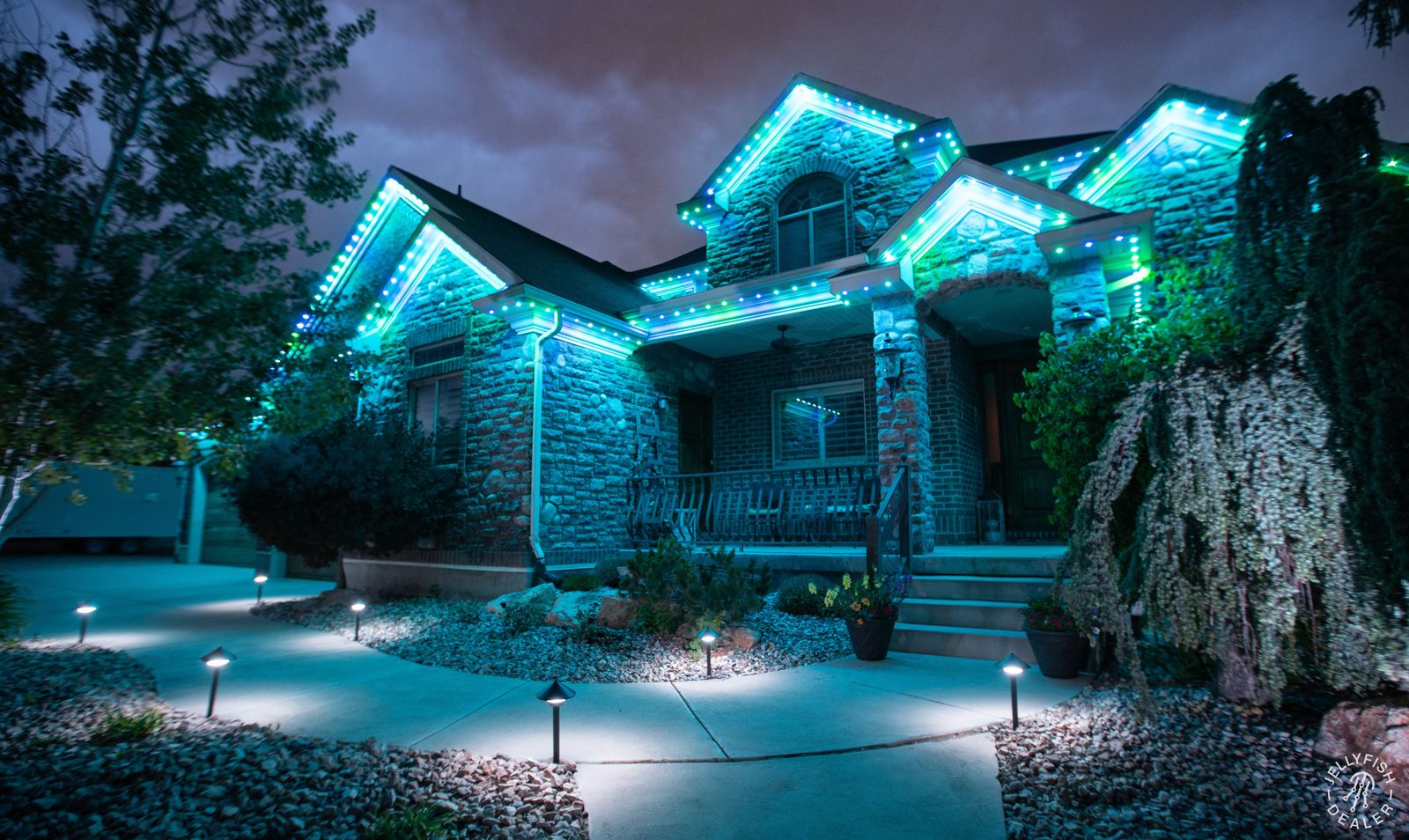
Mounting permanent Jellyfish lighting track on original wood fascia requires more attention than mounting on newer vinyl or fiber cement, since old wood can be more brittle in spots or have layers of old paint that affect how hardware seats.
We check trim condition during the site visit and adjust mounting approach where needed, rather than assuming every section of an older home's fascia is uniform.
For homes with masonry features like a stone chimney or brick facade, we typically use low-voltage landscape lighting fixtures at grade to uplight those features rather than trying to run roofline track across masonry that was not built for it.
Why warm white tends to fit historic character best
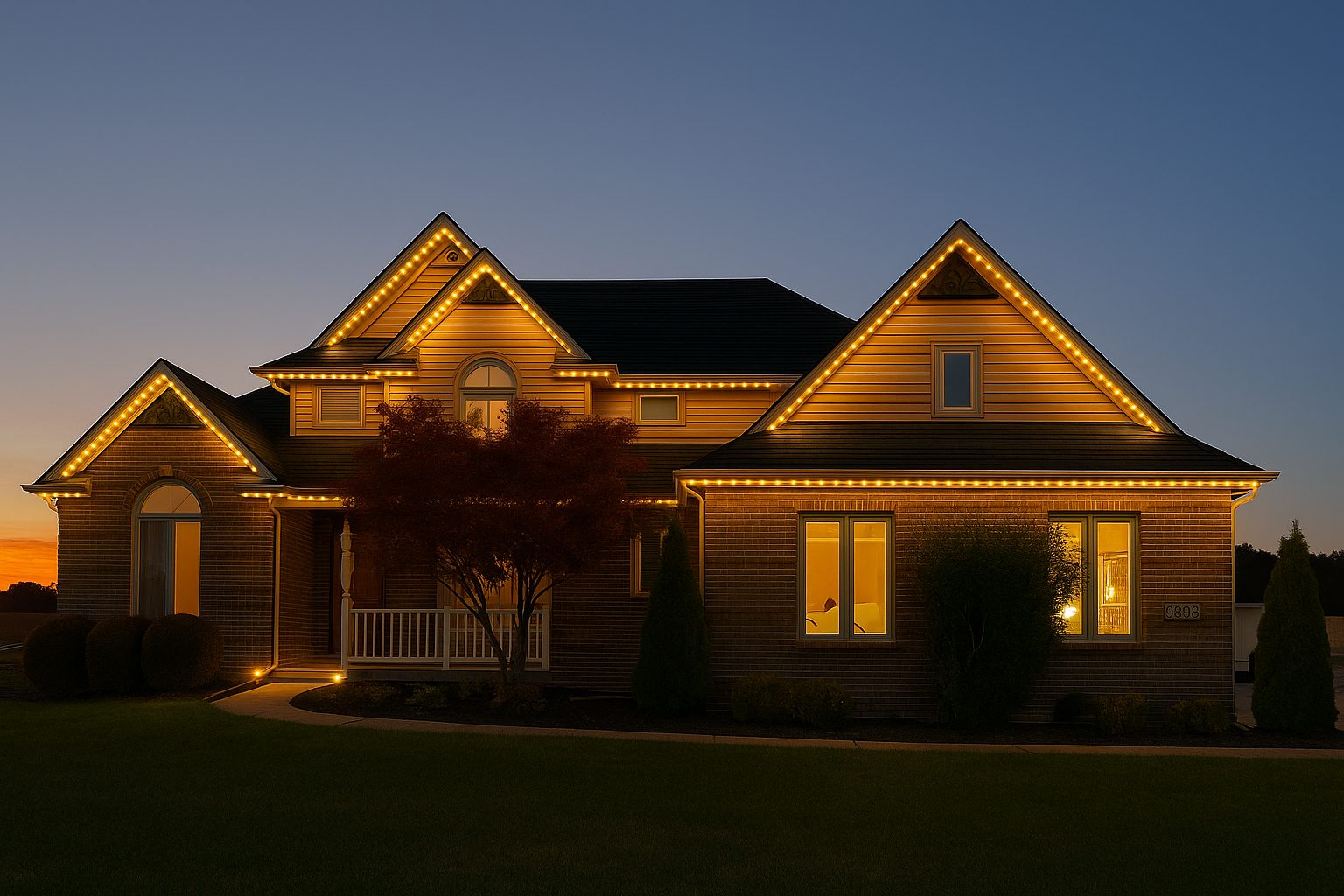
Most historic homeowners in Grand Rapids gravitate toward a warm white setting as their everyday look, since it reads closer to gas-lamp era lighting than a bright cool white or bold color would. It tends to complement original wood and masonry tones rather than compete with them.
That said, the same system can switch to color scenes for holidays or events through the app, so you are not locked into one look permanently.
We generally recommend starting conservative on a historic home and adjusting from there once you see it lit up, rather than starting with a bold display and dialing back.
Landscape lighting for mature trees near the canal
A lot of properties near the canal district have mature trees that predate current construction by decades. These trees are often strong candidates for uplighting, adding depth to the property at night beyond just the roofline.
Low-voltage fixtures placed at the base of a mature tree, run on the same transformer system as any pathway or bed lighting, extend the lighting design into the yard rather than stopping at the house.
This pairs well with a landscape design conversation if you are also thinking about updating plantings around an older home.
- Identify architectural features worth highlighting beyond the roofline
- Check original trim and masonry condition before mounting hardware
- Use grade-level fixtures on masonry rather than roofline track
- Consider uplighting mature trees near the canal for added depth
- Start with warm white and add color scenes for events later
Balancing modern lighting technology with older architecture
Permanent LED systems are a modern product, and some historic homeowners worry the technology will look out of place on an older house. In practice, the fixtures themselves are small and largely hidden along the roofline during the day, so the architecture reads as it always has in daylight.
At night, the warm white setting is what carries the look, and it is designed to complement rather than dominate. The National Trust for Historic Preservation also notes that exterior lighting on historic homes is generally best kept subtle and warm-toned to preserve the building's character.
We treat every historic property individually rather than applying the same plan we would use on a new build.
Getting started on a historic Grand Rapids property
The process starts with a walkthrough where we look at trim condition, roofline shape, and any masonry or mature trees you might want included. From there we put together a specific plan rather than a generic quote.
If you are unsure whether your home is a good candidate for permanent lighting versus a simpler landscape lighting approach, that is a normal question to bring to the free quote visit.
Frequently asked questions
Can permanent lighting be installed on an older home without damaging original trim?
In most cases yes, but we check trim condition first. If a section of fascia is too brittle for standard mounting, we discuss alternatives during the site visit rather than forcing a standard install.
Does lighting look out of place on a historic home?
Not typically when kept to warm white tones and placed to highlight existing architecture. Fixtures are small and unobtrusive during the day, so the home's daytime character stays intact.
Can masonry features like a stone chimney be lit?
Yes, usually with grade-level landscape lighting fixtures that uplight the masonry from below rather than roofline track, which is better suited to fascia mounting.
Is there a difference in cost for historic home installs?
Cost depends on the specific roofline and trim condition rather than the home's age itself. We give a specific quote after seeing the property.
The bottom line
- Historic Grand Rapids homes benefit from warm white, understated lighting that respects original architecture.
- Trim and masonry condition should be checked before mounting permanent track.
- Grade-level landscape lighting works better than roofline track on masonry features.
- Mature trees near the canal district are strong candidates for uplighting.
- Every historic property gets an individual plan rather than a generic layout.
Thinking about lighting for your historic home
We'll walk your property and put together a plan that respects the architecture you already have.
Request a free quote