
Winterizing a Concrete Water Feature Before the First Freeze
Winterizing a concrete water feature means draining it fully, pulling the pump, and protecting plumbing before the first hard freeze. Here's the process step by step.
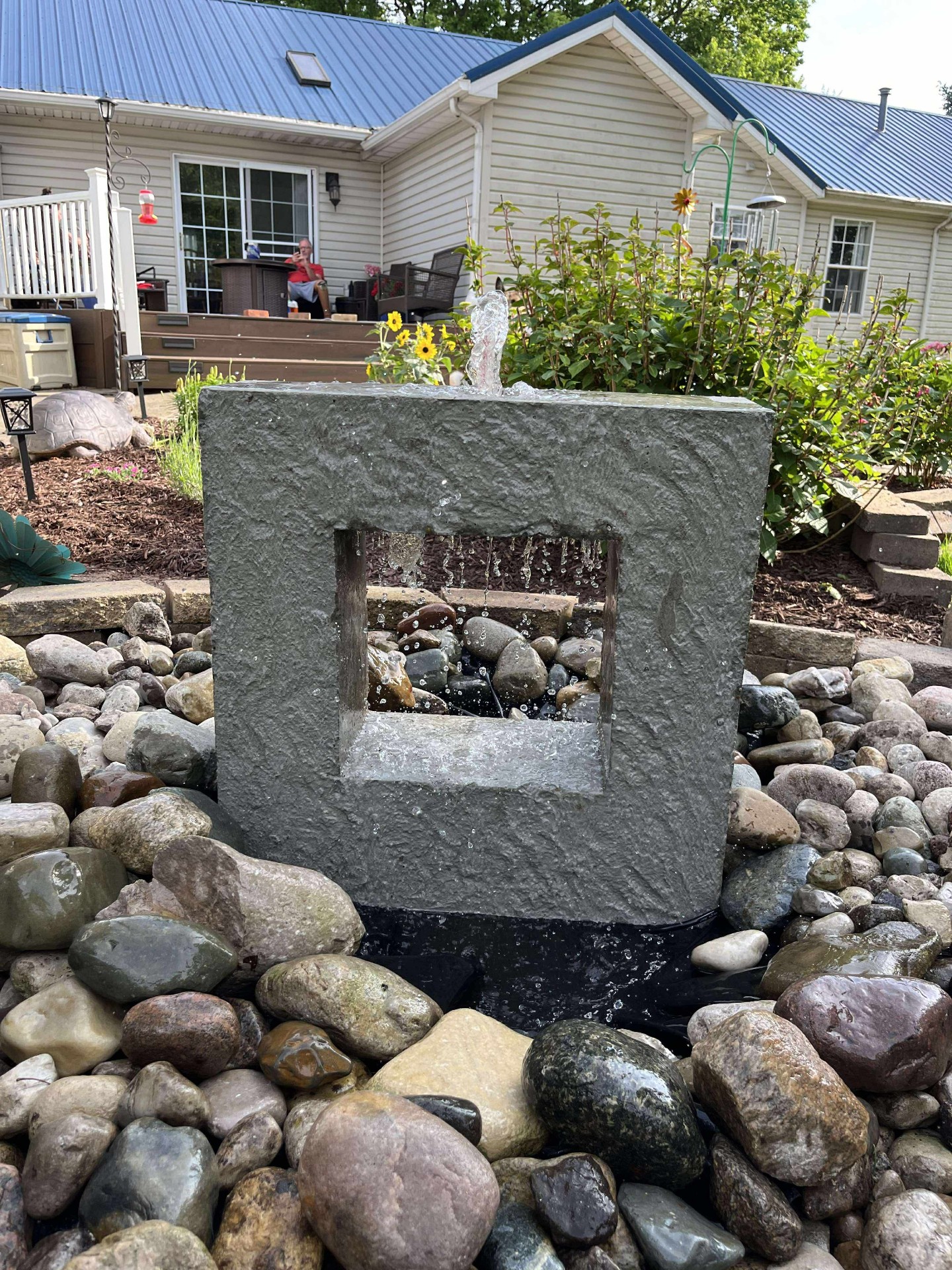
Winterizing a concrete water feature means draining the basin fully, removing and storing the pump, and clearing any water trapped in plumbing lines before the first hard freeze hits. Skipping any of these steps risks cracked concrete or a ruined pump by spring.
Ohio's freeze-thaw pattern is exactly what makes this necessary. It's not one cold night that causes damage, it's water sitting in a basin or line through repeated freezing and thawing over the whole winter.
Here's the process we walk through with every concrete feature before cold weather sets in.
Step one: draining the basin completely
Partial draining isn't enough. Even a shallow layer of standing water left in a concrete basin can freeze, expand, and stress the concrete, especially at corners or thinner sections. Use the feature's drain if it has one, or a small sump pump to remove standing water fully.
Once drained, check the basin for any debris, leaves, or sediment that built up over the season and clear it out. This also gives you a chance to spot any hairline cracks or wear before they get worse over winter.
Step two: removing and storing the pump
Pumps left submerged through a freeze can crack or have internal components damaged as any residual water inside freezes and expands. Pull the pump, rinse it to clear sediment or mineral buildup, and store it somewhere it won't freeze, a garage or basement works fine for most residential pump sizes.
While it's out, it's a good time to inspect the impeller and housing for wear, since pumps often need this kind of attention only once or twice a year and this is a natural checkpoint.
Step three: clearing plumbing lines
Any pipe or tubing connecting the pump to the feature's spillway or fountain head can trap water even after the main basin is drained. That trapped water freezes and expands just like standing water in the basin, and it's a common source of cracked fittings each spring.
Disconnect and drain lines where possible, and use compressed air to blow out any sections that can't be easily disconnected or tilted to drain naturally.
- Drain the main basin completely, not just partially
- Remove, clean, and store the pump indoors
- Disconnect and drain plumbing lines and fittings
- Blow out lines that can't be fully drained by gravity
Step four: protecting the basin itself
With everything drained and the pump removed, cover the basin opening to keep out leaves, debris, and excess precipitation over winter. A breathable cover works better than a fully sealed tarp, which can trap moisture underneath and encourage mold or mildew.
If your feature has any decorative bowl or spillway components that are removable, consider bringing lighter accessory pieces indoors or into a shed for the season, especially anything with thinner walls than the main basin.
When should you actually do this?
Aim to winterize before nighttime temperatures start regularly dropping near freezing, which in our area is generally by mid to late October. Waiting for the first hard freeze warning cuts it close, especially if that warning comes with only a day or two of notice.
If you also run landscape lighting near the feature on the same low-voltage system, this is a good time to check those connections too, since they're often serviced together during fall prep.
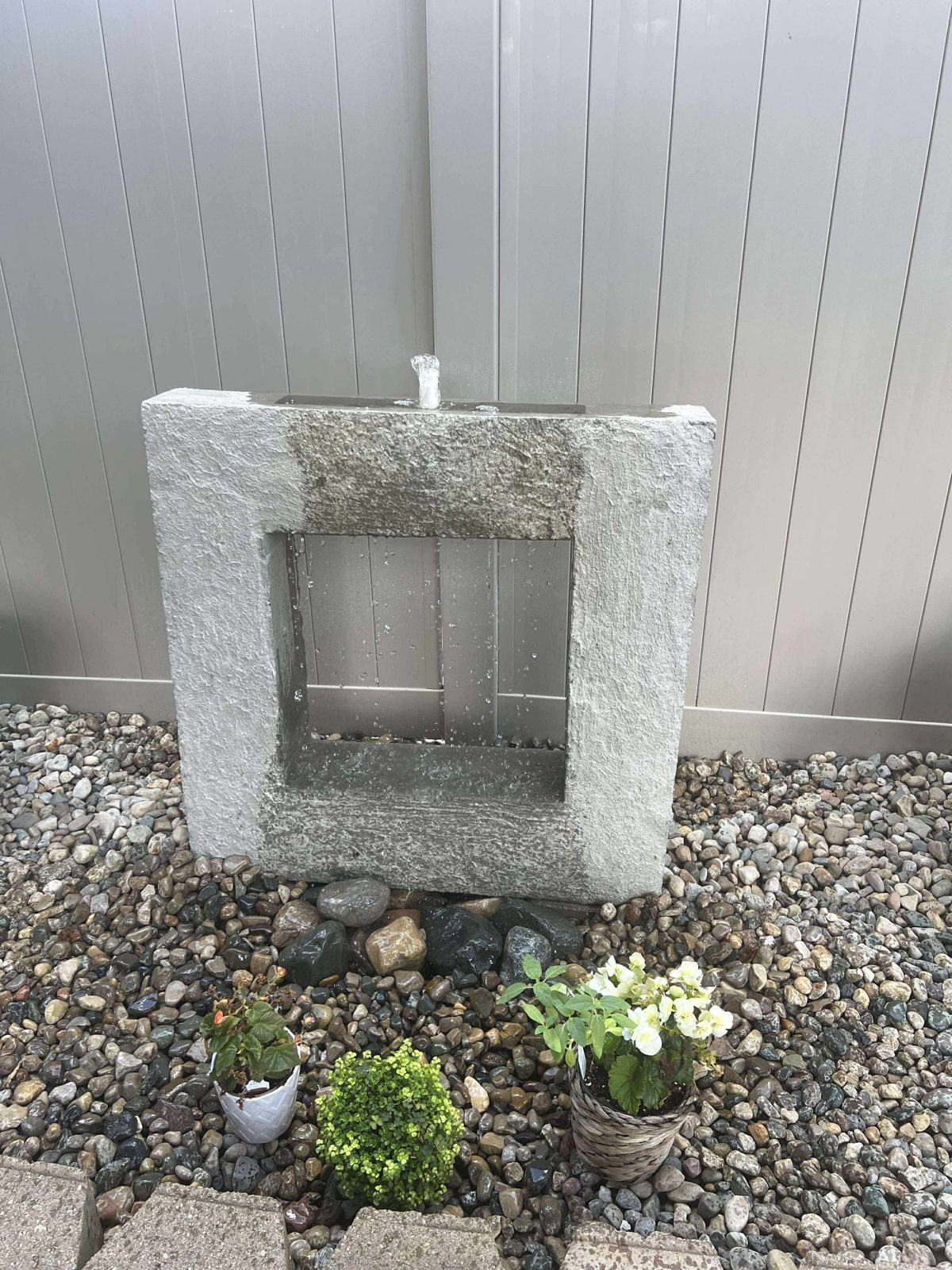
What if you forget and a hard freeze hits first?
If a surprise early freeze catches you before winterizing, check the feature as soon as temperatures allow and drain it immediately rather than waiting for a scheduled time. The sooner standing water is removed after a freeze, the less cumulative stress the concrete and plumbing take on.
One missed cold snap usually isn't catastrophic on its own, but repeated freezing over a full winter without draining is what leads to real cracking and pump damage by spring.
Frequently asked questions
Can I just run the pump through winter to keep water from freezing?
For most residential concrete features in our climate, this isn't reliable protection once temperatures drop into the teens or lower for extended periods. Full draining is the safer approach for a typical backyard installation.
Do I need to winterize if my feature is only a few years old?
Yes. Age doesn't change the physics of water expanding as it freezes. Newer features benefit from winterizing just as much as older ones, if not more, since you want to protect that investment long-term.
How do I know if my pump was damaged by a freeze?
Listen for unusual noise or reduced flow when you restart it in spring, and check for visible cracks in the housing. If it doesn't prime properly or sounds like it's straining, it may need repair or replacement.
Should I hire someone or can I winterize it myself?
Many homeowners handle basic draining and pump removal themselves. If your feature has complex plumbing or you're not confident locating all the trapped water points, having it done professionally reduces the risk of a missed section.
The bottom line
- Full draining, not partial, is required to prevent freeze damage
- The pump should be removed, cleaned, and stored indoors for winter
- Trapped water in plumbing lines is a common source of spring cracking
- A breathable cover protects the basin without trapping moisture
- Winterize before nighttime temperatures start regularly nearing freezing
Need help winterizing your water feature before the freeze hits?
We can handle the draining, pump removal, and line clearing so your feature is protected and ready to restart cleanly in spring.
Explore water features