
24-Inch vs. 36-Inch Water Feature: Which Size Fits Your Yard?
Choosing between a 24-inch and 36-inch water feature comes down to sound level, visibility from your patio, and the scale of the surrounding bed. Here's how to size it right.
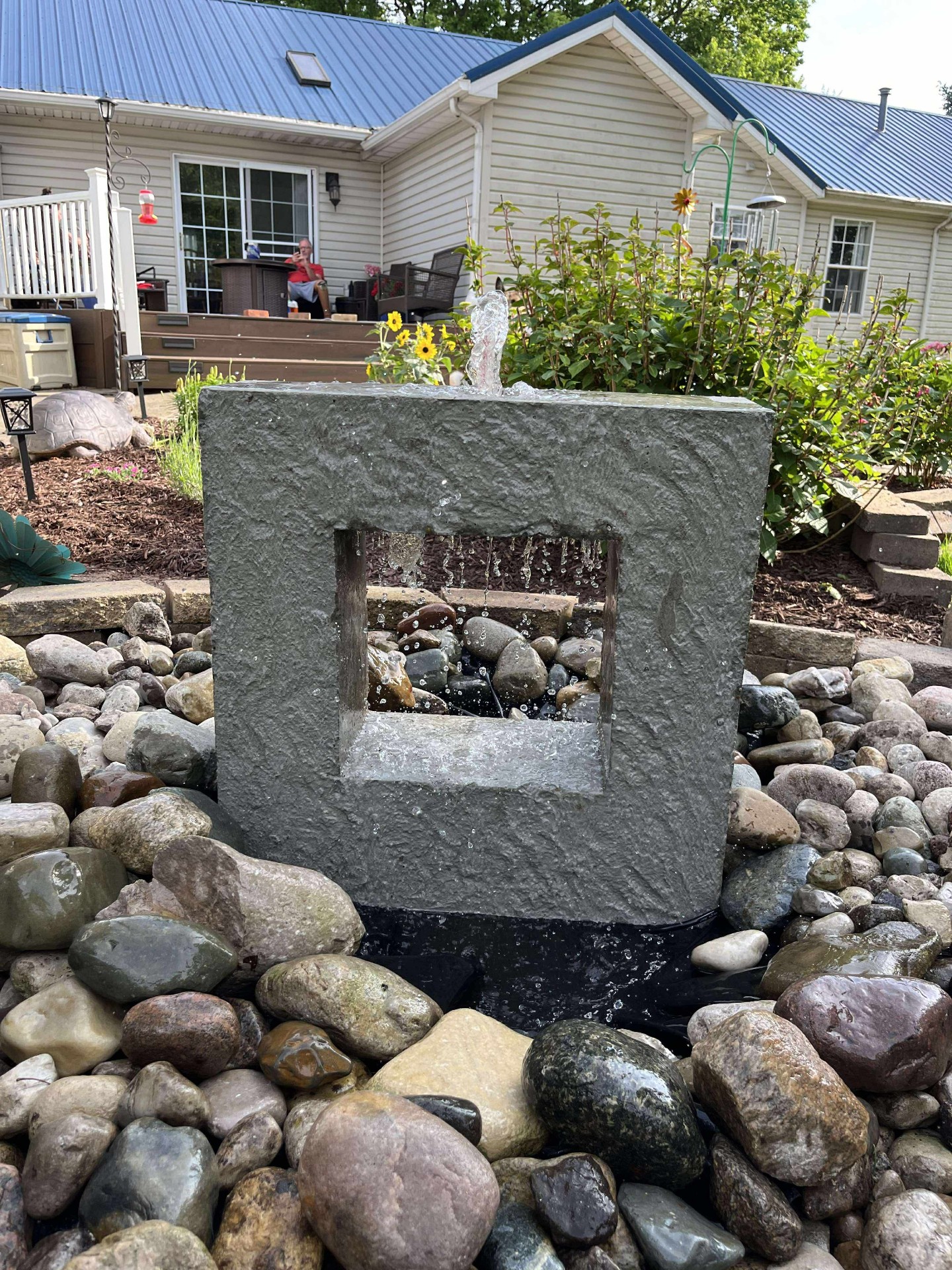
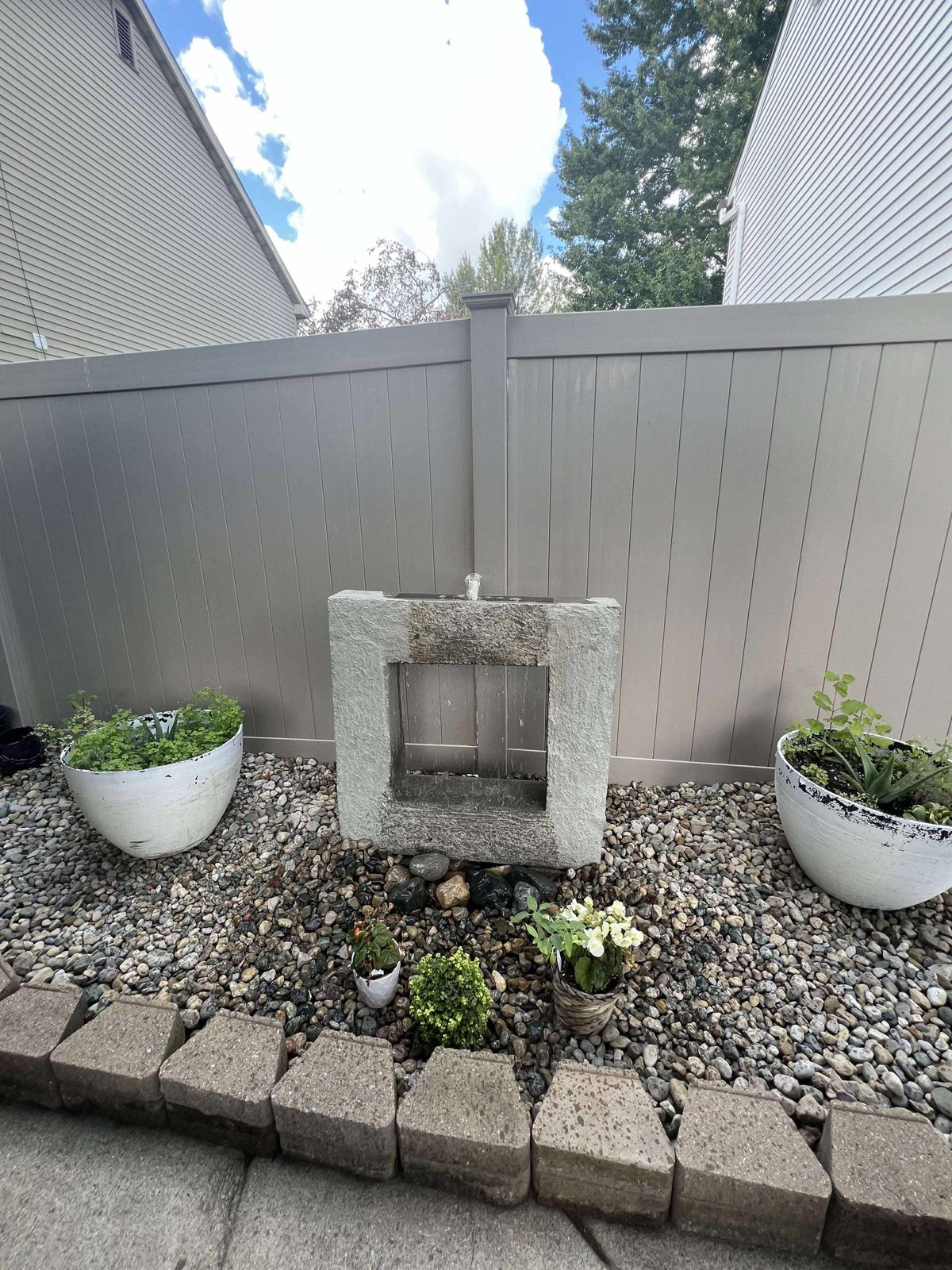
A 24-inch water feature suits smaller beds, courtyards, and spots close to seating where you want a quiet trickle rather than a bold sound. A 36-inch feature fits larger beds or open yards where it needs to hold its own visually and be heard from farther away. Getting this wrong is one of the more common regrets we see with self-installed water features.
Size isn't just about how big the feature looks sitting in a nursery display. It's about scale relative to the bed around it, how close you'll typically be sitting or standing to it, and how much sound you actually want competing with conversation or a nearby patio.
Here's how to think through the decision.
What does the size actually change in daily use?
The most immediate difference is sound. A smaller basin and pump combination produces a gentler trickle, which is pleasant near a patio or reading nook where you don't want the water competing with conversation. A larger feature with more water volume moving through it produces a fuller, more present sound that carries farther across a yard.
Visually, a larger feature reads as a focal point from across the yard, while a smaller one works better as a detail you notice up close, tucked into a bed near a walkway or seating area.
How does viewing distance affect the right size?
If the feature will mostly be seen and heard from a patio or seating area ten to fifteen feet away, a smaller scale can still register well. If it needs to be a focal point visible from across a larger yard, or from inside the house through a window facing the backyard, a larger feature holds its visual weight better at that distance.
A feature that's too small for its viewing distance tends to disappear into the landscaping rather than serving as the accent it's meant to be.
How should it relate to the surrounding bed?
A general rule of thumb is that the feature shouldn't dominate a small bed or get lost in a large one. In a modest foundation bed or a tight courtyard space, a 24-inch feature usually has enough presence without overwhelming the surrounding plantings.
In a larger open bed, especially one that anchors a bigger portion of the yard, a 36-inch feature holds proportion better and avoids looking undersized next to mature shrubs or a larger patio footprint.
- Small bed or courtyard: 24-inch feature usually fits proportionally
- Larger open bed or yard: 36-inch feature holds visual weight better
- Near seating, want subtle sound: lean smaller
- Viewed from a distance or across the yard: lean larger
What about the reservoir and maintenance difference?
Larger features generally use a larger underground reservoir to keep the pump properly submerged and to reduce how often you need to top off water lost to evaporation and splash. Smaller features have a smaller reservoir, which means more frequent topping off, especially during hot, dry stretches in summer.
This is worth factoring in if you're not planning to check on the feature often. A larger reservoir buys you more time between maintenance visits, though it also means more excavation and construction upfront.
Can you start smaller and upsize later?
Not easily. The reservoir, plumbing, and electrical are typically sized and installed for a specific feature size from the start, so upsizing later usually means redoing the underground work rather than just swapping the visible fountain piece.
It's worth spending time on this decision upfront rather than assuming you can adjust later. If you're unsure, err toward sizing for the bed and viewing distance you have now, not what you might change in a few years.
How does this pair with lighting?
Either size benefits from a small uplight or two aimed at the water's surface, which is a common addition alongside a broader landscape lighting plan. A larger feature can support two fixtures for better coverage, while a smaller one usually only needs one well-placed light.
Frequently asked questions
Do larger water features cost significantly more to run?
The pump for a larger feature typically draws more power than a smaller one, but the difference in ongoing electrical cost is usually modest. The bigger cost difference is upfront, in reservoir size and installation.
Can I put a 36-inch feature in a small bed if I like the bigger look?
You can, but it will likely visually dominate the bed and may need surrounding plantings adjusted or enlarged to keep proportion. It's worth seeing it staged in place before committing if you're leaning this direction.
How loud is a 36-inch feature compared to a 24-inch one?
Generally louder, since more water volume moves through a larger feature. If you want strong ambient sound to mask road noise or add privacy, that's often a reason to size up.
Does size affect winterizing requirements?
Larger features have more water and plumbing to drain, so winterizing takes a bit longer, but the same basic winterizing process applies to both sizes.
The bottom line
- Size choice should follow bed proportion and viewing distance, not just preference
- Smaller features suit quiet, close-up spots; larger features anchor bigger spaces
- Reservoir size scales with feature size and affects how often you'll top off water
- Upsizing later usually means redoing underground work, so plan size upfront
- Either size pairs well with a small amount of accent lighting
Not sure which water feature size fits your yard?
We'll look at your bed, patio sightlines, and how far you'll typically be from the feature before recommending a size.
Explore water features