
Concrete Water Features vs. Traditional Fountains: What Lasts Through Ohio Winters
A concrete water feature generally holds up better through Ohio winters than a traditional cast fountain, if it's winterized correctly. Here's how the two compare.
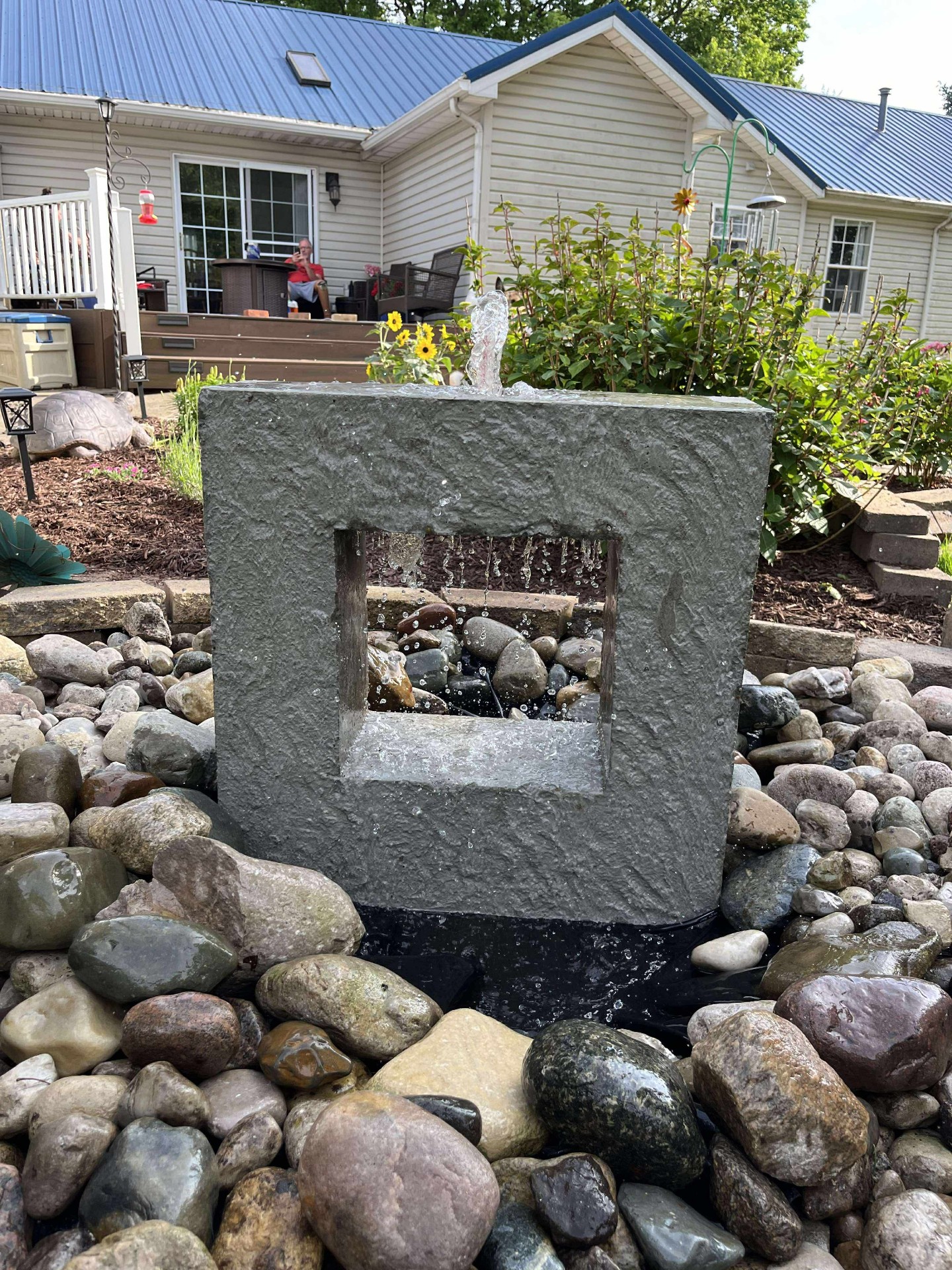
A concrete water feature generally holds up to Ohio winters better than a traditional cast-stone or resin fountain, mainly because of how the material handles freeze-thaw cycling and how the basin is typically built. Neither is maintenance-free through winter, but the failure points differ significantly.
This matters a lot in our climate. Northwest Ohio and Southeast Michigan see repeated freeze-thaw swings each winter, not just one hard freeze, and that repeated cycling is what actually breaks water features down over time.
Here's what actually separates the two through a real winter.
What actually damages a water feature in winter?
It's not the cold itself, it's water freezing and expanding inside a basin, bowl, or plumbing line that wasn't drained. Water expands roughly nine percent as it freezes, and that expansion puts real pressure on whatever container is holding it.
A feature that gets frozen and thawed repeatedly over a winter, rather than just once, takes more cumulative stress. That's exactly the pattern Ohio winters produce, with temperatures swinging above and below freezing multiple times between November and March.
How does concrete hold up compared to cast-stone or resin?
Poured or precast concrete basins, when built with adequate wall thickness and proper reinforcement, tend to resist cracking better than thinner cast-stone fountains, which are often more decorative and less structurally thick. Concrete's mass also means it holds heat slightly longer, which can matter during shorter cold snaps.
That said, concrete isn't immune. If water is left standing in a concrete basin through a hard freeze without any protection, it can still crack, especially at thinner sections like a bowl lip or spillway edge.
- Poured concrete: durable but heavy, difficult to relocate for winter
- Cast-stone: decorative, generally thinner walls, more prone to freeze cracking
- Resin or fiberglass: lightweight, flexes more, but can also become brittle in extreme cold
- All three need water removed or protected before a hard freeze
What about traditional tiered fountains specifically?
Traditional multi-tier cast-stone fountains have more surface area and more thin sections, bowls, spillways, connecting pedestals, than a single solid concrete basin. Each of those thin points is a place freeze expansion can crack the material.
They're also usually not designed to be left full and running through winter in our climate at all. Most manufacturers recommend fully draining tiered fountains for the season rather than trying to winterize them in place.
Does concrete need less winter attention than a traditional fountain?
It needs less, but not none. A concrete feature with a good drain and a properly sized pump vault can often be prepared for winter faster than a multi-tier fountain, since there are fewer separate components to drain and store.
Both still need the water removed, the pump pulled and stored indoors, and any exposed plumbing protected from trapped water. Skipping that step because concrete feels more durable is a common and costly mistake.
Which one fits your yard better long-term?
If you want a feature that stays in place year-round and handles our winters with less relocation hassle, a built-in concrete water feature is generally the more durable long-term choice. If you prefer a more traditional decorative look and don't mind draining and possibly storing it seasonally, a cast-stone or resin fountain still works fine with proper care.
We install both, and the right choice depends more on the look you want and how much winter prep you're willing to do than on durability alone. Take a look at our water features work for examples of both styles.
Frequently asked questions
Can I leave a concrete water feature running all winter?
It depends on the design and depth. Some deeper, well-built features with adequate water volume and circulation can run through mild winters, but most in our climate need to be drained or protected during hard freezes.
Does a heater keep a fountain running safely in winter?
A properly sized pond or fountain de-icer can keep a small area open in some setups, but it's not a substitute for proper winterizing on features not designed to run through extended hard freezes.
Will a cracked concrete basin need full replacement?
Not always. Smaller cracks can sometimes be patched with the right concrete repair product, but larger structural cracks, especially ones that go through the full wall thickness, usually mean a rebuild of that section.
How early should I winterize before the first freeze?
Plan to winterize before nighttime temperatures start regularly dropping near freezing in fall, generally by mid to late October in our area, rather than waiting for the first hard freeze warning.
The bottom line
- Repeated freeze-thaw cycling, not one cold snap, is what damages water features
- Concrete basins generally resist cracking better than thin cast-stone tiers
- Traditional tiered fountains almost always need full draining for winter
- Concrete still needs water removed and the pump pulled before a hard freeze
- Choose based on look and maintenance tolerance, not durability alone
Weighing a concrete feature against a traditional fountain?
We can walk you through both options for your yard and what winter care each actually requires before you decide.
Explore water features