Professional Permanent Outdoor Light Installation
What separates a professional permanent outdoor light installation from a DIY kit, from track quality to app setup and long-term support.
Professional permanent outdoor light installation means a trained crew measures your roofline, mounts weather-rated aluminum track with clean corner transitions, wires it to a properly sized power supply, and configures the app before leaving. That last part, a real setup and walkthrough, is what most DIY kits skip entirely.
Homeowners often start out considering a DIY track kit, then look into professional installation once they see how many corners, dormers, or roof pitches their actual house has. The difference shows up most in the details: even spacing, hidden wiring, and reliable performance years down the line.
Here is what a professional installation actually includes and how to evaluate a company before you sign a contract.
What a professional site walk actually covers
Before any installation begins, a professional crew walks your property to measure roofline length, note dormers or bay windows, and plan where the controller and power supply will live. This step is what a boxed kit cannot replicate, since every home's roofline is shaped differently.
During the walk, installers also check for obstacles like satellite mounts, vents, and existing gutter guards that need clean transitions rather than track running straight into them.
This is also when you should discuss what you actually want out of the system, whether that is subtle warm white year-round or full color-changing scenes for holidays and game days.
Track quality and mounting technique
Professional-grade track is rigid aluminum that holds its shape through freeze-thaw cycles, unlike thinner channel that can warp over a few Ohio winters. Corners get machined or heat-formed for even LED spacing instead of simply bent by hand.
Mounting brackets attach to the fascia board with weather-rated fasteners, not adhesive strips or gutter clips that can loosen over time.
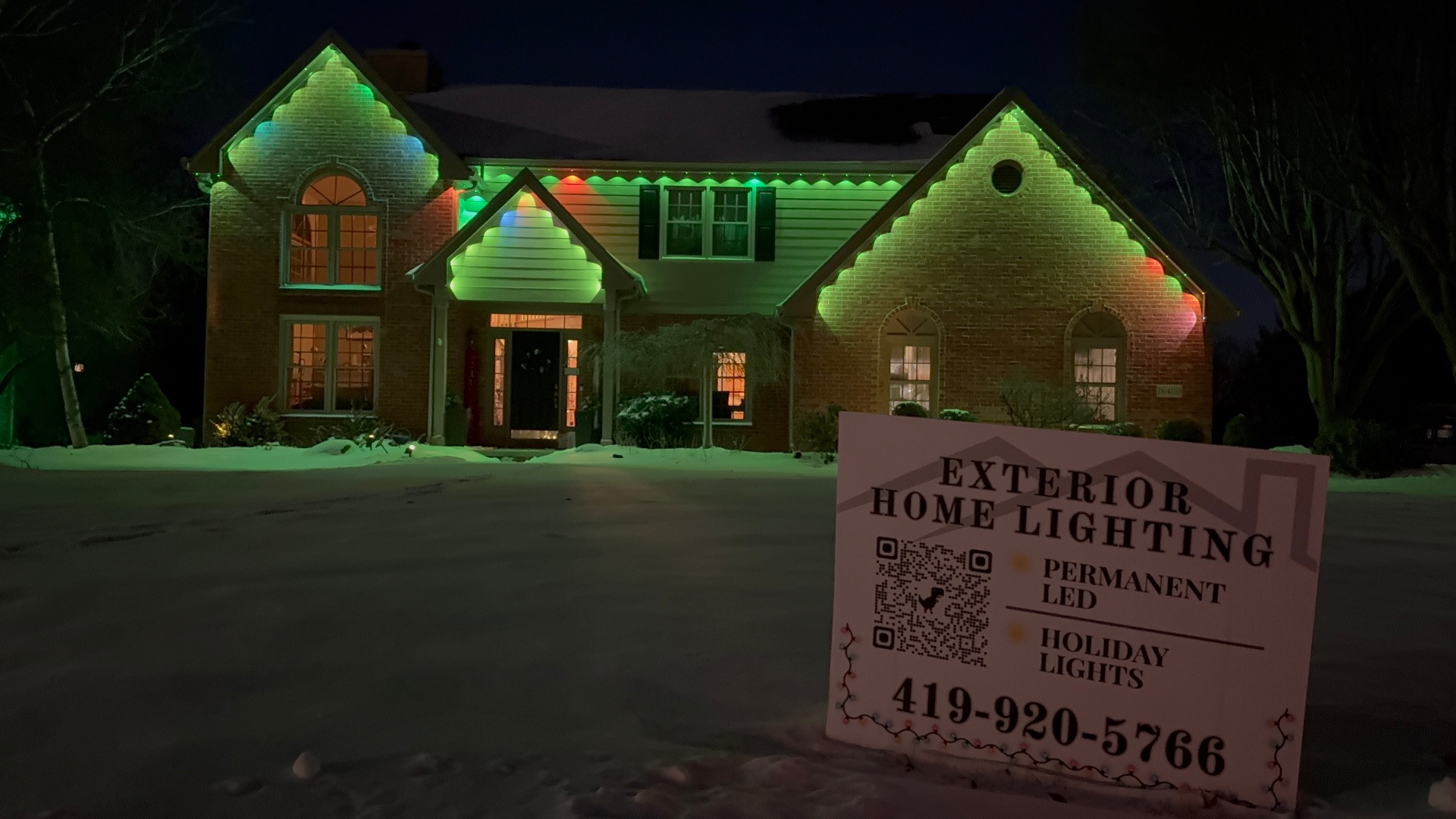
This attention to mounting is what keeps a professional install looking straight and even years after it went up, rather than sagging or gapping at corners.
Hiding the wiring and sizing the power supply
A professional crew routes low-voltage wiring through the soffit or attic space so it stays out of sight rather than running visibly along your siding. This takes more time than surface-mounting cable, but it is a major visual difference.
Power supplies get sized to the actual pixel count of your specific system, which prevents the dimming or color drift that shows up on undersized DIY setups running long track lengths.
The controller is placed somewhere protected and accessible, like a garage or attic, near a stable outlet and Wi-Fi signal.
App configuration and the walkthrough you should expect
After the physical install, a professional finishes by connecting the controller to your Wi-Fi, pairing it with the app, and setting up a few starter scenes so the system works the moment they leave. This includes scheduling lights to turn on around sunset automatically.
You should get a walkthrough of the app in person, including how to switch scenes for holidays, sports, or everyday use, and how to create custom colors if you want them.
If an installer leaves without showing you the app, ask them to come back and walk through it. Understanding the controls is part of the job, not an optional extra.
Warranty, support, and what to ask before hiring
Ask any installer what is covered under warranty: the track and LED hardware, the labor, or both. Manufacturer hardware warranties and installer labor warranties are usually separate, and you want to understand both before signing.
Find out how support works if a section of lights stops working a year or two later. A company that installed the system should be able to diagnose and repair it without you needing to track down a manufacturer directly.
It also helps to see examples of past installs, ideally on homes with a similar roofline shape to yours, in a gallery or portfolio.
- Ask what is covered under hardware warranty versus labor warranty
- Confirm how repairs are handled if a section fails later
- Request to see past installs on similarly shaped rooflines
- Make sure app setup and a walkthrough are included, not extra
- Ask whether the quote includes financing options for larger jobs
Where we install and how to get started
We install permanent lighting across Northwest Ohio and Southeast Michigan, including Perrysburg, Maumee, Sylvania, Toledo, and Monroe. Every job starts with a free, in-person quote so pricing reflects your actual roofline.
According to the International Dark-Sky Association, well-designed outdoor lighting can reduce glare and light pollution compared to poorly aimed fixtures, which is part of why proper installation and fixture placement matter beyond just aesthetics.
If you are ready to see options for your home, our Jellyfish lighting and Govee lighting pages walk through the two systems we install most.
Frequently asked questions
How is professional installation different from a DIY kit?
Professional installs include precise measuring, machined track corners, hidden wiring, correctly sized power supplies, and a full app walkthrough. DIY kits can work well on simple rooflines but require more effort to get the same clean result.
Do professional installers handle the app setup?
Yes, a proper installation includes connecting the controller to your Wi-Fi, pairing the app, and setting up scenes and schedules before the crew leaves.
What warranty should I expect?
Expect separate coverage for hardware (track and LEDs) and labor. Ask specifically what each covers and for how long before signing a contract.
How long does professional installation take?
Most homes take one to two days depending on roofline size and complexity. We give you a specific estimate during your free quote.
The bottom line
- Professional installs start with an in-person site walk and measurement, not a generic kit.
- Rigid, machined track and properly sized power supplies prevent the most common lighting problems.
- Wiring gets hidden through the soffit or attic rather than run along visible siding.
- A complete install includes app configuration and a walkthrough of scenes and scheduling.
- Ask about hardware and labor warranty coverage before choosing an installer.
See what professional installation looks like
We measure, mount, wire, and program your system, then walk you through the app before we leave.
Explore Jellyfish lighting