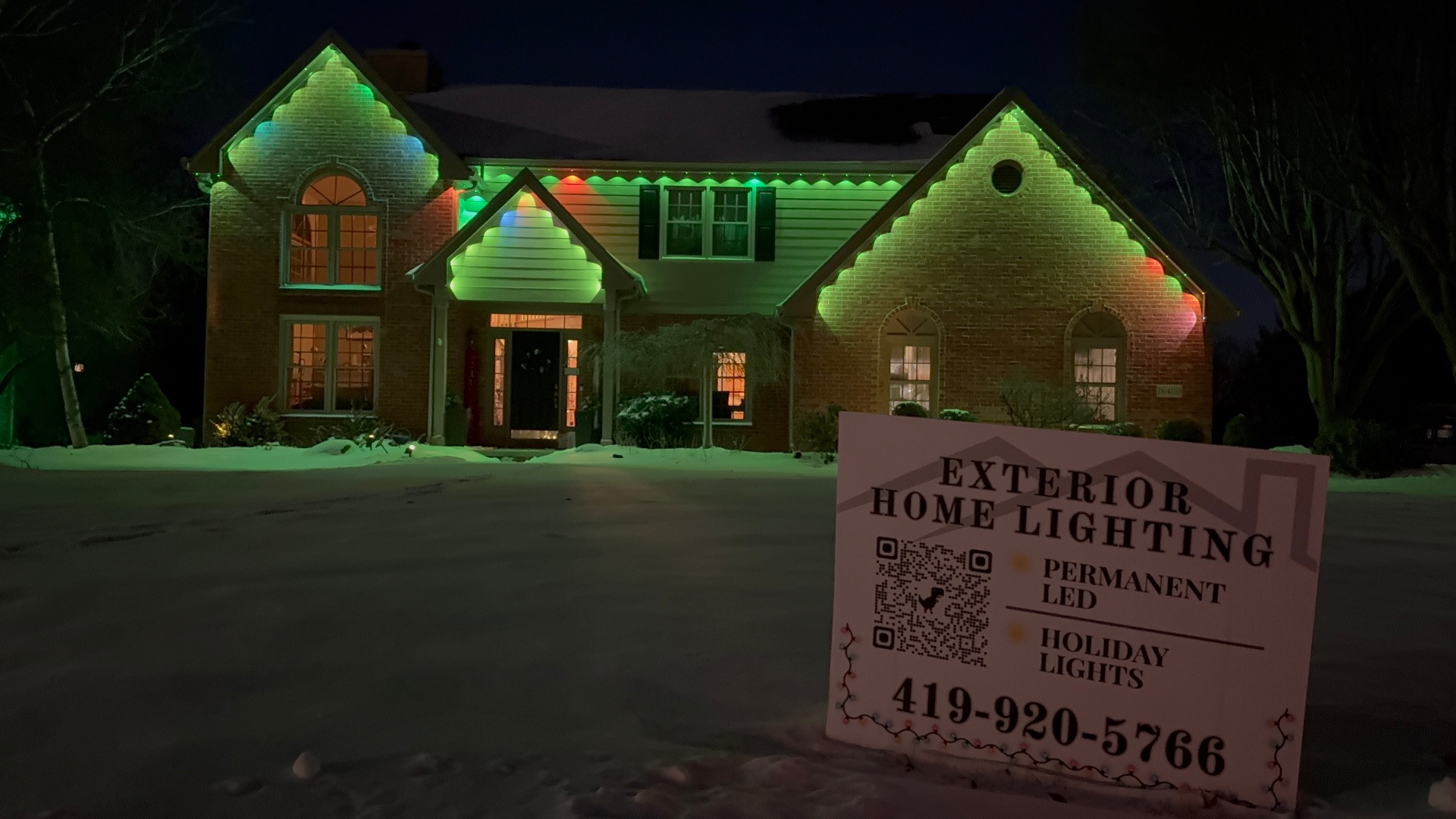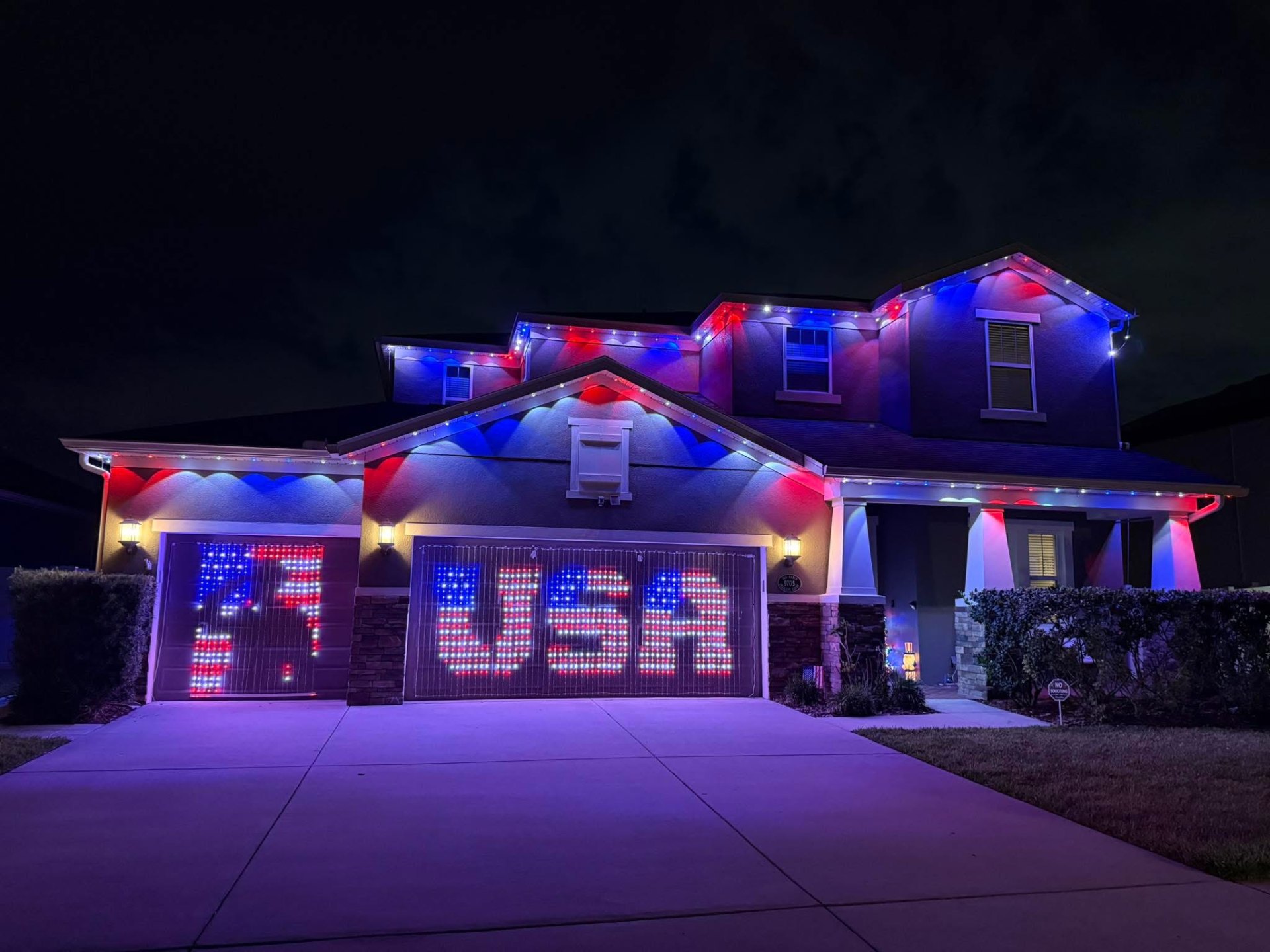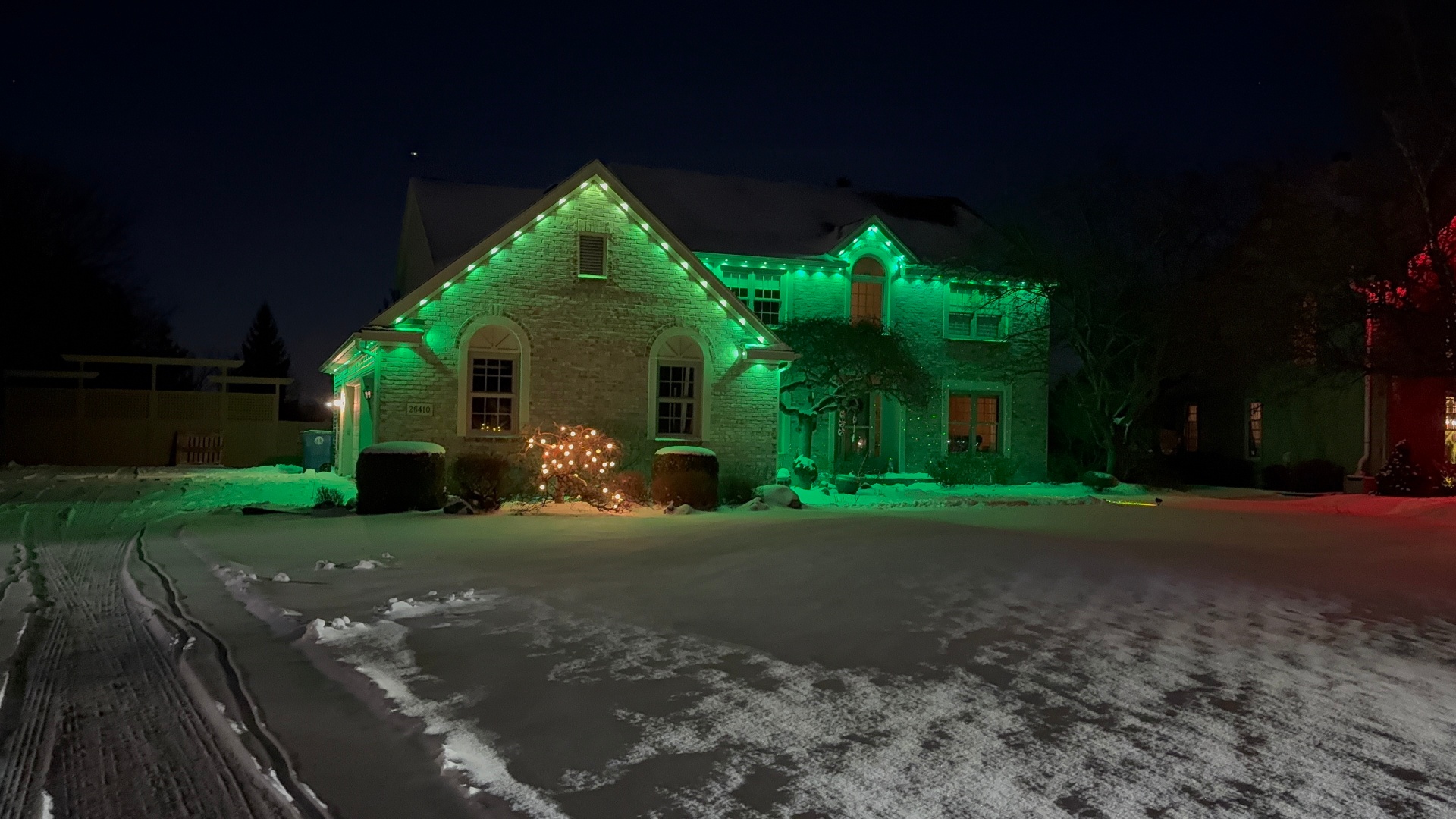
Permanent House Light Installation in Northwest Ohio
How permanent house light installation works for homes across Northwest Ohio and Southeast Michigan, from roofline styles to winter weather.
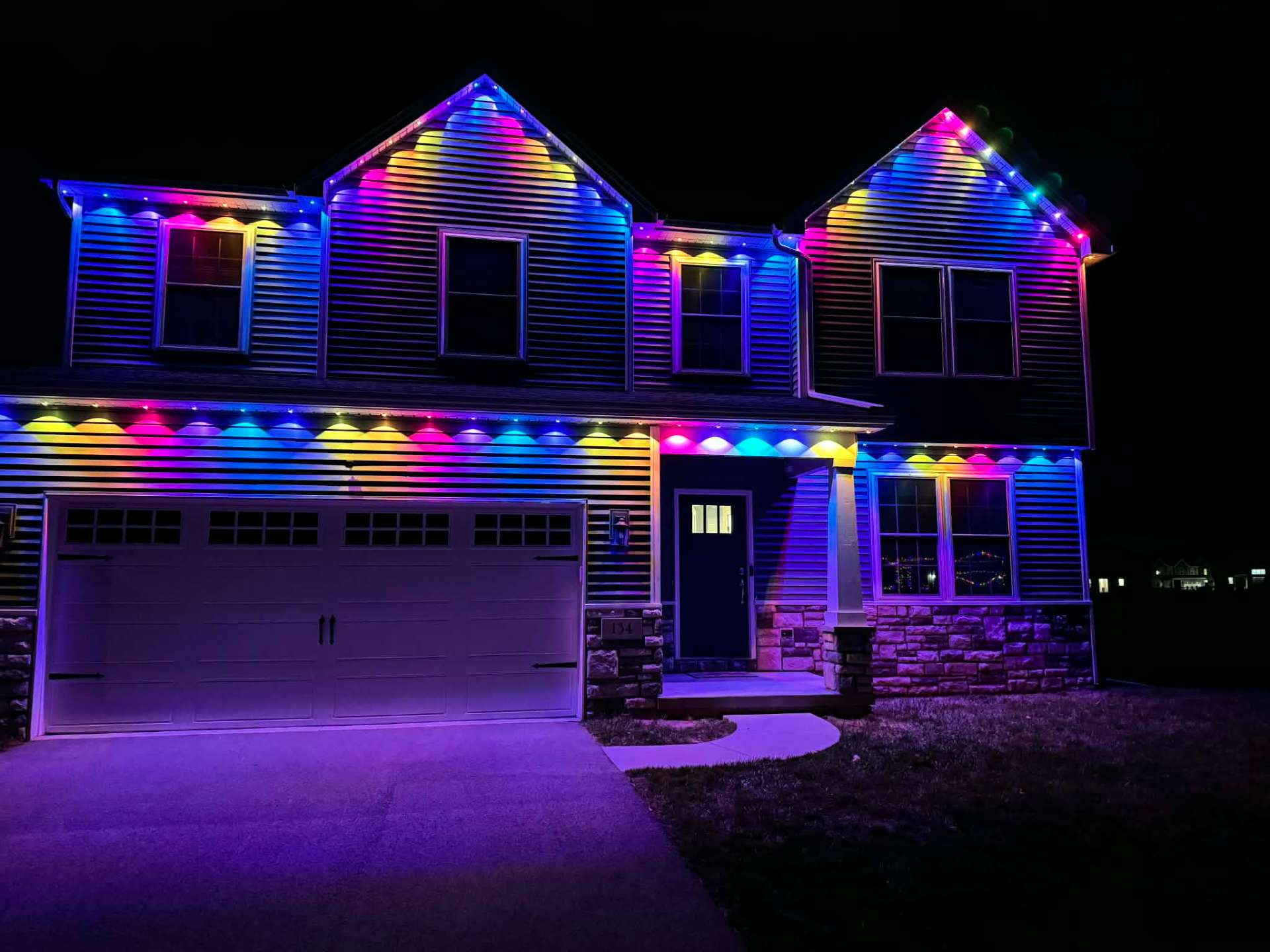
Permanent house light installation in Northwest Ohio needs to account for regional roofline styles, freeze-thaw winters, and the mix of brick, vinyl, and fiber cement siding common on homes from Perrysburg to Sylvania. Track and mounting hardware chosen for a milder climate can loosen or warp faster here than they would somewhere without our winter swings.
Homes in this region tend to fall into a few common categories: colonials and traditional two-stories in older neighborhoods, newer builds with steeper rooflines and more dormers in developments, and ranch-style homes throughout Wood and Lucas counties. Each roofline style has its own installation considerations.
Here is what local homeowners should know about the process, from roofline planning to how the system holds up through a Northwest Ohio or Southeast Michigan winter.
Common home styles across Northwest Ohio and Southeast Michigan
Older neighborhoods in Perrysburg, Sylvania, and Toledo have a lot of colonial and traditional two-story homes, often with moderate roof pitches and straightforward roofline shapes. These tend to be efficient installs since track runs are relatively simple.
Newer developments around Maumee, Waterville, and Monclova often feature steeper rooflines with more dormers, bay windows, and varied roof heights, which need more careful track planning and more corner transitions.
Ranch-style homes, common throughout Bowling Green and rural parts of the region, are usually single-story with simpler rooflines, making them well suited to either professional installation or a DIY Govee track kit for homeowners who want to install it themselves.
Why Ohio and Michigan winters affect installation choices
Freeze-thaw cycles, common through the winter months here, can loosen mounting hardware and warp lower-quality track over a few seasons. This is why rigid aluminum track and weather-rated fasteners matter more in this climate than somewhere with milder winters.
Ice buildup near gutters and roof edges is another local consideration. Mounting points need to sit far enough from areas prone to ice dams so falling ice does not damage the track or clips.
According to Ohio State University Extension, ice dams commonly form along roof edges in this region during winter, which is part of why mounting placement and gutter clearance matter during installation planning.
Working with local siding types
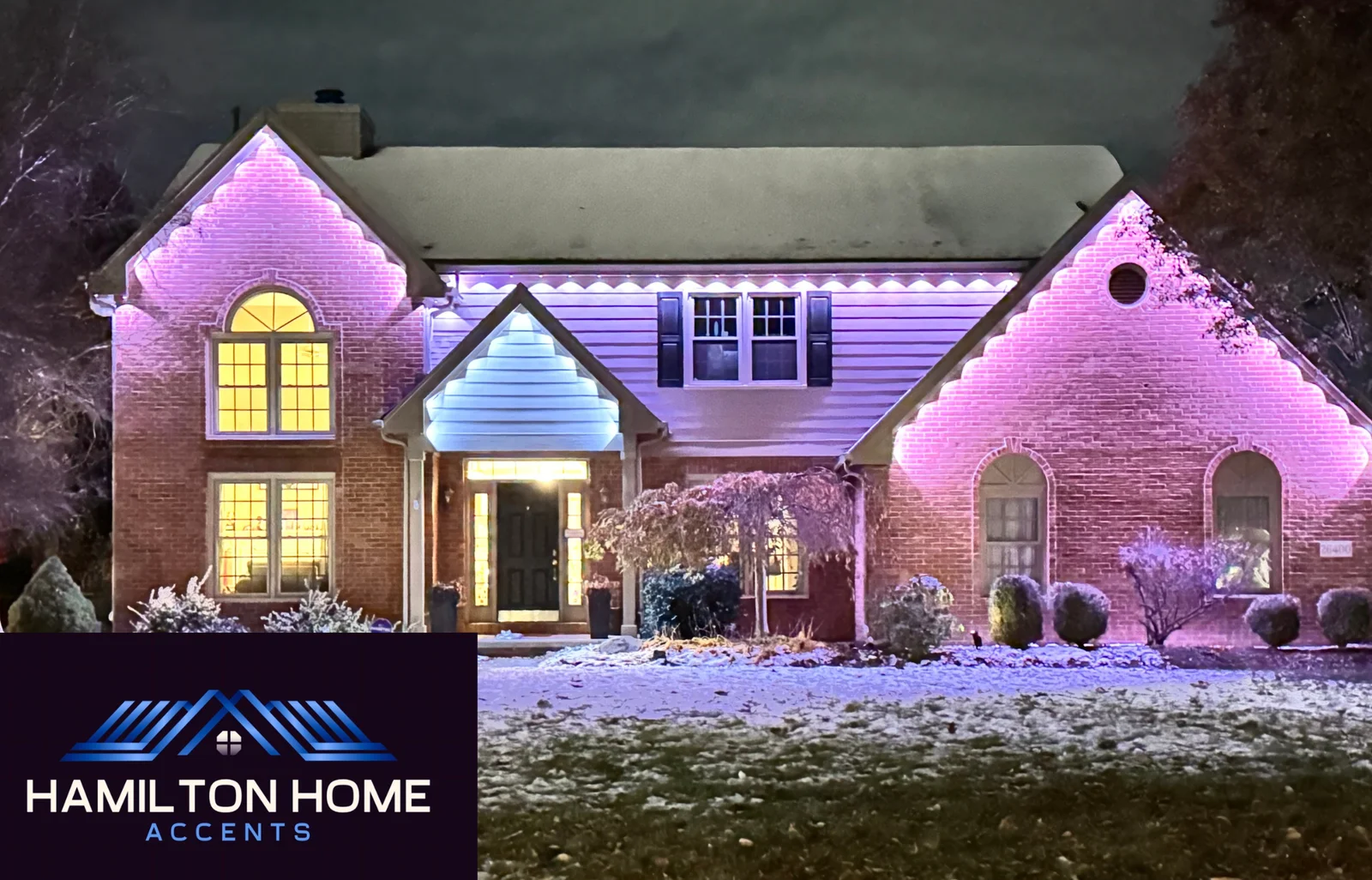
Brick homes, common in older parts of Toledo and Sylvania, need masonry-appropriate fasteners for mounting brackets rather than the wood screws used on fascia boards over vinyl or fiber cement siding. This changes both tools and mounting technique.
Vinyl siding homes need mounting hardware that avoids trapping moisture behind the siding panel, since vinyl can trap condensation more than fiber cement or brick.
Newer fiber cement siding, increasingly common in developments across Monroe and Temperance, generally accepts standard fascia mounting well but should still use fasteners rated for the material to avoid cracking.
Timing installation around regional weather
Late spring through early fall is the most reliable window for installation here, since ladder work and precise mounting go faster without ice or heavy wind. Many homeowners schedule in late summer specifically to have the system ready before the holiday season.
Winter installation is possible but slower, since crews need to work around snow, ice, and shorter daylight hours. If you want a system ready for the holidays, planning ahead avoids the late-fall scheduling crunch.
We track local weather patterns when scheduling crews, which helps avoid installation delays during the wetter spring stretch common across the region.
What a local site walk looks for
A site walk in this region checks roofline shape, siding type, gutter and downspout placement, and any ice-prone areas near roof edges before finalizing a track plan. This is more thorough than a generic remote quote based on photos alone.
We also look at tree coverage and yard layout, since homes with a lot of overhanging branches sometimes need adjusted mounting points to avoid contact with the track during storms.
Every quote is specific to your home rather than a regional average, since even homes on the same street can have different roofline shapes and siding conditions.
- Roofline shape and pitch specific to your home
- Siding type (brick, vinyl, fiber cement) and appropriate fasteners
- Gutter and ice dam risk near mounting points
- Tree coverage and potential contact with track
- Timeline planning around seasonal weather windows
Getting started with a local install
We serve homeowners throughout Northwest Ohio and Southeast Michigan, including Perrysburg, Sylvania, Toledo, Maumee, Monroe, Ann Arbor, and Findlay. Every project starts with a free, in-person quote so we can plan around your home's specific roofline and siding.
If you are comparing Jellyfish lighting and Govee lighting systems for your home, we can walk through both options during your site visit and explain which fits your roofline better.
Browse our gallery to see examples of permanent lighting installed on homes with styles similar to yours across the region.
Frequently asked questions
Does winter weather affect how permanent lighting is installed here?
Yes, freeze-thaw cycles and ice buildup near roof edges affect mounting hardware choices and where brackets are placed. We plan for these local conditions during the site walk.
Can permanent lighting be installed on brick homes?
Yes, brick homes need masonry-appropriate fasteners for mounting brackets, which our crews use for the brick homes common across the region.
What is the best time of year to install in Northwest Ohio?
Late spring through early fall is the most reliable window for ladder work and precise mounting. Scheduling in late summer also gets the system ready before the holidays.
Do you install on both ranch and two-story homes in the area?
Yes, we install on ranch-style homes, colonials, and newer two-story builds throughout the region, adjusting track planning to each roofline shape.
The bottom line
- Local roofline styles across Northwest Ohio and Southeast Michigan each need different track planning.
- Freeze-thaw cycles and ice dams make rigid track and proper mounting placement especially important here.
- Siding type (brick, vinyl, fiber cement) changes the fasteners and mounting technique used.
- Late spring through early fall is the most reliable installation window in this climate.
- A local site walk accounts for regional weather, siding, and tree coverage specific to your home.
Get a local, weather-ready installation plan
We install permanent lighting across Northwest Ohio and Southeast Michigan, planned around your home's siding and roofline.
Request a free quote