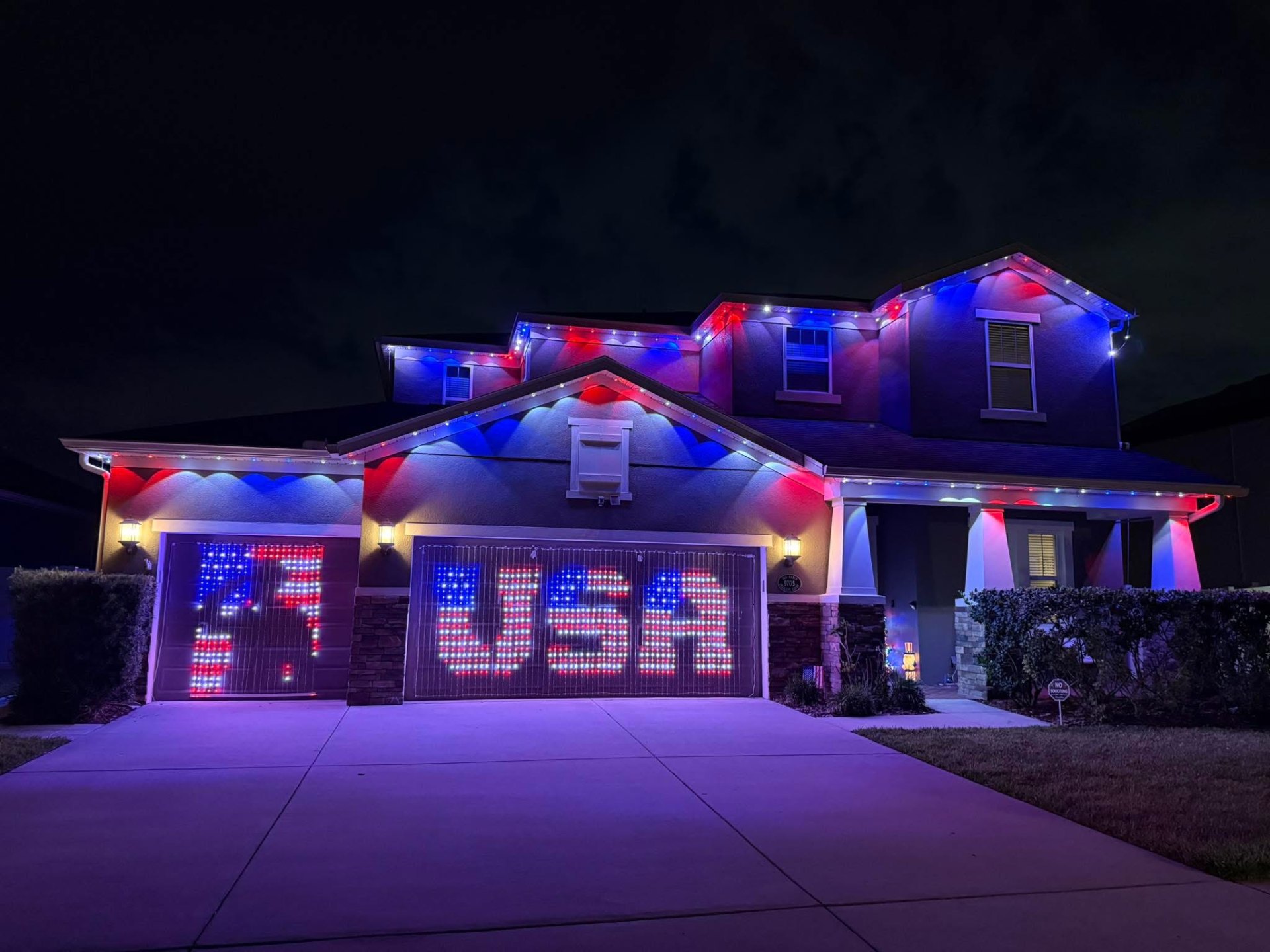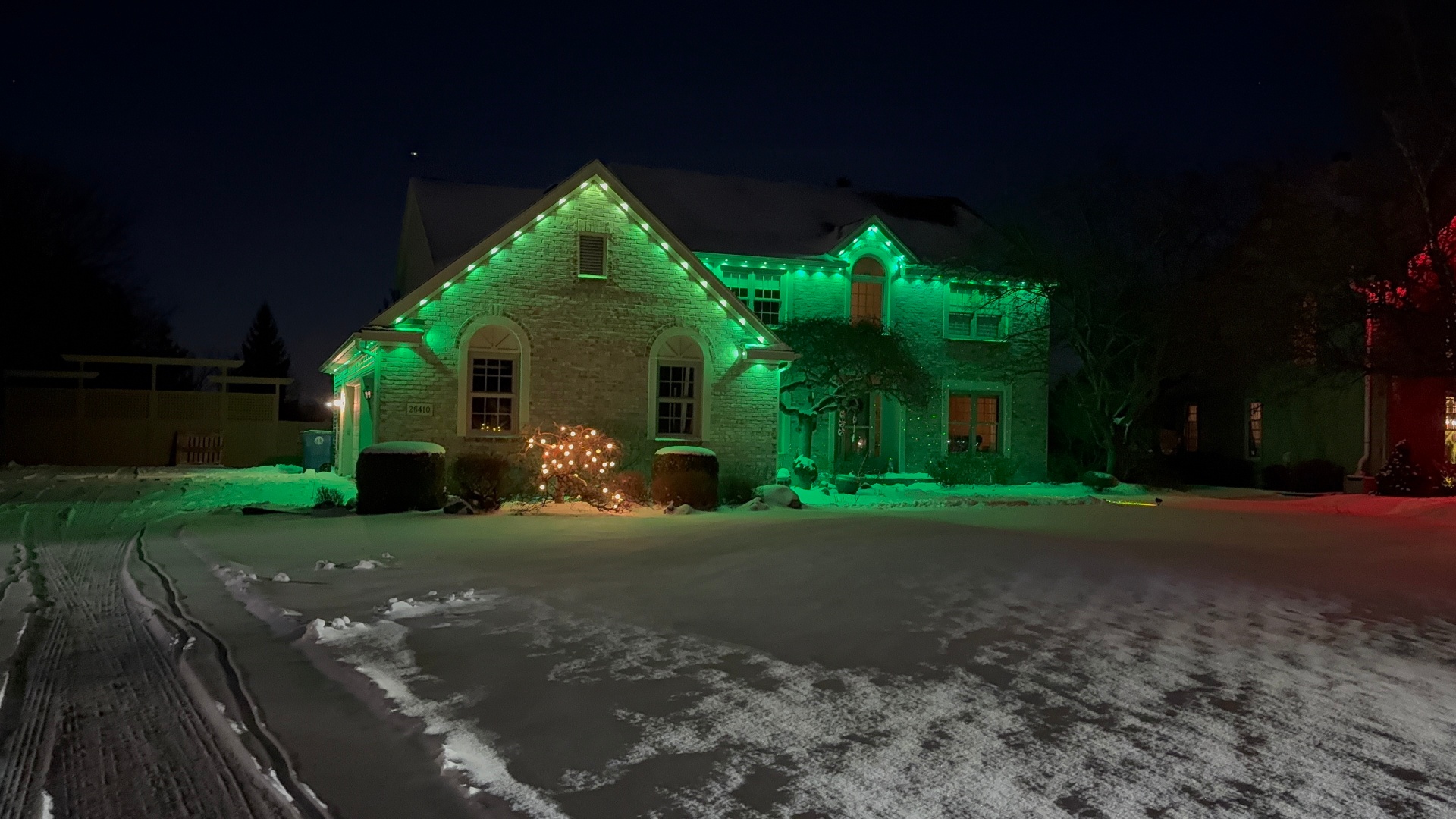
Peaked Roofline Lighting Plans for Delta, Ohio Homes
Delta Ohio outdoor lighting for steep, peaked rooflines works best with a track plan built around the gables, not a generic strip run. Here's how we approach it.
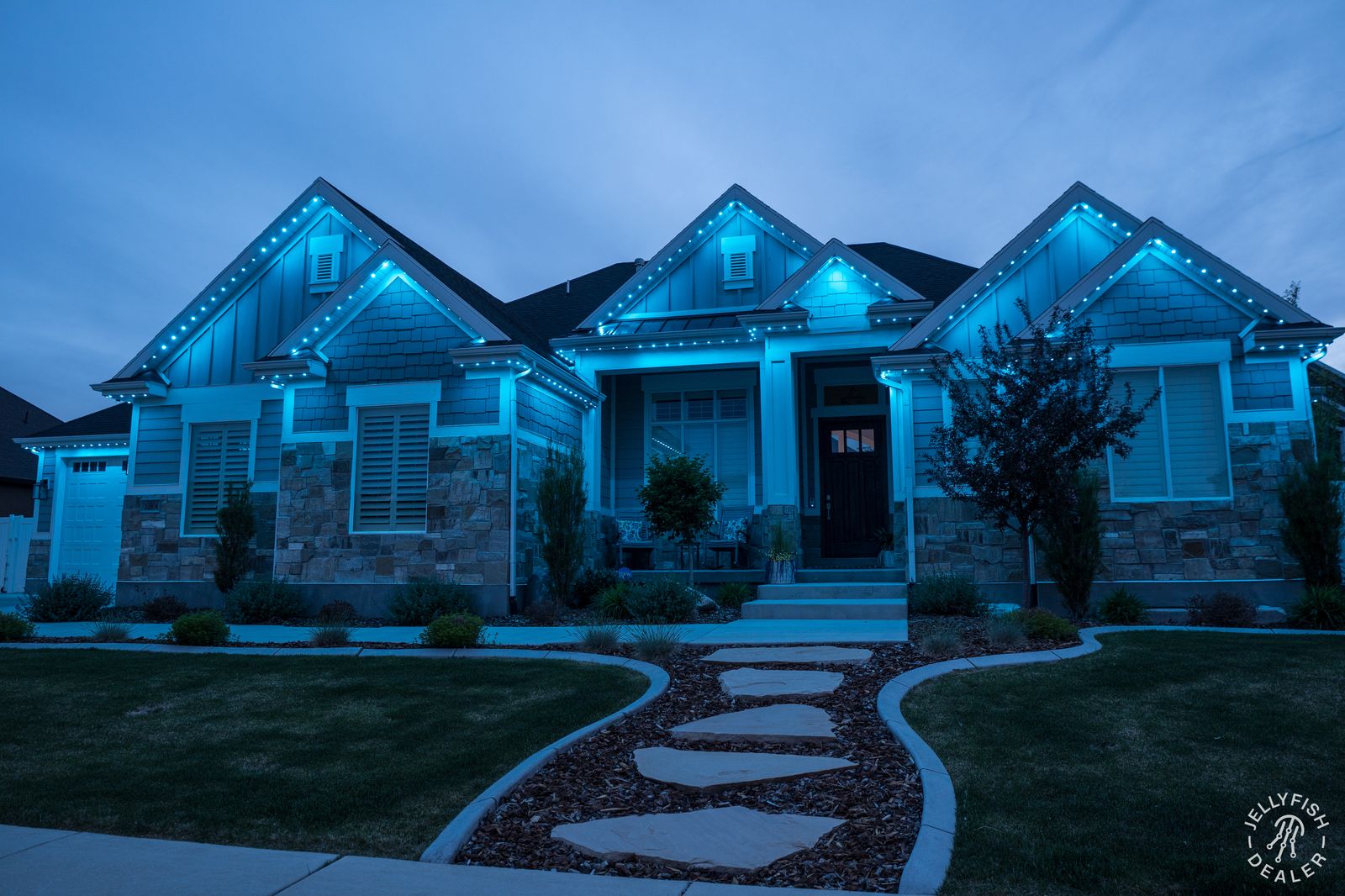
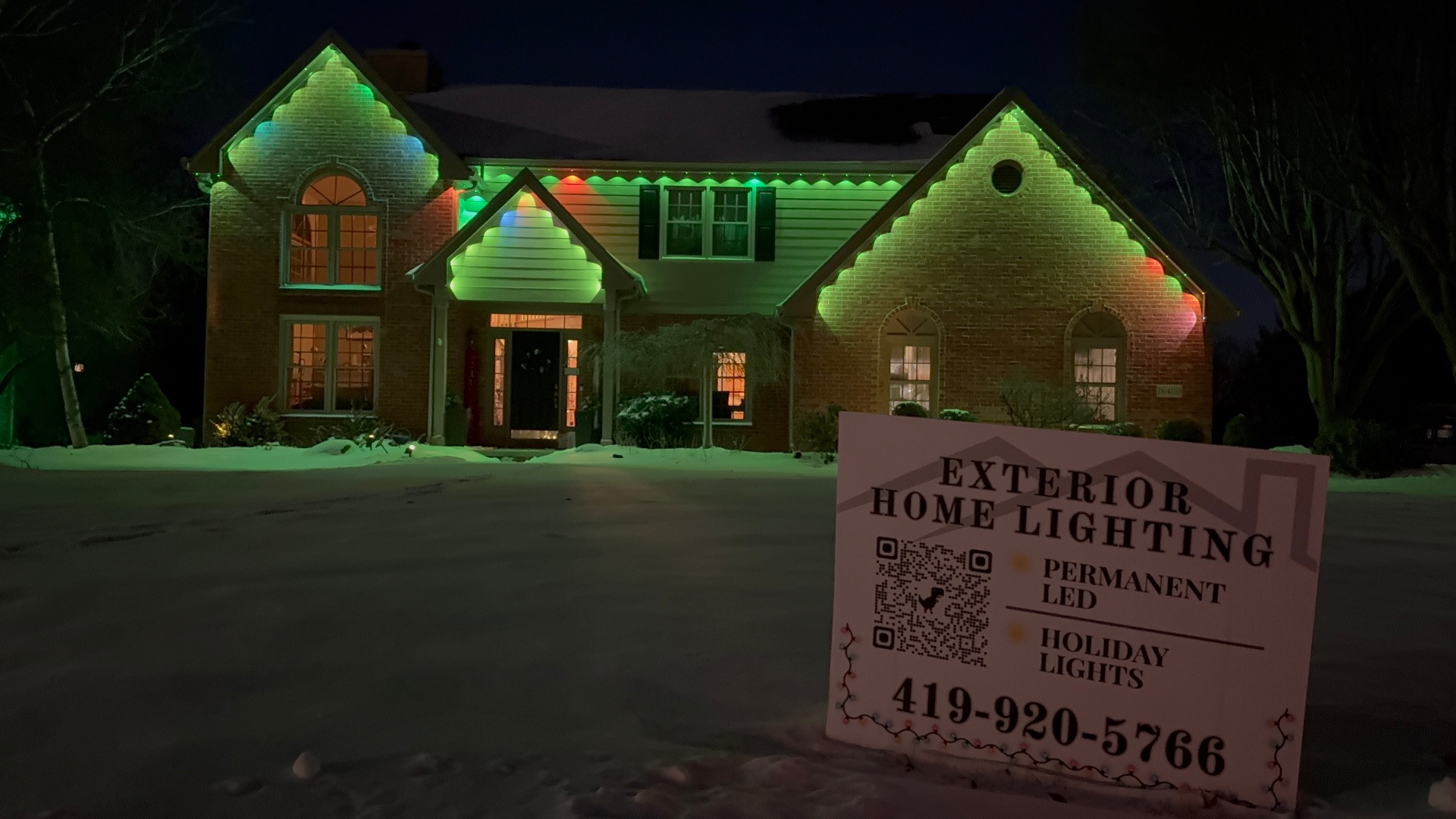
Delta Ohio outdoor lighting jobs come with a specific challenge more often than in flatter neighborhoods: steep, peaked gables. A lot of homes in and around Delta have traditional farmhouse-style rooflines with sharp pitches, and that shape changes how a lighting track needs to be planned compared to a simple ranch roofline.
We have installed permanent lighting on enough of these gable-heavy homes to know where the plan usually needs adjusting, from mounting angle at the peak to how many transitions a run needs to stay clean-looking from the street.
This post walks through what we look at during a site visit for a peaked-roof home and why the layout matters more than the fixture itself.
Why peaked gables change the lighting plan
A steep gable creates a sharper angle where two roof planes meet than a standard ranch roofline does. If the track and channel aren't planned with that angle in mind, the transition piece can look bulky or the light spacing can go uneven right at the point where it matters most visually.
We measure the actual pitch during the site visit rather than assuming a standard angle, since older Delta homes often have steeper pitches than newer construction in the area.
Getting the angle right at the peak is usually the single biggest factor in whether a gable-heavy home looks sharp at night or just busy.
How permanent track handles multiple roof planes
Permanent Jellyfish lighting uses aluminum track mounted to the fascia or roofline, cut and joined with machined transition pieces at each angle change. On a home with several gables, dormers, or a mix of roof heights, that can mean a handful of transitions across one elevation.
We plan transitions at logical break points, usually where one roof plane naturally ends, rather than trying to force a single continuous run across a complicated roofline. That keeps the light spacing consistent and avoids visible kinks in the line.
For homes with a lot of roof detail, we sometimes recommend lighting the primary gables and main roofline rather than every minor peak, since over-tracing a busy roof can actually make it look cluttered at night.
What we check during a Delta-area site visit
Older farmhouse and Cape Cod style homes common around Delta often have fascia boards that have seen decades of weather, and mounting hardware needs a solid, sound surface to attach to. We check fascia condition at the site visit rather than assuming it will hold standard mounting clips everywhere.
We also look at soffit depth and overhang, since a deeper overhang can change how visible the track and fixtures are from the ground, which affects how we plan fixture spacing for even light distribution.
Roof access and ladder placement around steep pitches factor into the visit too, since some gable peaks are higher off the ground than they look from the street.
- Measure actual roof pitch rather than assuming a standard angle
- Check fascia condition for solid mounting points on older homes
- Identify natural break points for transition pieces between roof planes
- Decide which gables get lit versus which minor peaks are skipped
- Confirm ladder access and safe reach for steep sections
Warm white everyday use versus color for events
Most homeowners in Delta run their permanent lighting on a warm white setting most nights, which reads as a clean, upscale accent rather than a colorful display. That is the default a lot of people land on after trying a few options in the app.
For holidays, birthdays, or local events, the same fixtures switch to color or seasonal scenes without any new hardware, since the system is built for both uses year-round.
If you are deciding between Jellyfish lighting and other permanent options, this flexibility is usually the deciding factor for homeowners who want more than a single holiday display.
Comparing this to a flatter roofline install
A flat or low-pitch ranch roofline is generally a more straightforward install, with fewer transitions and a simpler track run overall. That does not mean it looks better lit up, just that the planning is more direct.
Peaked roofs, when planned well, often look more dramatic at night specifically because the light traces the architecture of the gables rather than a flat line. The extra planning tends to pay off in the visual result.
Either way, the process starts the same: a site visit, a track plan, and a discussion of which parts of the roofline you actually want highlighted.
What this looks like once installed
Once the track is mounted and the transitions are set at the gable peaks, the system connects to a controller and the Govee lighting app or Jellyfish app depending on which system was installed, letting you set scenes from your phone.
Most homeowners start with a simple warm white scene for everyday use and add color scenes later once they get a feel for the app.
If you want a second opinion on how your specific roofline would look, a free quote visit is the easiest way to see the plan mapped out for your home.
Frequently asked questions
Does a steep roof pitch cost more to light than a flat roof?
It can, mainly due to added planning time and sometimes more transition pieces, but it depends on the specific roofline. We give you a specific quote after the site visit rather than a general estimate.
Will lighting every gable make my house look too busy?
It can if every peak and dormer is traced with equal emphasis. We usually recommend prioritizing the main roofline and primary gables so the result looks intentional rather than cluttered.
Can older farmhouse-style fascia support permanent track?
In most cases yes, but we check condition on-site first. If fascia is deteriorated in spots, we identify that during the visit and discuss mounting options before installation.
Can I switch between warm white and color myself?
Yes. Once installed, scene changes happen through the app on your phone, so you can switch from everyday warm white to color for an event without calling us back out.
The bottom line
- Steep, peaked rooflines need a plan built around actual pitch and transition points, not a generic layout.
- Fascia condition on older Delta-area homes should be checked before mounting track.
- Fewer, well-placed transitions look cleaner than tracing every minor roof angle.
- Warm white everyday lighting and color event scenes run on the same installed system.
- A site visit is the best way to see how your specific roofline would look lit up.
See what permanent lighting looks like on your roofline
We'll walk your roof, measure the pitch, and map out a plan that fits your home's actual gables.
Explore Jellyfish lighting