
What a First-Year Plant Warranty Actually Covers
A landscape design plant warranty typically covers plant health issues tied to installation, not damage from neglect or unrelated causes. Here's what that means in practice.
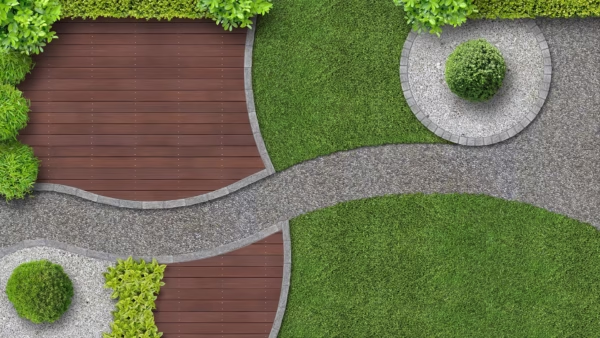
A first-year plant warranty on a landscape design project generally covers plants that fail due to issues related to how they were planted or supplied, not every possible reason a plant could struggle. Understanding that distinction upfront avoids confusion later if a plant does not thrive.
We get this question most often a few months after a new landscape design installation, when a homeowner notices one plant is not doing as well as the rest of the bed.
This post explains what a typical plant warranty covers, what it generally does not, and what care on your end affects the outcome.
What a warranty is actually protecting against
A plant warranty is meant to protect you against issues tied to the installation itself, things like a plant that was already stressed or diseased when it arrived, planted at the wrong depth, or installed in clearly unsuitable drainage conditions that the installer should have caught.
It is not a general guarantee that every plant will thrive no matter what happens after installation. Weather, watering, pests, and site conditions all affect plant health, and not all of those are within a contractor's control once the plant is in the ground.
Ask any landscape contractor directly what their warranty covers and for how long before the project starts, since terms differ from company to company.
What usually falls outside warranty coverage
Most plant warranties exclude damage from drought, over-watering, extreme weather events, pest infestations that occur after a healthy establishment period, and damage from lawn equipment, foot traffic, or pets.
Neglect is the most common reason a warranty claim gets denied. If a new planting was never watered during a dry stretch in its first season, that is a care issue rather than an installation defect.
Changes made by the homeowner, like altering irrigation, adding mulch too deep against the trunk, or moving a plant to a new spot, can also void coverage for that specific plant.
- Drought stress from inadequate watering during establishment
- Damage from mowers, trimmers, or pets
- Pest or disease issues introduced after the establishment period
- Plants moved or replanted by the homeowner after installation
- Extreme weather events like ice storms or flooding
What you are responsible for during the establishment period
New plants need more frequent watering than established landscaping, typically for the first several weeks to months depending on the species and the season they were planted. This is almost always the homeowner's responsibility unless irrigation is specifically part of the contract.
If your property has an existing irrigation system, we will talk through whether it covers the new planting zones adequately or if manual watering is still needed during establishment.
Mulch depth also matters. A few inches of mulch helps retain moisture, but mulch piled against the trunk or stems can cause rot and is a common, avoidable mistake.
How to document your installation for warranty purposes
Keep a copy of your planting plan, invoice, and any plant list provided at installation. This documentation helps identify exactly what was planted, where, and when if a warranty question comes up later.
Photos taken shortly after installation are also useful, since they establish a baseline for comparison if a plant later shows signs of decline.
If you notice a plant struggling, reach out sooner rather than later. Early intervention sometimes saves a plant that would otherwise be a total loss by the time a warranty window closes.
Why some plant loss is normal even with a good installation
Even with correct planting technique and reasonable care, some percentage of new plantings do not survive their first year. Transplant shock, an unusually harsh winter, or a stretch of extreme heat can affect even healthy stock installed correctly.
This is one reason warranties usually have defined terms rather than an open-ended promise, since no contractor can control every environmental factor after installation.
The U.S. Environmental Protection Agency's WaterSense program and university extension offices both note that new plantings generally need consistent watering through at least one full growing season to establish well, which underscores how much of first-year survival depends on aftercare.
What to ask before your landscape design project starts
Before signing off on a new landscape design project, ask specifically what the plant warranty covers, its length, and whether replacement plants come at no cost or a reduced cost.
Also ask what watering schedule is expected of you during establishment, since this affects whether a future issue would even qualify as a warranty claim.
Getting these details in writing at the start avoids a frustrating conversation later if a plant does not make it through its first season.
Frequently asked questions
How long does a typical plant warranty last?
This varies by contractor, but a common range is a set period covering the first growing season after installation. Ask for specifics before the project begins.
Does the warranty cover replacement labor or just the plant material?
This depends on the specific agreement. Some warranties cover the plant only, while others include replacement labor as well. Clarify this detail before signing.
What if I am not sure whether my watering caused the plant to struggle?
Reach out and describe the plant's condition and your watering routine. A straightforward conversation usually clarifies whether it looks like an installation issue or a care-related one.
Does a warranty cover plants damaged by deer or pests?
Typically not, since this falls outside installation-related issues. Deer and pest damage are generally considered separate from a plant warranty claim.
The bottom line
- Plant warranties cover installation-related failure, not every possible cause of decline.
- Consistent watering during establishment is usually the homeowner's responsibility.
- Ask about warranty length and terms before your project starts, not after.
- Keep documentation and photos from installation in case a claim comes up.
- Some plant loss in year one is normal even with proper installation and care.
Have questions before starting a landscape design project
We will walk through plant selection, care expectations, and warranty details before any work begins.
Get a free quote