How Much Electricity Does Jellyfish Lighting Actually Use?
A realistic look at Jellyfish lighting electricity usage, how LED permanent lighting compares to traditional string lights, and what affects your cost.
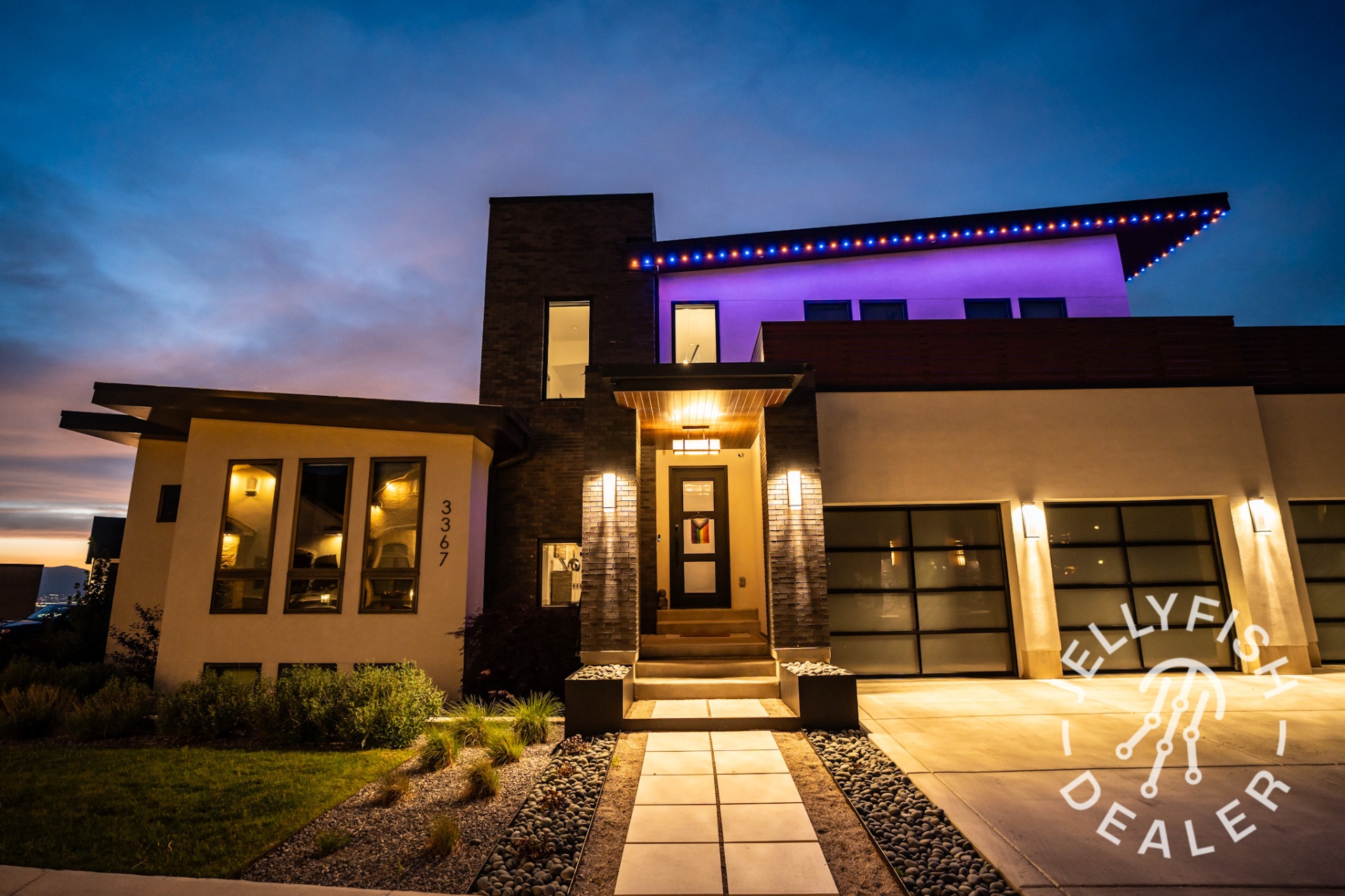
Jellyfish lighting electricity usage is low compared to traditional incandescent holiday lighting because the system uses LED technology, which converts more of its energy draw into visible light rather than heat. Running a full roofline of LED pixels overnight costs far less than most homeowners expect.
Because the system runs on a schedule and can be dimmed, actual usage depends on brightness settings and how many hours per night the lights run, not just the total number of LEDs installed. Understanding these variables helps you estimate your own usage realistically.
Here is how Jellyfish lighting electricity usage works and how it compares to other lighting options.
Why LED lighting uses less power to begin with
LEDs produce light by passing current through a semiconductor rather than heating a filament, which means far less of the energy used gets wasted as heat compared to incandescent bulbs. According to the U.S. Department of Energy, LED lighting uses significantly less energy than incandescent lighting for a comparable amount of light output.
This efficiency difference is part of why permanent LED systems have become popular replacements for traditional incandescent holiday string lights, which draw much more power per bulb for similar brightness.
Because Jellyfish systems use individually addressable LED pixels rather than simple on-off incandescent bulbs, the underlying technology is inherently more efficient than what most holiday lighting used a decade ago.
What actually determines your usage
Total electricity draw scales with how many LED pixels are installed, which is a function of your roofline length, not a fixed number across every home. A larger home with more linear footage of track will use more total power than a smaller home, all else equal.
Brightness level matters as much as pixel count. Running scenes dimmed to 50 or 60 percent, which many homeowners prefer for everyday warm white anyway, uses meaningfully less power than running everything at full brightness.
Hours of operation per night is the other major factor. A system scheduled to run from dusk to a set bedtime uses less power than one left running continuously around the clock.
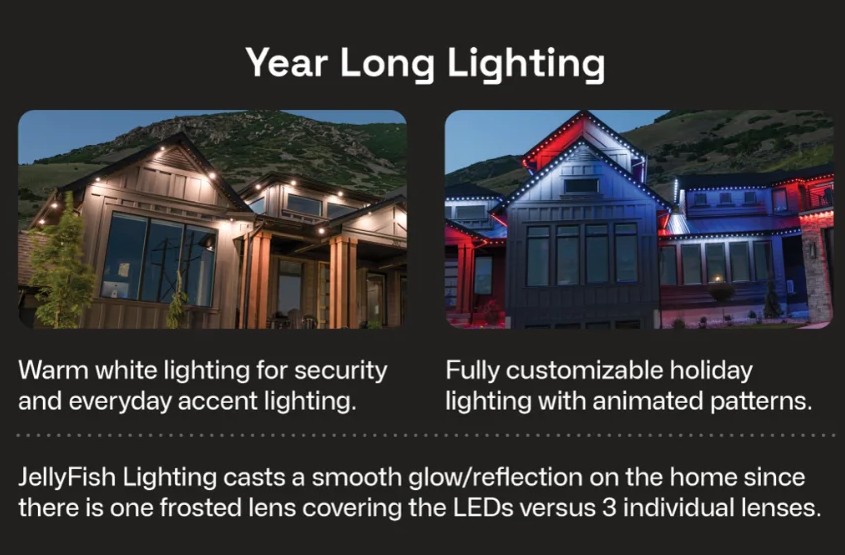
Comparing permanent LED lighting to traditional string lights
Traditional incandescent holiday string lights draw considerably more power per bulb than LED equivalents, which is part of why utility bills sometimes noticeably increase during the holiday season for homes using older incandescent displays. LED-based permanent systems avoid most of that seasonal spike.
Even LED-based string lights, while more efficient than incandescent versions, still typically use more total wattage for equivalent coverage than a properly designed permanent LED track system, since permanent systems are engineered specifically around efficient pixel design.
For homeowners currently using traditional lighting and considering a switch, our comparison of Jellyfish versus traditional holiday lights covers more of these differences beyond just electricity use.
How scheduling affects your actual electricity cost
Setting a schedule so lights turn on around sunset and off at a reasonable bedtime, rather than running all night until sunrise, cuts total run hours meaningfully over a year. Most homeowners do not need lighting running at 3 a.m. anyway.
Seasonal variation matters too, since winter nights are longer than summer nights, meaning total run hours naturally increase in winter even with an identical sunset-to-bedtime schedule. This is a normal part of how any exterior lighting system behaves seasonally.
The app's scheduling tools make this kind of adjustment simple, and it is worth revisiting your schedule seasonally as sunset times shift throughout the year.
- Schedule lights to run from dusk to a set bedtime rather than all night
- Use a dimmed everyday scene rather than full brightness for daily use
- Reserve full-brightness color scenes for special occasions rather than nightly use
- Expect slightly higher usage in winter due to longer nights
- Review your schedule seasonally as sunset times shift
Putting the cost into perspective
Because LED systems draw relatively little power individually, even a full roofline running nightly represents a modest addition to a typical home electricity bill compared to major appliances like HVAC systems or water heaters. Exact costs depend on your local electricity rate and total system size, which varies by home.
For homeowners who want a more precise estimate for their specific home, your local utility rate combined with your system's total wattage, which we can provide from your installation, allows for a straightforward calculation.
If minimizing usage further is a priority, dimming everyday scenes and tightening your nightly schedule are the two changes that make the biggest practical difference.
Where to get specifics for your own system
Because total wattage depends on your specific roofline length and pixel count, the most accurate answer for your home comes from your installation details rather than a generic industry number. We can provide this information based on your actual installed system.
If you are still deciding between a full permanent system and other lighting options for your home, our Govee lighting page covers an alternative permanent lighting option with different pixel spacing and pricing.
Reach out through our contact page if you want a usage estimate specific to your home's roofline and planned scene usage.
Frequently asked questions
Does permanent LED lighting significantly raise my electricity bill?
Most homeowners see a modest increase rather than a dramatic one, since LED technology is efficient and usage depends on brightness and run hours, which you control through scheduling.
Do color-changing scenes use more electricity than plain white light?
The difference is minimal in most cases, since usage is driven more by brightness level and total pixel count than by the specific color being displayed.
Is permanent lighting more efficient than traditional holiday string lights?
Yes, LED-based permanent systems generally use less power for comparable coverage than traditional incandescent string lights, and often less than LED string lights as well due to more efficient design.
Can I reduce usage without giving up the look I want?
Yes, dimming your everyday scene slightly and scheduling lights to turn off at a set bedtime rather than running all night both reduce usage without meaningfully changing how the display looks.
The bottom line
- LED permanent lighting uses less energy than incandescent lighting for comparable brightness.
- Usage depends on pixel count, brightness level, and hours run per night.
- Scheduling lights to turn off at a set time reduces total usage meaningfully.
- Dimmed everyday scenes use less power than full-brightness displays.
- Your installer can provide specific wattage details for your actual system.
See what efficient permanent lighting looks like on your home
We size your system to your roofline and walk you through scheduling to keep usage sensible.
Explore Jellyfish lighting