Jelly Lights Spacing Guide: 6", 9", or 16"?
Jelly Lights spacing options like 6", 9", and 16" affect brightness and cost differently depending on your roofline. Here's how to pick the right one.
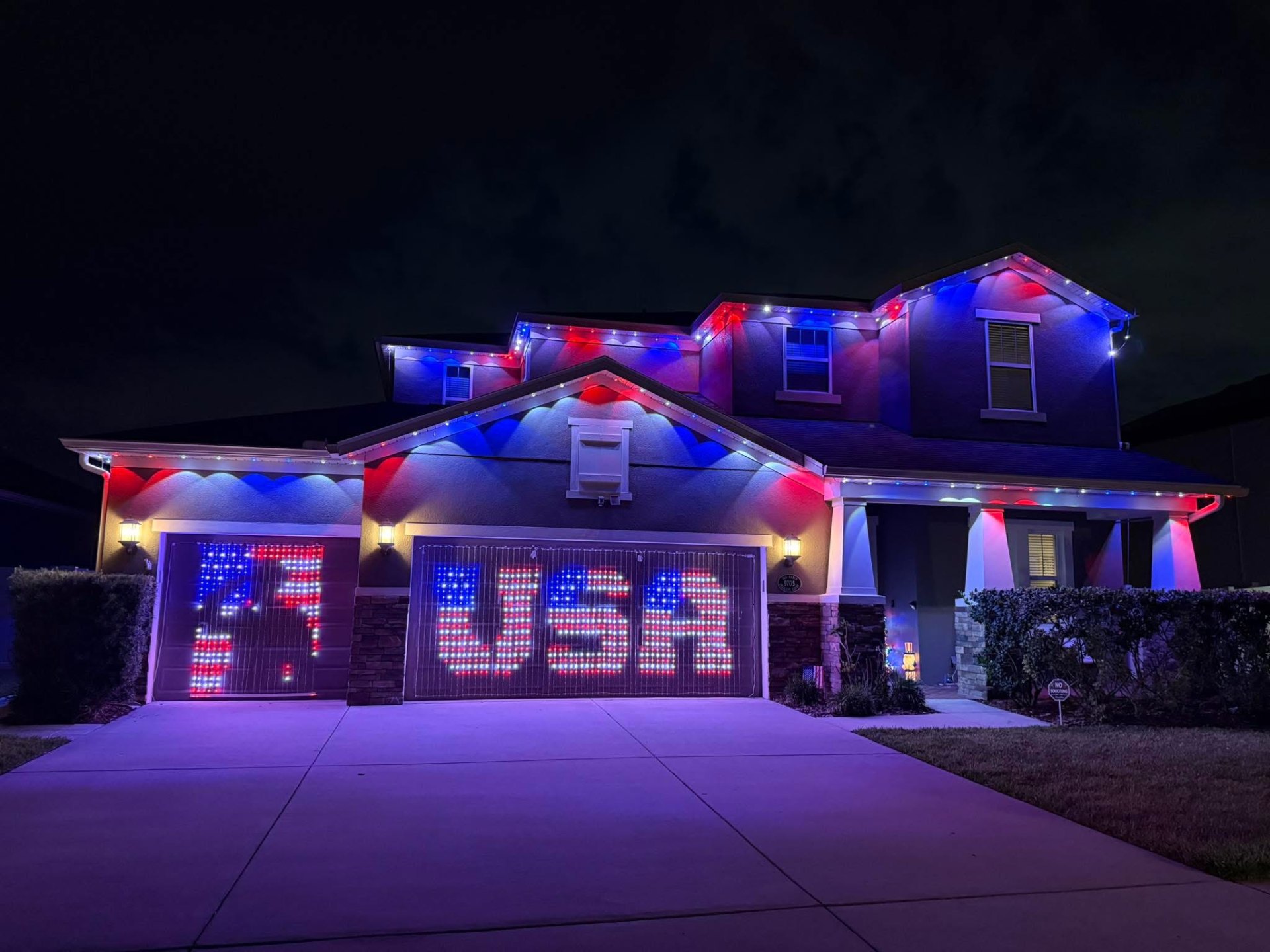
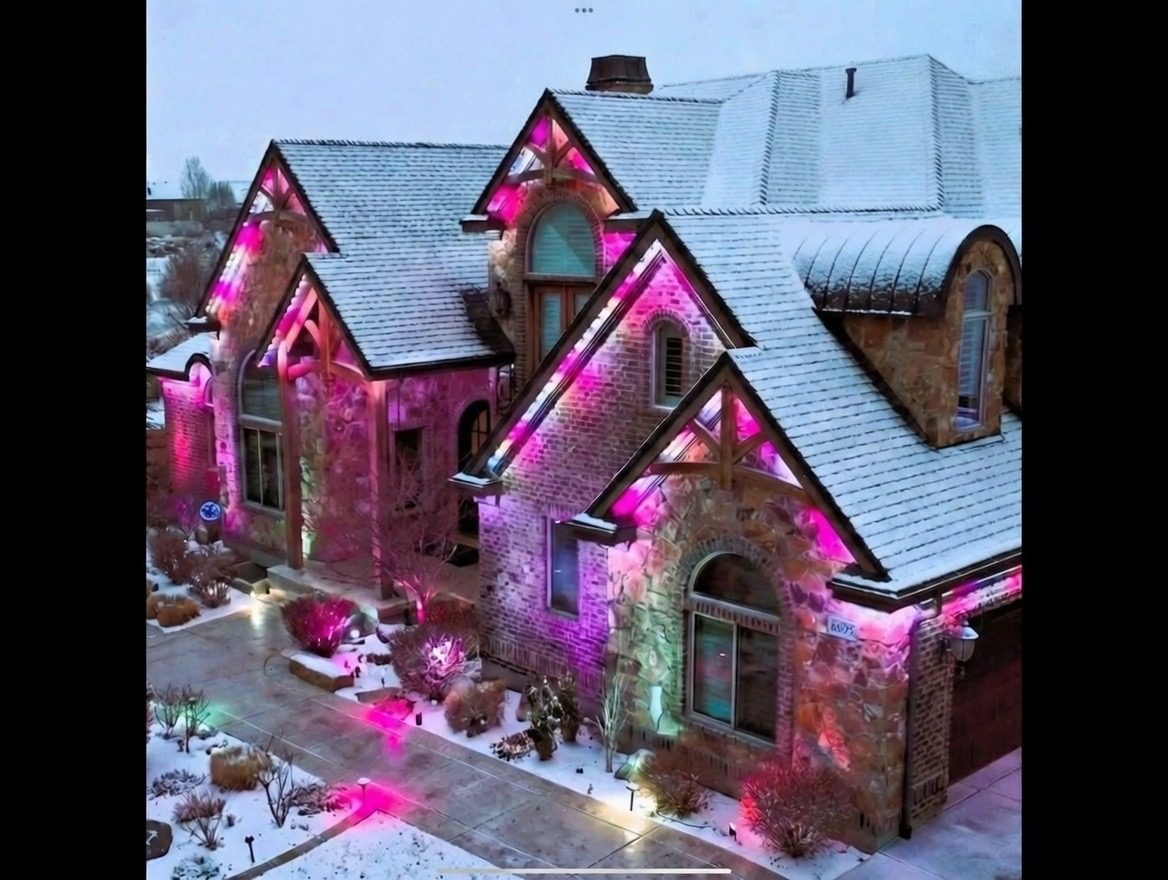
Jelly Lights spacing refers to the distance between individual LEDs inside the track, typically offered in 6", 9", and 16" options, and it directly affects how bright and saturated your roofline lighting looks. Tighter spacing means more LEDs per foot, which produces a more vivid, richer color display, while wider spacing is a more budget-conscious option that still looks great, especially for warm white use.
This is one of the first decisions homeowners make during a quote, and it is worth understanding the tradeoffs rather than just picking a number.
This post breaks down what each spacing option is actually suited for and how to think about it for your specific roofline.
What spacing actually changes
Spacing determines how many individually addressable LEDs are packed into each foot of track, which directly affects brightness and color saturation. Tighter spacing means more light sources per foot, so colors appear richer and patterns look smoother, especially at a distance.
Wider spacing means fewer LEDs per foot, which is still effective, particularly for warm white lighting where the goal is a soft, even glow rather than a bold saturated color display.
Neither option is better in an absolute sense. The right choice depends on how you plan to use the lighting and what your budget looks like for the project.
When 6" spacing makes sense
The tightest spacing option produces the most vivid and richly saturated color display, which matters most for homeowners who plan to run bold color scenes regularly, not just for holidays. If color performance is the priority, tighter spacing shows the biggest visual difference.
This option also tends to look best on rooflines that are viewed up close, such as a covered porch or an area near a walkway, where the individual LED spacing itself would be more noticeable with a wider gap.
It is generally the higher cost option per linear foot, since more LEDs are used to cover the same length of track.
When 9" spacing is the practical middle ground
This spacing balances cost and performance for most homes, delivering strong color saturation without the added expense of the tightest option. It is a common recommendation for homeowners who want both good holiday color and a nice everyday warm white look without maximizing the budget on spacing alone.
For a typical roofline viewed from the street or a driveway, the difference between this option and the tightest spacing is less noticeable than it would be up close.
This is often a good default recommendation when a homeowner has not specified a strong preference either way.
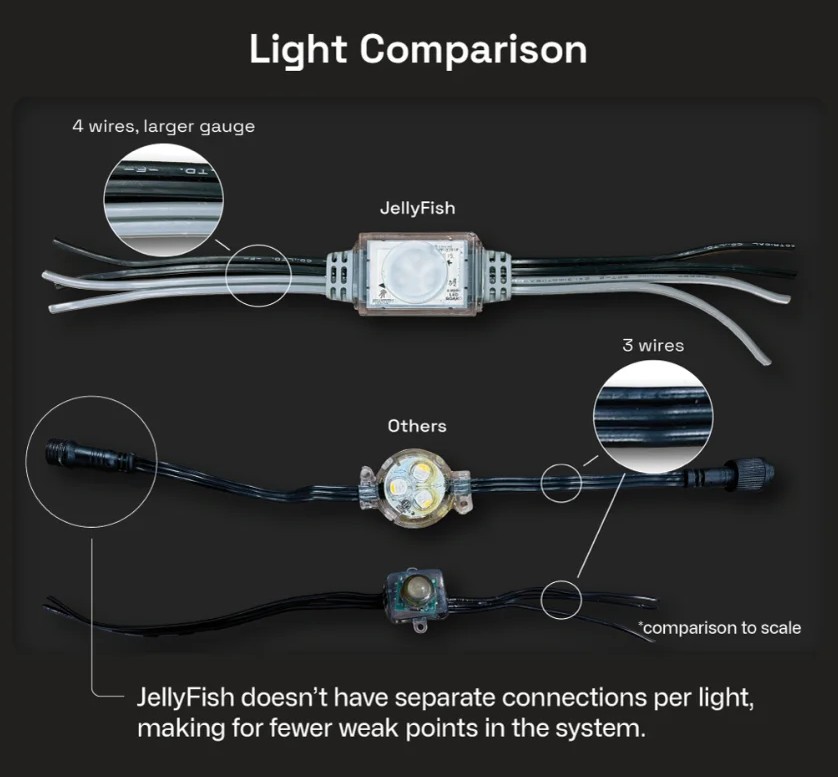
When 16" spacing is the right call
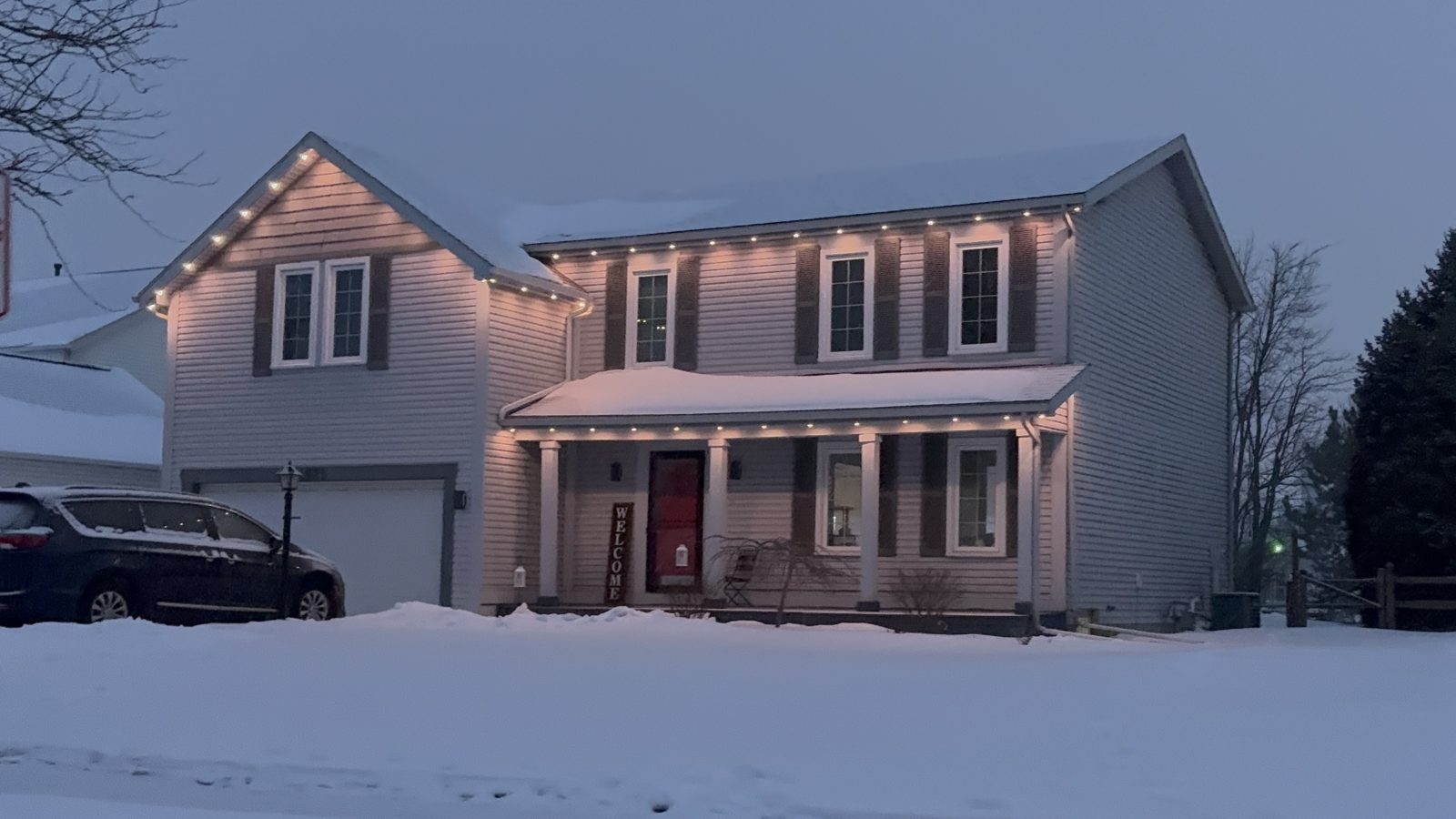
Wider spacing is the more budget-conscious option and still performs well for warm white, which is the scene most homeowners run for the majority of the year. If your primary use case is a clean, elegant everyday glow with occasional color for holidays, this spacing can meet that need at a lower cost per foot.
It becomes more noticeable if you plan to run very bold, saturated colors frequently, since the visible gap between LEDs is larger and can be more apparent up close.
For long rooflines viewed primarily from a distance, such as a large home set back from the street, this spacing is often a practical, cost-effective choice.
- 6": most vivid color, best for close viewing and color-focused use
- 9": a practical middle ground for most homes
- 16": most budget-friendly, works well for warm white-focused use
- Consider viewing distance and how often you'll run bold colors
- Spacing can be mixed by section based on visibility and use
Can spacing be mixed across one house
Yes, and this is common on homes with a covered front porch viewed up close alongside a longer roofline viewed mainly from the street. Tighter spacing near the porch and wider spacing along the rest of the house is a reasonable way to balance cost and appearance.
This is something to discuss during your free quote rather than assuming the whole house needs to use the same spacing option.
We can walk your specific roofline and recommend where tighter spacing adds real visible value versus where it would not be noticeable enough to justify the added cost.
Frequently asked questions
Which spacing should I choose if I mostly run warm white?
The 16" option is a practical, budget-friendly choice for warm white-focused use, since the wider spacing is less noticeable in a soft, even glow than it would be in a bold saturated color.
Does spacing affect how bright the lights are overall?
Yes, tighter spacing means more LEDs per foot, which increases both brightness and color saturation compared to wider spacing over the same length of track.
Can I mix spacing options on the same house?
Yes, it is common to use tighter spacing near areas viewed up close, like a covered porch, and wider spacing along longer rooflines viewed mostly from a distance.
Is tighter spacing always worth the extra cost?
Not necessarily. It depends on viewing distance and how often you plan to run bold color scenes. For many homes, the middle option balances cost and appearance well.
The bottom line
- Spacing options of 6", 9", and 16" directly affect brightness and color saturation.
- Tighter spacing suits close viewing distances and color-focused use.
- Wider spacing is a budget-friendly option that works well for warm white.
- Spacing can be mixed by section of the house based on visibility and use case.
- Discussing your priorities during the quote helps determine the right spacing for your home.
Not sure which spacing fits your roofline
We'll walk your home and recommend spacing based on how you plan to use the lighting.
Get a free quote