How to Choose Permanent Outdoor Lighting
Learn how to choose permanent outdoor lighting by comparing track systems, LED quality, color range, and installation quality before you buy.
Choosing permanent outdoor lighting comes down to three things: the track and diode quality, how many colors and effects you actually need, and who installs it. Not every system marketed as permanent lighting holds up the same way once it has been through a Northwest Ohio winter.
We install Jellyfish lighting and Govee permanent systems around Toledo, Perrysburg, and Sylvania, and the question we hear most is simply which one is right for a given house. The answer depends on your budget, how much control you want over color, and whether you want it done for you or want a DIY kit.
This guide walks through the real differences so you can compare systems before a crew shows up at your door.
What does permanent outdoor lighting actually mean?
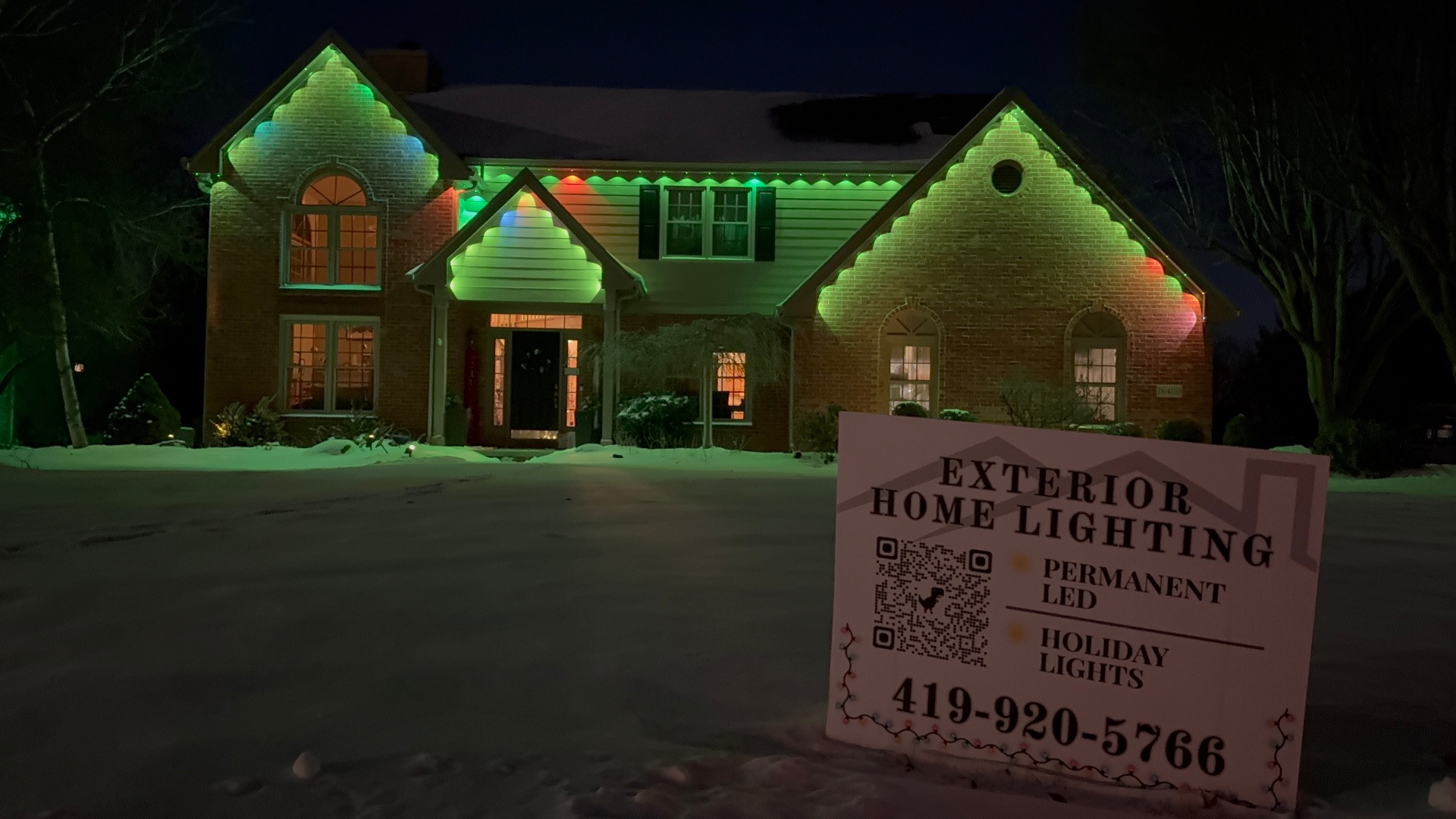
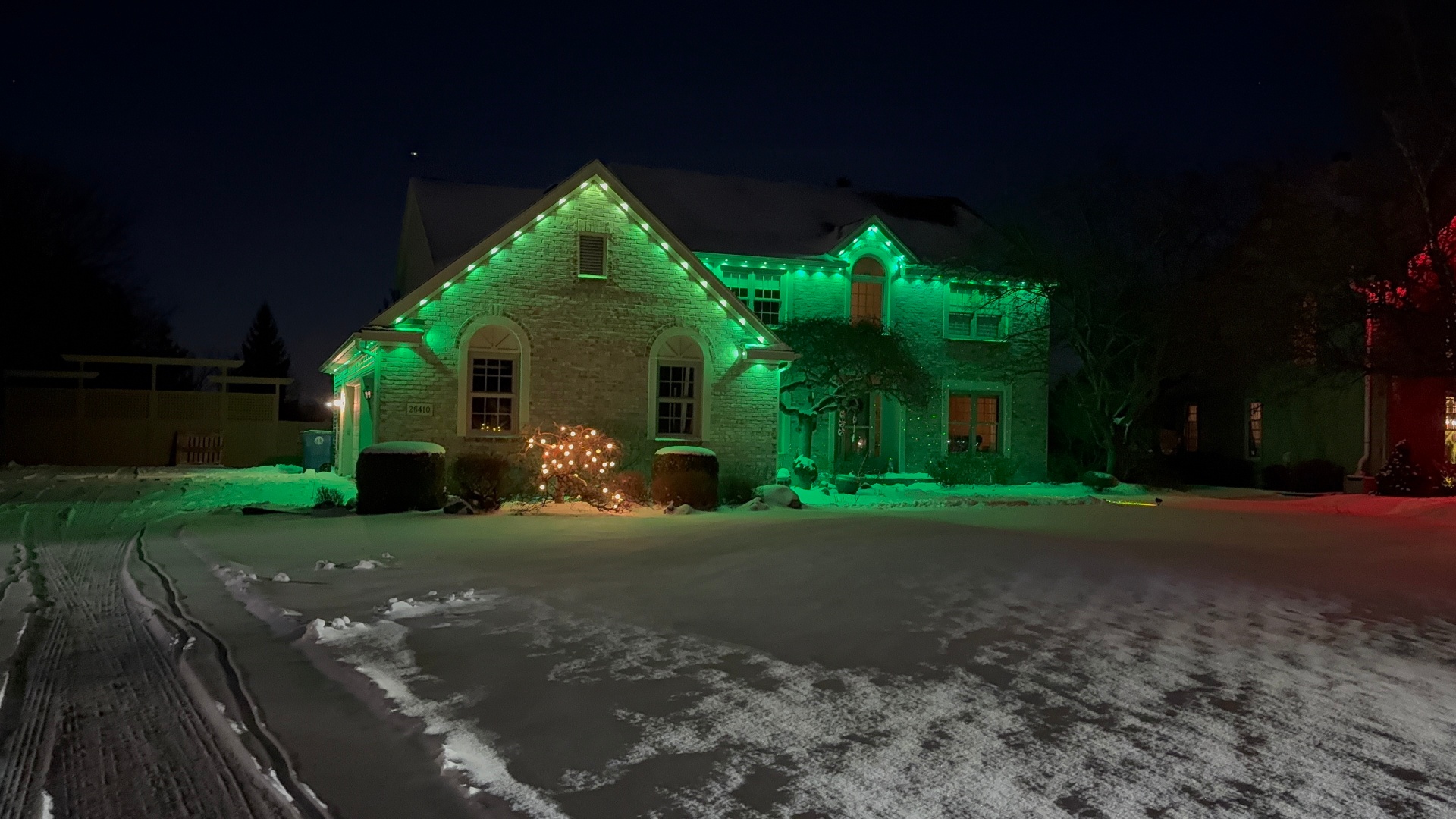
Permanent outdoor lighting is an LED track mounted under your roofline, fascia, or eaves that stays installed year-round. Unlike holiday lights you put up and take down each season, the track is low-profile and designed to disappear into the trim when it is off.
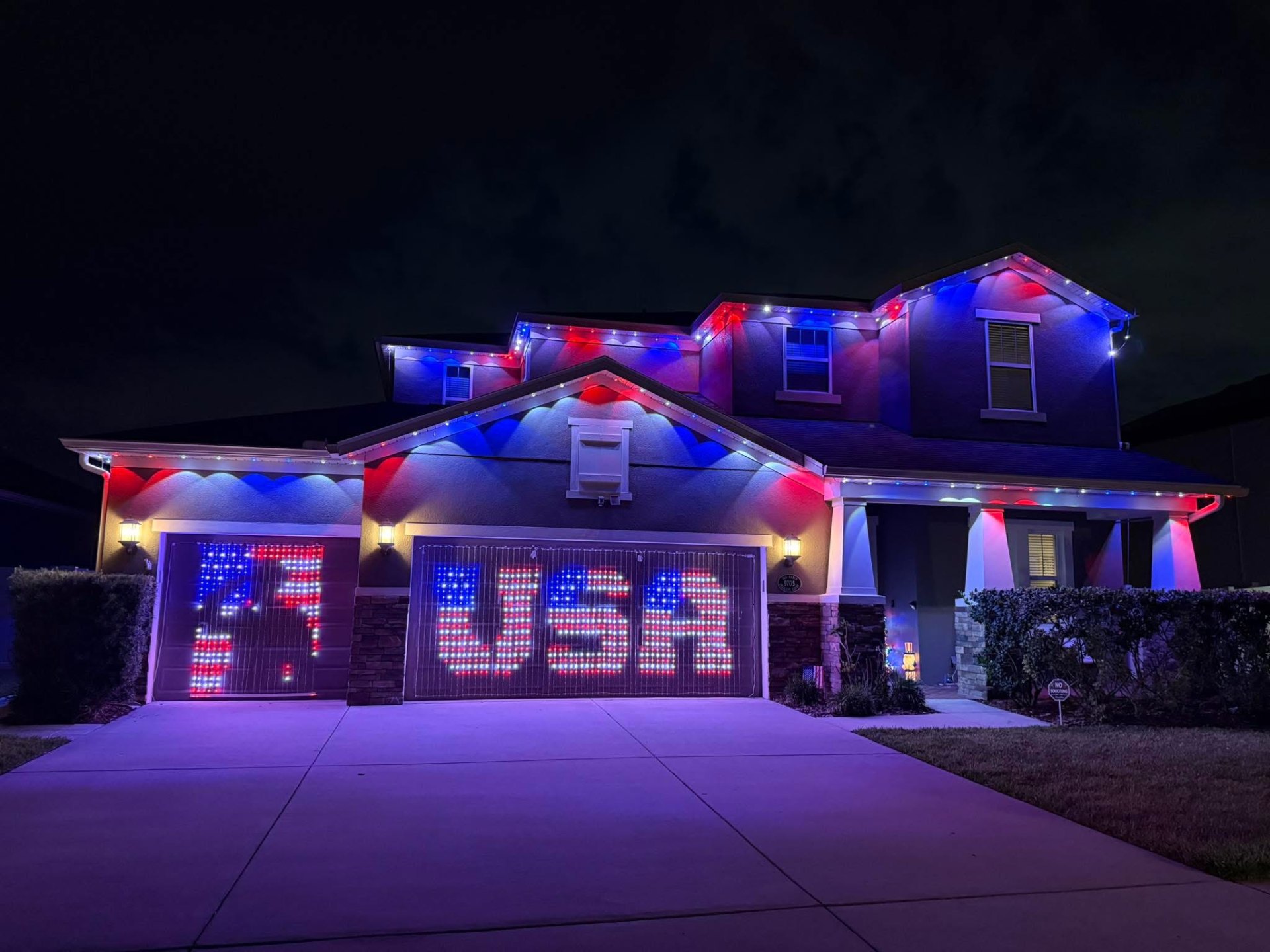
The lights are controlled through an app, so you can run warm white for everyday use, switch to team colors on game day, or run a full holiday scene in December without ever getting back on a ladder.
Because it is a permanent fixture, the hardware needs to handle sun, ice, and wind for years, which is why track material and diode sealing matter more than the marketing photos.
Jellyfish vs Govee: what's the real difference?
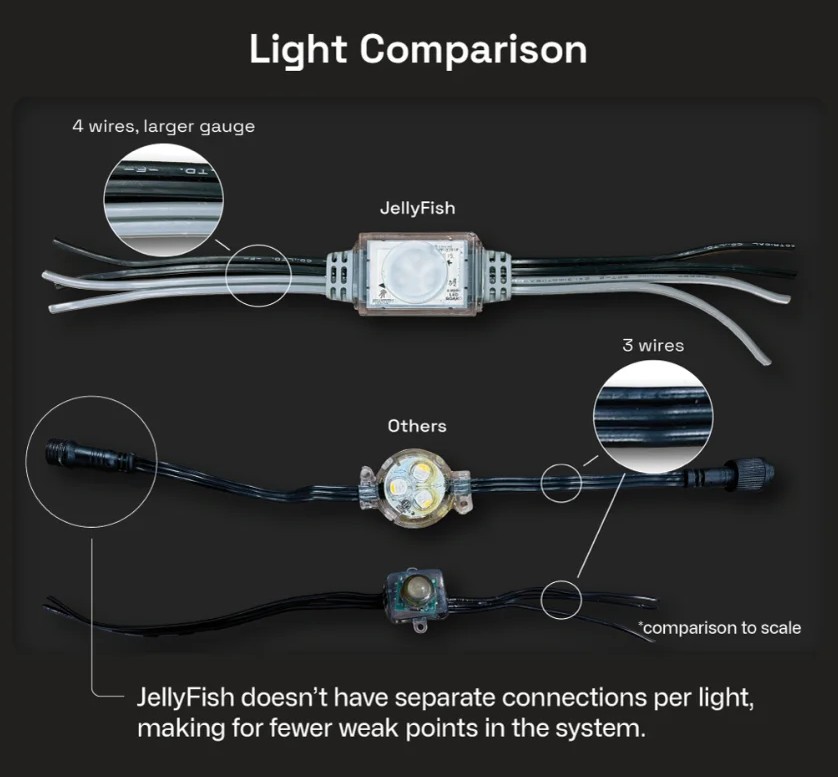
Jellyfish lighting uses a proprietary track with tightly spaced diodes and a wider effective color range, which produces smoother color transitions and truer whites. It is a premium system with a higher install cost that reflects the hardware and the design software behind the scenes.
Govee's permanent lineup, including the Govee smart lighting system, uses a 15 to 19 inch cuttable track depending on the model, with strong app support and a lower price point. For a lot of homeowners it is the better value, especially if you mainly want color-changing effects rather than a subtle, designer-grade warm white.
Neither system is objectively better in every case. It depends on what you are trying to get out of it and what you are willing to spend.
How much does track and diode quality matter?
Cheap track can fade, yellow, or crack after a season or two of freeze-thaw cycles. A well-made aluminum track holds its shape, resists UV damage, and keeps the diodes protected from moisture intrusion at the seams.
Diode spacing affects how smooth the light looks. Wider spacing can create visible dotting at night, especially on longer, straight fascia runs, while tighter spacing gives a more even wash of light.
Ask any installer what the track is rated for and how the connections are sealed at corners. That's a better indicator of long-term performance than the number of preset colors in the app.
Do you need full color, or just warm white?
Most homeowners end up running warm white 90 percent of the year and only switch to color for holidays, birthdays, or a game. If that's you, don't overpay for a system built around elaborate color mixing you'll rarely use.
If you want vibrant, saturated colors for parties or seasonal displays, look closely at how each brand renders reds, blues, and purples specifically, since white and warm white look similar across most systems but saturated colors vary a lot.
It's worth asking your installer to show you a live demo on an actual house at night, not just a phone screen in daylight.
- Warm white year-round with occasional color for holidays
- Full color rotation for parties and seasonal themes
- Sports team colors for game days
- Security-style solid white for everyday use
Professional installation vs DIY track kits
Professional installation means a site walk, custom track lengths cut for your specific rooflines, machined transitions at corners, and a controller placed somewhere weatherproof and out of sight. That level of finish is hard to replicate without the right tools.
If budget is the main driver, Govee track kits are a DIY option that let you install the system yourself with a lower up-front cost. You'll spend more of your own weekend on it, and the finish at corners and gutters typically won't look quite as clean as a pro install.
Either path is reasonable. It's a question of how much your time is worth and how particular you are about the finished look.
What should a quote actually include?
A real quote should cover linear footage of track, the controller and mounting hardware, labor for a clean install around vents and downspouts, and a walkthrough of the app once it's live. Anything less leaves room for surprises.
We measure every roofline in person because gutter style, fascia depth, and soffit venting all affect how the track mounts. Two houses that look similar from the street can need very different hardware.
Ask whether the quote includes future support if a section needs adjustment after a storm or a gutter replacement.
How does climate affect the choice?
Northwest Ohio and Southeast Michigan see real winters, with ice buildup on rooflines and wide temperature swings. Track and connectors need to be rated for that, not just for a mild climate.
The U.S. Department of Energy notes that quality LED products are built to handle temperature extremes better than older lighting technology, which is part of why permanent LED systems have become a practical replacement for seasonal string lights in this region.
If you're comparing quotes from installers outside our service area, ask specifically how their hardware has performed through a full Ohio or Michigan winter.
Frequently asked questions
Is Jellyfish or Govee better for my house?
It depends on your budget and how much color range you want. Jellyfish offers a premium track and smoother color transitions, while Govee delivers strong value and solid app control at a lower price point. We can walk your roofline and recommend one based on your goals.
Can permanent lighting handle winter weather?
Yes, quality permanent lighting track and diodes are rated for outdoor use through freeze-thaw cycles and temperature swings. That said, hardware quality varies between brands, so ask about weatherproofing before you commit.
How long does professional installation take?
Most residential installs take one day, depending on the size and complexity of the roofline. We measure everything during a free quote so there are no surprises on install day.
Do I need to replace my gutters or fascia first?
Usually not. The track mounts to existing fascia or gutter in most cases. If your fascia is damaged or your gutters need work, we'll flag it during the site walk before installing anything.
The bottom line
- Compare track material and diode spacing, not just app features, when choosing a system.
- Jellyfish suits homeowners who want the smoothest color range and top-tier finish.
- Govee delivers strong value, whether professionally installed or as a DIY track kit.
- A proper quote includes a site walk and measurements specific to your roofline.
- Ask how any system performs through winter before you decide.
Not sure which permanent system fits your home?
We'll walk your roofline, compare Jellyfish and Govee for your specific house, and give you a straightforward quote.
Get a free lighting quote