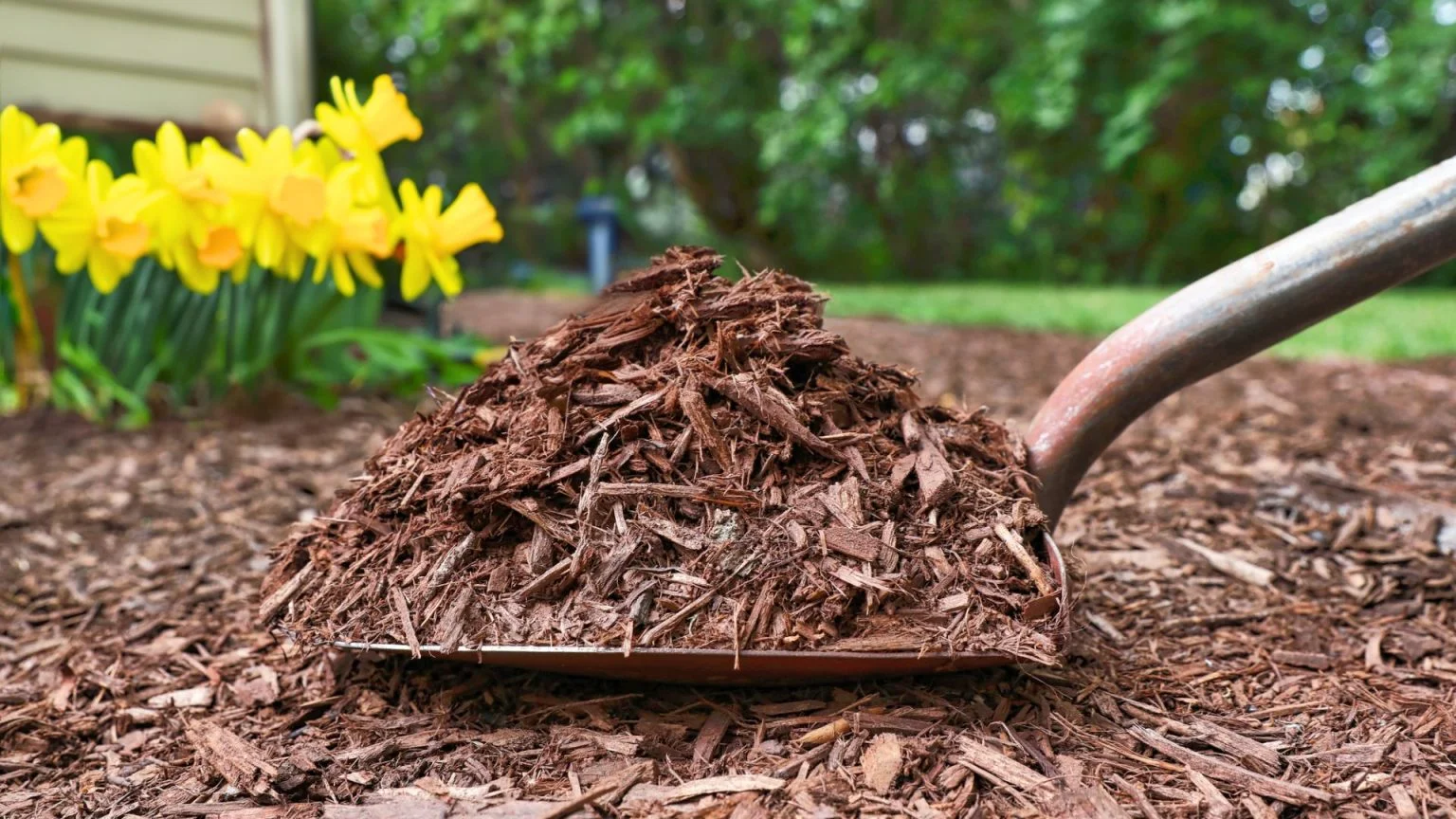
How Much Mulch Does My Yard Actually Need?
How much mulch you need depends on bed square footage and target depth. Here's a simple way to estimate before ordering or scheduling a mulch job.

How much mulch you need comes down to two numbers: the square footage of your beds and how deep you want the mulch layer to be. Get those two right and the calculation is simple math, even before a truck shows up.
A lot of the confusion around mulch quantity comes from irregular bed shapes and not knowing the difference between a cubic yard and a bag, which throws off estimates fast.
This post walks through a straightforward way to measure your beds and figure out roughly how much mulch a job actually needs.
The basic math behind mulch coverage
One cubic yard of mulch covers roughly 100 square feet at a 3-inch depth, or about 160 square feet at a 2-inch depth. These numbers are a helpful starting point for estimating any bed size.
To use this, you need the total square footage of your beds, which is length times width for a rectangular bed, and a target depth, typically 2 to 3 inches for a healthy, functional mulch layer.
Once you have square footage and depth, divide total square footage by the coverage rate for your chosen depth to get the cubic yards needed.
Measuring beds that are not simple rectangles
Most residential beds are not perfect rectangles, but you can still get a reasonably accurate estimate by breaking irregular shapes into smaller rectangles, triangles, or circles and adding the areas together.
For curved bed edges, walking the perimeter with a measuring wheel or long tape and averaging the width at a few points along the curve gives a workable estimate without needing exact precision.
Small measurement errors are not a big deal for mulch estimating, since a slight overage is easy to spread thin in another area, while running short mid-project means a second trip.
- Break irregular beds into rectangles, triangles, or circles
- Measure width at a few points along curved edges and average them
- Add 5 to 10 percent to your total estimate as a buffer
- Measure separately for beds with different target depths
Why depth matters as much as area
A common mistake is estimating mulch quantity based only on bed area without factoring in how deep the layer needs to be, which leads to running short if you assumed a shallower depth than you actually apply.
For new beds or full replacements, 2 to 3 inches is a reasonable target depth for most hardwood mulch. For simple annual top-dressing over existing mulch, 1 to 1.5 inches is often enough to refresh color and function.
Mixing up these two scenarios, treating a full new bed like a light top-dress, is one of the most common reasons homeowners underestimate how much mulch a project needs.
Bulk mulch versus bagged mulch
For anything beyond a small bed or two, bulk mulch delivered by the cubic yard is generally more cost-effective than bagged mulch from a home improvement store, since bagged mulch carries a higher per-unit cost for packaging and retail markup.
A standard 2 cubic foot bag of mulch covers about 8 square feet at 3 inches deep, which means covering even a modest bed can require a large number of bags compared to a single bulk delivery.
Bulk mulch does require a place to dump the pile and a way to move it to beds, which is worth factoring in if you are doing the labor yourself rather than having it professionally installed.
Common mistakes when estimating mulch
Forgetting to subtract areas taken up by large shrubs, trees, or hardscape features within a bed is a frequent overestimate, since those areas do not need mulch coverage.
Underestimating curved or irregular bed edges is a common underestimate, since curves often cover more area than they visually appear to from a distance.
Assuming last year's mulch has fully disappeared is another mistake. If you are top-dressing over an existing layer rather than starting from bare soil, you generally need less new material than a full-depth calculation would suggest.
When it makes more sense to have this professionally estimated
For a straightforward single bed, doing the math yourself is entirely reasonable. For a full property with multiple beds of varying shapes, depths, and mulch types, a professional walkthrough tends to be faster and more accurate than DIY measuring.
During a mulch consultation, we measure your beds directly and factor in existing mulch depth, plant coverage, and material choice so the quantity ordered matches what the job actually needs.
This also avoids the common outcome of ordering mulch yourself, running short mid-project, and needing a second delivery to finish beds around your landscape design.
Frequently asked questions
How many square feet does a cubic yard of mulch cover?
Roughly 100 square feet at 3 inches deep, or about 160 square feet at 2 inches deep. Depth is the key variable that changes the coverage number.
Is bulk mulch cheaper than bagged mulch?
For anything beyond a small bed, bulk mulch delivered by the cubic yard is generally more cost-effective than buying multiple bags, since bagged mulch carries higher per-unit packaging costs.
How much mulch do I need for a top-dress refresh versus a new bed?
A top-dress refresh over existing mulch typically needs about 1 to 1.5 inches of new material, while a new bed usually needs a full 2 to 3 inch depth, roughly double the material per square foot.
Should I round up or down when estimating mulch quantity?
Round up. Adding 5 to 10 percent extra to your estimate is a reasonable buffer, since running short mid-project usually means a second trip or delivery.
The bottom line
- Mulch quantity is a function of bed square footage times target depth.
- One cubic yard covers about 100 square feet at 3 inches deep.
- Bulk mulch is more cost-effective than bagged mulch for larger beds.
- Top-dressing needs less material than a full new bed installation.
- A professional measurement is worth it for properties with several irregular beds.
Skip the guesswork on mulch quantity
We measure your beds directly and order exactly what your property needs, no extra trips or leftover piles.
Explore mulch services