Custom Soffit Lighting Solutions That Last
Custom soffit lighting solutions add curb appeal and year-round flexibility with clean installation designed around your home's architecture.
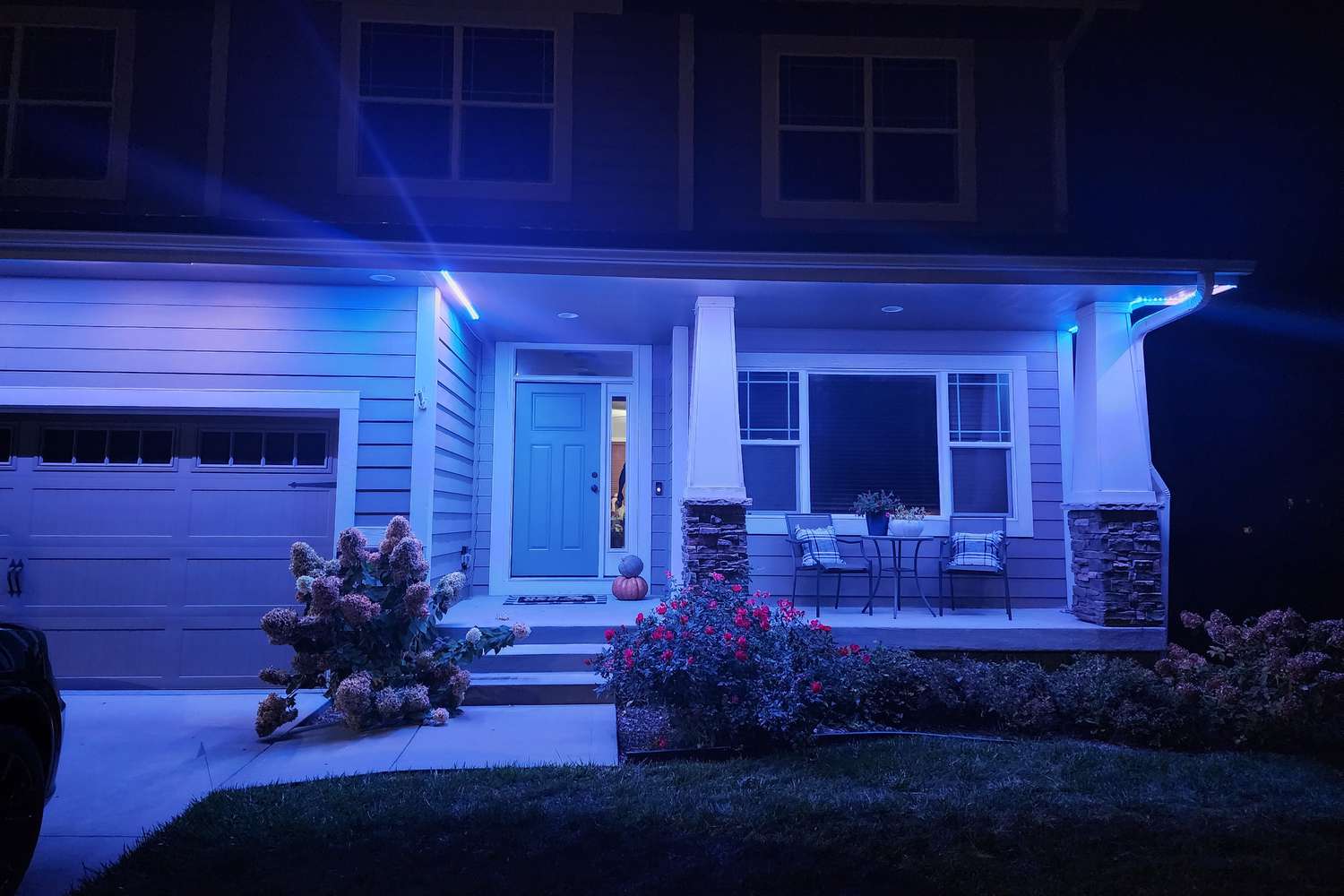
Custom soffit lighting means permanent LED track mounted along your soffit or eave, designed specifically for your home's overhangs, porch ceilings, and covered areas rather than a generic strip lighting kit. Soffit runs add depth to a lighting design that roofline-only installs miss.
We treat soffit lighting as part of the same Jellyfish lighting system used on rooflines, not a separate product, so it integrates with the same app and controller.
Here's what a custom soffit design actually involves and where it fits alongside a full roofline system.
What soffit lighting adds beyond a roofline run
A roofline-only install lights the top edge of the home, while soffit lighting lights the underside of overhangs, covered porches, and garage returns, adding a second layer of glow that fills in shadowed areas roofline light alone can't reach. Together they create a more complete lighting picture at night.
Homes with deep overhangs, covered entries, or wraparound porches see the biggest benefit, since those areas are otherwise the darkest part of the exterior after sunset.
Designing around vents, beams, and soffit material
Soffits have vents, seams, and sometimes exposed beams that a generic lighting kit ignores. A custom design routes track around vent openings so airflow isn't blocked, and works with beam spacing instead of running straight through it.
Vinyl, wood, and aluminum soffit each mount slightly differently, so the installer needs to know which material they're working with before finalizing the layout.
- Route track around soffit vents to preserve attic airflow
- Plan spacing between exposed rafters or beams on open porches
- Match mounting hardware to vinyl, wood, or aluminum soffit material
- Keep transformer and wiring runs inside the attic or a covered chase
Where soffit lighting works best
Covered front porches, garage overhangs, and back patio soffits are the most common spots for this kind of install, since they're already architectural focal points at night. A soffit run under a covered entry also adds practical light for anyone walking up to the door after dark.
For homes with an outdoor living space, soffit lighting under a covered patio pairs naturally with patio lights or Saber series fixtures for a layered look.
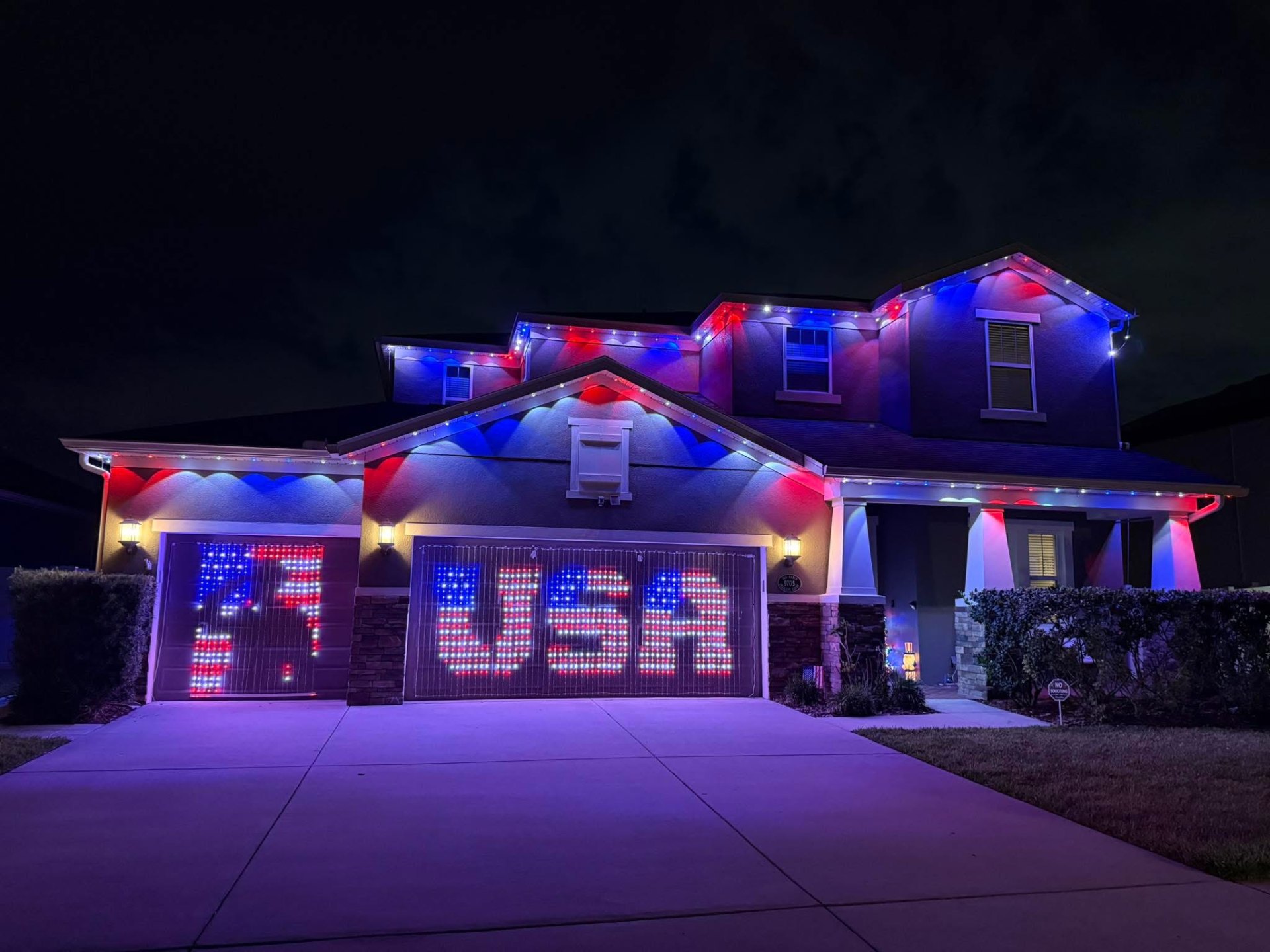
How soffit runs connect to the rest of the system
Soffit track wires back to the same transformer and hub used for roofline runs where the layout allows, meaning one app controls the whole exterior instead of separate systems with separate controls. This is one advantage of planning soffit and roofline lighting together from the start rather than adding soffit lighting later as an afterthought.
If a soffit run is added after a roofline system already exists, we check load capacity on the existing transformer before extending it, since adding length without checking capacity is a common cause of dimming issues.
What makes an installation last
Correct standoff from the soffit surface, sealed mounting points, and hardware rated for outdoor exposure all matter more for longevity than the diode itself. Soffits also see more airflow than fascia in some designs, so mounting needs to account for wind load over multiple seasons.
A poorly mounted soffit run can sag or shift over time, which is far more visible on a ceiling surface you look up into than on a roofline you view from a distance.
Common mistakes with DIY soffit lighting
Store-bought strip lighting often lacks the standoff and sealing needed for long-term outdoor soffit use, and adhesive-only mounting tends to fail within a season or two of temperature swings. Another common issue is running strips directly across vents, which can restrict airflow and cause condensation issues in the attic.
If you're considering a DIY option, our Govee track kits are built with outdoor-rated mounting hardware designed for this kind of application, which is a meaningful step up from generic strip lighting.
Getting a custom soffit design for your home
A site walk lets us look at your specific soffit material, vent layout, and how it connects to any existing roofline lighting before proposing a design. That walk-through also identifies whether a full system or a partial run, like just the front porch, makes the most sense for your budget.
Homeowners in Maumee, Waterville, and Monroe have added soffit runs to existing roofline systems as a smaller follow-up project once they saw the initial install.
Frequently asked questions
Can soffit lighting be added to an existing roofline system?
Yes, in most cases, though we check the existing transformer's capacity before extending it. If capacity is tight, a second small transformer keeps both runs performing correctly.
Will soffit lighting block my attic vents?
A properly designed layout routes track around vent openings rather than across them, which preserves airflow. This is one reason a custom design matters more than a generic strip kit for soffit applications.
Does soffit lighting use the same app as roofline lighting?
When wired to the same hub, yes, soffit and roofline runs are controlled from a single app with shared scenes and schedules. This is typically how we design combined systems from the start.
How much does adding soffit lighting typically add to a project?
Cost depends on linear footage and complexity of the soffit area, similar to roofline pricing. A free quote after a site walk gives an accurate number for your specific home.
The bottom line
- Soffit lighting fills in shadowed overhangs that roofline lighting alone doesn't reach.
- Custom design accounts for vents, beams, and soffit material before installation.
- Soffit and roofline runs can share one transformer and app when planned together.
- Correct standoff and sealed mounting keep soffit lighting from sagging or shifting over time.
- A site walk determines whether a full system or a partial run fits your home and budget.
Add depth to your lighting with a custom soffit design
We'll look at your soffit material and layout and show you what a combined system could look like.
Explore Jellyfish lighting