
Power Washing Before Mulch or Lighting Installs: Why Order Matters
Power washing before mulch or lighting installs protects new work from overspray and debris. Here's why sequencing outdoor projects in this order makes a difference.
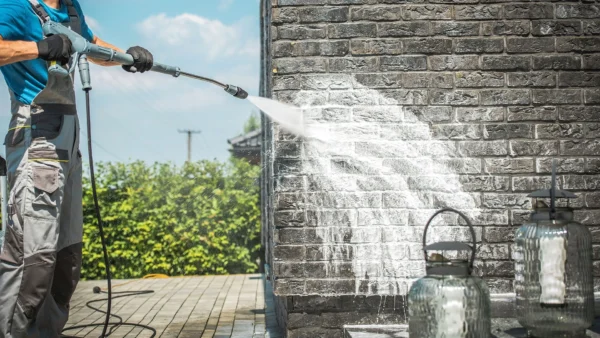
Power washing before mulch or lighting installs is the right order for one simple reason: pressure washing kicks up dirt, algae, and debris that can land right in fresh mulch or on newly installed fixtures. Doing it first keeps that mess from undoing work you just paid for.
We get asked about project order fairly often when homeowners are planning multiple outdoor projects for the same season, whether that is a power washing job alongside mulch or a lighting install.
Here is the reasoning behind the typical sequence and when it is safe to deviate from it.
What actually happens during a power washing job
Pressure washing a house exterior, driveway, or patio dislodges built-up dirt, algae, mildew, and sometimes old paint or coating flakes, all of which have to go somewhere. Runoff carries this debris across nearby surfaces, including any adjacent planting beds.
This is normal and expected as part of the process, not a sign of something going wrong. The issue only comes up when there is fresh mulch, new plants, or newly installed fixtures sitting directly in the path of that runoff.
Understanding this is the main reason the sequencing recommendation exists in the first place.
Why fresh mulch and power washing don't mix well
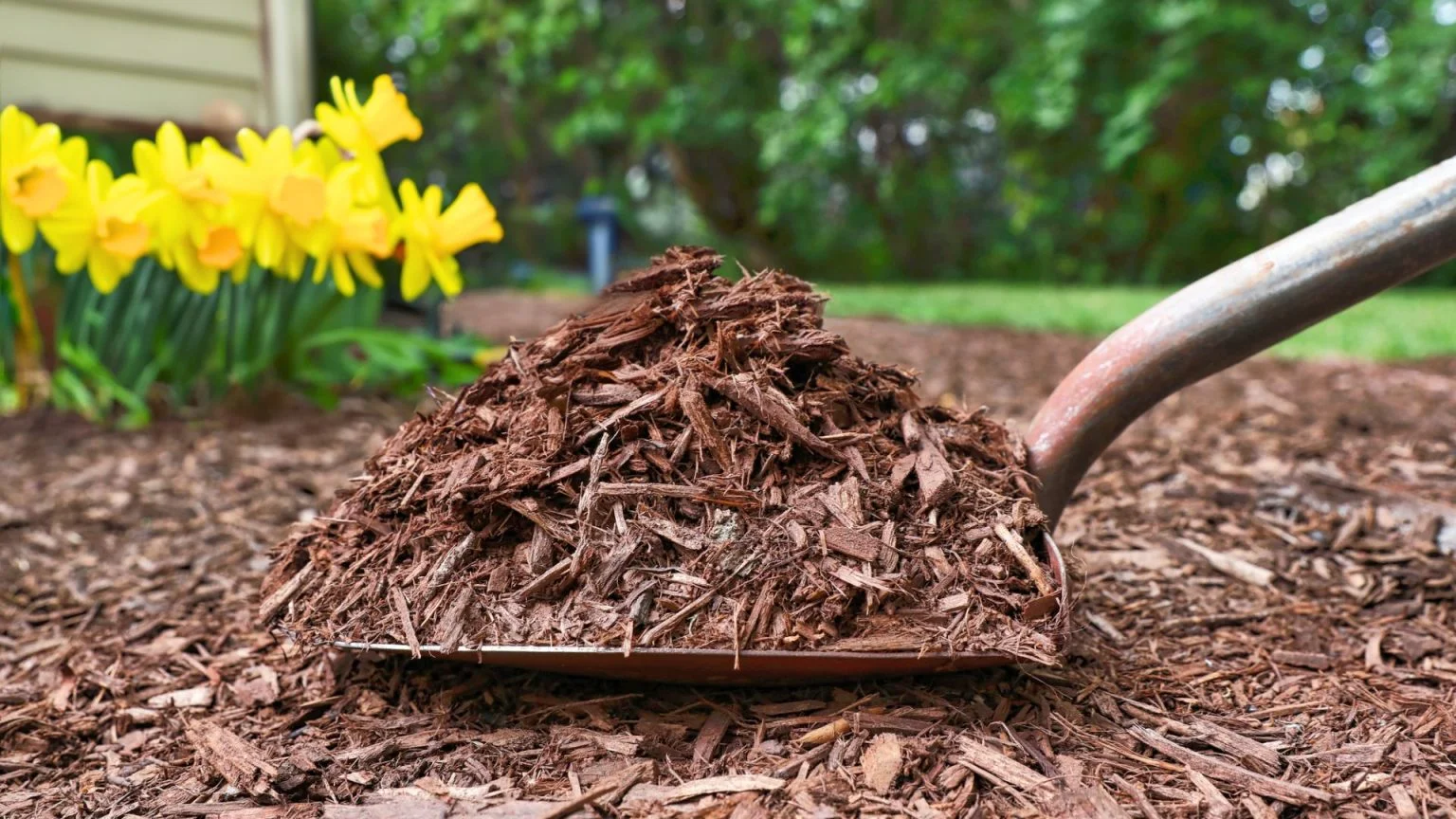
Freshly laid mulch is loose and not yet settled, which means it is easy to displace or discolor with pressure washing runoff and overspray. Dirt and algae residue can also stain light-colored mulch noticeably compared to how it looks once weathered a bit.
If mulch is already down and washing needs to happen, covering nearby beds with tarps during the job is a reasonable workaround, though it adds time and is not always practical for a full house wash.
Doing the washing first avoids this problem entirely and means the mulch you put down afterward stays clean from day one.
How this applies to landscape lighting fixtures
Landscape lighting fixtures, wire connections, and transformers are generally water-resistant by design, but a direct pressure washer stream at close range is a different situation than rainfall exposure they are built for. Spraying directly at a fixture or a wire connection point can force water into places it is not meant to go.
Installing landscape lighting after a power wash means fixtures go in clean, without dirt or debris settling around them during the wash, and without any risk of the pressure washer being aimed at fixtures that are not yet placed.
If lighting already exists and you need a power wash near it, mentioning this ahead of time lets whoever is washing avoid direct spray on fixtures and connection points.
What about roofline lighting like Jellyfish or Govee tracks?
Permanent lighting tracks mounted along the roofline, like Jellyfish or Govee systems, are positioned higher up and generally out of the direct path of a driveway or patio power washing job. Roof and gutter washing is a different scenario and worth discussing separately if that is part of your plan.
These systems are designed to handle weather exposure year-round, but as with ground-level fixtures, a direct high-pressure stream at close range is not the same as normal rain exposure.
If you are having your roofline or gutters cleaned and have permanent lighting installed, it is worth flagging to whoever is doing that work so they know the track is there.
Typical order for a multi-project season
When a homeowner has several outdoor projects planned for the same season, a reasonable sequence is power washing first, followed by any hardscape or structural work, then mulch and planting, then lighting installation last. This order keeps each new install clean and reduces the chance of one project undoing another.
This is a general guideline, not a strict rule. Weather, contractor scheduling, and budget timing often mean projects happen in whatever order actually works out, and that is fine as long as you know what to protect during each step.
If you are unsure how to sequence a specific combination of projects, it is worth asking whoever is doing the work rather than guessing, since some combinations matter more than others.
- Power washing exterior surfaces and hardscape
- Retaining wall or structural landscaping work
- Mulch and planting installation
- Landscape lighting fixture placement and wiring
- Final walkthrough and adjustments
When it's fine to deviate from this order
If your mulch and lighting are already well established and you are just doing a routine annual power wash, there is no need to redo anything beforehand. The sequencing concern mainly applies when projects are happening close together in the same season.
Covering beds and being mindful around existing fixtures during the wash is enough in that situation. The EPA's guidance on stormwater and yard runoff is a useful reference if you are also thinking about where wash water and runoff end up on your property.
The main thing to avoid is scheduling a big power washing job for the same week as a fresh mulch or lighting install without a plan for protecting the new work.
Frequently asked questions
Can I power wash right after mulch is installed?
It is better to avoid this if possible, since fresh mulch can be displaced or stained by runoff and overspray. If washing has to happen soon after mulching, covering the beds during the job helps protect them.
Will power washing damage my landscape lighting fixtures?
Fixtures are generally water-resistant, but a direct high-pressure spray at close range is different from normal rain exposure. It is best to avoid spraying fixtures and connection points directly during a wash.
What's the best order if I'm doing multiple projects this season?
A common sequence is power washing first, then structural or hardscape work, then mulch and planting, then lighting last. This keeps each new install cleaner and reduces the chance of one project affecting another.
Does this apply to roofline lighting like Jellyfish?
Roofline systems are usually out of the path of driveway or patio washing, but roof and gutter cleaning is a separate consideration. Flag any permanent lighting to whoever is doing that work.
The bottom line
- Power washing generally works best before mulch and lighting installs, not after.
- Fresh mulch can be displaced or stained by pressure washing runoff and overspray.
- Avoid direct high-pressure spray on lighting fixtures and wire connections.
- A reasonable project order is washing, then hardscape, then mulch, then lighting.
- Established landscapes with routine washing needs don't need to worry about this sequence.
Planning multiple outdoor projects this season
We can help sequence power washing, mulch, and lighting so each project protects the next instead of undoing it.
See power washing services