
New Koi Pond vs. Pond Restoration vs. Pond Removal: How to Decide
Deciding between a new koi pond, pond restoration, or full removal depends on the liner condition, filtration, and how much you actually use the space. Here's the framework.
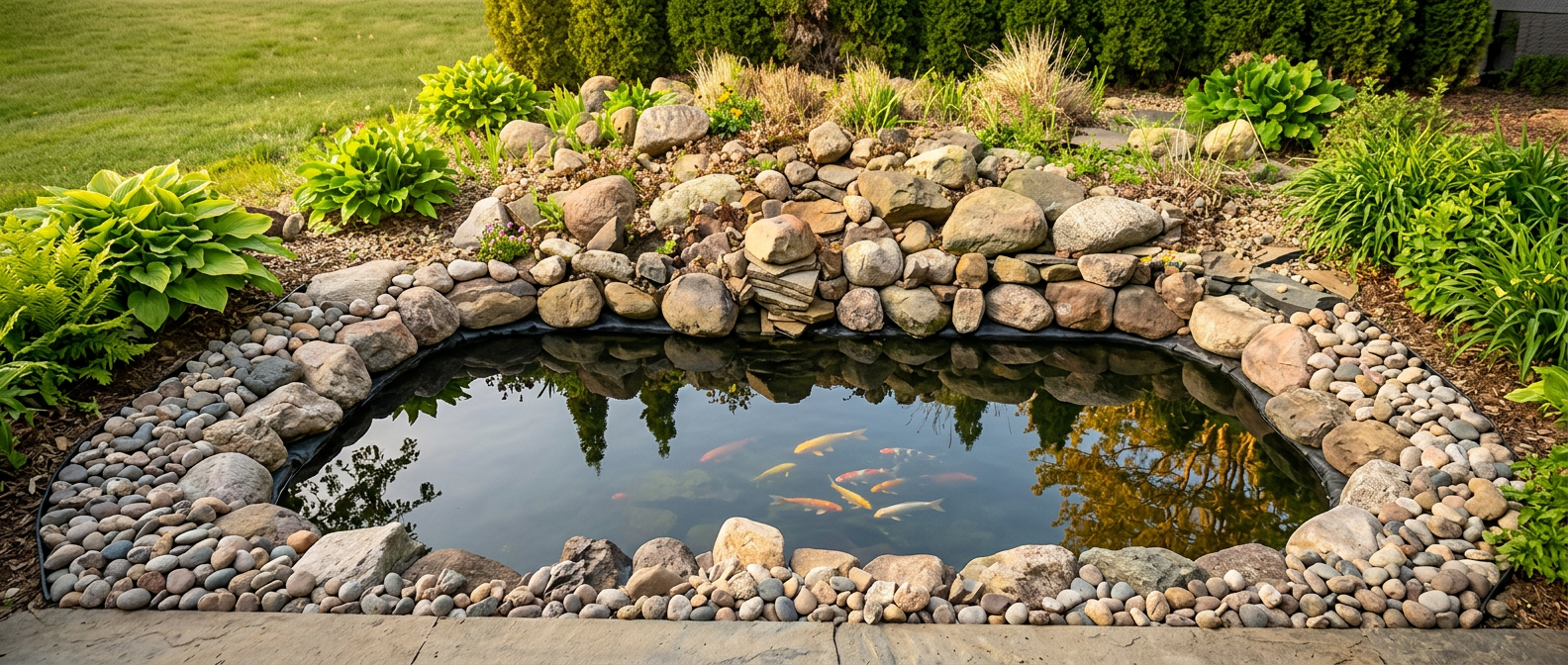
Choosing between a new koi pond, a pond restoration, or removal comes down to three questions: is the liner still sound, is the filtration adequate for the fish load, and do you actually want a pond in that spot going forward. Answer those honestly and the decision usually becomes clear.
We get called out to a lot of ponds that were installed years ago, sometimes by a previous homeowner, and the current owner isn't sure whether it's worth saving. Some are easy calls. Others need a real evaluation before you spend money either way.
Here's how we walk through that decision on site.
What condition is the liner actually in?
The liner is the single biggest factor in this decision. A flexible liner that's still intact, without major tears, UV degradation, or persistent leaks, can often be reused as part of a restoration, saving significant demolition cost.
Signs the liner is done include water levels dropping faster than evaporation explains, visible cracking or brittleness where the liner is exposed at the edges, and rock or gravel that has worked its way through small punctures. If you're topping off the pond more than once a week in summer, that's worth investigating before assuming it's just evaporation.
Is the filtration keeping up with the fish load?
A lot of ponds that look like they need a full rebuild actually just have undersized or outdated filtration. Cloudy water, algae blooms, and stressed fish are often filtration problems, not structural ones.
If your koi have grown significantly since the pond was built, or you've added fish over the years, the original filter system may simply be undersized for the current bioload. That's a straightforward fix within a restoration, not a reason to remove the pond.
When does restoration make more sense than a rebuild?
Restoration is usually the right call when the liner is sound, the basic shape and location work for you, and the problems are mechanical: filtration, pump, plumbing, or cosmetic issues like faded rock or a worn waterfall structure.
It's also worth considering restoration if you have an emotional attachment to the pond, established koi you don't want to relocate long-term, or mature plantings around the edge that took years to establish.
- Liner intact with no major leaks
- Filtration or pump is undersized or aging out
- Fish and plants you want to keep in place
- Location and size still work for the yard
When is a full rebuild or removal the better call?
If the liner has failed in multiple spots, if the pond was built with an underlying design flaw like poor drainage around the perimeter, or if tree roots have compromised the excavation, restoration usually costs close to what a rebuild would cost anyway. In those cases, starting over gives you a cleaner result.
Removal, not rebuilding, is worth considering seriously if you're honest that the pond has become more maintenance than enjoyment. Some homeowners inherit a pond from a previous owner and never really wanted one. If that's you, pond removal and regrading into lawn or a garden bed is a completely valid direction.
How do you weigh cost between the three options?
New build costs the most upfront but gives you full control over size, depth, and filtration sized correctly from day one. Restoration typically costs less than a new build since you're keeping the excavation and often the liner, but the gap narrows if extensive rock or plumbing work is needed.
Removal has its own cost since it involves draining, liner removal, and regrading, but it eliminates ongoing maintenance costs entirely going forward. None of these is universally cheaper; it depends on the pond's actual condition.
What does an honest evaluation actually involve?
We start by draining the pond partially or fully to inspect the liner directly rather than guessing from water clarity alone. We check the pump and filtration against the current fish load and pond volume, and we look at the surrounding grade for drainage issues that might be feeding leaks.
That gives you a real answer instead of a guess, and it's the same information whether you end up restoring, rebuilding, or deciding removal is the right call.
Frequently asked questions
Can koi be relocated temporarily during a restoration?
Yes. Fish are typically moved to a holding tank or temporary tank with aeration while the pond is drained and worked on, then returned once water is cycled and stable again.
How do I know if my pond is leaking versus just evaporating?
Mark the water level and check it daily for a week without topping off. Evaporation is usually gradual and consistent with weather, while a leak often shows a level that drops faster than hot, dry weather alone would explain.
Is removal cheaper than restoration?
Not always. Removal involves draining, liner and rock removal, and regrading the area, which has its own real cost. It's often comparable to a modest restoration, so the decision should be based on what you actually want in that space, not assumed cost savings.
What happens to the fish if I decide to remove the pond?
Fish need a new home before removal begins, whether that's a smaller feature elsewhere on the property, a friend's pond, or a local aquatic supplier who can take healthy koi.
The bottom line
- Liner condition is the single biggest factor in restoration versus rebuild decisions
- Filtration problems often masquerade as bigger structural issues
- Restoration works best when the liner is sound and you like the current design
- A full rebuild or removal makes more sense when leaks are extensive or roots have caused damage
- Be honest about whether you still want the pond, not just whether it can be fixed
Not sure if your pond needs restoration or removal?
We'll drain and inspect it on site so you get a real answer instead of a guess, then walk you through the options that actually fit your yard.
Explore pond services