What Roof Overhang Do You Need for Govee Lighting Installation?
The roof overhang requirement for Govee lighting installation explained, including what happens on homes with minimal or no overhang.
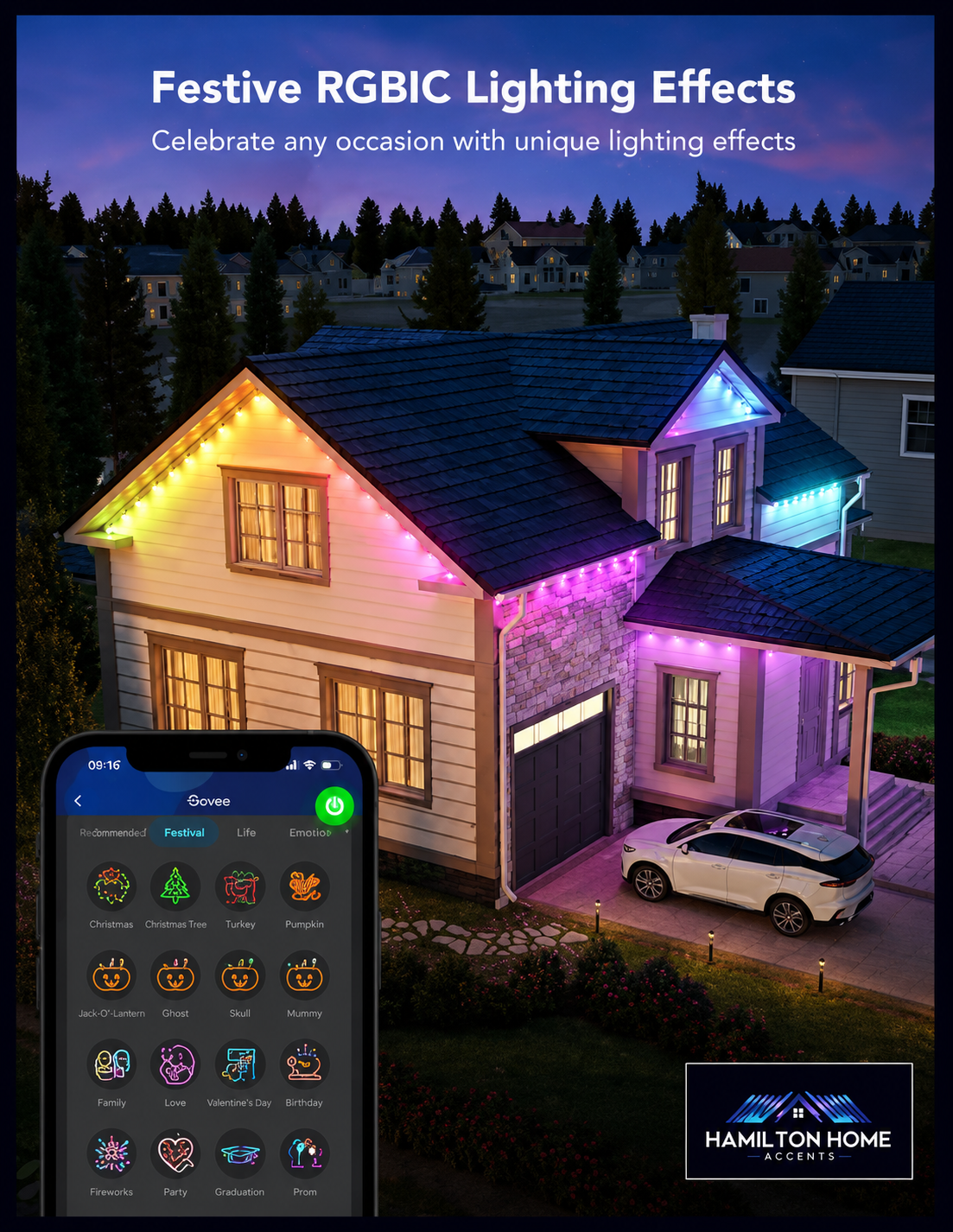
The roof overhang requirement for Govee lighting installation is less strict than many homeowners expect. There is no single minimum overhang measurement that rules a home out, but the amount of overhang does affect how the track mounts and how visible it is from below.
Homes vary widely in roofline style, from deep traditional overhangs to modern homes with minimal or flush eaves, and each style changes the mounting approach slightly. This is something we evaluate during a site walk rather than something you need to measure yourself before calling.
This post covers how overhang affects Govee lighting installation and what options exist for homes with limited overhang.
Why overhang matters for mounting
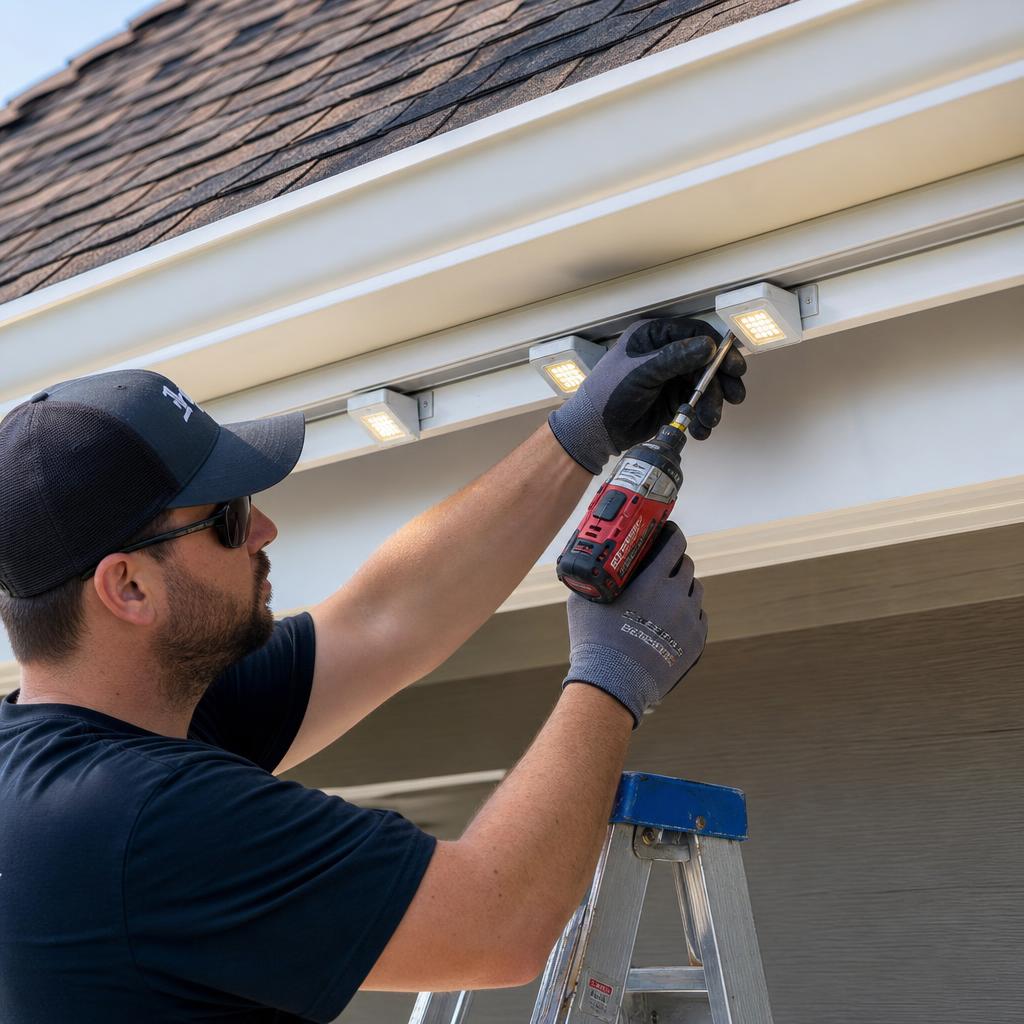
Custom track is typically mounted to the fascia board, the vertical trim piece running along the edge of a roof overhang, since it offers a stable, flat mounting surface. A typical overhang with a standard fascia board gives installers a clean, consistent surface to work with along the entire roofline.
Overhang depth also affects the viewing angle of the light once installed. A deeper overhang can partially shield light from certain angles, while a shallow overhang exposes more of the fixture directly to view.
None of this is a strict pass-fail test. It is a set of considerations that shapes exactly how and where track gets mounted on your specific home.
What a typical overhang mounting looks like
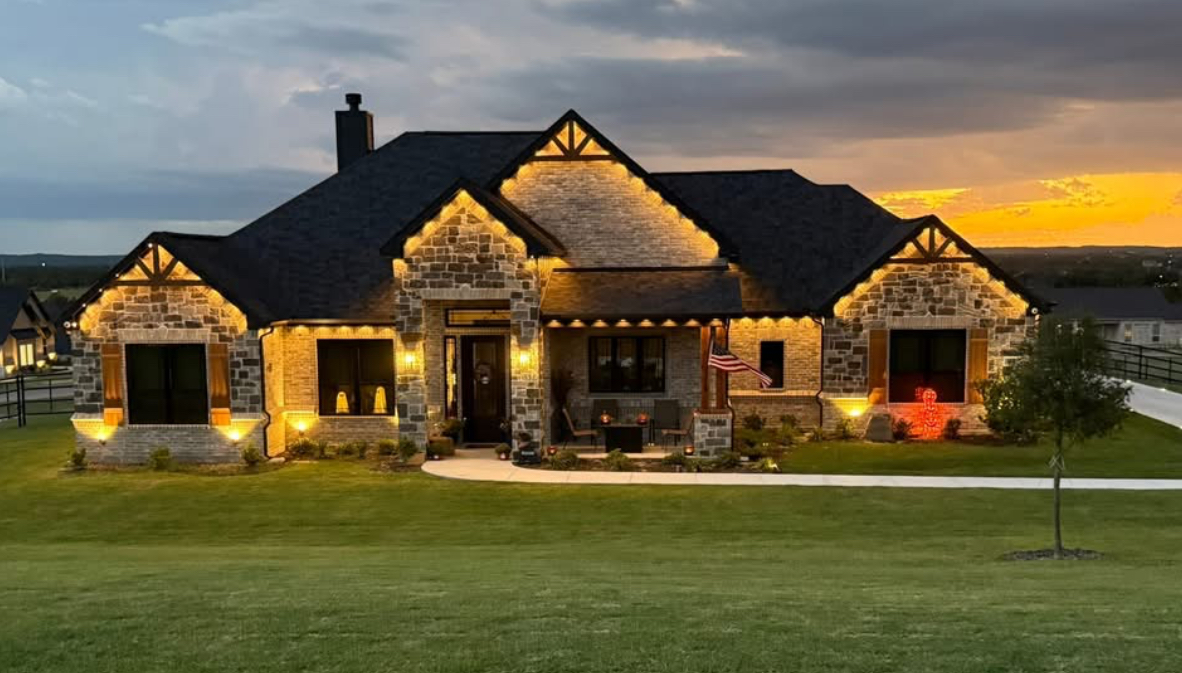
On a home with a standard overhang and fascia board, track mounts directly to the fascia using brackets fastened at consistent intervals along the run. This is the most common and most straightforward mounting scenario we see.
The fascia provides a stable surface that keeps the track level and properly aligned with the roofline above it, which contributes to an even, professional look once lit.
This setup also tends to make wire routing simplest, since the track channel runs continuously along a single consistent surface without needing to jump between different mounting points.
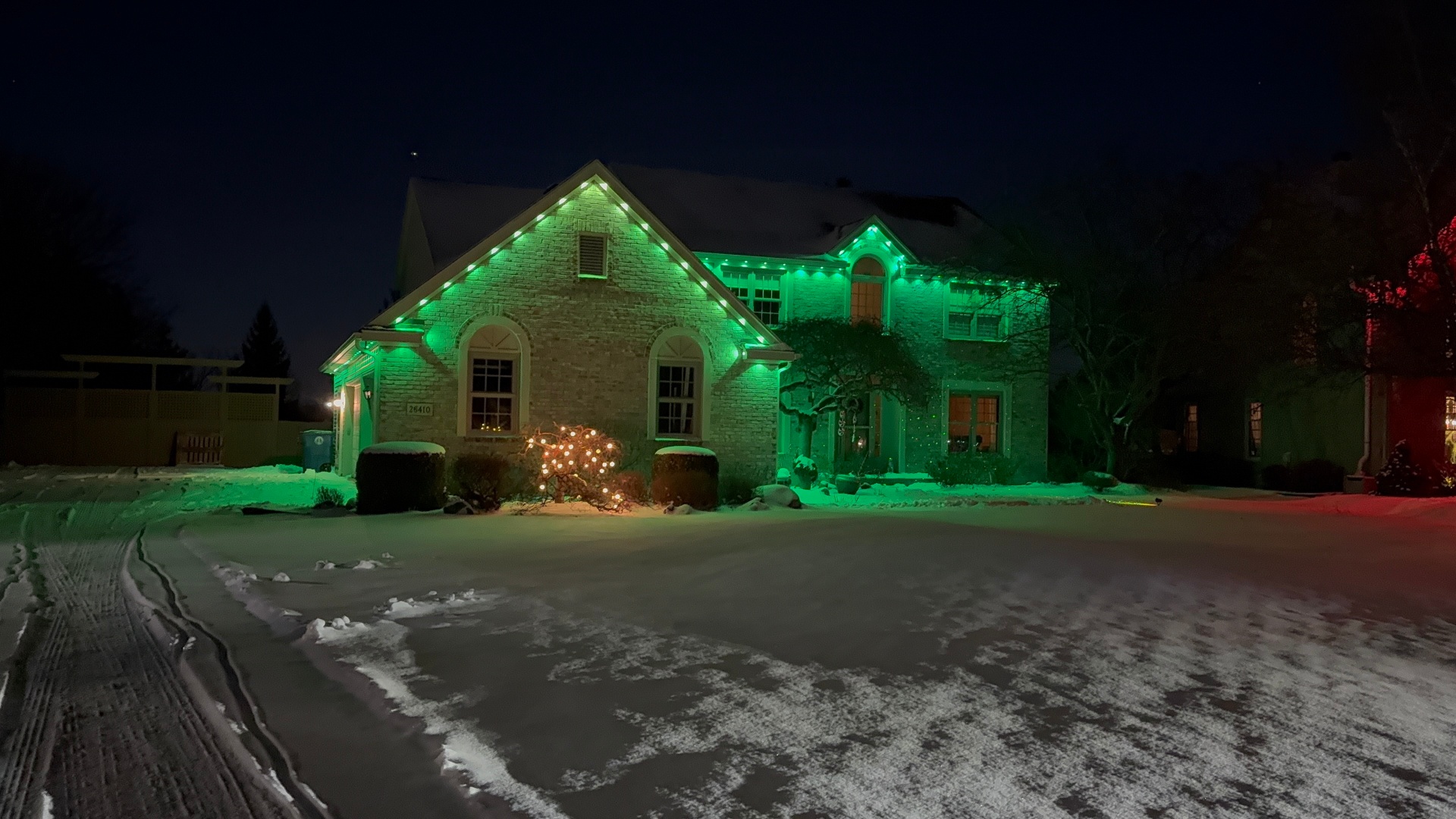
Homes with minimal or flush overhangs
Some architectural styles, particularly certain modern or contemporary designs, have minimal overhang or a flush roofline without a traditional fascia board to mount to. These homes are not automatically ruled out, but they do require a different mounting approach evaluated during the site walk.
Options in these cases can include mounting to an alternate trim surface, adjusting bracket angle, or in some cases recommending a different lighting approach if the roofline genuinely will not support a clean permanent lighting mount.
We would rather walk your specific roofline in person and tell you honestly what is achievable than guess based on a general description over the phone.
- Alternate trim surfaces can sometimes serve as a mounting point
- Bracket angle can be adjusted for unusual roofline profiles
- Some homes may need a different lighting approach if mounting is not practical
- A site walk gives an accurate answer specific to your home
- Modern architectural styles are evaluated individually rather than assumed to be incompatible
How overhang depth affects the finished look
A deeper overhang can create more shadow directly under the roofline during the day, which sometimes changes how prominent the track appears from the street compared to a shallow overhang where the track sits more exposed to view.
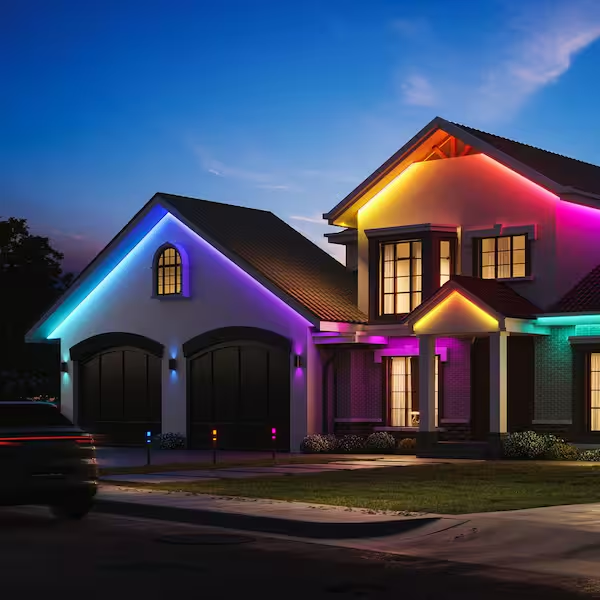
At night, this effect is much less noticeable since the light itself is the focal point rather than the track housing. Overhang depth mostly influences the daytime appearance more than the nighttime performance.
This is one more reason paint-matching track to trim color, covered in our post on hiding Govee light wires, helps regardless of overhang depth.
What to expect during a site walk evaluation
During a site walk, we look at your fascia condition, overhang depth, and roofline shape together to determine the best mounting approach for your specific home. This takes into account both feasibility and the finished appearance you are looking for.
If your home has an unusual roofline style, mentioning that when you request a quote helps us come prepared to evaluate the specific mounting challenge rather than assuming a standard setup.
Most homes, even those with less common overhang styles, have a workable mounting solution once we have seen the roofline in person.
Frequently asked questions
Is there a minimum overhang required for installation?
No strict minimum exists. Overhang depth affects mounting approach and visibility angle, but most rooflines have a workable solution once evaluated in person.
Can homes with flush or minimal overhangs still get Govee lighting?
Often yes, using an adjusted mounting approach evaluated during a site walk. In rare cases where mounting is not practical, we will discuss alternative options honestly.
Does overhang depth change how bright the lighting looks?
It mostly affects the daytime appearance and viewing angle rather than nighttime brightness, since the light itself is the focal point after dark.
How do I know if my roofline is a good fit before scheduling a quote?
You do not need to evaluate it yourself. A site walk gives an accurate, specific answer for your home, and most roofline styles have a workable solution.
The bottom line
- There is no strict minimum overhang requirement for installation.
- A standard overhang with fascia offers the most straightforward mounting.
- Minimal or flush overhangs usually still have a workable mounting solution.
- Overhang depth affects daytime appearance more than nighttime performance.
- A site walk is the most reliable way to evaluate any specific roofline.
Wondering if your roofline is a fit
We evaluate overhang, fascia, and roofline shape in person during a free site walk.
Explore Govee lighting