Why We Install Govee Lighting Through Ohio Winters (and Most Installers Don't)
Govee lighting cold weather install questions answered: why we keep installing through Ohio winters and what changes about the process when temperatures drop.
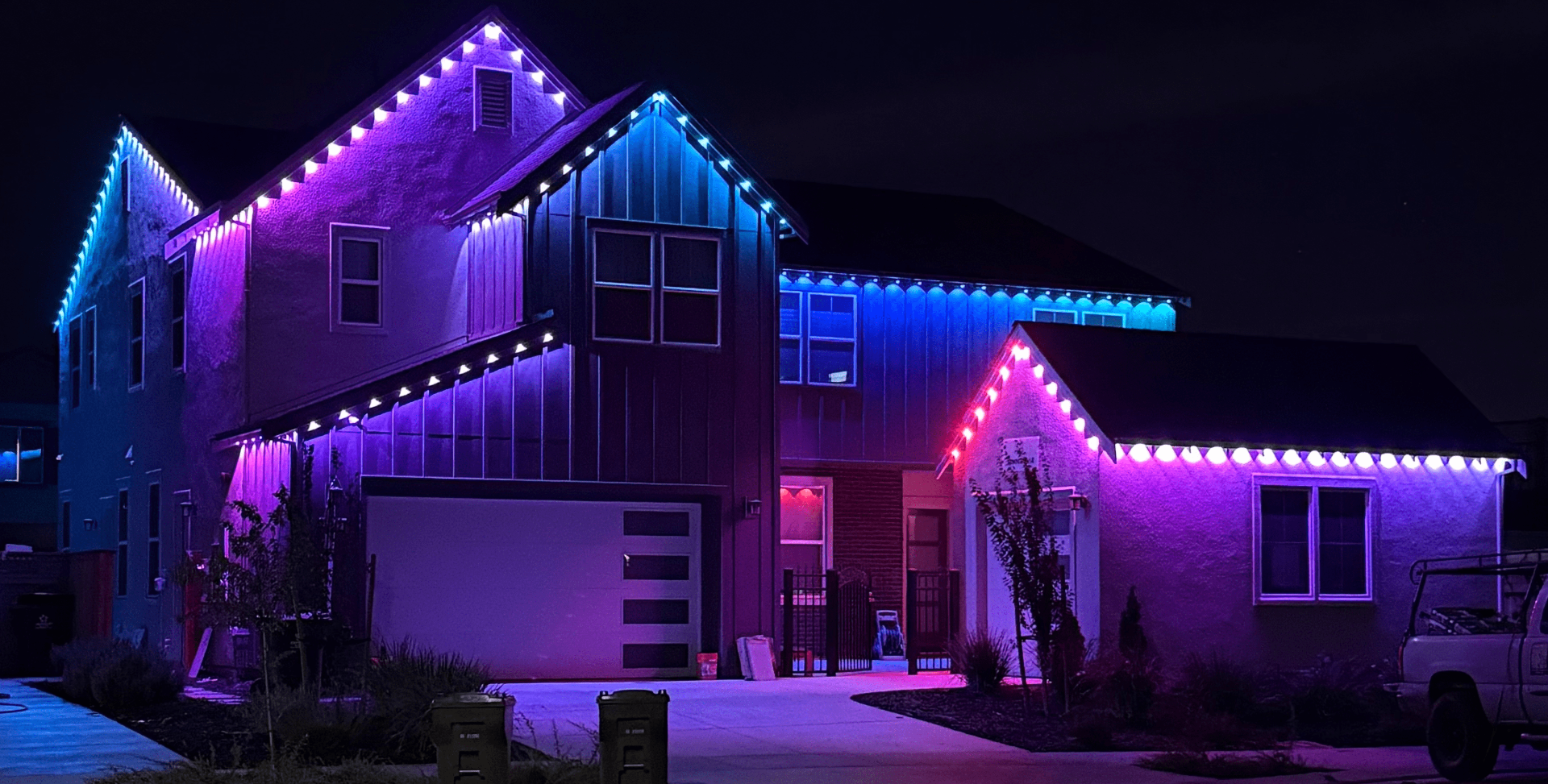
A Govee lighting cold weather install is possible through most of an Ohio winter, and we keep our crews out on ladders well after other installers have packed it in for the season. The track, brackets, and wiring are not the limiting factor. Ice, snow load, and daylight hours are what actually shape our schedule.
A lot of homeowners assume permanent lighting installs stop entirely once temperatures drop below freezing, which is not true for us. We adjust the process rather than stop it, and that means homeowners calling in November or December are not necessarily waiting until spring.
This post covers what changes about a Govee lighting install in cold weather, when we do pause, and what to expect if you are booking a winter project.
What actually stops a winter install
Cold air by itself does not stop us from installing Govee lighting. The controllers, wiring, and track hardware are rated for outdoor use across the range of temperatures Northwest Ohio sees in a typical winter.
What does stop us is roof safety. A roofline covered in snow or glazed with ice is not a safe place for a crew, so we reschedule around active snow and ice events rather than around the calendar date.
Wind is the other practical factor, since gusty days make ladder work and roof access harder regardless of temperature. We watch the forecast day by day rather than assuming winter is a blackout period.
Why some installers avoid winter altogether
Some lighting companies simply staff down for winter and shift crews to other seasonal work, which is a business decision more than a technical limitation. Others rely heavily on adhesive-mounted clips that can lose grip in cold temperatures, making a winter install riskier for them.
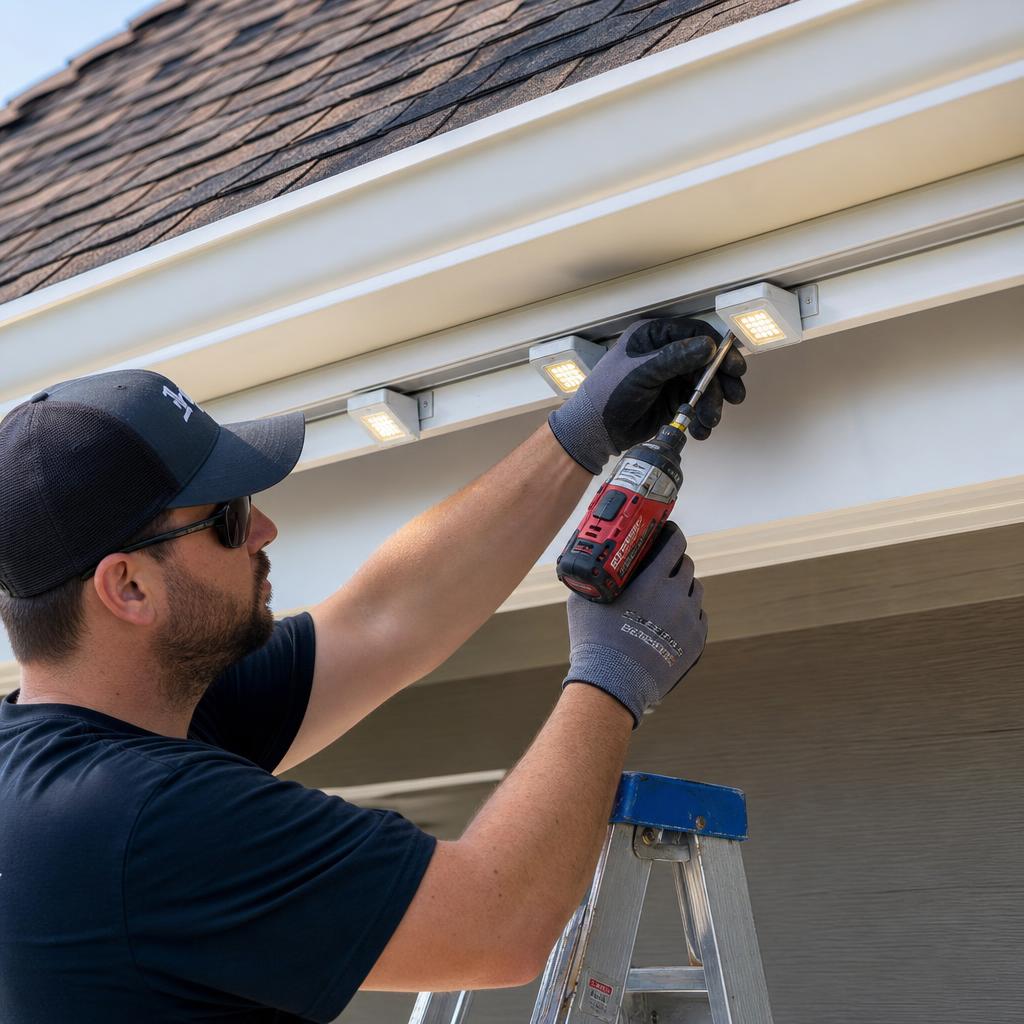
Because we mount Govee lighting into custom track with mechanical fasteners rather than relying only on adhesive clips, cold weather has less effect on how securely the lighting stays put once installed.
That difference in mounting approach is a big part of why we can keep a winter schedule that other installers choose not to run.
How the install process adjusts in winter
The core process, a site walk, track layout, and controller wiring, stays the same in winter. What shifts is pacing: shorter daylight hours mean a job that takes one day in July might stretch across two shorter days in December.
Crews dress for the cold and take more frequent breaks, which we build into scheduling rather than rushing through. A slightly longer timeline is a fair trade for a safer, cleaner install.
Adhesive components, where they are used at all, get extra attention and sometimes additional mechanical backup fastening in colder conditions to make sure everything holds through the season.
- Site walk and layout planning happen the same as any season
- Crews work shorter windows around available daylight
- Extra fastening attention on any adhesive-based components
- Active snow or ice on the roof means a reschedule, not a cancellation
- Controller and app setup are unaffected by outdoor temperature
Does cold weather affect how the lights perform once installed
Once installed, Govee lighting performs consistently across the temperatures Northwest Ohio and Southeast Michigan see through the winter months. LED lighting generally tolerates cold well, and in some cases LEDs are even more efficient in colder ambient temperatures than in extreme heat, according to general guidance from the U.S. Department of Energy on LED lighting.
Snow accumulation on the track itself is mostly a cosmetic, temporary issue rather than a functional one, since the lighting sits under a diffused track cover designed for outdoor exposure.
Homeowners running warm white winter scenes or holiday colors through the coldest months should not expect any difference in brightness or reliability compared to a summer install.
Why booking in fall or early winter can work in your favor
Our schedule fills up fastest in late summer and early fall as homeowners plan ahead for the holidays. Booking a bit later, once that rush has passed, sometimes means a shorter wait for an install date.
If you want Govee lighting in place before winter holidays specifically, earlier is still better, but a cold-weather install is a real option if your quote or scheduling lands later than planned.
We will always tell you honestly if a specific stretch of weather is going to push your install date, rather than promising a date we cannot safely meet.
Frequently asked questions
Can Govee lighting be installed in freezing temperatures?
Yes, cold air alone does not stop installation. We reschedule around active snow or ice on the roof for safety reasons, not because of the temperature itself.
Will the lights perform differently once winter sets in?
No, once installed the lighting performs the same across the temperature range Northwest Ohio typically sees. Snow sitting on the track is cosmetic and temporary rather than a functional issue.
Does a winter install take longer than a summer one?
It can, mainly because shorter daylight hours limit how much a crew can complete in a single day. The overall process is the same, just spread across more short days if needed.
Is it better to wait until spring to book?
Not necessarily. Booking in late fall or winter can mean a shorter wait than the busy summer and early fall season, and we can usually still get you installed before conditions make it impractical.
The bottom line
- Cold air does not stop a Govee lighting install; unsafe roof conditions do.
- Mechanical track mounting holds up better in cold than adhesive-only clips.
- Lighting performance once installed is unaffected by winter temperatures.
- Winter jobs may span more days due to shorter daylight, not more difficulty.
- Booking outside the fall rush can sometimes get you installed sooner.
Ready for permanent lighting before winter is over
We install Govee lighting through most of the Ohio winter using mechanically fastened track built for the season.
Explore Govee lighting