How to Hide Govee Light Wires on Your Roofline
How to hide Govee light wires on your roofline for a clean daytime look, from track-based wire channels to power routing at the controller.
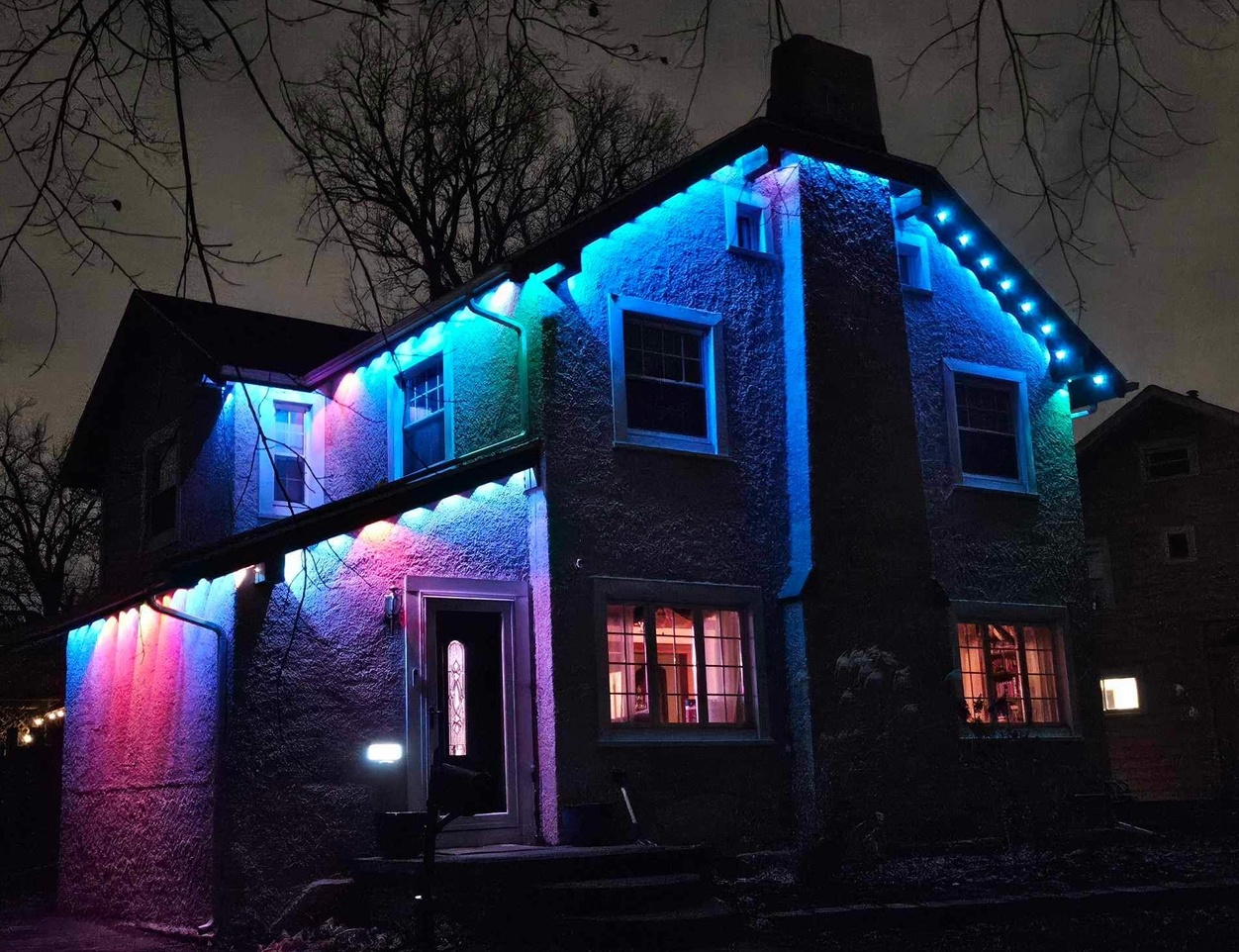
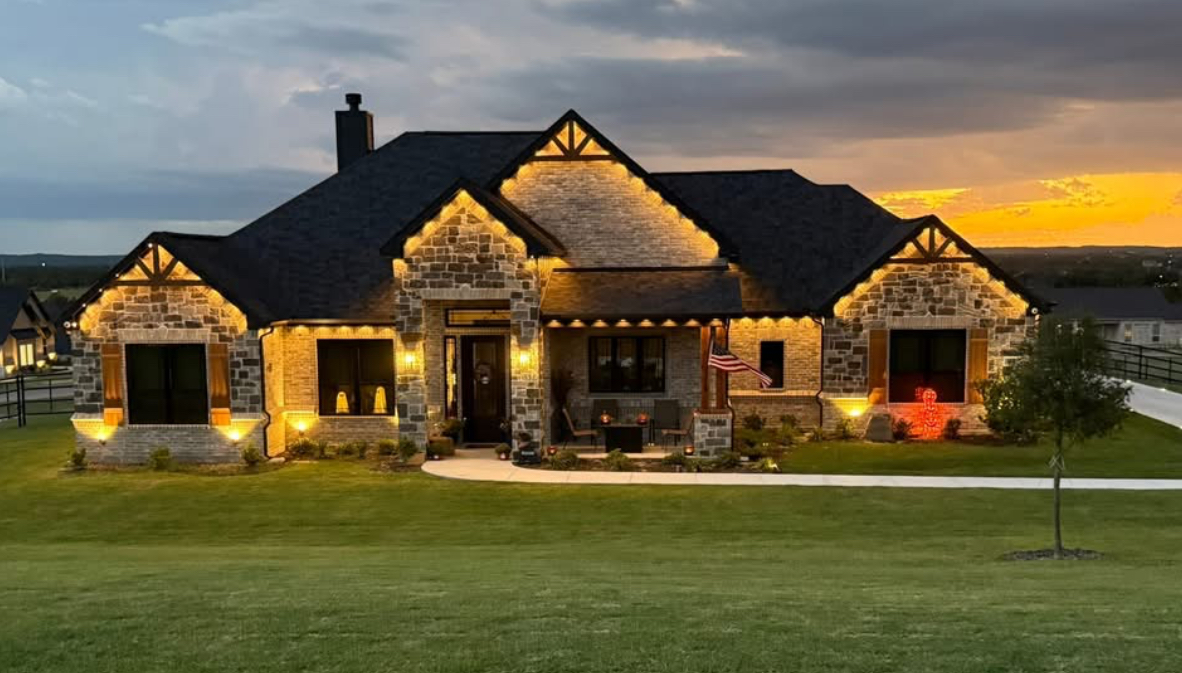
Learning how to hide Govee light wires on your roofline is what separates a clean, professional-looking install from one that looks fine at night but messy during the day. The wiring itself does not disappear, but where and how it is routed determines whether anyone notices it in daylight.
Most of the visible wire complaints we hear about come from stock adhesive clip kits that leave connector wire exposed between lights rather than tucked inside a housing. That is a mounting choice, not something inherent to Govee products.
This post covers the specific methods we use to keep Govee lighting wiring out of sight, from the track itself down to where power reaches the controller.
Why wire visibility comes down to mounting method
Stock Govee light strings mounted with individual adhesive clips typically leave the connecting wire visible in the gaps between clips, since there is no enclosure around it. This is fine at night when the lights are the focal point, but noticeable in daylight.
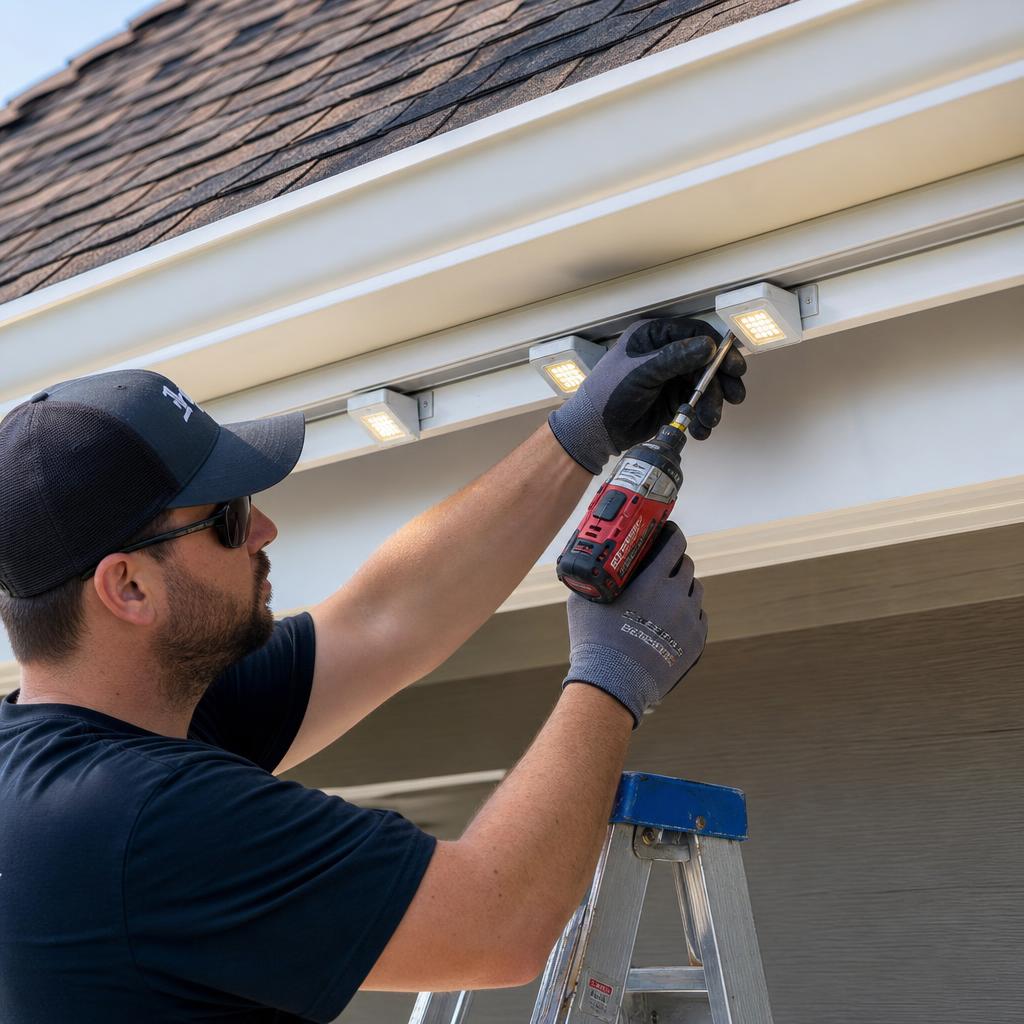
Custom track solves this by running the wiring inside a channel built into the track itself, with only the light-emitting portion visible from the ground. The track becomes the housing rather than an afterthought.
This is one of the main reasons we build and install custom track kits rather than mounting stock strings directly with clips.
How track channels conceal wiring day to day
The track profile is designed with a recessed channel that the connector wiring sits inside, protected from view and from weather exposure at the same time. From the ground, you see a slim track line rather than loose wire.
Because the track can be painted to match trim, fascia, or roof color, it blends into the roofline even more during daylight hours. Many homeowners choose a paint match specifically so the track reads as part of the house rather than an added fixture.
This approach also protects the wiring itself from sun and moisture exposure that loose, clipped wiring would otherwise face directly.
Routing wire around corners and transitions
Corners and roof direction changes are where wiring is most likely to become visible if not planned for, since a wire has to physically travel around the angle somehow. Purpose-built transition pieces, like inner and outer 90-degree connectors, keep the wire enclosed through these turns rather than exposed at a gap.
This matters even more on multi-peak or complex rooflines, where there are more corners and transitions for wire to potentially show through.
Planning these transition points during the site walk, rather than improvising once the crew is on the roof, keeps the finished look consistent across the whole home.
Getting power to the controller without visible cable runs
Beyond the track itself, the power run from an outlet to the controller is the other place wiring can become visible if not planned carefully. We look for existing penetrations, like a nearby outlet or a low-visibility path along a soffit, rather than running cable across an obvious wall surface.
Controllers are typically mounted in a garage, attic, or other out-of-the-way spot, which keeps both the hardware and its power cable away from common sightlines.
If your home does not have a convenient nearby outlet, that is worth discussing during your quote so we can plan routing before the install day rather than working around it after track is already up.
- Use existing outlets and penetrations where possible
- Route power cable along low-visibility paths like soffits
- Mount the controller in a garage or attic out of sightlines
- Plan routing during the site walk, not during installation
- Avoid running cable across visible wall surfaces
What to check if you already have visible wiring
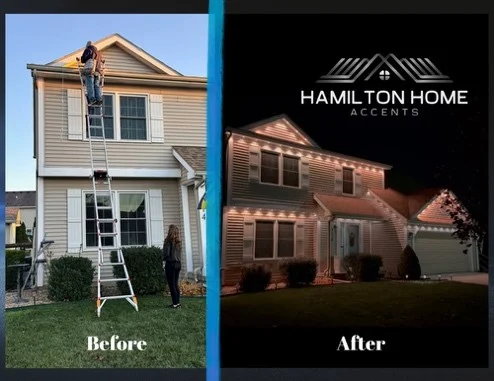
If you have an existing Govee install with visible wire between clips, the fix usually involves remounting into custom track rather than trying to tuck loose wire after the fact. Loose wire management after install tends to look worse than a proper track-based solution.
In some cases, simply repainting existing track to match trim can improve the daytime look without a full remount, if the wiring itself is already reasonably concealed but the track color stands out.
We can evaluate what you currently have during a quote visit and recommend whether a full remount or a simpler fix makes sense for your situation.
Frequently asked questions
Does Govee lighting always have visible wires?
Not when mounted in custom track with a wire channel. Stock adhesive clip installs are more likely to show wire between fixtures, but track-based mounting keeps wiring enclosed.
Can existing visible wiring be fixed after install?
Usually yes, by remounting the lighting into custom track. We can evaluate your current setup and recommend the best fix during a quote visit.
Does painting the track actually help hide it?
Yes, painting track to match trim or fascia color makes it blend into the roofline more during daylight, even though the track itself remains visible up close.
Where does the controller usually get mounted?
Most controllers go in a garage, attic, or another out-of-the-way spot near an existing outlet, which keeps both the hardware and its power cable out of common sightlines.
The bottom line
- Custom track with a built-in wire channel is the main factor in hiding wiring.
- Paint-matched track blends into the roofline for a cleaner daytime look.
- Transition pieces keep wiring concealed through corners and direction changes.
- Power routing to the controller should be planned before installation day.
- Existing visible wiring can often be fixed by remounting into custom track.
Want your Govee wiring completely out of sight
We mount lighting into custom, paintable track built with a hidden wire channel.
Explore Govee lighting