The first cold evening when your roofline glows is supposed to feel festive, not like the aftermath of a ladder, tangled cords, and a rushed weekend. This traditional holiday lighting guide helps homeowners plan a polished seasonal display that fits their home, holds up to Northwest Ohio and Southeast Michigan weather, and comes down without leaving behind damaged gutters or a storage-room headache.
Traditional Christmas lights still have a place. They offer the familiar warmth of a classic holiday display, work beautifully for homeowners who enjoy changing colors and themes from year to year, and create an immediate impact for family gatherings, neighborhood events, and commercial storefronts. The difference between a display that looks carefully finished and one that feels thrown together usually comes down to design, installation methods, and maintenance.
Start With a Design That Fits the House
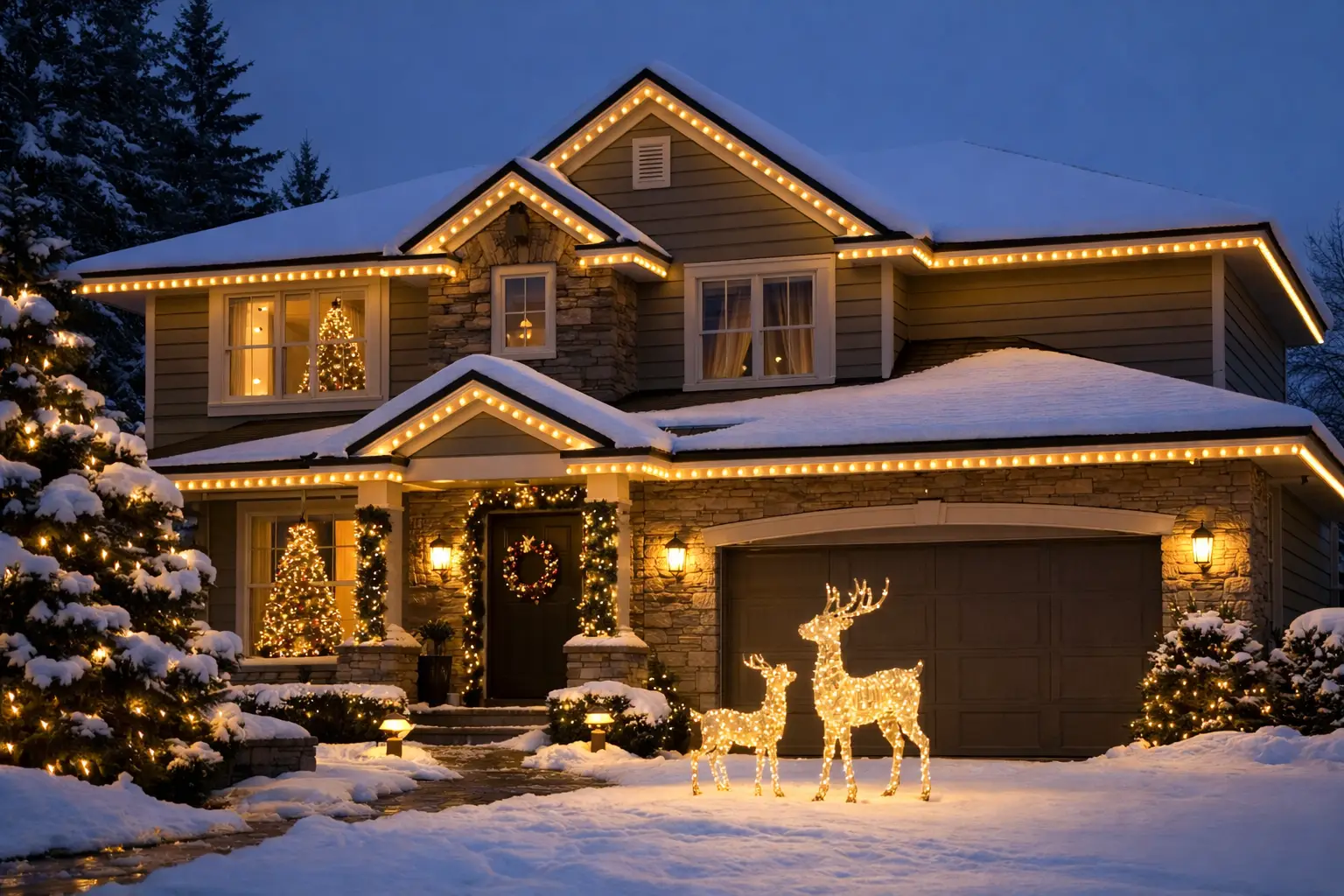
A good holiday lighting design follows the architecture instead of trying to cover every surface. Rooflines, peaks, dormers, entryways, columns, trees, and landscape beds all offer possibilities, but not every feature needs lights. A clean roofline paired with a welcoming front entry often makes a stronger impression than a crowded display.
Begin by deciding where you want the eye to land from the street. For many homes, the roofline is the natural starting point. Straight runs of warm white bulbs create a timeless look, while red, green, or color-changing options can bring more energy to the season. A taller two-story home may benefit from lit peaks and a balanced entryway. On a ranch-style home, pathway lighting, wrapped columns, and evergreen accents can add height and depth without making the roofline feel oversized.
Color choice matters, especially when lights are viewed from the road. Warm white is classic and works with nearly every exterior style. Cool white has a sharper, icier appearance that suits some modern homes but can look blue next to warm porch fixtures. Multicolor strands feel cheerful and nostalgic, while a limited palette such as red and white can look more coordinated. If your landscaping already includes stone, decorative planters, or prominent evergreens, the lighting plan should complement those features rather than compete with them.
Choose Lights Built for Outdoor Use
Not all string lights are designed for the same job. Interior products may look similar but are not built to handle moisture, temperature swings, wind, or repeated seasonal installation. Outdoor-rated lights, cords, timers, and connectors are the better choice for an exterior display.
For rooflines, commercial-grade LED bulbs are a practical option because they use less energy, produce less heat, and maintain consistent color over long runs. C9 bulbs are a traditional favorite for their visible, defined shape along eaves and peaks. Mini lights work well in shrubs, garland, wreaths, and tree wraps, where a softer sparkle is the goal. Larger bulbs can add personality, but they should be used with restraint so the home still reads as one complete design.
Quality also shows up in the details people do not see from the curb. Properly sized extension cords, protected connections, weather-rated timers, and well-planned power distribution help prevent nuisance outages. A display that keeps tripping a breaker or has dim sections halfway through December is not a good value, even if it looked great on installation day.
Measure Before You Buy or Schedule
Accurate measurements prevent uneven runs, awkward gaps, and unnecessary materials. Roofline measurements should include every planned section, along with the distance to a suitable power source. Trees and shrubs need a different approach because branch structure, plant health, and access all affect how lights can be placed.
It is also smart to think about the view from more than one location. A front-facing display should look balanced from across the street, but your entry lighting should also make guests feel welcomed as they walk to the door. For commercial properties, visibility from parking areas and road traffic may shape the design more than a front-door view.
Safety Is Part of the Holiday Look
Installing traditional holiday lighting often means working at height during a season with slick roofs, frozen ground, and unpredictable wind. That is where a professional installation has real value. The goal is not just to get lights up quickly. It is to install them securely, protect the exterior, and make sure the electrical setup is appropriate for the display.
Avoid staples, nails, screws, and other fasteners that can puncture wiring or damage fascia, shingles, and trim. Purpose-made clips provide a cleaner result and help keep bulbs aligned. Gutters should be handled carefully as well. A heavy load of lights or poorly placed clips can create problems on older or already stressed gutter systems.
Electrical safety deserves the same attention. Exterior outlets should be protected, cords should not be pinched in doors or windows, and connections should be kept elevated where possible to reduce exposure to standing water and snow. Do not overload a single outlet simply because it is closest to the display. LED lighting lowers the power demand, but the full system still needs to be planned responsibly.
If you are handling a small display yourself, inspect each strand before it goes up. Replace cracked sockets, frayed wiring, damaged plugs, and lights with visible corrosion. A few minutes of inspection can prevent an outage or a safety concern when temperatures are below freezing.
Installation Timing Makes a Difference
Most homeowners want their lights ready before Thanksgiving or soon after, which means installation dates fill quickly. Putting lights up earlier in the fall does not mean turning them on early. It gives installers more flexibility to work in safer weather and lets your display be ready whenever your holiday schedule begins.
Traditional holiday lighting is also easier to install before snow accumulation and deep freezes. Frozen ground can complicate stake placement, and ice can make ladder work more hazardous. Early planning gives you a better chance to choose the colors, roofline coverage, trees, wreaths, and garland that match your vision instead of settling for what remains available.
Hamilton Home Accents designs and installs custom traditional holiday displays for homes and businesses that want a professional finish without giving up weekends to outdoor setup. As a family-owned, licensed, and insured exterior service provider, the team can build a display around your property rather than offering a one-size-fits-all package.
Traditional Lights or Permanent Outdoor Lighting?
Traditional holiday lights are a strong fit when you want a dedicated seasonal look and prefer the familiar appearance of classic bulbs, garland, wreaths, and wrapped trees. They are also ideal for homeowners who like changing their display substantially each year. Professional installation and removal take away much of the inconvenience while preserving that annual holiday reveal.
Permanent outdoor lighting is worth considering when you want curb appeal beyond December. Professionally installed Jellyfish Lighting can provide subtle everyday accent lighting, holiday colors, game-day displays, and special-event lighting from a system designed to stay in place. It eliminates the seasonal ladder work and storage demands that come with traditional products.
Neither choice is automatically better. It depends on how often you want exterior lighting, what look you prefer, and whether you value a yearly changing display or year-round flexibility. Some properties even benefit from both: permanent roofline lighting for everyday use and traditional greenery or landscape accents for the holiday season.
Plan for Maintenance and Removal
A well-managed lighting service should include more than installation. Weather can shift quickly around Toledo, Perrysburg, Monroe, and surrounding communities, and a display may need attention if a storm knocks loose a section or an unexpected electrical issue appears. Ask what support is available during the season before choosing an installer.
Removal matters, too. Lights should come down carefully, clips should be removed without damaging exterior surfaces, and materials should be organized for future use when applicable. Leaving lights up year-round can expose seasonal products to unnecessary sun, wind, and weather, shortening their useful life and making the home look unfinished after the holidays.
The best holiday display is one that feels like it belongs on your home: bright enough to be noticed, balanced enough to look intentional, and installed with care. Plan early, choose quality materials, and get a custom quote when you are ready to enjoy the season from the sidewalk instead of the top of a ladder.