The best gatherings usually hit their stride right around sunset. Dinner lingers, people settle into their seats, and suddenly the patio that looked great at 6:30 feels a little flat at 8:15. That is where smart patio lighting for entertaining makes a real difference. Done well, it keeps the space comfortable, helps guests move around safely, and gives your backyard the kind of polished atmosphere people remember.
A lot of homeowners start with one fixture and hope it carries the whole space. In practice, entertaining areas need layers. You want enough light to serve food, refill drinks, and see faces across the table, but not so much brightness that the patio feels like a parking lot. Good outdoor lighting is less about one dramatic source and more about balancing function, mood, and layout.
What patio lighting for entertaining needs to do
If your patio is built for hosting, the lighting has to work harder than basic backyard illumination. It should support conversation, movement, and visibility without making the space feel harsh. That balance depends on how you use the area.
For example, a patio that revolves around outdoor dining needs clearer task lighting near the table than a lounge area with cushioned seating and a fire pit. If kids are running between the patio and yard, pathways and transitions matter more. If your guests tend to stay out late during football season or summer parties, glare control becomes a bigger issue because people are spending more time looking across the space, not just passing through it.
This is one reason custom design matters. A one-size-fits-all setup can leave dark corners where you need visibility and overly bright spots where you want people to relax. A professionally planned system can match the way your patio actually gets used.
Start with the zones people use most
A well-lit entertaining space usually has three distinct zones, even if the patio itself is not very large. There is the gathering zone, the dining or serving zone, and the movement zone. Each one benefits from a different lighting approach.
Seating areas need soft, flattering light
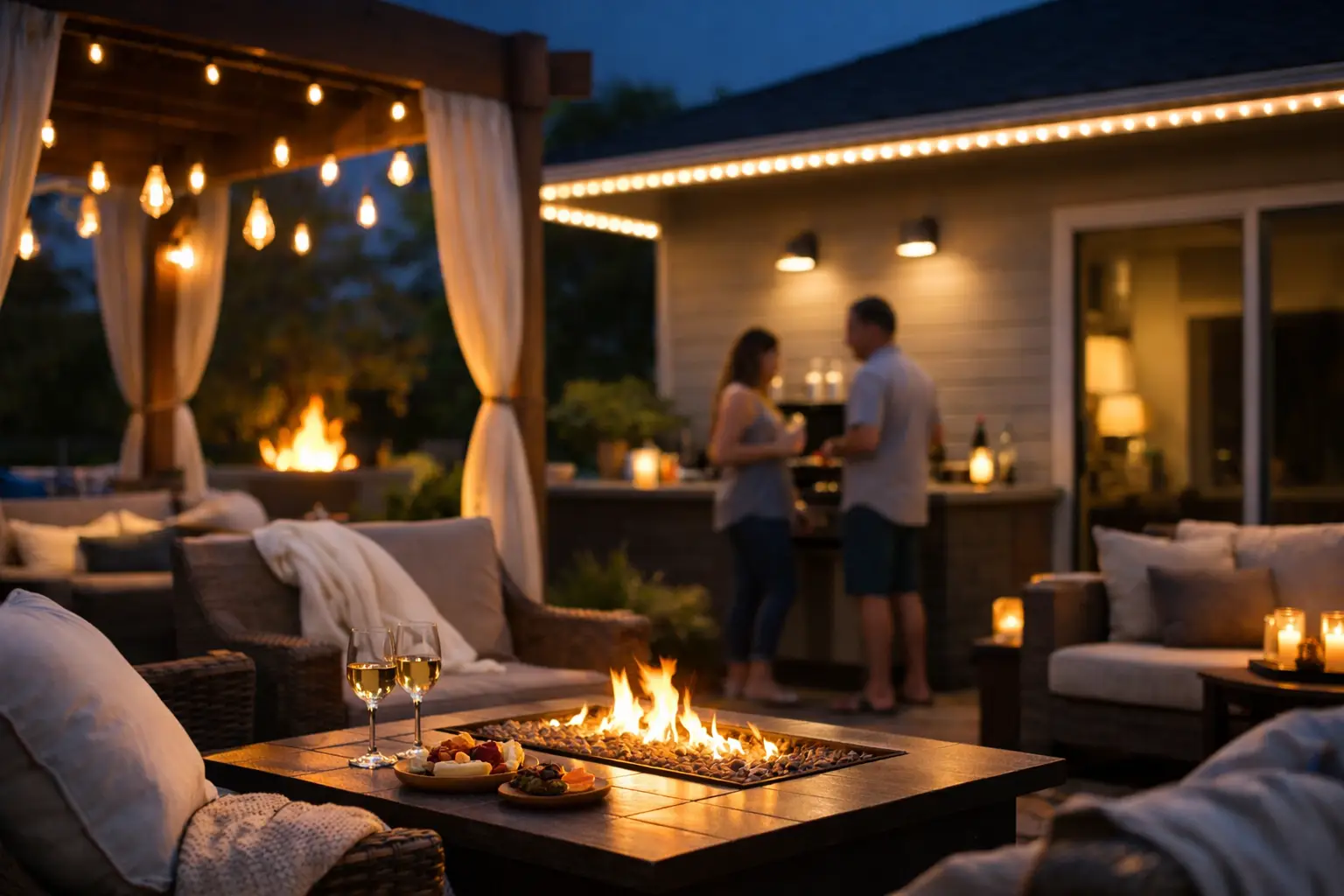
In conversation spaces, the goal is comfort. People should be able to see each other easily without feeling exposed. Soft perimeter lighting often works better than a strong overhead fixture because it reduces squinting and keeps the mood relaxed.
This can come from nearby landscape lighting, integrated lighting under railings or steps, or permanent exterior lighting that casts an even, controlled glow onto the patio area. Warm color temperatures usually feel more inviting here, especially for evening use.
Dining spaces need a little more clarity
Where food is served, guests need enough brightness to see plates, drinks, and serving dishes. This does not mean blasting the whole patio with white light. It means placing light intentionally so the table feels usable.
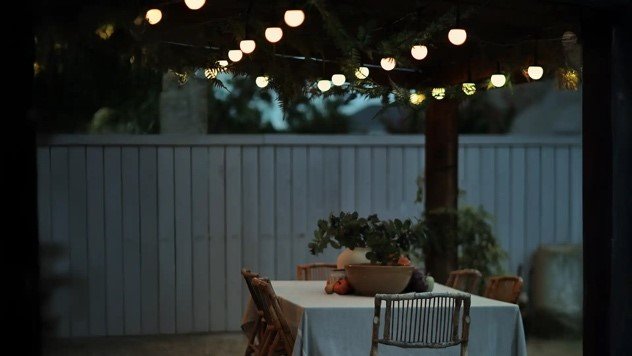
If your dining space sits under a covered patio, pergola, or overhang, fixture placement becomes especially important. Light should fall onto the table, not directly into guests’ eyes. For open patios, surrounding accent lighting can help define the dining area without making it feel isolated from the rest of the yard.
Paths, steps, and edges should never disappear at night
Some of the most important lighting on a patio is the lighting nobody talks about until it is missing. Changes in elevation, walkway edges, and transitions between the patio and lawn all need clear definition.
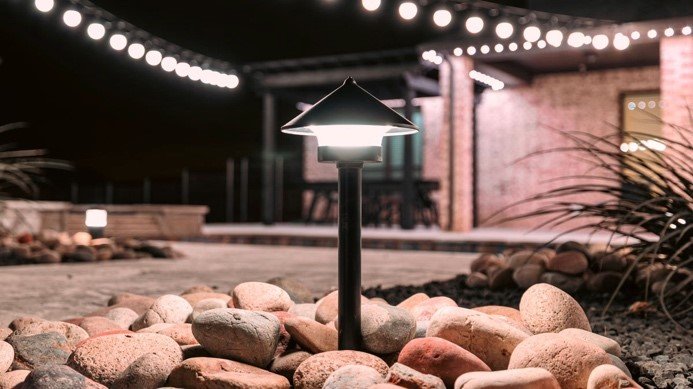
This is where lower-level lighting does a lot of work. Step lights, path lights, and subtle edge lighting improve safety while making the whole entertaining area feel more finished. It is a practical upgrade, but it also helps the space read as professionally designed.
The biggest mistake is too much light in one place
Many outdoor entertaining spaces feel off because all the brightness is concentrated in a single area. One floodlight over the back door might technically light the patio, but it creates deep shadows everywhere else. It also makes guests feel like they are under inspection.
Better patio lighting spreads illumination across the space in smaller, more controlled layers. That could mean combining permanent soffit lighting with landscape accents and pathway illumination. It could also mean using architectural features like columns, retaining walls, or planters to help bounce and shape the light.
There is always a trade-off. More brightness can improve visibility, but too much can flatten the look of your patio and wash out the details you invested in, like stonework, seating walls, or landscaping. The right plan keeps the space useful while still letting it feel like an evening environment.
Permanent lighting makes entertaining easier
For homeowners who host often, temporary patio lights can become one more chore. You hang them, adjust them, store them, replace bulbs, and repeat the process next season. That works for some setups, but it is not always the best long-term answer.
Permanent outdoor lighting offers a cleaner, more durable solution. Professionally installed systems can be designed around your roofline, patio cover, landscape beds, and entertaining areas so the lighting feels built into the property rather than added as an afterthought. It is especially useful for homeowners who want year-round flexibility, whether they are hosting a summer cookout, a fall gathering, or a holiday party.
Systems like Jellyfish Lighting are popular for that reason. They can provide everyday architectural lighting, event lighting, and seasonal color changes without requiring separate installations throughout the year. For a homeowner who wants their patio to look ready for guests on any given weekend, that convenience matters.
How to choose the right look for your home
The style of your patio lighting should match the style of the house and landscape, not compete with it. A clean modern home can usually handle sharper lines and more hidden light sources. A traditional brick home often benefits from warmer, softer lighting that highlights texture and architectural detail.
The patio itself matters too. Paver patios, stamped concrete, natural stone, and composite deck transitions all react differently to light. Some surfaces reflect more. Some absorb more. Some show glare quickly if the angle is wrong.
This is another area where experience pays off. What looks balanced on paper can feel very different once it is installed against real materials and viewed from inside the home, from the yard, and from the seating area itself. A dependable installer will account for that instead of just placing fixtures where it is easiest.
Patio lighting for entertaining should work beyond the patio
A strong patio plan does not stop at the edge of the concrete or pavers. Entertaining usually spills outward. Guests look into the yard, walk to the driveway, move toward the grill, or gather near landscape features. If the patio is beautifully lit but everything around it disappears into darkness, the whole scene can feel disconnected.
A more complete approach uses patio lighting for entertaining as part of the larger outdoor experience. That may include landscape lighting around planting beds, accent lighting on trees, subtle illumination around water features, or better visibility along side-yard access paths. These details make the property feel intentional and improve curb appeal even when you are not hosting.
For many homeowners, that broader payoff is what makes professional installation worth it. You are not just solving for one party. You are improving how the property looks and functions every evening.
Why professional installation usually shows
Outdoor lighting looks simple until you see the difference between basic placement and custom planning. Fixture spacing, beam angles, wire routing, controls, and finish details all affect the final result. So does durability.
A licensed and insured installer can build a system that is designed for your home, your entertaining habits, and your exterior layout. That includes making sure fixtures are positioned cleanly, components are protected, and the finished look holds up through changing seasons. In Northwest Ohio and Southeast Michigan, that matters. Outdoor systems have to handle weather swings, moisture, and long-term exposure without turning into a maintenance headache.
It also helps to work with a company that understands the full exterior picture. When lighting is considered alongside landscaping, hardscaping, and upkeep, the results are usually stronger because every feature supports the others.
When it makes sense to upgrade now
If you already enjoy your patio during the day but stop using it after dark, lighting is probably the missing piece. The same is true if guests tend to cluster near the back door because the rest of the patio feels too dim, or if your current setup relies on temporary string lights that never quite look finished.
An upgrade also makes sense when you are investing in the rest of the exterior. New landscaping, a refreshed patio, retaining walls, or outdoor living improvements all benefit from proper lighting. Waiting too long can mean treating lighting like a final add-on when it should be part of the design from the start.
Hamilton Home Accents works with homeowners who want that finished look without guesswork – especially those who want certified installation, custom design, and a lighting system that performs well beyond one season.
A good patio should not shut down when the sun goes down. With the right lighting, it becomes easier to host, easier to enjoy, and a lot easier to feel proud of what your home looks like after dark.