Waterfront Lighting Design for Grosse Ile Properties
Grosse Ile outdoor lighting for waterfront homes has to account for water views, docks, and long sightlines. Here's how we approach it differently than a standard yard.
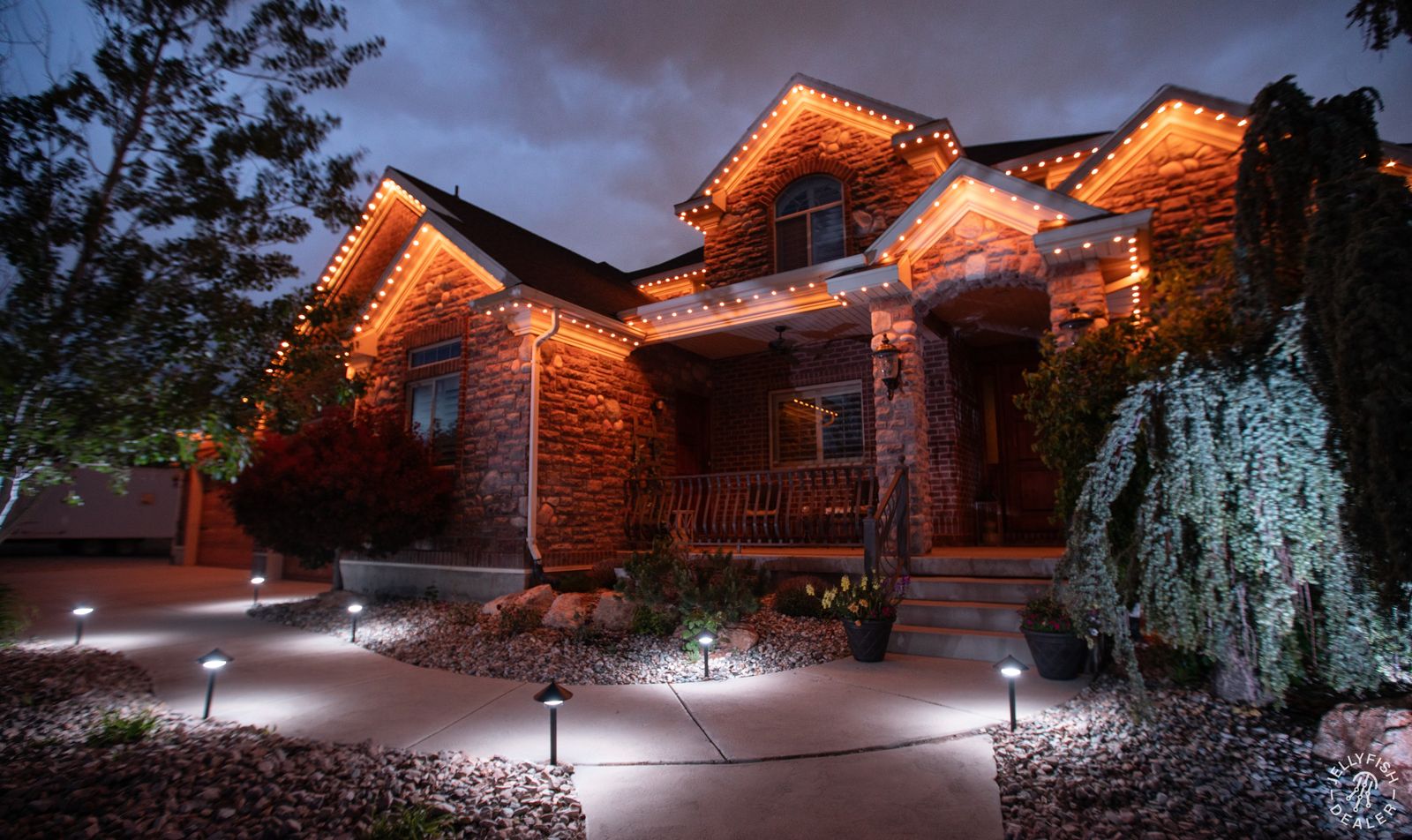
Grosse Ile outdoor lighting for a waterfront property is a different design problem than lighting a typical inland lot. Water reflects and amplifies light, sightlines run much farther, and a dock usually needs its own lighting plan separate from the house.
Homes along the Detroit River and the channels around Grosse Ile also deal with wind, humidity, and boat traffic that inland properties do not, which changes fixture and wiring choices.
This post covers what we think through differently when a project is on the water, from dock lighting to how much light is actually useful across open water at night.
Why lighting a waterfront lot is different
On an inland lot, light mostly stays contained to the yard and the house. On the water, light reflects off the surface and travels much farther, which means a fixture that looks right on a landlocked property can look overdone on a lot facing open water.
We generally scale back the number of fixtures on the water-facing side and rely more on a few well-placed accents rather than lighting every tree and shrub the way we might on a front yard.
The goal on a waterfront elevation is usually to define the house and dock clearly without washing out the view of the water itself.
Dock lighting as its own project
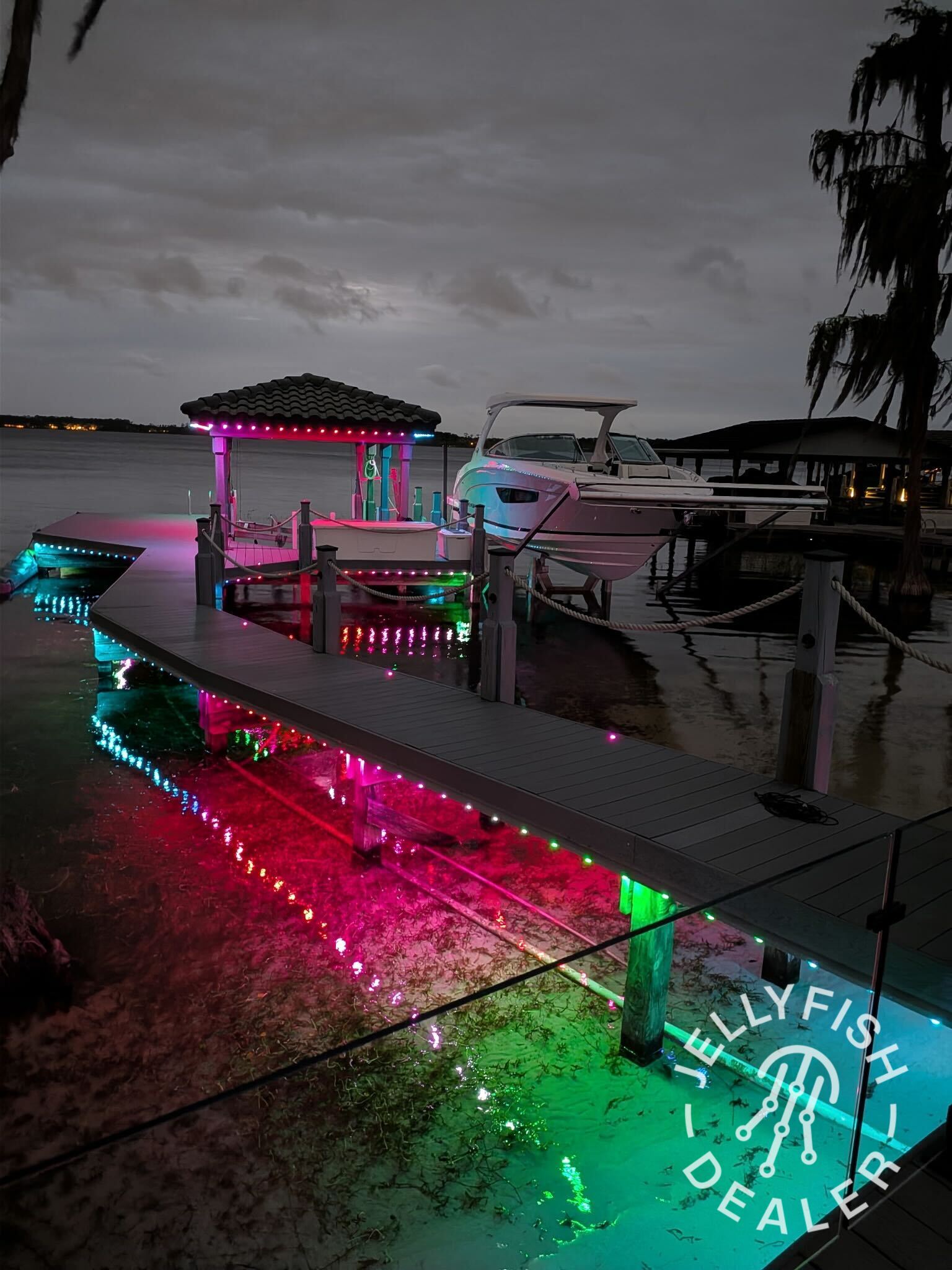
A dock needs lighting for safety first, aesthetics second. Step edges, cleats, and the transition from dock to yard are the priority spots, since those are where people trip in the dark.
We use fixtures rated for the exposure a dock gets, since they deal with more direct weather and occasional splash than fixtures mounted higher up on a house or in a bed.
Dock lighting is often planned alongside landscape lighting for the rest of the yard so the two read as one coordinated system instead of two unrelated projects.
How permanent roofline lighting looks from the water
A lot of Grosse Ile homes are visible from boats and from neighboring docks, not just from the street. That changes how we think about roofline lighting, since it is often seen from an angle a typical customer never considers.
Jellyfish permanent lighting on the roofline gives you a consistent, warm outline that reads well from across the water, and the app-based control means you are not out at dusk adjusting bulbs before guests arrive by boat.
For holidays, the same system can switch to seasonal colors, which is a nice option for a property that gets viewed from multiple angles during a lake or river gathering.
Wind and humidity considerations for fixtures and wiring
Waterfront properties see more sustained wind than sheltered inland lots, which affects how we secure low-voltage wiring and mount fixtures in beds near the shoreline.
Humidity near open water also means we pay closer attention to connector quality and sealing at every junction, since a marginal connection degrades faster in a consistently damp environment than it would on a dry inland lot.
None of this changes the basic components used, but it does change how carefully they're installed and secured for the specific site conditions.
- Secure wire runs against wind-driven movement near open shoreline
- Use sealed connectors at every splice, especially near the dock
- Anchor fixtures more firmly in looser, sandier soil common near water
- Plan for occasional splash exposure on dock-level fixtures
Balancing house lighting with the natural water view
One mistake we see on waterfront lots is over-lighting the yard side that faces the water, which competes with the water view itself rather than complementing it. Too much light at the shoreline can also wash out any ambient moonlight or reflections that make a waterfront evening feel distinct.
We typically recommend a simpler, more restrained plan on the water-facing side and save more detailed landscape lighting for the front approach and entry, where visitors actually experience it up close.
A well-lit dock and a clean roofline outline are usually enough to make a waterfront home feel finished at night without competing with the water itself.
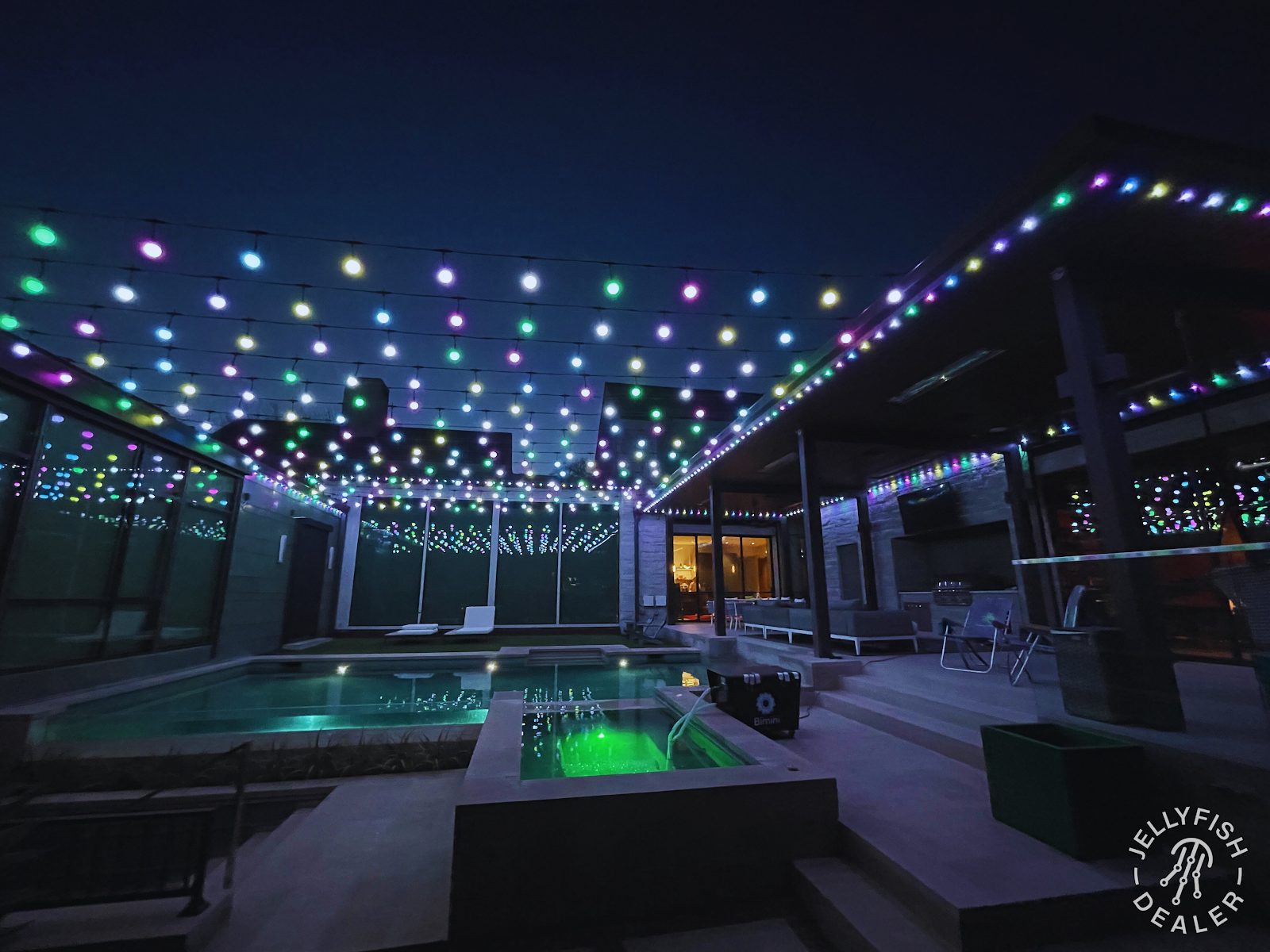
What a site walk on a waterfront lot covers
A waterfront consultation covers more ground than a typical yard walk, since we're looking at the house from the street approach, the yard, and the water side separately.
We ask about how the property is used, whether guests typically arrive by boat, and how much of the yard actually faces open water versus a more sheltered inlet or channel, since that changes how much light reflection actually matters.
According to the U.S. Coast Guard's guidance on recreational boating safety, proper lighting near docks and shoreline access points reduces nighttime hazards for anyone getting on or off a boat, which lines up with how we prioritize dock lighting on these projects.
Frequently asked questions
Do waterfront homes need more lighting than inland properties?
Not necessarily more, but different. Light travels farther across open water, so we often use fewer, better-placed fixtures rather than lighting everything the way we might inland.
Can dock lighting run off the same system as the house?
It depends on distance and layout. Some docks can tie into the same low-voltage system as the yard, while others need a separate transformer closer to the water. We evaluate this during the site walk.
Does Jellyfish permanent lighting hold up near the water?
Yes, the components are built for outdoor exposure, and we take extra care with wiring and connections on waterfront sites specifically because of the added humidity and wind.
Will lighting attract bugs near the water?
Warm-toned lighting tends to attract fewer insects than cooler, bluer light. We generally recommend warmer color temperatures for waterfront properties for this reason among others.
The bottom line
- Waterfront lots need fewer, more deliberate fixtures since light travels farther over open water.
- Dock lighting is a safety-first project that should be planned alongside yard lighting.
- Wiring and fixtures near open water need extra attention to wind and humidity exposure.
- Roofline lighting reads well from boats and neighboring docks, not just from the street.
- A restrained water-facing design keeps the focus on the view rather than competing with it.
Planning lighting for a waterfront property on Grosse Ile
We'll walk your property from the street side and the water side to design a plan that works from both angles.
Explore landscape lighting