Wall-Washing vs. Backlighting: What Saber Series Can Do for Your Home
Wall-washing vs backlighting with Saber Series linear fixtures: two different mounting techniques that create very different lighting effects on the same wall.
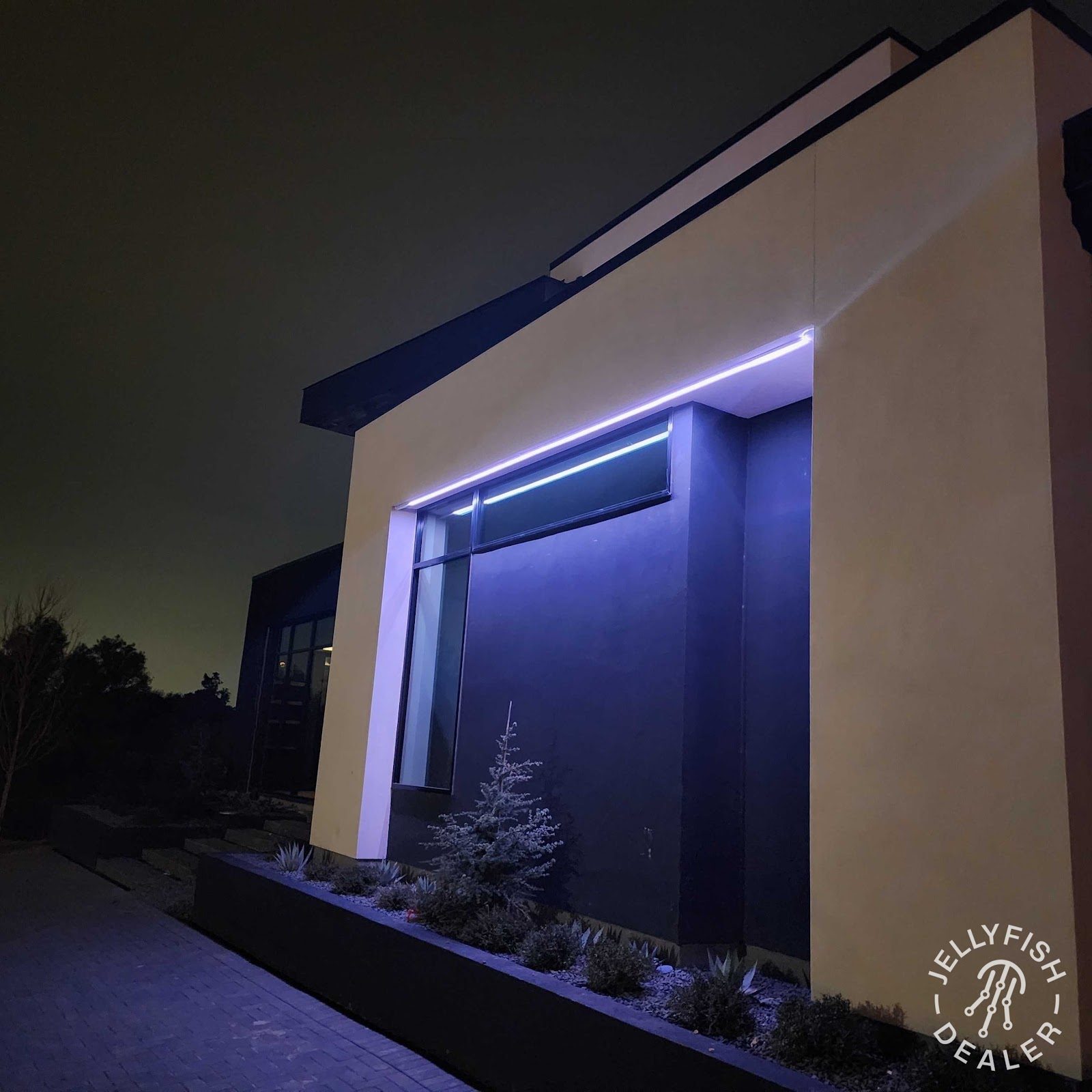
Wall-washing and backlighting are two different ways to use Saber Series linear fixtures, and the difference comes down to fixture placement relative to the surface, not the product itself. Wall-washing mounts the fixture away from the wall to spread even light across the surface, while backlighting mounts it directly behind an object or edge to create a glow and silhouette effect.
Both techniques use the same Saber Series hardware, so choosing between them is really about the effect you want on a specific wall or feature.
This post explains how each technique works and where each one fits on a typical home.
What wall-washing actually does
Wall-washing mounts a linear fixture at a distance from the wall, angled so the light spreads evenly across the surface rather than concentrating in one spot. The goal is uniform coverage, light that fills the wall from edge to edge without hot spots or dark gaps.
This technique works especially well on textured surfaces like stone, brick, or stucco, since even light grazing across texture reveals depth and shadow detail that flat, front-facing light misses.
Wall-washing is also useful for larger flat surfaces where you want general illumination rather than a specific accent, such as a long stretch of exterior wall along a driveway or entry path.
What backlighting does differently
Backlighting places the fixture directly behind an object, edge, or cutout so the light source itself is hidden and what you see is the glow around the object or the silhouette it creates. This is a more dramatic, focused effect than the even coverage of wall-washing.
Common backlighting applications include a stone planter box, a railing with slats, a low wall with a decorative cap, or an architectural cutout where light escapes around the edges. The effect draws attention to the shape of the object rather than the wall behind it.
Because the fixture is hidden from view, backlighting tends to feel more intentional and higher-end, since visitors see the effect without seeing the light source that creates it.
How mounting distance changes the outcome
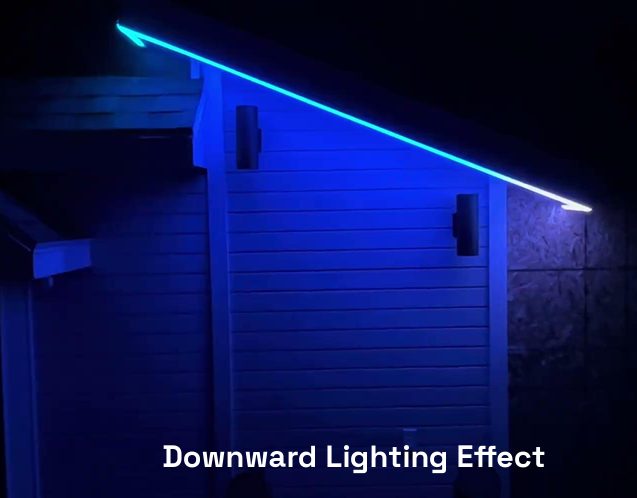
The distance between the fixture and the surface is the main variable that separates these two techniques, even when using the same linear light. Closer mounting with an angled throw tends toward backlighting and silhouette effects, while a greater standoff distance with a broader spread tends toward wall-washing.
Surface texture also affects how forgiving each technique is. Smooth surfaces show wall-washing more evenly, while heavily textured surfaces can create shadow patterns that need testing before finalizing fixture placement.
We generally test placement on-site during install rather than finalizing distance purely from a design drawing, since real materials and lighting conditions vary from what a plan alone can predict.
Choosing based on what you want the eye to notice
If you want the wall itself to be the feature, its texture, its material, its overall presence at night, wall-washing is the better fit. If you want a specific object or edge to stand out with the wall as a secondary backdrop, backlighting does that more effectively.
Some properties use both techniques in different areas: wall-washing along a long stretch of stone facade and backlighting behind a specific planter or low wall feature near the entry.
This decision should follow what you actually want visitors to notice first when they see the space at night, rather than picking a technique because it sounds more advanced.
- Wall-washing: textured facades, long flat walls, general illumination
- Backlighting: planters, railings, cutouts, low walls, single features
- Combine both across a property for varied effects in different zones
- Test placement on-site rather than relying only on a plan drawing
What to bring to your design conversation
Identify the walls or features you are most interested in lighting and think about whether you want them to glow evenly or to frame something specific. Photos taken during the day help us assess texture and material, which affects which technique will look better.
Mention any features you specifically want highlighted, a planter, a railing, a stone accent wall, since those are strong candidates for backlighting rather than a general wash.
A free quote conversation is the right time to walk through specific spots rather than deciding on technique before seeing the property.
Frequently asked questions
Is backlighting more expensive than wall-washing?
Cost depends more on the scope of the area being lit than the technique itself, since both use the same Saber Series hardware. Mounting complexity for a specific feature can affect labor time.
Can the same fixture be used for both techniques?
Yes, the mounting distance and angle relative to the surface determine whether the effect reads as wall-washing or backlighting, not the fixture itself.
Which technique works better on stone or stucco walls?
Wall-washing generally works better on textured surfaces like stone or stucco, since even raking light reveals depth and shadow detail across the texture.
Can I use both techniques on the same property?
Yes, many properties use wall-washing on longer facades and backlighting behind specific features like planters or railings in the same overall lighting plan.
The bottom line
- Wall-washing spreads even light across a surface for general illumination.
- Backlighting hides the fixture and highlights an object or edge with a glow or silhouette.
- Mounting distance and angle, not the fixture itself, create the difference between techniques.
- Textured surfaces suit wall-washing, while planters, railings, and cutouts suit backlighting.
- A design conversation can help match the right technique to each feature on your property.
Curious which technique fits your home
We can look at your walls and features during a design walk and recommend wall-washing, backlighting, or both.
Explore Saber Series