Riverfront Lighting Design in Napoleon and Defiance
Napoleon outdoor lighting for homes along the Maumee River covers moisture, bank access, and how to light a river view without overdoing it.
Napoleon outdoor lighting for homes along the Maumee River shares some of the same considerations as lakefront lighting but with its own specific factors, including riverbank stability, seasonal water level changes, and the narrower sightlines that come with a river view compared to open water.
Defiance, sitting where the Auglaize and Maumee rivers meet, has a similar mix of riverfront properties that deal with these same conditions.
This post covers what riverfront lighting design should account for in this specific setting.
How riverfront lighting differs from a standard yard
A yard that slopes down to a riverbank has a different set of conditions than a flat, uniform lot. Grading changes, occasional erosion, and periodic water level shifts all affect where fixtures and wiring should go, and how stable that placement needs to be over time.
The Maumee River through Napoleon and the Maumee and Auglaize rivers through Defiance both see seasonal water level changes, with higher water more common in spring than in late summer.
This means riverbank lighting needs a bit more thought about placement above typical high-water lines, rather than assuming current water levels will stay constant year-round.
Placing fixtures with seasonal water changes in mind
Fixtures and wiring placed too close to a river's edge risk being affected by higher water during spring rains or heavy storm events, even if the area looks dry most of the year. It is worth thinking about historical high-water marks on your specific property when planning fixture placement near the bank.
This does not mean avoiding lighting near the water entirely, just setting fixtures back enough or elevating them appropriately so a typical seasonal rise does not cause repeated issues.
If your property has had flooding or significant water level changes in the past, mentioning that during a landscape lighting consultation helps us plan placement that accounts for it directly.
- Set fixtures back from typical high-water lines along the riverbank
- Use wet-rated fixtures for anything near the water's edge
- Route wiring above known flood-prone areas where possible
- Anchor fixtures securely against bank erosion or soil shift
Why river views call for more targeted lighting
A river view is narrower and more directional than an open lake view, which changes how lighting should be aimed. Rather than worrying about wide-open glare across a large body of water, riverfront lighting can focus more on specific sightlines, like the view from a deck or patio toward a bend in the river.
This often means lighting can be more targeted and intentional, highlighting a specific tree, dock, or section of bank that is the actual visual focus from the house, rather than trying to light the whole riverbank evenly.
It also means light spill toward the water is generally less of a concern than on a wide lake, simply because there is less open water surface for light to reflect across.
Uplighting mature trees along the riverbank
Riverfront properties in this area often have mature trees along the bank, which make strong uplighting candidates similar to what you would find on a wooded inland lot. A large tree lit from below near the water's edge tends to be one of the most striking features on a riverfront property at night.
This works especially well combined with a landscape design plan that keeps sightlines to the river open from the house, so the lit tree becomes part of a framed view rather than blocking it.
Pairing riverbank tree lighting with subtler path lighting toward the water gives the property a cohesive look without overdoing it.
Permanent lighting on riverfront homes
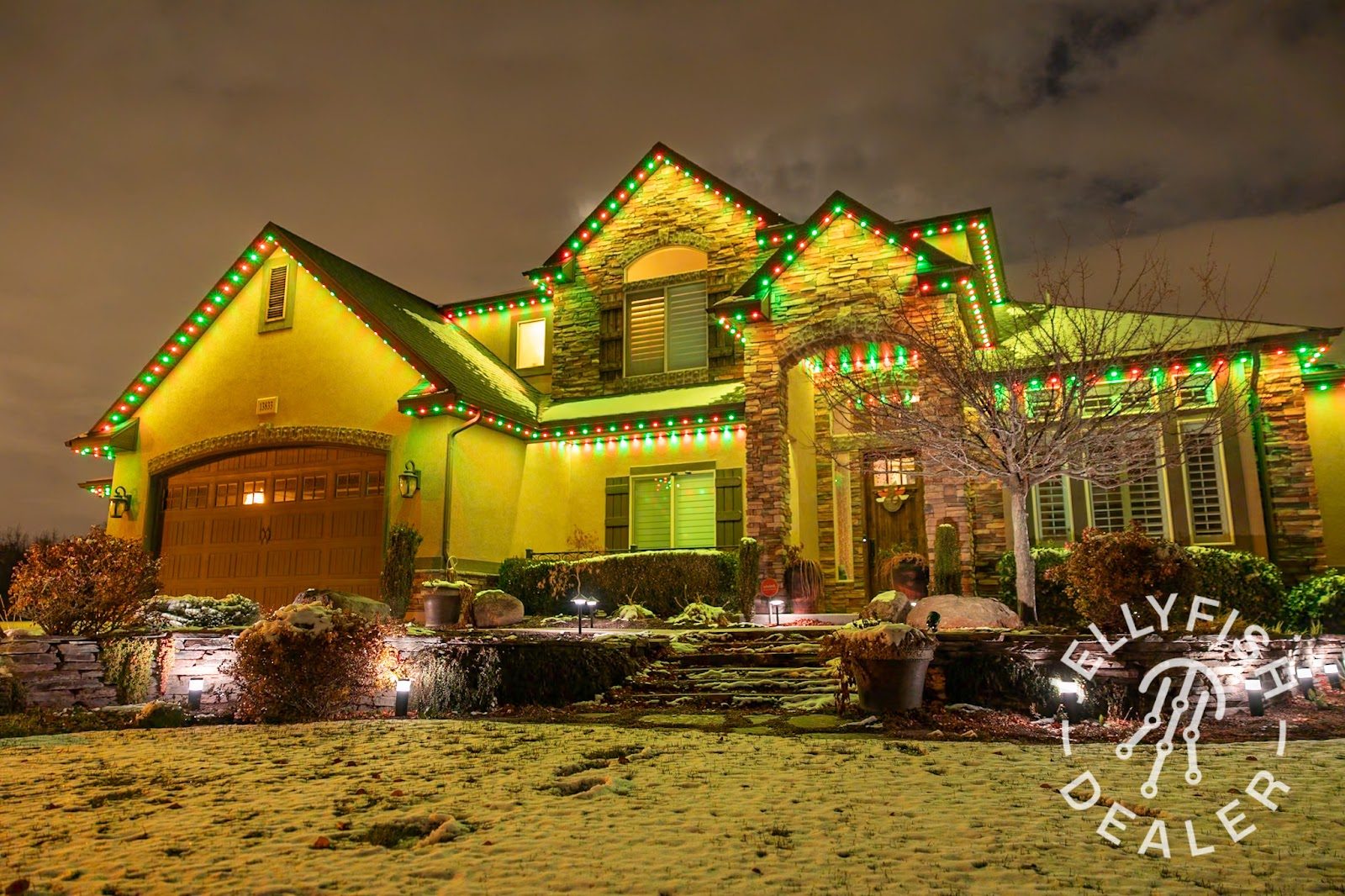
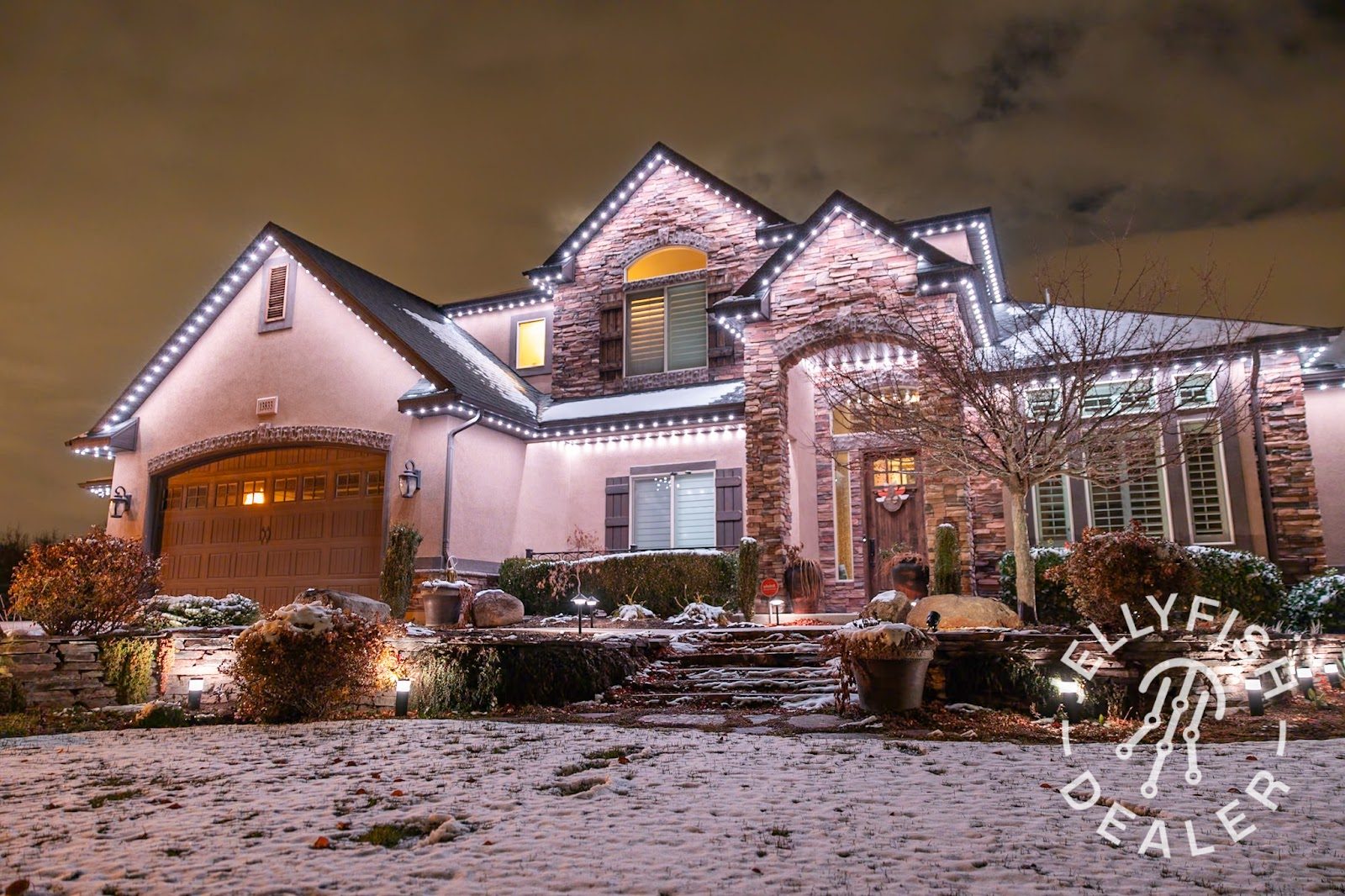
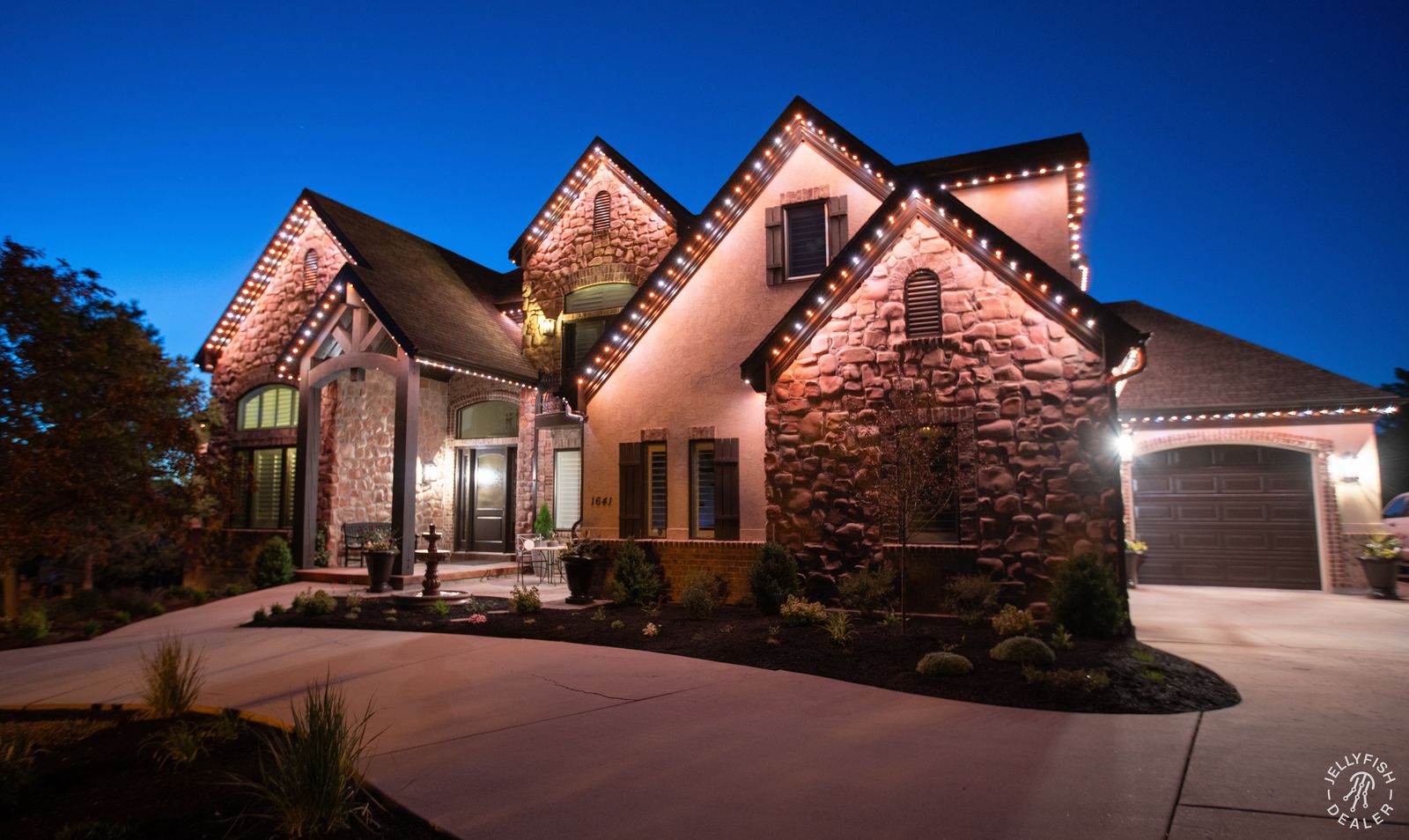
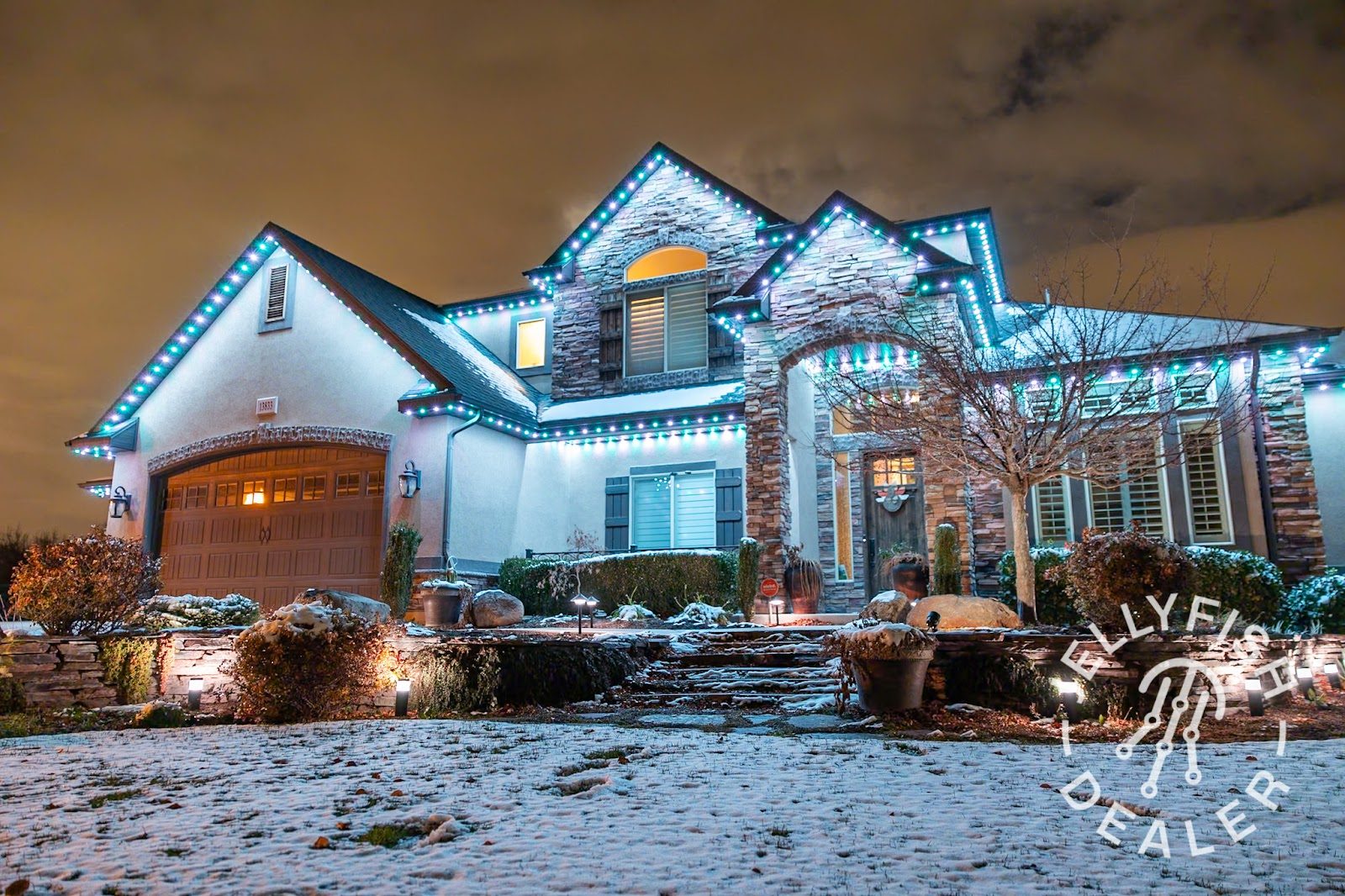
Permanent roofline lighting works well on riverfront homes for the same reasons it works on lakefront properties, outlining the structure without adding glare directly toward the water. This is especially useful for homes visible from the river itself, whether from a boat, kayak, or a neighboring property across the water.
The Jellyfish system installs the same way on a riverfront home as anywhere else, with attention to moisture exposure similar to what a lakefront property would need, though generally less intense given a river's more sheltered setting compared to open water.
For homes set back further from the riverbank, roofline lighting also helps mark the property clearly at night for anyone navigating the water after dark.
Getting local input on flood patterns before installing
Local knowledge about a specific stretch of river matters more than general guidance, since flood patterns vary block by block along both the Maumee and Auglaize rivers through Napoleon and Defiance.
The U.S. Geological Survey maintains river gauge data for the Maumee River, which can be a useful reference for understanding typical seasonal water level changes if you want more specific information before finalizing fixture placement near the bank.
If your property has a known flood history, it is worth discussing specifics with us during the consultation so the lighting plan reflects real conditions rather than general assumptions.
Frequently asked questions
How close to the riverbank can lighting fixtures be placed?
It depends on your property's specific high-water history. Generally fixtures should sit above typical seasonal high-water lines, with wet-rated equipment used for anything closer to the water's edge.
Does river lighting need to be as bright as lakefront lighting?
Not usually. River views are narrower and more directional, so lighting can be more targeted toward specific features rather than needing to cover a wide expanse of open water.
Are mature riverside trees good candidates for uplighting?
Yes, often some of the best candidates on a riverfront property. A large tree lit from below near the water's edge tends to be a striking nighttime feature.
Should I worry about flooding when planning lighting near the river?
It's worth considering, especially if your property has a known flood history. Setting fixtures back from typical high-water lines and routing wiring carefully helps avoid repeated issues.
The bottom line
- Riverbank lighting placement should account for seasonal water level changes.
- River views allow for more targeted lighting than a wide lake view requires.
- Mature riverside trees often make strong uplighting features.
- Permanent roofline lighting works well on riverfront homes with attention to moisture exposure.
- Local flood history should inform fixture placement near the water.
Plan lighting for your riverfront property
We can design a plan that accounts for seasonal water changes while highlighting the parts of your property that matter most.
Explore landscape lighting