Landscape Lighting Installation Done Right
A landscape lighting installation done right starts with a lighting plan, correct fixture placement, and low-voltage wiring buried properly.
Landscape lighting installation done right starts with a plan for what you actually want highlighted, whether that's a walkway, a tree canopy, or a retaining wall, before any fixture goes into the ground. Fixture placement and wiring depth matter as much as the fixtures themselves.
We design and install landscape lighting throughout Perrysburg, Sylvania, and Toledo, and most of the mistakes we get called to fix come from fixtures placed without a real plan.
Here's what a properly done landscape lighting install actually involves, from planning through long-term care.
Why start with a lighting plan?
Before buying a single fixture, walk your property at dusk and note what actually catches your eye: a mature tree, a stone retaining wall, the front walkway, or steps that are hard to see at night. That list becomes your lighting plan.
A plan also helps you avoid the common trap of just lining the driveway with evenly spaced path lights, which looks more like an airport runway than a designed landscape.
If you're not sure where to start, a landscape design consultation can help identify focal points before lighting placement, especially if you're doing both at once.
Where should fixtures actually go?
Uplighting works well on trees, columns, and textured surfaces like stone or brick, casting light upward to create shadow and depth rather than flat, even illumination. Aim the fixture slightly off-center from the trunk or feature for a more natural look.
Path lighting should mark transitions like steps, turns, or the edge of a walkway, not every few feet in a straight line. Fewer, well-placed fixtures usually look better than many evenly spaced ones.
Accent lighting on a retaining wall or water feature should wash light across the surface rather than creating one bright hot spot, which usually means slightly wider beam-angle fixtures.
How should the wiring be installed?
Low-voltage wiring should be buried a few inches below grade or tucked under mulch beds, not left resting on top of the soil where it's a trip hazard and gets damaged by mowing or trimming. Wire connectors need to be waterproof, not just wrapped in electrical tape.
Wiring runs should be planned so the total fixture load doesn't overload a single run, which can cause the fixtures farthest from the transformer to look noticeably dimmer.
If you're adding ponds or water features to the same area, plan wiring routes together so you're not digging up finished beds twice.
- Bury wiring below grade or under mulch, never left exposed
- Use waterproof, direct-burial-rated connectors
- Balance fixture load across multiple wiring runs
- Route wiring away from areas that get regularly tilled or edged
How do you size the transformer correctly?
A transformer needs enough wattage capacity for your total fixture load, plus some room for future additions if you plan to expand the system later. Undersizing it is one of the most common mistakes in DIY installs.
Placement matters too. The transformer needs a nearby weatherproof outlet and should be mounted somewhere protected from direct rain, ideally with a timer or photocell for automatic operation at dusk.
If you're combining landscape lighting with Saber series wall-wash fixtures or other higher-draw fixtures, that load needs to be accounted for specifically, not estimated.
What fixture finishes and materials last outside?
Brass and copper fixtures develop a natural patina over time and hold up well outdoors for years, while cheaper plastic or coated aluminum fixtures tend to fade, crack, or corrode faster, especially through winter.
Fixture lenses matter too. Poor-quality lenses can yellow or cloud over within a couple of seasons, dimming the output even if the bulb itself is fine.
Spending a bit more on fixture quality up front usually costs less over time than replacing cheaper fixtures every few years.
How does landscape lighting work with other outdoor lighting?
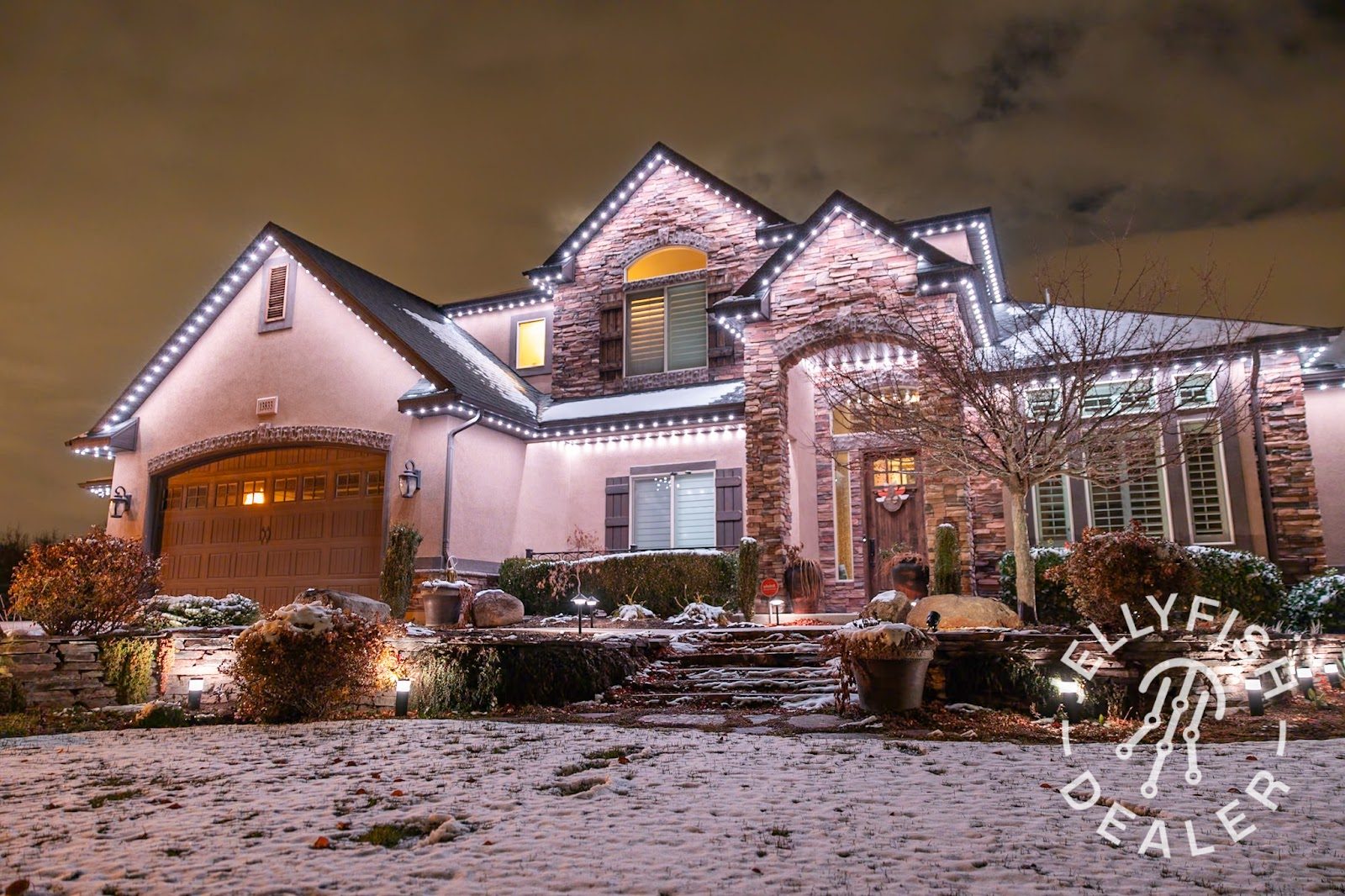
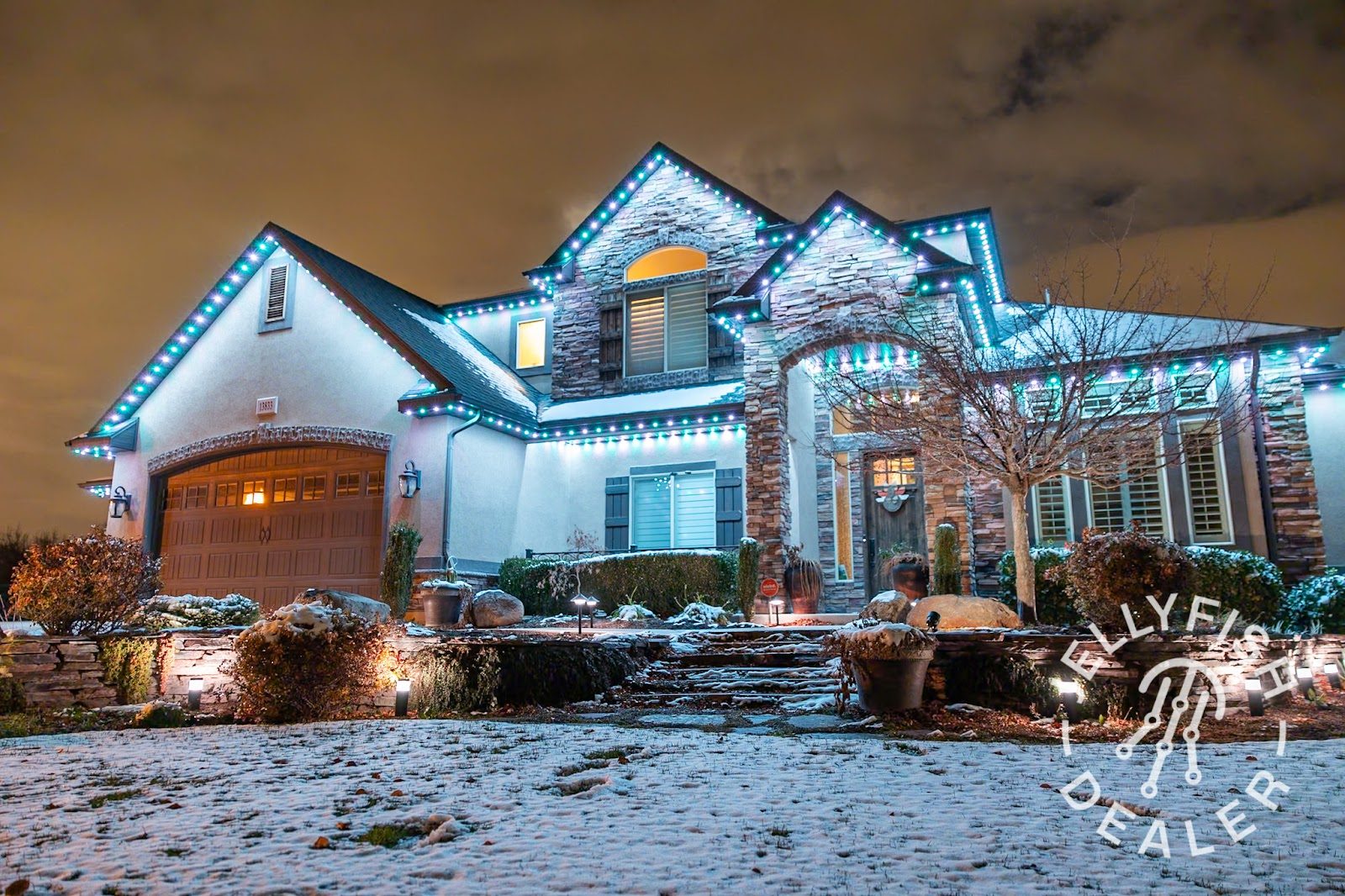
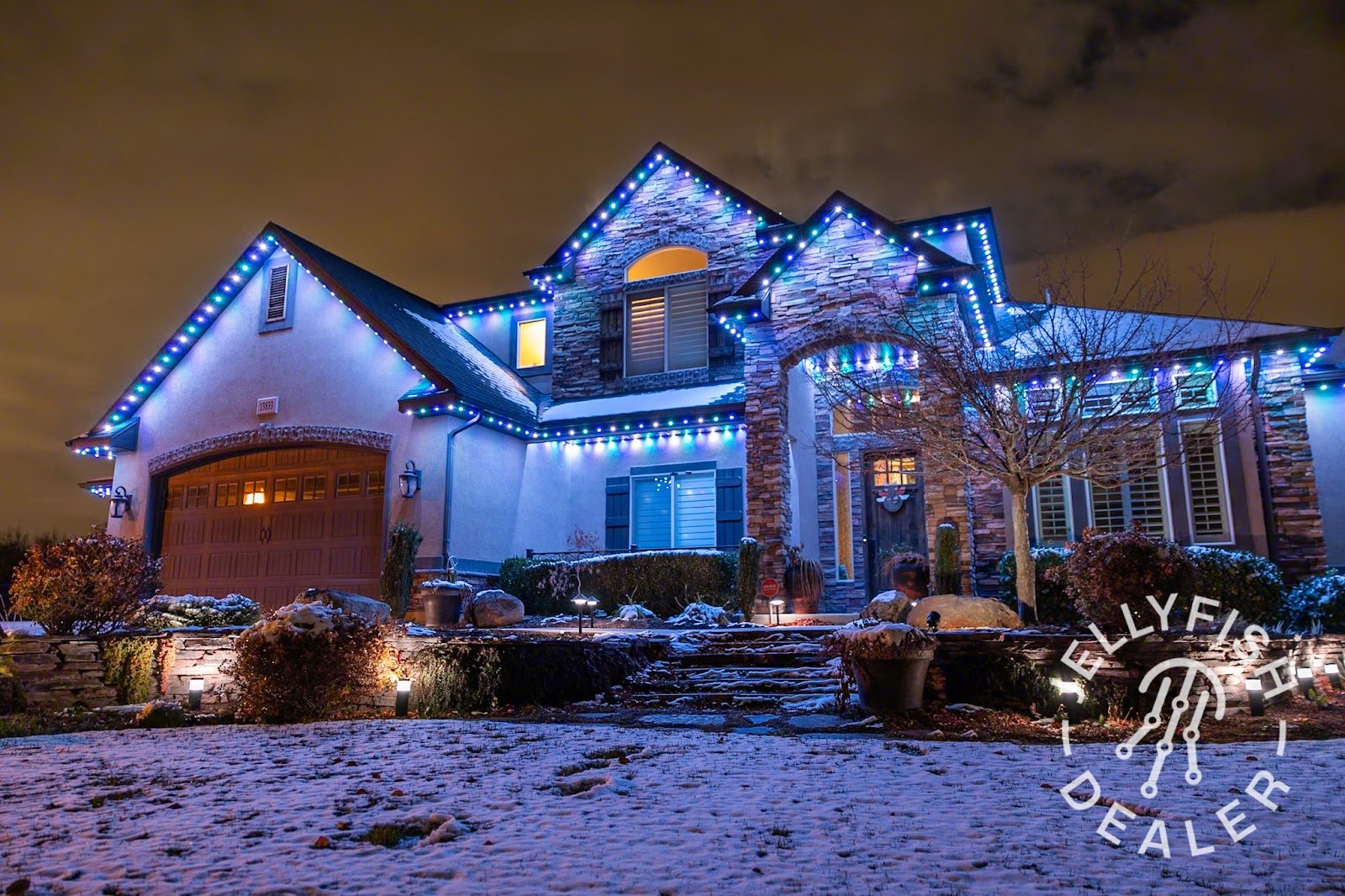
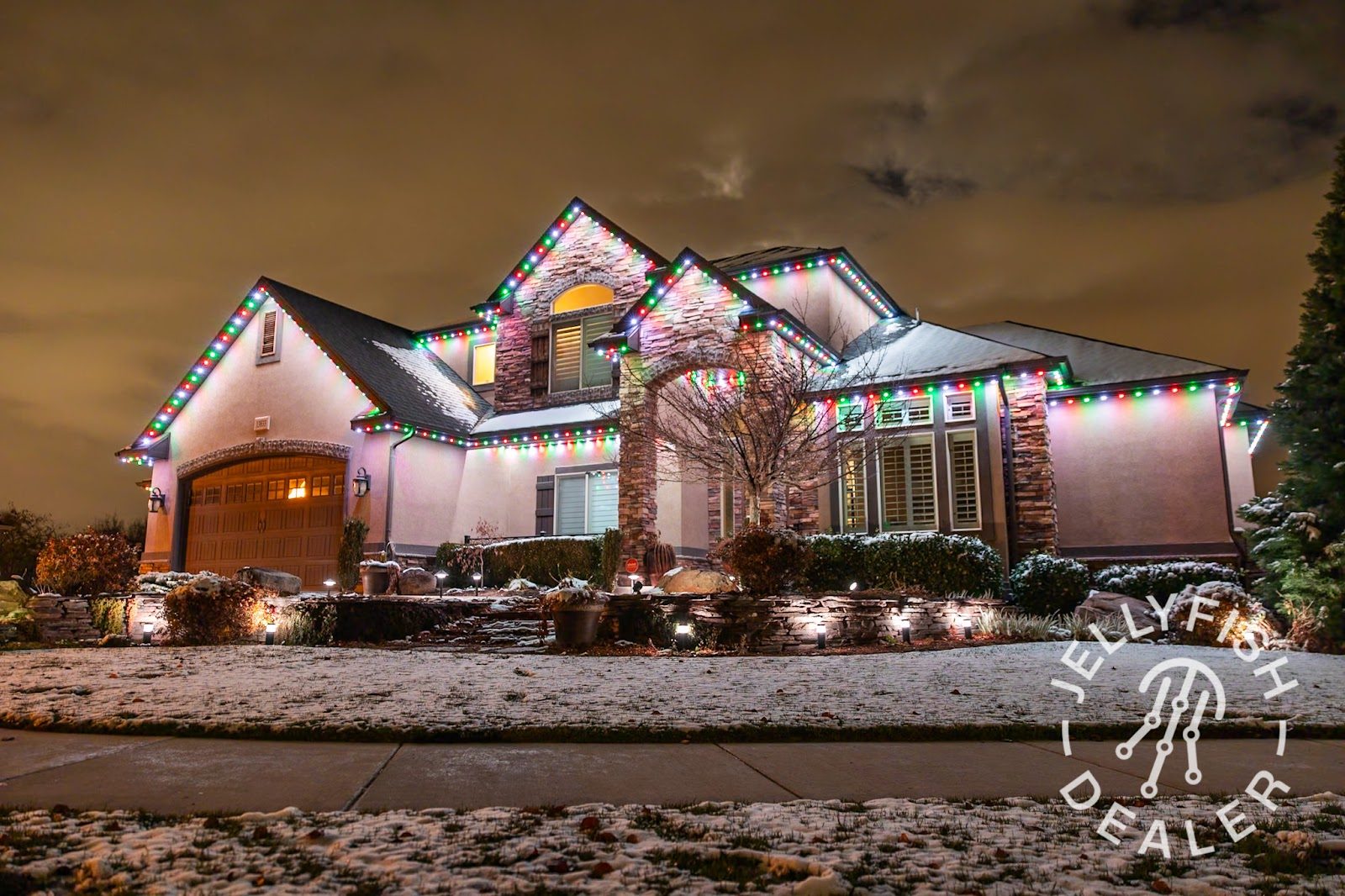
Landscape lighting handles ground-level features like trees, beds, and walkways, while permanent roofline lighting and patio lights cover the house and entertaining areas. Together they create a layered look rather than one flat wash of light.
If you already have permanent roofline lighting, landscape lighting fills in the areas that roofline lighting can't reach, like a garden bed along the side yard or a specimen tree in the back.
We often quote both together, since running the site walk once for the full property is more efficient than separate visits for each system.
How much maintenance does landscape lighting need?
Seasonal maintenance is mostly about clearing mulch or plant growth away from fixture lenses, checking for loose connections after freeze-thaw cycles, and confirming the transformer timer is still set correctly as daylight hours shift.
The International Dark-Sky Association recommends shielded, downward-focused fixtures where possible to reduce glare and light spilling onto neighboring properties, which is worth keeping in mind during fixture selection.
A quick annual check, ideally in early spring, catches most issues before they become bigger repairs.
Frequently asked questions
How many fixtures do I need for my yard?
It depends on what you want to highlight, not the square footage of your yard. A lighting plan focused on specific trees, walkways, and features usually needs fewer fixtures than people expect, placed more deliberately.
Is low-voltage landscape lighting safe to install near kids or pets?
Yes, low-voltage systems run at a much safer voltage than standard household wiring, which is part of why they're the standard for outdoor landscape lighting.
Can I add landscape lighting to an existing garden bed?
Yes, we can run wiring through existing beds with minimal disruption, especially if we plan the route around existing plants rather than through their root zones.
How long do landscape lighting fixtures typically last?
Quality brass or copper fixtures can last many years outdoors with minimal maintenance. Lower-quality plastic fixtures tend to need replacement much sooner, especially through winter weather.
The bottom line
- A real lighting plan focused on key features beats evenly spacing fixtures everywhere.
- Wiring should be buried and protected with waterproof connectors, not left exposed.
- Transformer sizing needs to account for total fixture load plus future expansion.
- Fixture material quality affects how long the system looks good outdoors.
- Landscape lighting pairs well with permanent roofline lighting for a fully layered look.
Want a landscape lighting plan built around your yard?
We'll walk your property, identify the features worth highlighting, and design a system that avoids the common DIY mistakes.
Explore landscape lighting