Landscape Lighting Design Principles: What to Feature, What to Hide
Core landscape lighting design principles covering what to feature, what to leave dark, layering, and contrast for a natural-looking evening yard.
Good landscape lighting design principles start with restraint: deciding what to feature and, just as importantly, what to leave dark. A yard where every plant and surface is lit ends up flat and busy, while a yard with a few well-chosen highlights and real shadow in between reads as intentional and layered.
This is one of the harder parts of planning landscape lighting, since it is tempting to think more fixtures automatically means a better result. In practice, the opposite is often true.
This post covers the core principles we use when designing a layout, regardless of the specific property.
Why contrast matters more than brightness
A yard with a few bright, well-placed highlights against a darker background creates a sense of depth that a uniformly lit yard cannot match. The human eye is drawn to points of brightness against contrast, so a fully lit yard actually reduces the visual impact of every individual feature since nothing stands out from anything else.
This is one of the most common adjustments we make when reviewing an over-designed layout: removing or dimming fixtures rather than adding more, to restore contrast between the features that matter and the space around them.
Brightness on its own is not the goal. A well-designed yard often uses less total light than an over-lit one, arranged more deliberately.
Choosing focal points deliberately
Every yard has a handful of features that deserve to be the visual anchor after dark: a specimen tree, an entry feature, a retaining wall, a water feature. Identifying these before placing any fixtures keeps the design from becoming a scattered collection of individually lit plants with no hierarchy.
A useful exercise is picturing the yard from the street or driveway at night and asking what you want the eye to land on first. That answer should guide where the brightest, most deliberate lighting goes.
Secondary features can still get light, but at a lower level than the primary focal points, which reinforces the hierarchy rather than flattening it.
Layering light for depth
Layering means combining different light levels and fixture types rather than using one uniform brightness across the property: primary focal points at full brightness, secondary accents dimmer, and low-level path or step lighting for function rather than drama. This mirrors how interior designers layer ambient, task, and accent lighting indoors.
Without layering, a yard tends to look either uniformly bright, which is flat, or uniformly dim, which loses detail. Layering creates the sense that some things were chosen to stand out while others quietly support the scene.
This is also where cylinder uplights and spotlights play different roles, since a wash fixture might handle a secondary layer while a spotlight handles the primary focal point in the same bed.
- Primary layer: main focal points at full intended brightness
- Secondary layer: supporting features at a dimmer level
- Functional layer: path, step, or safety lighting kept low and practical
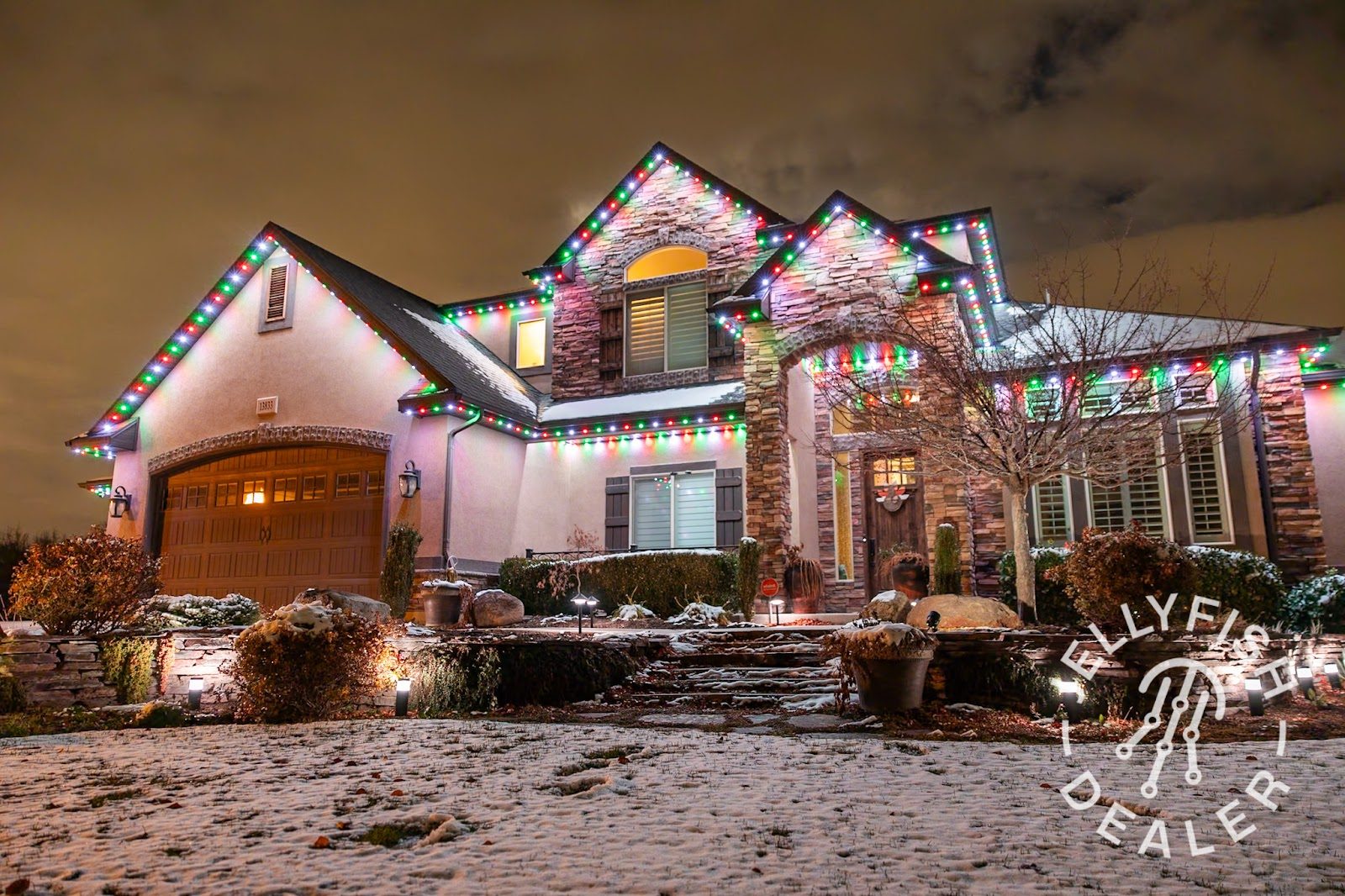
- Ambient layer: general glow from roofline or structural lighting, if present
Deciding what to leave dark
Not every plant, wall, or corner of a property needs a fixture. Leaving areas dark is what makes the lit areas readable as features rather than just part of a generally illuminated space, and it often reduces the fixture count and cost of a project without hurting the result.
Areas close to a home's own porch or interior light spill do not always need a dedicated fixture, since ambient light already reaches them. Deep background areas, far tree lines, or spaces not typically viewed at night are also reasonable candidates to leave unlit.
This is a judgment call best made during a walk-through of your actual property rather than a rule applied evenly everywhere, since every yard has different existing light sources and viewing angles.
Designing for how the space is actually viewed
A front yard is mostly viewed from the street and driveway, so the design should prioritize what reads well from those vantage points rather than an aerial or straight-on view that no one actually experiences. A backyard is usually viewed from a patio, deck, or specific windows, which should guide where the strongest lighting goes.
Walking your own property at the times and from the spots you actually use, coming home in the evening, sitting on the patio after dinner, helps identify what really needs emphasis versus what only matters in a hypothetical view from above.
We build layouts around these real vantage points during a design walk, which is part of why an in-person visit produces a better result than a generic plan applied to a lot size and shape.
Common mistakes that undercut good design
Lighting every tree and shrub equally is the most common issue, since it removes hierarchy and makes the yard look busy rather than considered. A close second is ignoring how a house is actually approached and viewed, leading to lighting decisions that look good on paper but miss the real vantage points.
Mismatched color temperatures across fixtures, cool white next to warm white, is another frequent problem, since it breaks the sense of a single cohesive scene even when individual fixture placement is otherwise good.
According to general guidance from the U.S. Department of Energy on outdoor lighting, thoughtful placement and appropriate light levels also reduce unnecessary energy use and light spill onto neighboring properties, which is worth factoring into a design beyond aesthetics alone.
Frequently asked questions
Does more lighting always look better in a landscape design?
No. Over-lighting a yard reduces contrast and makes individual features harder to notice. A well-designed layout usually uses fewer, more deliberately placed fixtures rather than lighting everything equally.
How do I know which features should be my focal points?
Picture your yard from the street or driveway at night and consider what you want the eye to land on first. Those features should get the primary lighting, with everything else layered in at lower levels.
Is it okay to leave parts of my yard completely dark?
Yes. Leaving some areas unlit creates contrast that makes the lit features stand out and often reduces total fixture count without hurting the overall look.
Can I apply these principles myself before getting a quote?
You can absolutely start by identifying your own focal points and vantage points, but a design walk helps translate that thinking into specific fixture types and placement for your property.
The bottom line
- Contrast between lit and dark areas creates more depth than uniform brightness.
- Deliberately chosen focal points give a design hierarchy instead of scattered equal lighting.
- Layering primary, secondary, functional, and ambient light adds dimension to a yard.
- Leaving some areas dark is a design choice, not a gap to fill with more fixtures.
- Design decisions should follow how the property is actually viewed and used at night.
Ready to design a layered landscape lighting plan
We can walk your property, identify the right focal points, and build a design that uses contrast and layering effectively.
Explore landscape lighting