Lakefront Landscape Lighting Considerations for Sandusky Bay Homes
Sandusky Bay outdoor lighting for lakefront homes needs to handle moisture, wind, and dock access. Here's what to plan for near the water.
Sandusky Bay outdoor lighting for waterfront properties has to deal with conditions that inland yards do not, including higher moisture exposure, more consistent wind, and often a dock or shoreline path that needs its own lighting plan.
Homeowners along the bay usually want lighting that highlights the water view at night while also handling the practical side of getting safely from the house to the dock after dark.
This post covers the specific considerations for lakefront lighting around Sandusky Bay, from fixture material to placement near the shoreline.
Why moisture exposure changes fixture choice
Properties directly on Sandusky Bay deal with more humidity, occasional spray, and general dampness than homes set back from the water. Fixtures rated for wet locations, not just damp locations, matter more here than on a typical inland yard.
Connections and wiring should be sealed carefully, since repeated moisture exposure over a season is harder on a marginal connection than an occasional rain event further inland.
This does not mean lakefront lighting requires exotic equipment, just more attention to sealing and fixture rating than a standard suburban install might need.
Planning dock and shoreline path lighting as its own zone
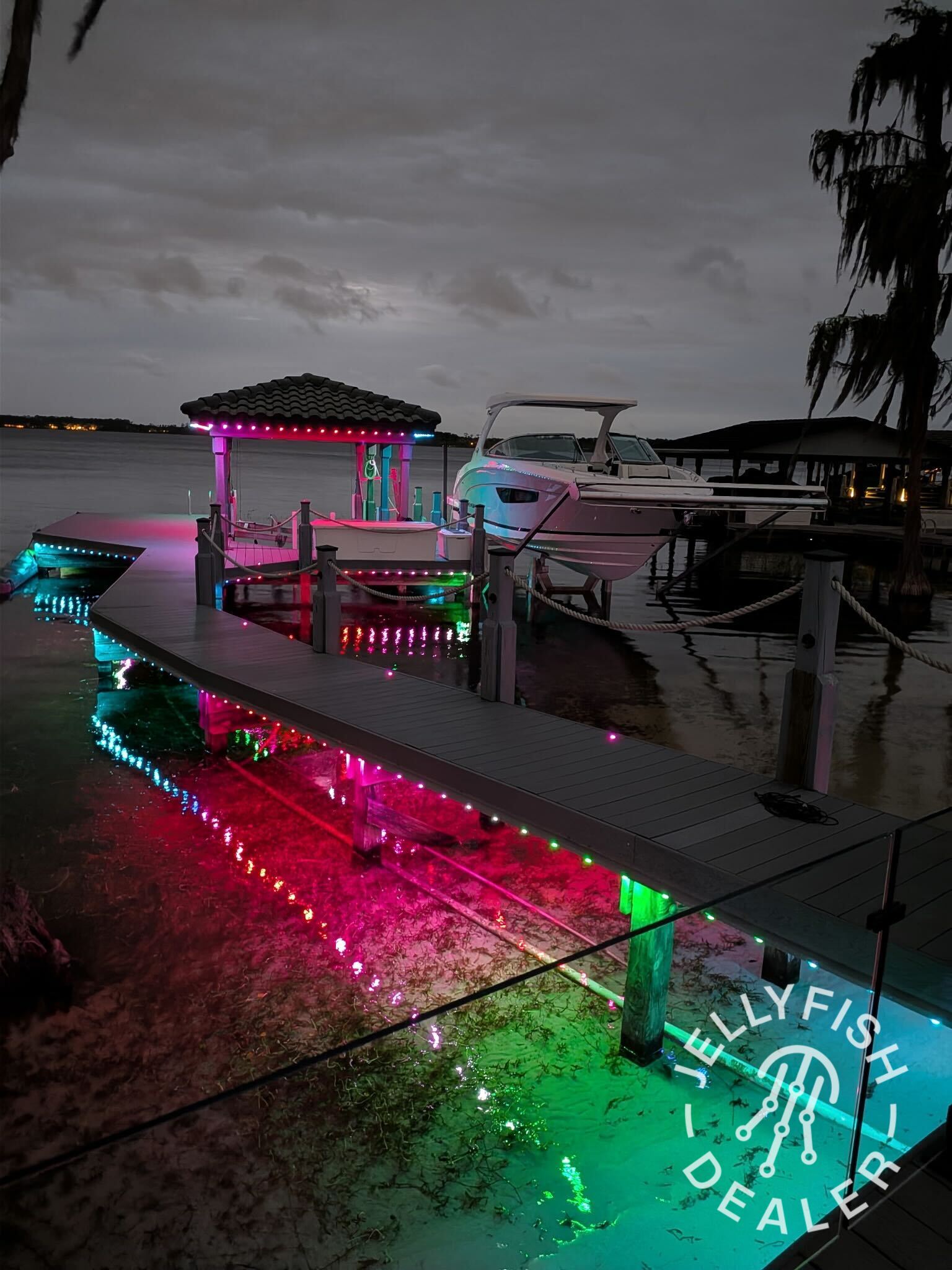
The path from the house down to a dock or shoreline often gets treated as an extension of the main landscape lighting plan, but it works better as its own zone with a clear purpose: safe footing after dark.
Dock lighting should prioritize even, low-glare illumination along the walking surface rather than decorative accents, since uneven footing near water is a real safety concern at night.
Path lights spaced consistently along the route, plus a fixture at any steps or transitions in grade, cover most of what this zone actually needs.
Accounting for wind near open water
Open water areas like Sandusky Bay tend to see more consistent and stronger wind than inland yards, which affects how fixtures and wiring should be mounted. Loose wire runs or lightweight fixtures are more likely to shift or get damaged over time in these conditions.
Securing wire runs more thoroughly and choosing fixtures with sturdier mounting hardware helps avoid repeat service calls after windy stretches.
This is also a factor for any permanent roofline lighting, since track and clip attachment matters more on a home that regularly faces wind off the water.
Balancing a water view with light spill
A lot of homeowners want their lakefront property lit up at night but also do not want the water view washed out by too much light pointed toward the shoreline. Overly bright landscape lighting aimed toward the bay can create glare on the water rather than a pleasant nighttime view.
Keeping fixtures aimed at the yard, deck, or dock itself rather than straight out over the water generally gives a better result, letting the natural darkness of the bay stay part of the view.
This also matters for neighboring properties along the shoreline, since light spill across the water is more noticeable at night than the same spill would be on a landlocked lot.
- Aim fixtures at usable areas like decks, paths, and docks rather than the open water
- Use lower-output path lighting along the shoreline instead of bright floodlighting
- Choose wet-rated fixtures for anything near the waterline
- Secure wire runs against consistent wind exposure
Where permanent lighting fits on a lakefront home
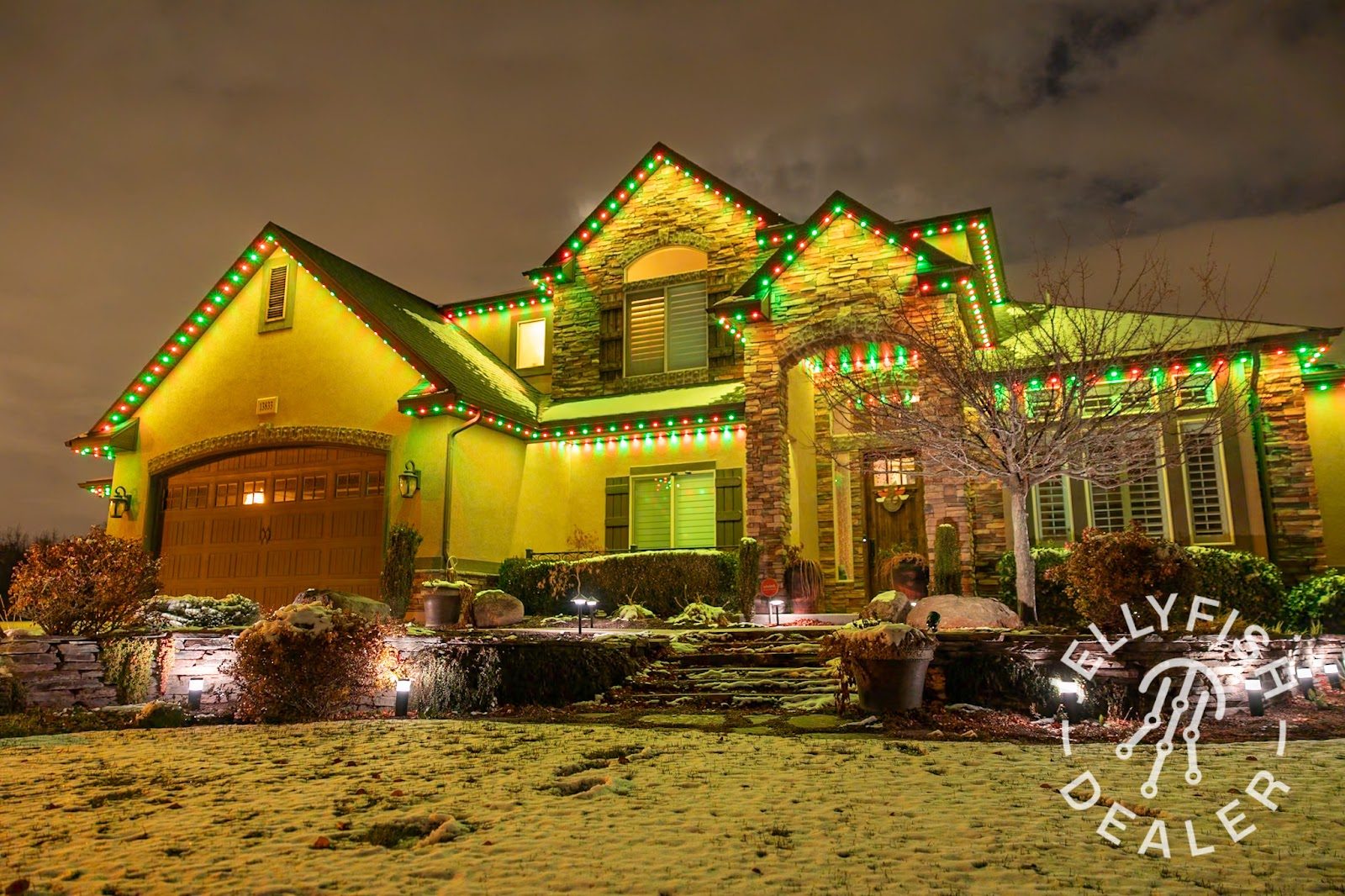
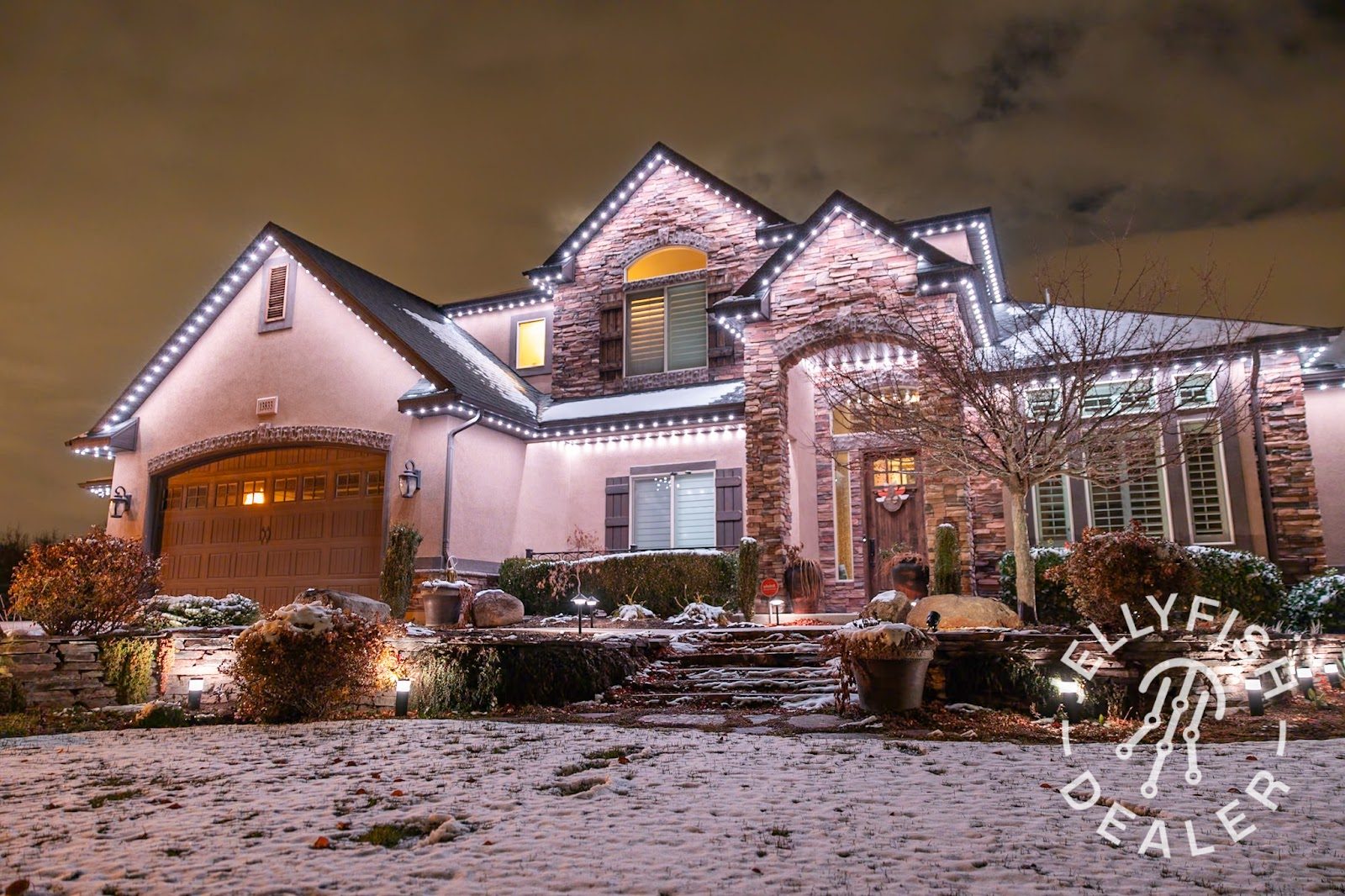
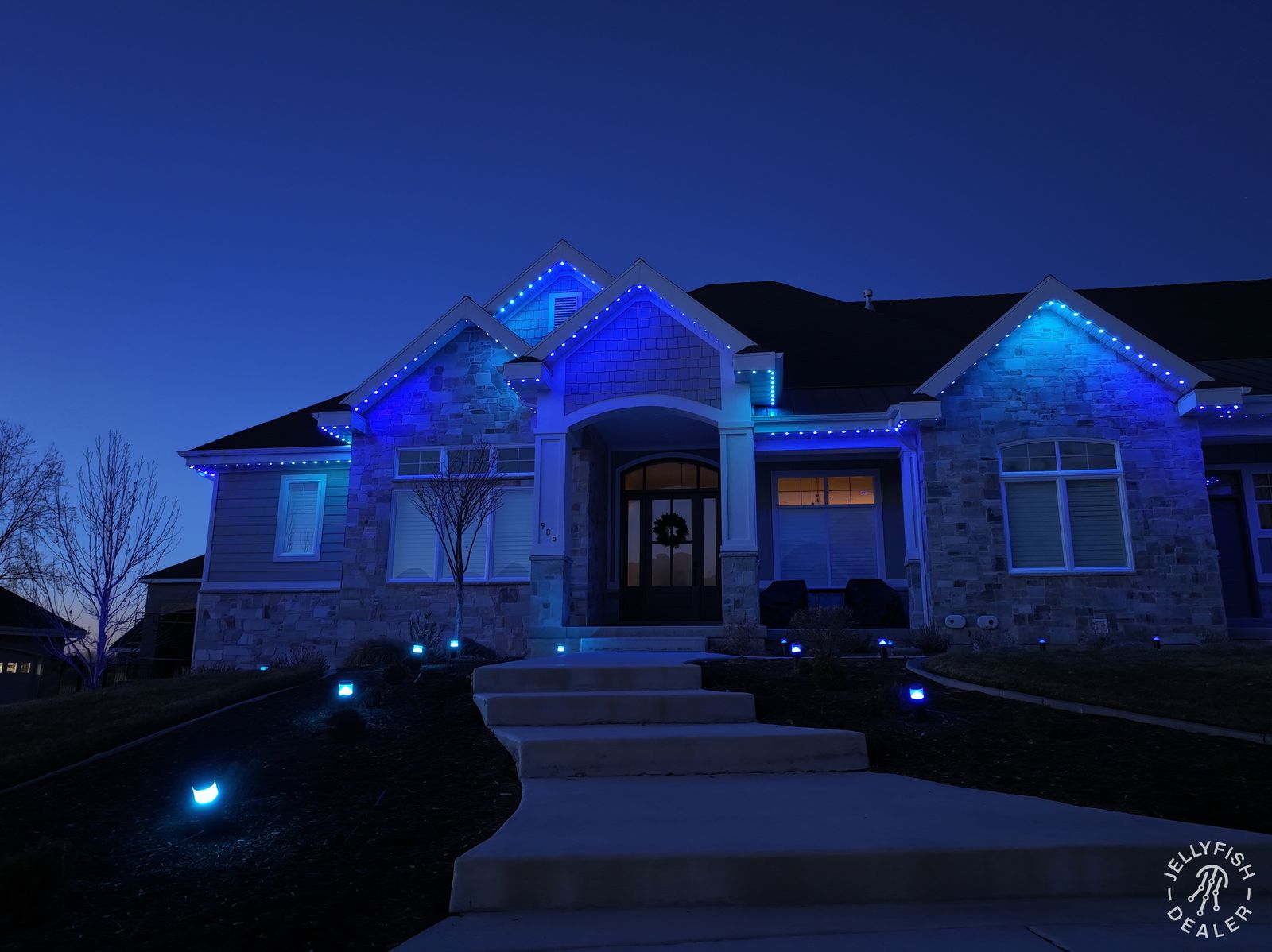
Permanent roofline lighting works well on lakefront homes because it defines the structure without adding glare directly over the water. A home outlined in warm white or color-changing light is visible from the water or a neighboring dock without competing with the view itself.
For homes visible from boats or across the bay, this outline effect also helps with identifying the property at night, which some owners find useful beyond just the aesthetic appeal.
The Jellyfish system is designed to hold up outdoors year-round, which matters on a property that deals with more weather exposure than a typical inland home.
Seasonal considerations for bay-area properties
Many Sandusky Bay properties are used seasonally or see heavier use in summer, which affects how lighting maintenance gets scheduled. A quick fixture check at the start of the season catches most issues caused by winter weather or storm exposure.
According to NOAA's Great Lakes resources, Lake Erie and its connected bays see notable seasonal wind and water level changes, which is a reasonable reminder to inspect shoreline fixtures and wiring each spring rather than assuming everything survived winter untouched.
If your property is only occupied part of the year, mention that during your consultation so we can plan a lighting setup that holds up through an unattended season.
Frequently asked questions
Do lakefront homes need special fixtures compared to inland properties?
Yes, generally wet-rated fixtures with strong corrosion resistance hold up better given the consistent moisture exposure near open water compared to a typical inland yard.
How should dock lighting be planned differently than yard lighting?
Dock and shoreline path lighting should prioritize even, low-glare illumination for safe footing rather than decorative accents, since uneven footing near water at night is a real safety concern.
Will lighting my property ruin the water view at night?
Not if fixtures are aimed at usable areas like the yard, deck, or dock rather than straight out over the water. Overly bright lighting aimed at the shoreline can create glare, but a thoughtful plan avoids that.
Does wind off the bay affect how lighting is installed?
Yes, wire runs and fixture mounting should be secured more thoroughly than a typical inland install to hold up to more consistent wind exposure near open water.
The bottom line
- Wet-rated, corrosion-resistant fixtures matter more on lakefront properties.
- Plan dock and shoreline paths as a dedicated safety-focused lighting zone.
- Secure fixtures and wiring against stronger, more consistent wind near open water.
- Aim lighting at usable areas rather than the water to preserve the view and reduce glare.
- Seasonal properties benefit from a spring fixture check before heavy summer use.
Plan lighting for your Sandusky Bay property
We can design a plan that handles the water, dock, and shoreline path together as one system.
Explore landscape lighting