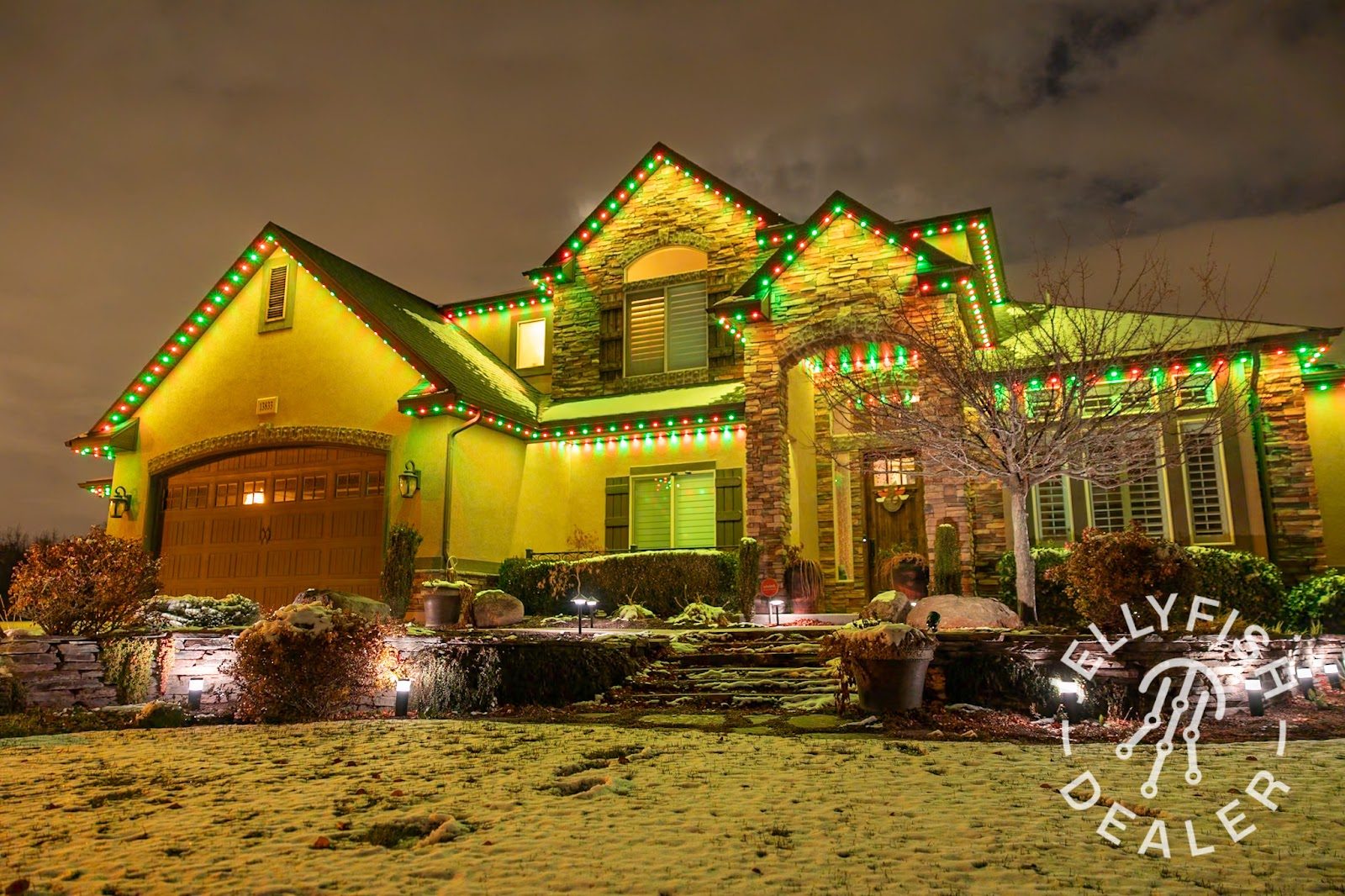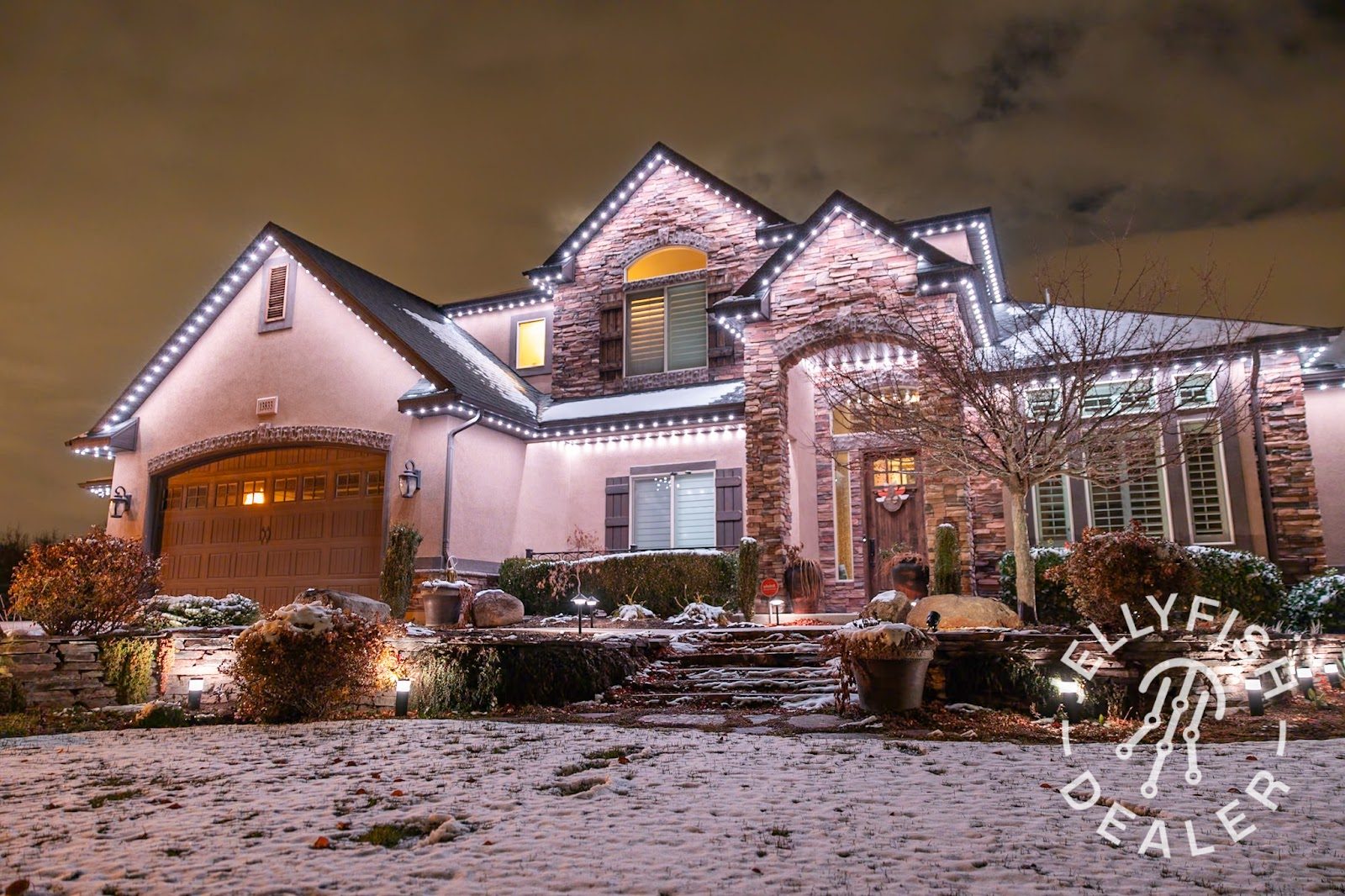
How to Integrate Landscape Lighting into Your Jellyfish Controller
Integrating landscape lighting with a Jellyfish controller lets you manage roofline and ground-level lighting from one app. Here's how the setup actually works.
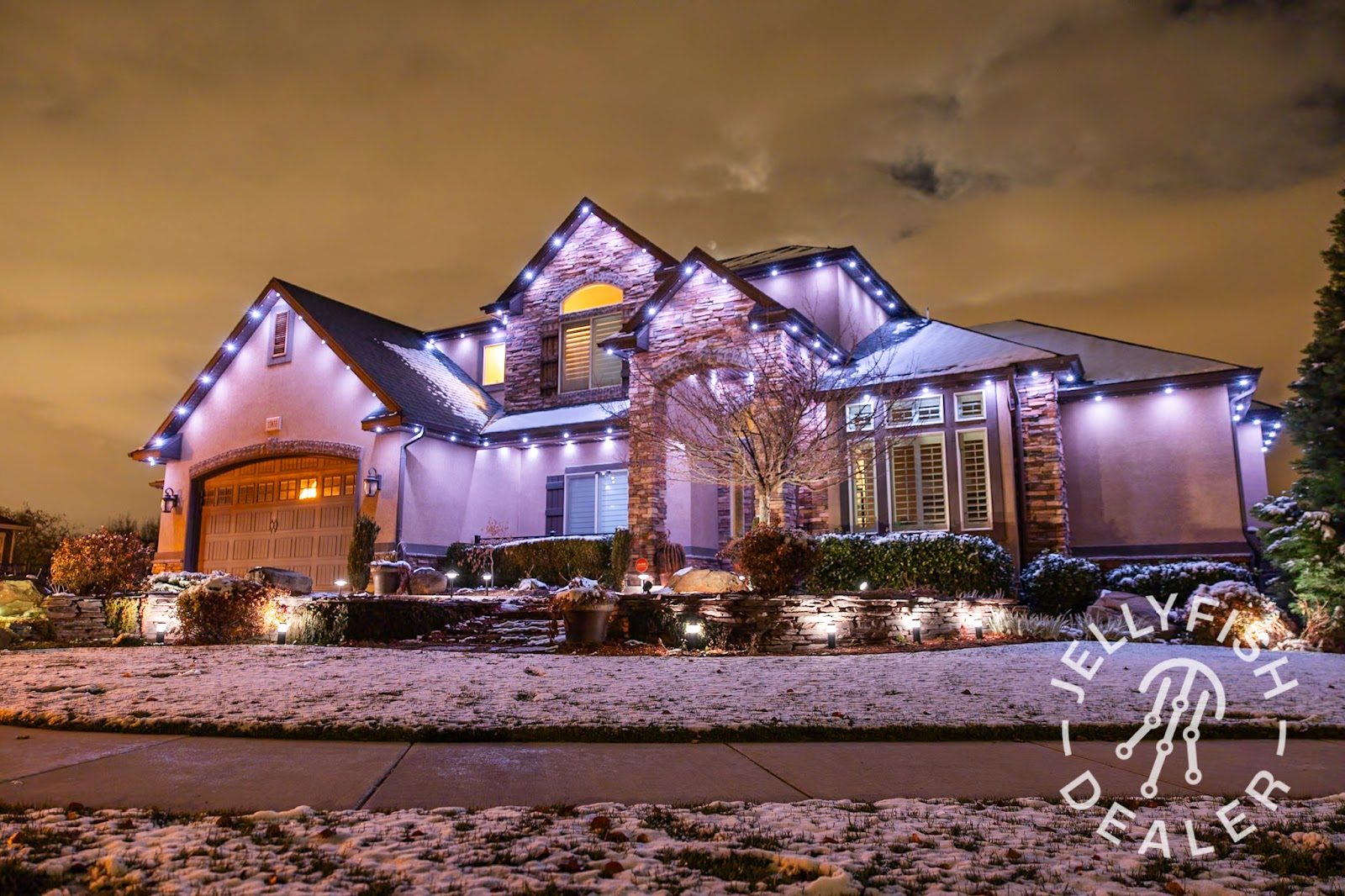
Landscape lighting Jellyfish integration is possible on select setups where the Jellyfish system's Omega Chip controller and app can also manage compatible low-voltage landscape zones alongside your roofline lighting, giving you one app for both instead of two separate systems to operate.
This is not automatic for every landscape lighting setup, since it depends on the specific fixtures, transformer, and control hardware involved. It is a conversation we have during design rather than something that works the same way on every property.
This post explains how the integration generally works, what determines whether your setup is a candidate, and what homeowners should expect from combining Jellyfish lighting with landscape lighting.
Why homeowners ask for this
Homeowners who already run Jellyfish lighting on their roofline and are adding landscape lighting for trees, beds, or walkways often want everything controlled from the same place rather than juggling a roofline app and a separate landscape lighting remote or timer.
The appeal is straightforward: one app, one schedule, and coordinated scenes where the roofline and ground-level lighting change together for a holiday setting, a game day color scheme, or a simple nightly on/off routine.
Not every homeowner needs this level of integration, and plenty of properties run two separate, well-functioning systems without issue. But for those who want a single point of control, it is worth understanding what is actually possible.
What determines compatibility
Jellyfish's control ecosystem is built around its own Omega Chip hardware and app, and its ability to manage other lighting depends on whether the landscape lighting side uses compatible control equipment, such as smart transformers or controllers designed to communicate with that ecosystem.
A standard low-voltage transformer with a basic mechanical timer generally is not going to integrate directly into the Jellyfish app. A landscape lighting system built with smart, app-controllable components has a much better chance of working alongside it.
This is why the timing of the conversation matters. If integration is a goal, it is far easier to plan for compatible hardware from the start of a landscape lighting install than to retrofit an existing basic system later.
Planning integration during design, not after
If you already have Jellyfish installed and are now planning landscape lighting, tell us during the landscape lighting design conversation that you want the two systems to work together. That lets us recommend transformer and control options that are actually compatible, rather than defaulting to standard equipment and discovering a mismatch later.
The reverse also applies. If you are planning both systems at once, from Jellyfish roofline lighting to landscape lighting for trees and beds, we can design the whole project around unified control from the beginning.
Retrofitting an already-installed basic landscape lighting system to integrate later is possible in some cases but often means replacing transformer or control components, which adds cost compared to planning for it upfront.
What integrated control actually looks like day to day
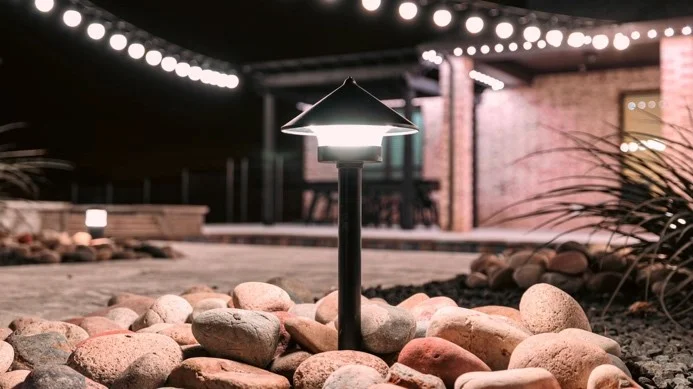
When a landscape lighting zone is integrated with the Jellyfish app, you can typically turn it on and off, and in some cases adjust brightness or color if the fixtures support it, from the same interface used for your roofline scenes.
This makes coordinated scenes possible, where a holiday color scheme, a warm white everyday setting, or a specific event scene applies across both the roofline and the landscape lighting at once rather than adjusting each system separately.
Scheduling also becomes unified, so a single sunset-to-sunrise or custom schedule can apply to both systems instead of managing two separate timers.
- On/off and scene control from a single app for compatible zones
- Coordinated color or brightness changes across roofline and landscape lighting together
- One schedule instead of separate timers for each system
- Standalone systems remain fully functional even without integration, for anyone who prefers separate control
What to expect if your setup is not a good candidate
If your landscape lighting uses a standard transformer that is not designed for smart integration, that does not mean the lighting will not work well. It simply means it will run as its own system with its own timer or app, separate from your Jellyfish roofline lighting.
Plenty of well-designed properties run this way successfully, since the visual result at night does not depend on whether the systems share an app. Two separately controlled systems can still look completely coordinated if the design and timing are planned well.
We will always tell you honestly whether integration is realistic for your specific equipment rather than promising a connection that is not actually supported.
Getting started with an integrated design
The best starting point is a single design conversation that covers both your roofline goals and your landscape lighting goals together, even if the projects are scheduled at different times. This lets us plan wiring, transformer placement, and control hardware with the full picture in mind.
If you already have one system installed, bring us information about your current setup, including transformer model and any app or control hardware in use, so we can evaluate integration options accurately.
For homeowners planning both from scratch, we can walk through what unified control adds to the project cost so you can decide if it fits your priorities.
Frequently asked questions
Can any landscape lighting system be integrated with Jellyfish?
Not automatically. It depends on whether the landscape lighting uses compatible smart transformer or control hardware. Standard mechanical timers generally do not integrate directly.
Do I need to buy new landscape lighting fixtures for integration to work?
Not necessarily the fixtures themselves, but the transformer and control hardware need to support the integration. We can tell you what your current setup would need during a review.
What happens if my landscape lighting can't be integrated?
It runs as its own separate system with its own schedule or app, which still works well and can look fully coordinated with your roofline lighting even without shared control.
Is it cheaper to plan integration from the start rather than adding it later?
Generally yes, since planning compatible hardware into the original landscape lighting design avoids replacing transformer or control components later.
The bottom line
- Some landscape lighting zones can be controlled from the same app as Jellyfish roofline lighting.
- Compatibility depends on using smart transformer and control hardware, not standard timers.
- Planning integration during design avoids retrofit costs later.
- Integrated control allows coordinated scenes and one shared schedule.
- Non-integrated systems still look coordinated at night even with separate control.
Want your roofline and landscape lighting on one app
Tell us about your goals for both systems and we will design a setup that works together where it makes sense.
Explore Jellyfish lighting