
8 Commercial Property Lighting Ideas That Work
Commercial property lighting ideas that improve safety, brand visibility, and after-hours curb appeal for retail, office, and multi-tenant sites.
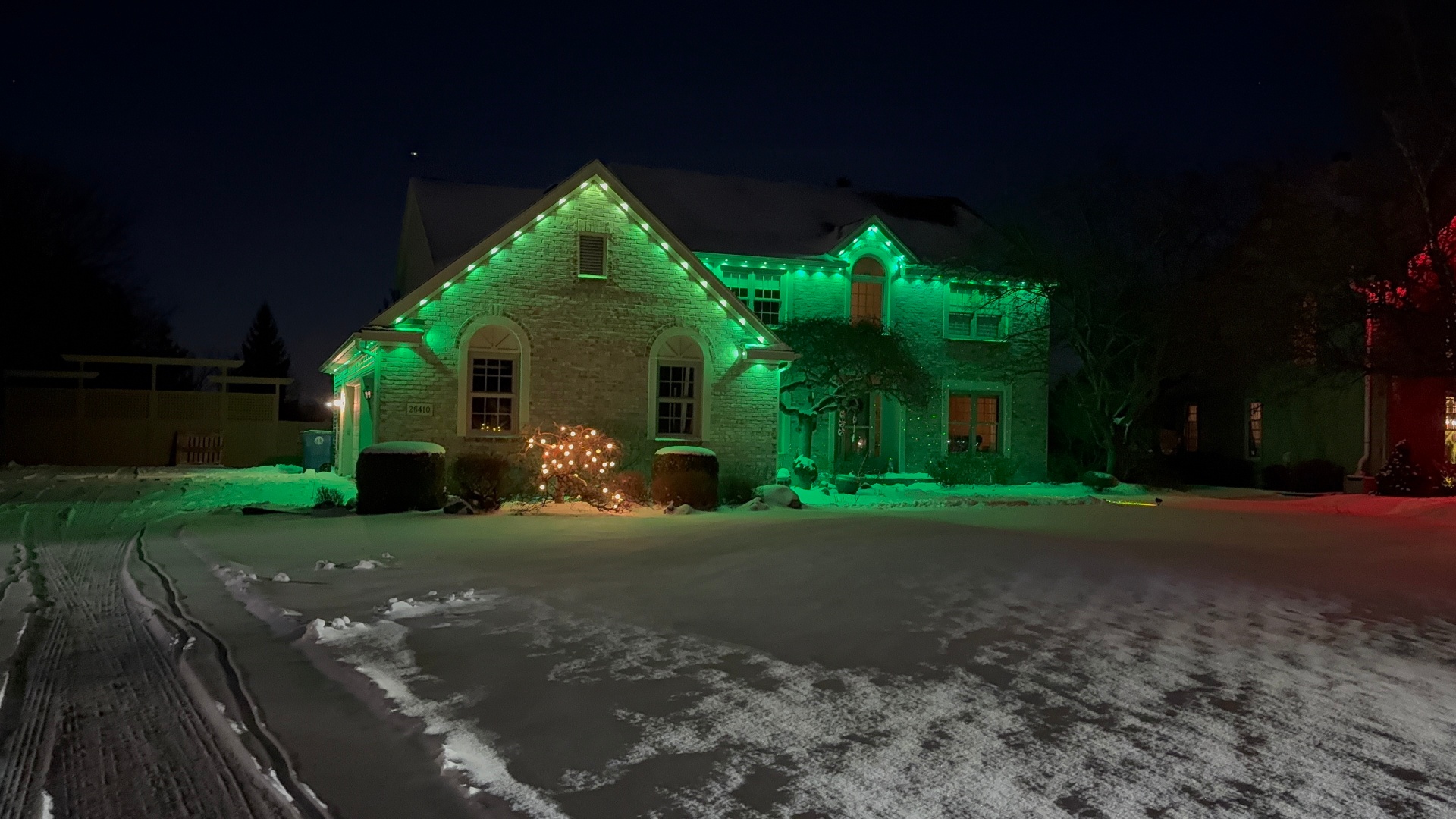
Commercial property lighting ideas need to balance three goals at once: safety for visitors after dark, brand visibility for the business, and a lighting bill that doesn't spiral. The right layout does all three without competing fixtures fighting for attention.
We work with property managers and business owners across Northwest Ohio on lighting that holds up to commercial use, not repurposed residential fixtures.
1. Safety-first parking lot and walkway lighting
Before anything decorative, commercial properties need consistent, glare-free lighting across parking areas and walkways. Dark spots near entrances or parking spaces are both a safety issue and a liability concern for property owners.
The ADA has specific guidance on accessible route requirements, and while lighting levels aren't always spelled out in detail, well-lit accessible paths are part of providing a safe, usable route for all visitors.
2. Permanent roofline lighting for brand visibility
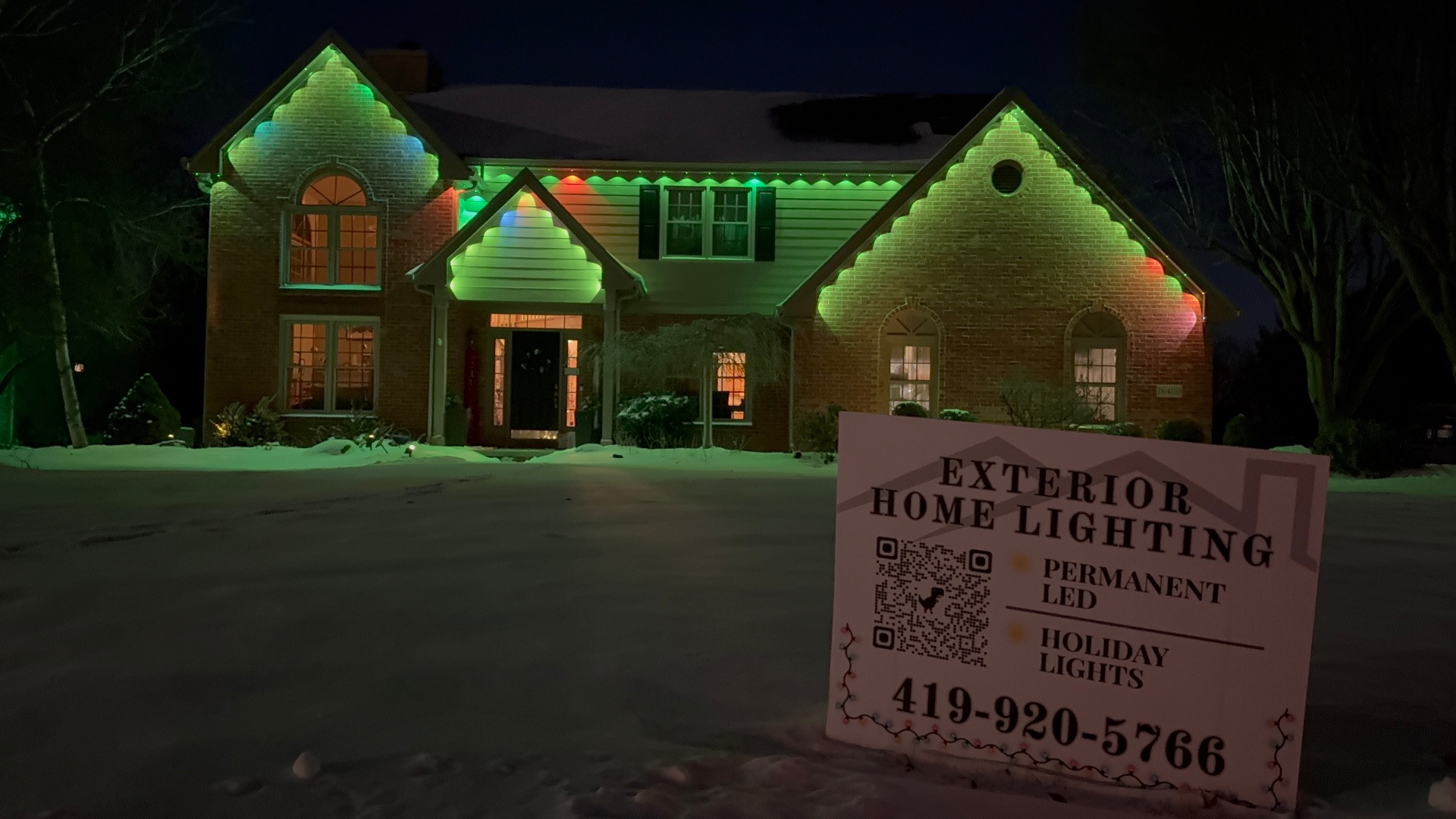
A Jellyfish or Govee permanent system along a commercial roofline lets a business run brand colors year-round, switch to seasonal themes, or highlight the building during events, all without repeated ladder work.
For multi-tenant buildings, this can be zoned so each tenant's section can be adjusted independently if needed, while still reading as one cohesive building at night.
3. Wall-wash lighting on the facade
Saber series wall-wash fixtures add depth and texture to brick, stone, or stucco facades, which reads as more upscale than flat floodlighting. This works especially well on properties with architectural details worth highlighting after dark.
It also softens harsh security lighting by filling in shadows on the building itself, rather than leaving the wall dark behind a bright floodlight.
4. Landscape lighting for entrances and signage
Landscape lighting around entrance beds, monument signs, and mature trees near the building draws attention to the property from the road and makes the entrance easier to find at night.
This is often the highest-return lighting improvement for retail and office properties, since it directly affects whether customers can find and feel comfortable approaching the building after dark.
5. Motion-activated and scheduled zones
Not every part of a commercial property needs full brightness all night. Motion-activated lighting in back lots, loading areas, or side entrances saves energy while still lighting the area the moment someone's there.
The Department of Energy notes that LED fixtures paired with controls like motion sensors and scheduling can meaningfully reduce outdoor lighting energy use compared to always-on fixtures.
- Motion sensors for loading docks and back entrances
- Scheduled dimming for parking lots during low-traffic hours
- Full brightness maintained at all entrances and accessible routes
- Separate zoning for tenant signage vs shared common areas
6-8: Signage, dark-sky consideration, and seasonal flexibility
Backlit or halo-lit signage should be bright enough to read from the road without overpowering the rest of the property's lighting scheme. Consider fixtures that direct light downward and inward rather than spilling into neighboring properties or the sky, both for good-neighbor reasons and to reduce wasted light.
Finally, build in seasonal flexibility: permanent systems that can shift color for holidays or local events give a commercial property a way to stay visually current without new hardware every time.
Frequently asked questions
How is commercial lighting different from residential lighting design?
Commercial properties have higher safety and liability standards for parking and walkways, often need brand-consistent lighting, and typically require more robust, higher-output fixtures than a residential install.
Can permanent lighting be zoned for multi-tenant buildings?
Yes, a permanent system can be split into zones so different sections of a building can run independent schedules or colors while still functioning as one system.
Does better lighting actually reduce liability risk?
Well-lit walkways and parking areas reduce trip-and-fall risk and improve visibility for security cameras, which is a meaningful factor in liability exposure for commercial properties.
Is motion-activated lighting appropriate for a business front entrance?
Front entrances and accessible routes should stay consistently lit for safety and accessibility. Motion sensors work better for lower-traffic areas like back lots and loading docks.
The bottom line
- Safety and accessible-route lighting comes first, before decorative elements.
- Permanent roofline lighting gives commercial properties brand visibility with low ongoing maintenance.
- Wall-wash and landscape lighting add depth without excessive brightness.
- Motion sensors and scheduling reduce energy use in low-traffic zones.
- Signage and seasonal flexibility round out a complete commercial lighting plan.
Upgrade your property's after-hours presence
We design commercial lighting layouts that balance safety, brand visibility, and energy use.
Talk to us about your property