A patio can look finished in daylight and still feel flat the second the sun goes down. The usual problem is not a lack of fixtures. It is a lack of plan. If you are wondering how to design patio lighting, start by thinking less about bulbs and more about how you want the space to feel when people actually use it.
A good patio lighting design should make the area comfortable, safe, and visually balanced. It should let you carry a plate without squinting, hold a conversation without harsh glare, and give your home a polished look from the street. That balance is where most DIY setups miss the mark. They either underlight everything or flood the patio with bright fixtures that make the whole space feel like a parking lot.
How to Design Patio Lighting Around Real Use
Before choosing fixtures, pay attention to what happens on your patio. A space used for quiet evenings needs a different lighting plan than one used for grilling, hosting, or watching the game outdoors. This sounds obvious, but it is the step that keeps lighting from feeling random.
Start with zones. Most patios have at least three, even if they are not formally defined. There is usually a seating area, a dining or grilling area, and a path or transition space that connects the patio to the yard, driveway, or back door. Each zone needs its own light level and fixture style.
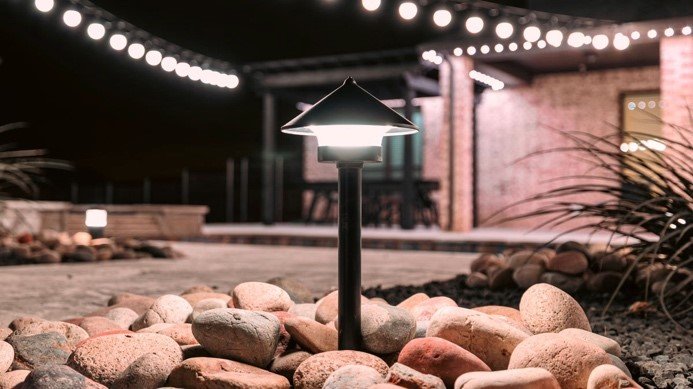
Seating areas usually work best with softer ambient light. You want enough visibility for people to see each other and move around comfortably, but not so much brightness that the space feels exposed. Dining and cooking areas need more direct light, especially around the grill, prep surface, or table. Walkways, steps, and edges need practical illumination first. Decorative effect comes second there, because safety always leads the conversation.
This is also where scale matters. A small paver patio behind a ranch home should not be lit the same way as a large outdoor living area with a pergola, retaining wall, and landscaping. The more features you have, the more important it becomes to layer light instead of relying on one fixture type.
Build the Design in Layers
The easiest way to make patio lighting feel intentional is to use layers. Think of it the same way you would think about indoor lighting. One overhead light in a kitchen rarely feels complete. Patios work the same way.
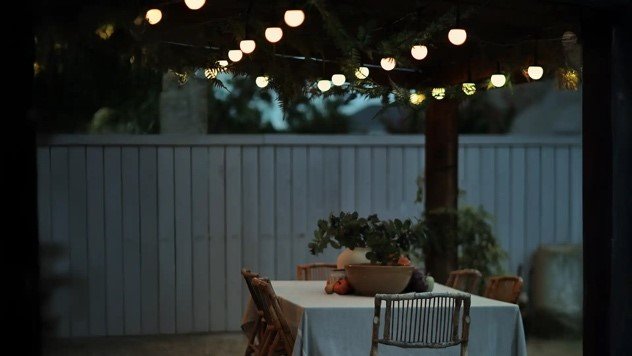
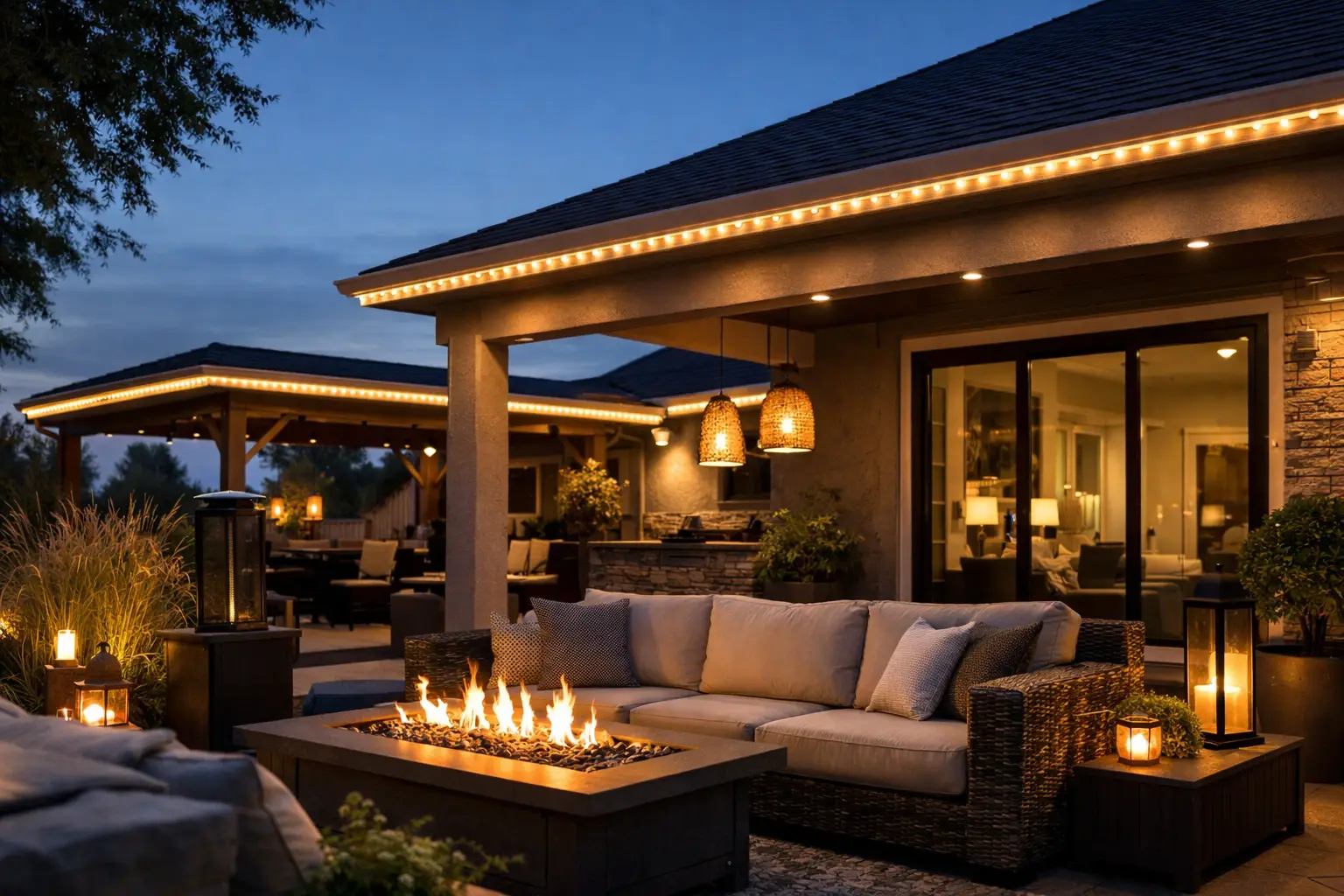
The first layer is ambient light. This is your overall glow. It can come from string lighting attached to a pergola, downlighting from a structure, mounted fixtures on the home, or carefully placed permanent lighting that casts a clean wash across the patio. Ambient light sets the tone, and the best versions of it feel present without calling too much attention to themselves.
The second layer is task lighting. This is the practical light that helps people use the space. Over a grill station, near outdoor kitchen counters, beside steps, or around dining areas, task lighting should be bright enough to be useful but still warm enough to feel residential. Cooler, overly white light often looks harsh on a patio, especially against brick, stone, or wood finishes.
The third layer is accent lighting. This is where the space starts to feel custom. Accent lighting might highlight a stone column, wash light across a retaining wall, add subtle glow around planters, or pull nearby landscaping into the evening view. It is not required on every patio, but it often makes the difference between basic lighting and a finished outdoor environment.
Choose Warmth and Brightness Carefully
People often assume brighter is better. On patios, that is rarely true. Too much brightness creates glare, flattens textures, and makes the area less relaxing. You should be able to see clearly without feeling like you are under inspection.
Warm color temperatures usually work best for outdoor living spaces. They complement siding, masonry, wood tones, and landscaping better than cooler light. They also feel more inviting when you are entertaining or sitting outside at the end of the day. If your patio lighting is part of a larger permanent exterior lighting system, consistency matters. The patio should feel connected to the roofline, landscape, and entry lighting rather than looking like a separate project.
Brightness should reflect the function of the fixture. A light at the grill has a job to do. A light near lounge seating has a mood to maintain. When every fixture is equally bright, the patio loses depth. The better approach is to give each light a purpose and let the overall scene build from there.
Placement Matters More Than Fixture Count
One of the most common mistakes in patio lighting design is adding too many fixtures in the wrong spots. You can spend plenty on lights and still end up with poor results if placement is off.
Keep glare out of sight lines whenever possible. A fixture should illuminate the area, not shine directly into people’s faces when they are seated. This is why integrated downlighting, shielded fixtures, and thoughtful mounting heights matter. If your patio includes steps or elevation changes, light the tread or adjacent edge rather than blasting the whole area with a flood fixture.
For patios connected to landscaping, do not stop the design at the hardscape edge. Bringing nearby beds, trees, or architectural features into the lighting plan helps the yard feel larger and more cohesive at night. It also avoids the effect of a bright patio surrounded by a dark void.
If you have overhead elements like a pergola, covered patio, or pavilion, use them. Structural features create excellent opportunities for discreet, effective lighting. They also make it easier to create even coverage without cluttering the space with visible fixtures.
Match the Lighting to the Materials
Patio lighting does not exist in a vacuum. The surfaces around it affect how light behaves. Light bounces differently off concrete than it does off natural stone. White trim reflects more than dark siding. Water features, glass doors, and metal accents can all create glare if lighting is aimed carelessly.
That is why custom design matters. A fixture that looks perfect on one property can feel out of place on another. The right layout depends on the materials, the home style, the patio size, and what else is happening in the landscape.
In Northwest Ohio and Southeast Michigan, durability also matters. Outdoor lighting has to hold up through humidity, storms, freezing temperatures, and seasonal shifts. Patio lighting should not only look good on installation day. It should keep performing after weather, lawn care, and daily use put it to the test.
When Permanent Lighting Makes More Sense
Some homeowners start with temporary options because they seem simple. String lights, plug-in fixtures, or solar products can work in limited situations, but they often come with trade-offs. Wires become visible, brightness is inconsistent, batteries fail, and the overall look can feel less polished than the home deserves.
If you use your patio regularly or want a cleaner year-round result, professionally installed permanent lighting usually makes more sense. It gives you better control over placement, output, and appearance. It can also tie the patio into the rest of the property so the lighting feels intentional from the front curb to the backyard.
For homeowners who want flexibility, modern permanent systems can do more than provide warm everyday light. They can shift for holidays, game days, gatherings, or seasonal accents without turning the home into a constant setup project. That is especially valuable when you want the patio to function for both everyday living and special occasions.
Why Professional Design Usually Pays Off
Patio lighting is one of those upgrades that looks easy until you try to get it right. The challenge is not hanging a fixture. The challenge is creating a result that feels balanced, performs reliably, and complements the property instead of competing with it.
A professional installer can account for voltage, beam spread, fixture durability, weather exposure, mounting details, and the way light will actually read on your home and patio materials at night. Just as important, a custom design helps avoid overlighting, underlighting, and wasted fixtures.
That is where a company like Hamilton Home Accents brings real value. A certified, licensed, and insured team can design lighting around the way your patio is used, the architecture of the home, and the surrounding landscape, instead of dropping in a generic package and hoping it fits.
The best patio lighting does not beg for attention. It quietly makes the space easier to enjoy, safer to move through, and better looking every time the sun goes down. If your patio already works during the day, the right lighting is what lets it keep working long after dinner is over.