
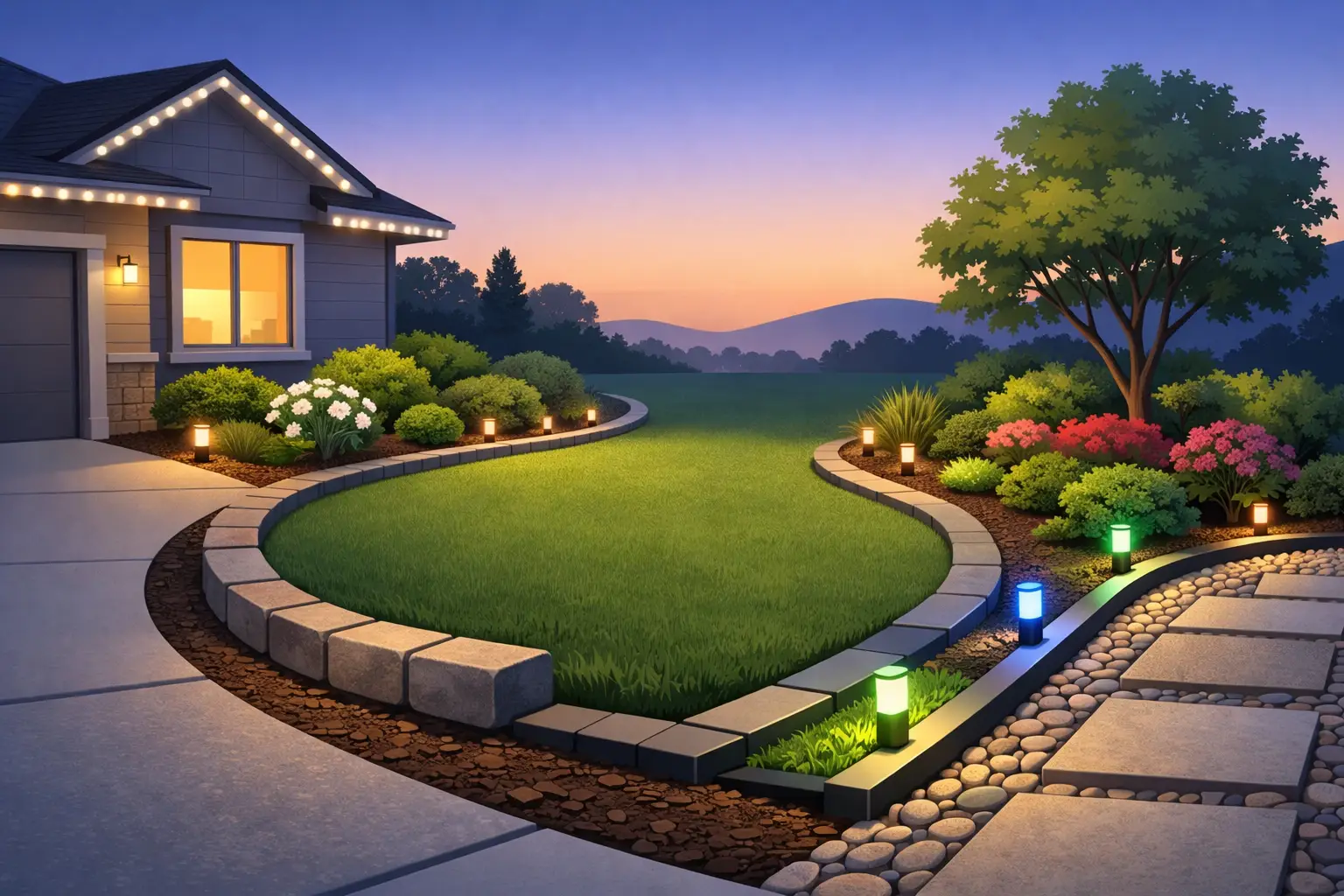
A fresh mulch bed can make a home look cared for, but without a clean border, that polished look often disappears after the first heavy rain, mowing day, or season of growth. Landscape edging for curb appeal gives planting beds a defined shape, keeps materials where they belong, and creates the kind of orderly finish people notice from the street.
For homeowners in Northwest Ohio and Southeast Michigan, edging also has to do more than look good. It needs to handle freeze-thaw cycles, spring rain, summer mowing, and the occasional snow shovel or plow near the driveway. The right edging choice brings structure to the landscape while making regular maintenance easier.
Why Edging Changes the Look of a Property
Edging creates separation. It tells the eye where the lawn ends and where the landscape begins, which makes even a simple bed of shrubs, perennials, and mulch feel intentional. A crisp line around the front foundation, mailbox, walkway, or mature tree can make the entire property look more finished without requiring a full landscape redesign.
That definition matters most from the curb. When bed lines wander, mulch spills into turf, or grass grows into planting areas, the landscape can look neglected even when the plants themselves are healthy. A well-planned edge gives the lawn a cleaner silhouette and helps features such as lighting, stonework, ornamental grasses, and flowering plants stand out.
There is a practical benefit, too. Proper edging reduces the time spent pulling grass out of mulch beds and raking displaced mulch back into place. It also provides a clear mowing boundary, which can help prevent string trimmers from damaging the base of shrubs, trees, and hardscape features.
Choosing Landscape Edging for Curb Appeal
The best material depends on the home’s architecture, the shape of the bed, the desired maintenance level, and how the area is used. A curved island bed needs a different solution than a straight driveway border, and a formal brick home may call for a more tailored look than a relaxed cottage-style garden.
Steel edging for a clean, low-profile border
Steel edging is a strong choice when the goal is a nearly invisible border that holds a sharp line. It works especially well around curved planting beds and modern landscape designs because it does not compete visually with the plants or mulch. Once installed correctly, it provides a durable barrier between lawn and bed.
The trade-off is installation. Steel edging must be set at the proper depth and anchored securely so it does not shift with seasonal ground movement. It is also best installed with care around areas where children, pets, or lawn equipment regularly pass, since exposed edges can become a concern if installation is rushed.
Brick or paver edging for traditional character
Brick and paver borders add color, texture, and a more substantial finished appearance. They pair naturally with brick homes, patios, walkways, and traditional front entries. A soldier-course brick edge, where bricks are set upright in a row, can make a foundation bed look especially refined.
Paver edging is more visible than steel, which is a benefit when the border itself is part of the design. It does require a well-prepared base. Without proper leveling and support, individual pieces may settle or heave after winter, leaving an uneven edge that loses its appeal.
Natural stone for a custom landscape feel
Stone edging can range from rustic fieldstone to more formal cut stone. It is a strong fit for properties with retaining walls, water features, boulder accents, or naturalistic plantings. Stone creates presence, and it can make a simple bed feel more established.
Because stone varies in size and shape, it takes an experienced eye to create a border that looks deliberate rather than scattered. It is also less effective as a complete grass barrier unless pieces are fitted closely and the bed is maintained regularly. For the right home, though, it offers a custom look that few manufactured materials can match.
Plastic and composite edging for budget-conscious projects
Flexible plastic or composite edging is often selected for its lower initial cost and ability to follow curves. It can work well in less prominent areas, such as backyard beds or around utility-side landscaping, when professionally installed and supported.
However, not all products perform equally over time. Thin edging can rise, crack, fade, or become visible after weather changes and mowing. In highly visible front-yard beds, a more durable material is often the better long-term investment.
Concrete curbing for continuous definition
Poured concrete curbing creates a permanent, continuous border that can be shaped into curves and finished in different colors or textures. It is useful for homeowners who want a pronounced edge with little chance of mulch washing into the lawn.
Its permanence is both its advantage and limitation. If future landscape plans change, moving or reshaping concrete curbing is more involved than adjusting steel or pavers. It should be chosen when the bed layout is established and the design has been thoughtfully planned.
Design Details That Make Edging Look Intentional
Material matters, but layout matters just as much. The most appealing landscape edges usually have smooth, confident lines. Tight, wavy curves can look busy and make mowing difficult. Broad curves are easier to maintain and tend to look more natural from the road.
Bed depth is another detail homeowners often overlook. A narrow strip of mulch along the front of a house rarely creates much visual impact. Expanding the bed enough to layer evergreen structure, flowering color, and lower plantings gives edging a purpose. The border becomes the clean frame around a more complete landscape design.
Keep the edging style consistent across the front of the property whenever possible. If the front foundation beds use brick edging, repeating that material at the mailbox or along a front walk creates a more connected appearance. Mixing materials can work, but it should be intentional, such as pairing a stone retaining wall with low-profile steel bed edging.
Edging also deserves consideration near driveway and walkway lines. A clean border can guide guests toward the front entry and prevent gravel, mulch, or soil from spreading onto hard surfaces. Near sidewalks, choose a profile that does not create a tripping hazard or interfere with snow removal.
Installation Is Where Long-Term Results Are Decided
Even quality edging can fail when it is installed over an uneven base, set too high, or placed without accounting for drainage. The work begins with defining the bed line, removing turf cleanly, and shaping the grade so water moves away from the home rather than pooling against the foundation.
For pavers, brick, and stone, base preparation is essential. The material needs stable support, consistent elevation, and proper alignment. For metal edging, stakes and connections should be secure, while the top edge should sit at a height that contains mulch without becoming a mower obstacle.
Mulch depth should be adjusted after edging is installed. Too much mulch can bury the border and make it ineffective; too little can expose soil and reduce the visual contrast that makes a bed look fresh. A maintained two- to three-inch layer is typically enough to protect roots and give the planting bed a finished appearance, though the right depth depends on the mulch type and existing soil conditions.
Pair Edging With Lighting for Evening Curb Appeal
Edging is most noticeable in daylight, but its shape can continue working after sunset when paired with thoughtful exterior lighting. Soft landscape lighting can highlight the curves of a front bed, illuminate specimen trees, and bring depth to the front elevation. Permanent roofline lighting can then add another layer of definition to the home itself.
The goal is not to light every inch of the yard. A few well-placed fixtures can make a crisp landscape border and healthy plantings feel more welcoming, while also improving visibility near pathways and entry points. Warm white lighting works beautifully for everyday use, while color-changing permanent lighting gives homeowners flexibility for holidays, game days, and celebrations.
For a complete exterior update, Hamilton Home Accents can coordinate landscape enhancement, edging, mulch, maintenance, and professionally installed lighting into one plan. That approach helps the materials, bed lines, and lighting placement work together instead of looking like separate projects completed years apart.
Keep the Edge Sharp Through Every Season
No edging material eliminates maintenance entirely. Grass will still try to creep toward beds, mulch may need refreshing, and shifting soil can affect certain materials after winter. The good news is that a properly installed edge makes those seasonal touch-ups faster and more predictable.
Check borders in early spring, especially after a hard winter. Reset any loose pavers, clear leaves from bed edges, and look for areas where mulch has washed thin. During the growing season, a clean vertical cut along the lawn side preserves the definition that makes the landscape look professionally maintained.
A strong landscape edge does not need to shout for attention. It should quietly make the lawn look neater, the plantings look fuller, and the home look more inviting before a guest ever reaches the front door. When the border, mulch, plants, and lighting are planned as one exterior picture, curb appeal starts feeling less like a weekend chore and more like a lasting upgrade.