You usually notice bad exterior lighting for the wrong reasons – crooked lines, visible wires, bright hot spots, or a setup that looked great for one holiday and awkward the rest of the year. A well-planned govee permanent outdoor lighting installation should do the opposite. It should look intentional in daylight, impressive at night, and easy to control without turning your roofline into a weekend project every season.
For homeowners in Northwest Ohio and Southeast Michigan, that matters more than people think. Our weather is not gentle on exterior products, and curb appeal is not just about December. Permanent lighting needs to handle changing temperatures, look clean on a variety of home styles, and work for everyday evenings as well as game days, parties, and holidays.
Why homeowners choose Govee permanent outdoor lighting installation
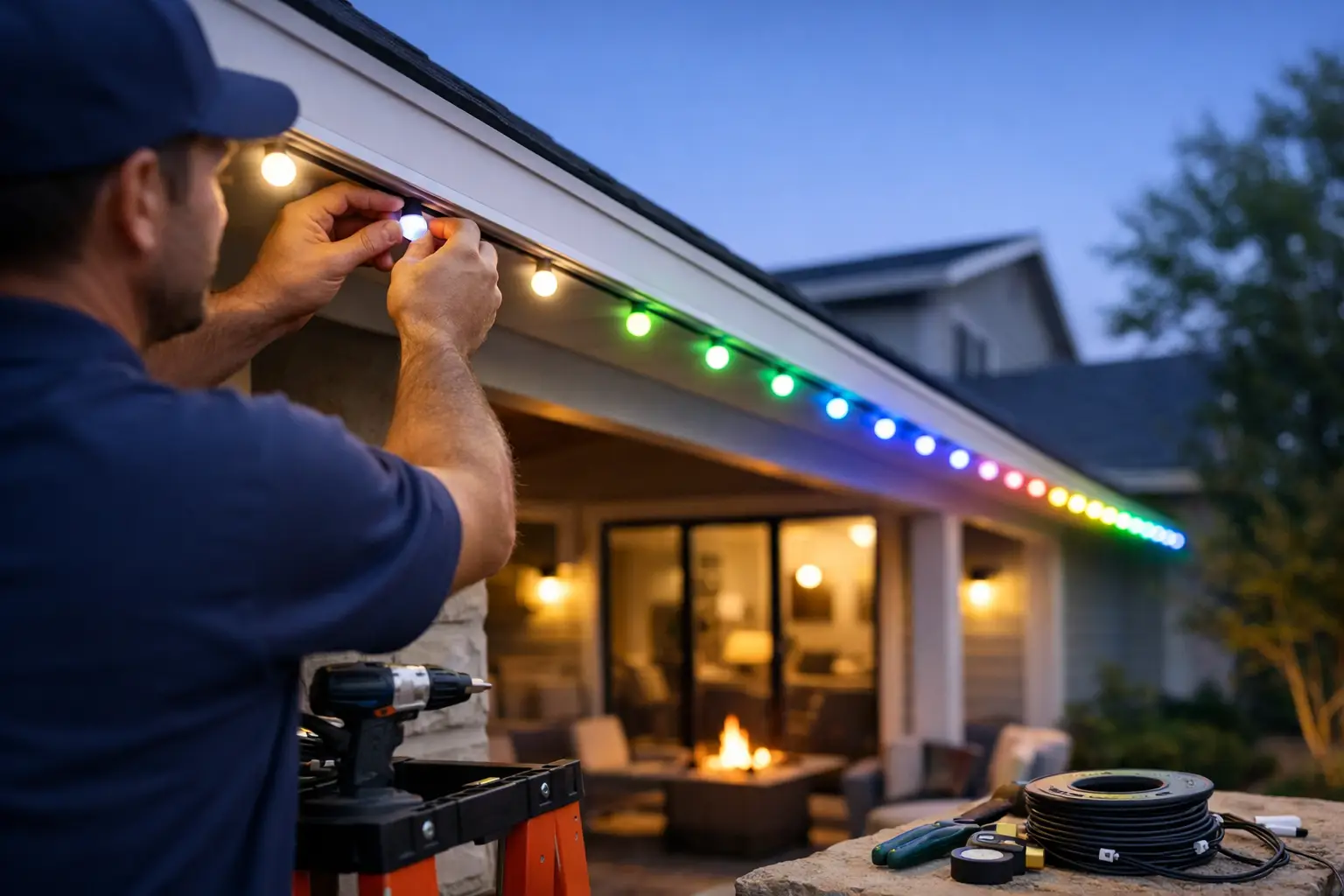
The main appeal is simple. You get year-round lighting without climbing ladders every time the calendar changes. With app-based controls, color options, scheduling, and scene settings, Govee gives homeowners flexibility that traditional seasonal lights never really offered.
That flexibility is what makes it practical, not just flashy. You can keep the look subtle for most of the year with warm architectural lighting, then change it for Halloween, Christmas, graduation parties, or team colors in a few taps. For busy families and property owners, that convenience is a real upgrade.
There is also a curb appeal benefit. When the layout is right, permanent lighting can define rooflines, emphasize peaks and trim, and make a home feel more polished after dark. On some properties, it adds a custom-finished look that standard string lights simply cannot match.
Still, the product itself is only part of the outcome. The installation is what determines whether the system blends into the home or looks like an add-on.
What makes a Govee permanent outdoor lighting installation look professional
A clean install starts with placement. This is where many DIY setups run into trouble. Lights that sit too far forward can create glare. Lights tucked too deep under soffits may lose impact. Spacing has to work with the architecture of the house, not against it.
Wire management is another big factor. Even a high-quality lighting system can look unfinished if cables sag, clips are inconsistent, or transitions around corners are obvious. On multi-level rooflines, garage peaks, and porch areas, careful routing makes the difference between a professional finish and a project that always looks one step from complete.
Attachment method matters too. Different soffit materials, trim profiles, and mounting surfaces call for different approaches. What works on one ranch home may not be the right solution on a two-story colonial or a home with detailed fascia and multiple gables. That is why custom planning matters. One-size-fits-all installation tends to show.
Then there is daytime appearance. Homeowners often focus on nighttime photos, but permanent lighting has to disappear visually when the sun is out. If the fixtures interrupt the roofline or draw attention to themselves, the design missed the mark.
Planning for the home you actually have
Not every house needs the same coverage. Some homes look best with a full roofline install. Others benefit more from highlighting front-facing elevations, garage lines, porch peaks, and entry features. The goal is not to put lights everywhere. The goal is to create balance.
That is especially true in neighborhoods where homes have different setbacks, roof pitches, and exterior colors. A lighting plan should complement the architecture and the lot, not just copy what looked good on another property.
For example, darker siding can absorb light differently than white trim. Deep soffits can soften output, while shallow overhangs can create more visible point sources. Brick, stone, vinyl, and composite exteriors all affect how a final install reads from the street. That is why experienced installers measure carefully, test sight lines, and think through the finished appearance before anything is mounted.
In our area, seasonal conditions matter as well. Wind, moisture, snow, and temperature swings all put stress on exterior systems. A proper install accounts for those realities from the beginning instead of hoping the adhesive, clips, and routing choices hold up long term.
DIY vs professional Govee permanent outdoor lighting installation
A lot of homeowners start by asking the fair question: can I do this myself? Sometimes the answer is yes. If you are comfortable working on ladders, reading the home’s lines accurately, planning power locations, and managing neat cable runs, you may be able to handle a basic layout.
But there are trade-offs. DIY can save money upfront, yet it often costs more time than expected. It also leaves less room for error. One misaligned run or one awkward transition above the garage can be visible every night after that. If the power placement is not ideal, or if the lights are mounted without thinking through viewing angles, the finished system may work but never look quite right.
Professional installation is usually about more than labor. It brings design judgment, clean execution, and accountability. Licensed and insured installers also offer peace of mind when the work involves ladders, roof edges, and exterior power planning. For many homeowners, that confidence is worth it.
A professional team can also spot issues before they become headaches. Uneven trim, hidden obstacles, tricky corner transitions, outlet limitations, or roofline sections that need a different mounting strategy are easier to address before installation starts than after everything is in place.
Where Govee fits best and where expectations should stay realistic
Govee is a strong option for homeowners who want smart control, colorful effects, and a more affordable path into permanent lighting. It is especially attractive for households that want lighting to do more than one job – everyday accent lighting, holiday displays, and event-based color changes.
That said, expectations should match the product and the home. Some properties call for a more architectural, highly customized permanent lighting system depending on design goals, coverage needs, and long-term priorities. If a homeowner wants a very specific premium finish or has a complex structure, it is worth comparing options carefully.
This is where an honest consultation helps. The best recommendation is not always the most expensive one, and it is not always the fastest install either. It depends on the home, the visual goals, and how the owner plans to use the lighting throughout the year.
Why local installation experience matters
Exterior work is always more predictable when the installer knows the area. Homes in Perrysburg, Maumee, Monclova, Waterville, and surrounding communities are not all built the same, but there are common architectural patterns, weather demands, and neighborhood expectations that local experience helps you navigate.
A local company also has more to protect. Reputation travels fast in community-based service businesses, which is exactly why craftsmanship, communication, and follow-through matter. When a team is family-owned, licensed, insured, and focused on custom exterior work, you tend to see more care in the details.
That local perspective also helps when lighting is part of a bigger curb appeal plan. Sometimes permanent roofline lighting works best alongside landscape enhancement, accent lighting, or exterior cleanup that improves the whole nighttime presentation. Looking at the property as a complete exterior environment usually leads to better results than treating lighting as a stand-alone add-on.
Hamilton Home Accents works with homeowners who want that bigger-picture approach – not just lights attached to a house, but a finished exterior that looks sharp from the street and feels easy to enjoy year-round.
What to ask before you schedule installation
Before moving forward, ask how the layout will be customized for your home. Ask where power will be located, how cables will be hidden, and what the lights will look like during the day as well as at night. Those questions tell you a lot about whether the installer is thinking like a craftsperson or just trying to get through a job quickly.
You should also ask about service, warranty support, and what happens if a section needs adjustment after installation. Good exterior lighting is not just about the first night it turns on. It is about how well the system performs and how confidently the installer stands behind the work.
Photo examples help, but they are only part of the story. A home that looks great in a gallery may not have the same soffits, roof angles, trim color, or street visibility as yours. The best install plan is the one built around your property.
Permanent outdoor lighting should feel like one of those upgrades you enjoy more over time, not less. When the planning is thoughtful and the installation is clean, you get color, convenience, and curb appeal without the yearly hassle. If you are considering govee permanent outdoor lighting installation, the smartest next step is not guessing from a ladder – it is getting a quote built around your home, your goals, and the way you actually want your exterior to look after dark.