Permanent Outdoor Lighting Installation Cost
Permanent outdoor lighting installation cost depends on linear footage, track type, controllers, and labor. Here's what actually drives your quote.
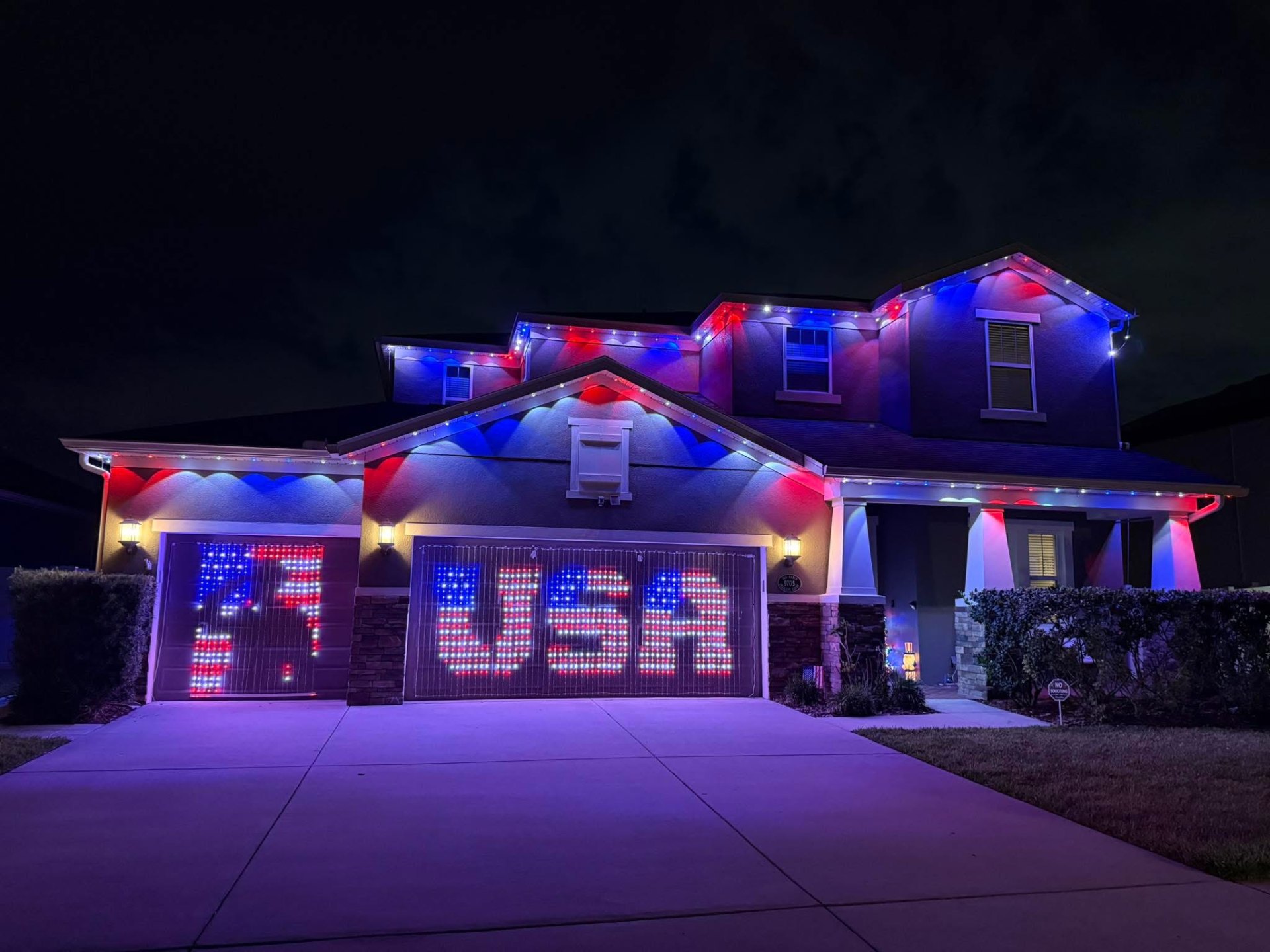
Permanent outdoor lighting installation cost is driven mainly by linear footage of roofline, the track system you choose, and how many transitions and controllers the job needs. A modest ranch runs less than a two-story home with dormers, multiple rooflines, and a detached garage.
We quote every job after a site walk because photos and square footage alone don't tell the whole story. Below is how the pieces actually add up, so you can read a quote and know what you're paying for.
What actually gets measured for a quote
When we walk a property, we measure linear footage along every roofline edge you want lit: eaves, gables, soffits, and any accent areas like porch columns or garage peaks. That number is the backbone of your quote.
We also note how many corners, transitions, and separate roof planes the track needs to navigate. A simple rectangular ranch with one roofline is straightforward. A home with multiple gables, a wraparound porch, and a detached garage takes more channel, more mounting hardware, and more time on the ladder.
Height matters too. Two-story sections and steep pitches slow installation and sometimes require different lift equipment, which is reflected in labor.
Track system and channel type change the number
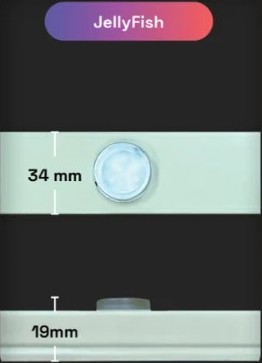
Our Jellyfish lighting uses a permanent aluminum track with machined corners, built to stay mounted year-round through Ohio winters. That aluminum channel and the precision cutting at each corner cost more per foot than a flexible plastic channel, but it holds up better long term.
Govee permanent lighting uses a cuttable channel (the Pro 19" and Elite/Govee 2 with 15" spacing) that's a lower-cost entry point while still being a permanent, app-controlled system. It's a real option if your budget is tighter but you still want year-round color.
Neither system is priced by pixel count alone. Spacing, channel width, and whether you want RGB+W or single-color diodes all shift the per-foot number.
Controllers, power, and Wi-Fi setup
Every permanent system needs at least one controller and a nearby power source, usually tied into an existing outlet or a new dedicated circuit if your electrical panel needs it. Larger homes with lighting on more than one side often need two or more controllers so runs aren't too long for stable power delivery.
We also handle Wi-Fi pairing and app setup as part of the install so your scenes, schedules, and holiday presets work the day we leave. That setup time is baked into the quote, not billed separately.
Labor: what a typical install day looks like
Most single-story homes with one roofline are a one-day install. Homes with multiple stories, detached structures, or tricky access (steep pitches, tight setbacks, mature trees close to the house) can run one and a half to two days.
Labor accounts for mounting brackets every few feet, running low-voltage wire discreetly, sealing entry points, and testing every zone before we leave. Rushing this step is where DIY and lower-end installs fail within a season.
- Single-story, single roofline: typically a one-day install
- Multi-story or multiple roof planes: one and a half to two days
- Detached garage or outbuilding: added as a separate run with its own controller
- Steep pitches or tall gables: added labor for safe access
What tends to push cost up unexpectedly
The most common surprise is underestimating total linear footage: buyers often picture the front of the house and forget the back roofline, garage, or a bump-out. We measure the full perimeter you want lit so there are no gaps once it's installed.
Older fascia or soffit in poor condition sometimes needs minor repair before mounting brackets can be secured properly. We flag that during the walk rather than after the ladder is up.
How financing changes the monthly math
Because permanent lighting is a one-time install with no annual takedown labor, many homeowners compare it to several years of hiring a seasonal holiday lighting service and find the total cost evens out faster than expected. We offer financing options so the upfront number isn't the only way to look at it.
If you're only using it for winter holidays, you're still getting a system that runs your favorite colors for Fourth of July, birthdays, or a Friday night on the patio the rest of the year.
Frequently asked questions
Is permanent lighting cheaper than hiring holiday lighting installers every year?
Over a few years, most homeowners find the total cost comparable or lower, since there's no annual install and takedown labor after the first year. You're also getting a system usable for more than just the holidays.
Does the quote include electrical work?
Basic tie-ins to existing outlets are included. If your panel needs a new dedicated circuit, we'll flag that during the site walk and coordinate it as part of the project.
Can I start with just the front of the house to save money?
Yes. Many homeowners phase the install, starting with the front roofline and adding the back or garage later. We design the layout so it's easy to extend.
Do bigger homes always cost more?
Generally yes, since cost tracks linear footage more than square footage. A long, single-story ranch can sometimes cost more to light than a compact two-story home with less roofline.
The bottom line
- Linear footage of roofline, not house size, drives most of the cost.
- Track type (Jellyfish aluminum vs Govee cuttable channel) is a real lever on price.
- Controllers and Wi-Fi setup are fixed costs layered on top of footage.
- Complex rooflines and multi-story sections add labor time.
- A free site walk is the only way to get a number that matches your actual home.
Get a real number for your roofline
We'll walk your property, measure linear footage, and give you a straightforward quote for Jellyfish or Govee permanent lighting.
Request a free quote