Patio Lights Buying Guide: Overhead Ambiance for Pergolas and Decks
A patio lights buying guide covering spacing, mounting, dimming, and smart control options for pergolas, decks, and covered patios before you decide on a system.
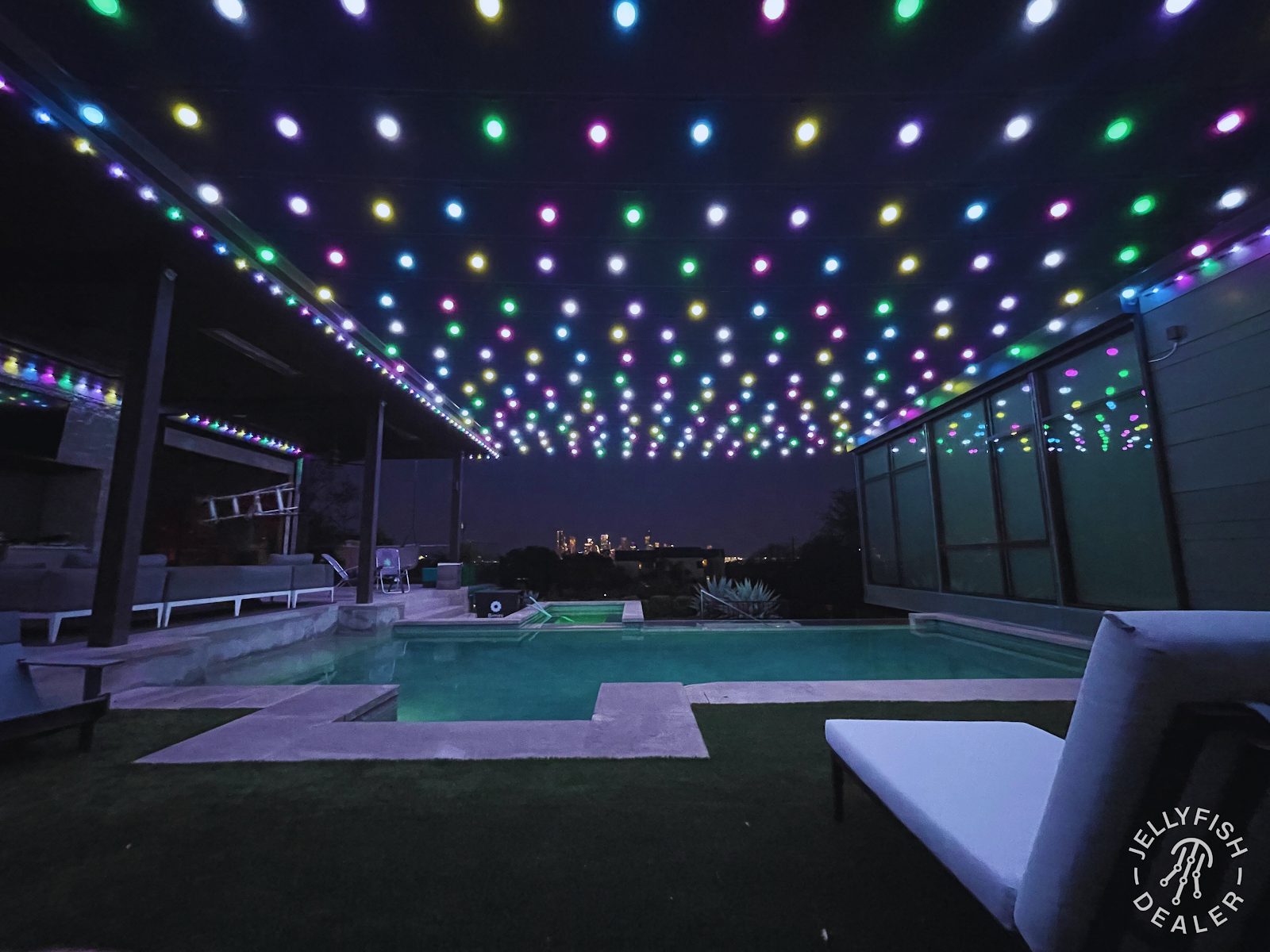
This patio lights buying guide focuses on what actually changes the outcome for a pergola or deck: mounting method, spacing, dimming, and whether you want app control or a simple switch. Overhead patio lighting looks simple from the ground, but the fixture choice and mounting plan decide whether it looks intentional or improvised.
We install patio lights as part of a broader outdoor lighting project as often as we do on their own, since a lot of homeowners add them once a roofline or landscape system is already in place.
This guide covers the questions worth answering before you commit to a layout.
Where patio lights actually get mounted
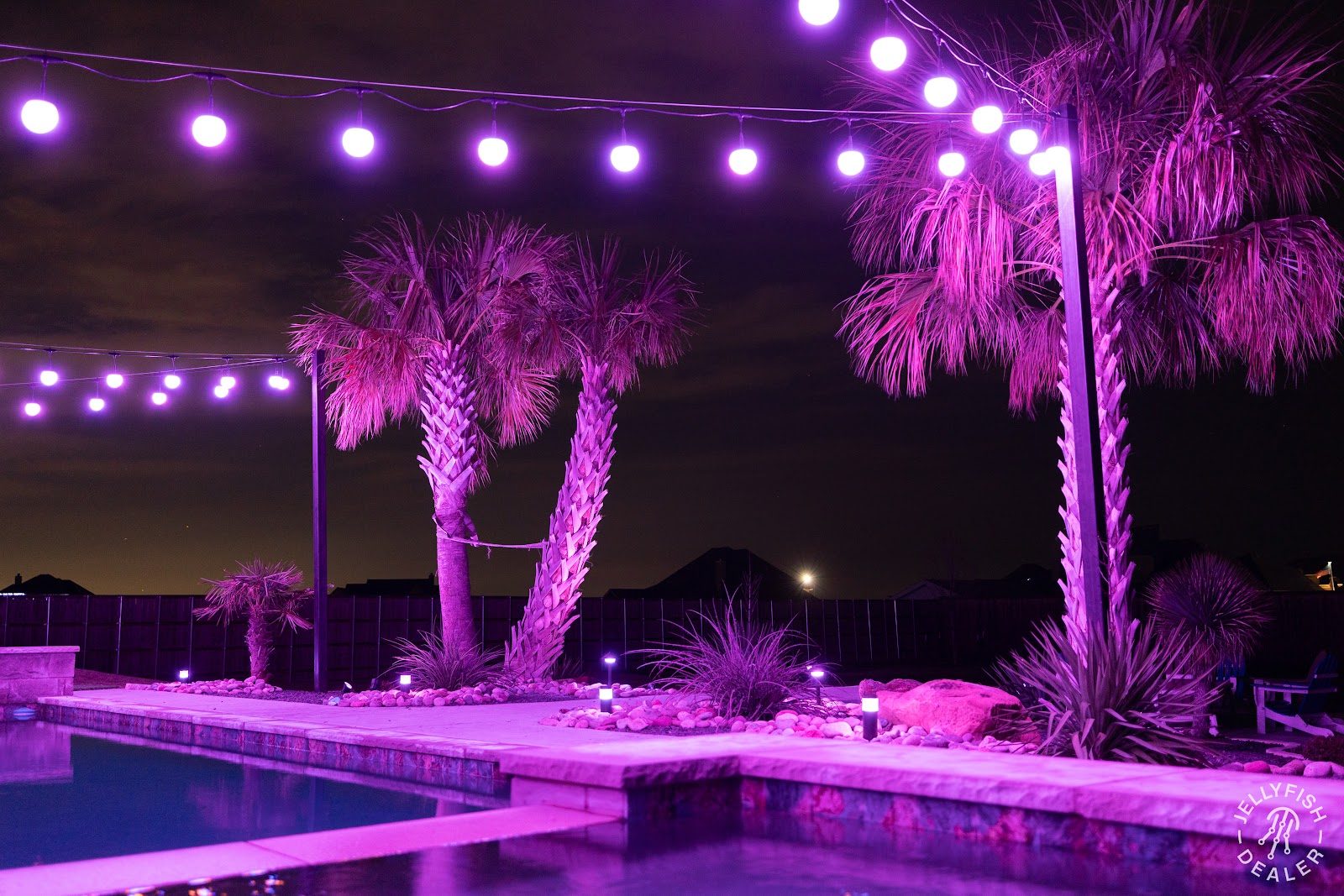
A pergola gives you the cleanest mounting option since the crossbeams provide natural attachment points across the whole span, letting the run stay taut and even. A deck without an overhead structure requires posts or a house-to-tree or house-to-post run, which changes the shape of the layout.
If you do not have a pergola or existing overhead structure, we can talk through post options during a quote, but it is worth knowing this ahead of time since it affects both the look and the cost of the project.
Covered patios with a solid roof sometimes call for surface-mounted fixtures instead of a string layout, depending on the ceiling material and how you want the light distributed.
How spacing changes the feel of the space
Wider spacing between bulbs gives a more relaxed, string-of-lights feel with visible gaps between each point of light, which reads casual and works well for a criss-cross pattern over a larger patio. Tighter spacing creates a fuller, more even glow that leans closer to ambient lighting than decorative accent.
The size of your patio matters too. A small, intimate patio can look overdone with a dense zig-zag pattern meant for a larger space, while a large open patio can look sparse with spacing meant for a small deck.
We size the layout to your actual footprint during a site visit rather than using a one-size pattern for every patio.
Dimmable and app-controlled options versus fixed strings
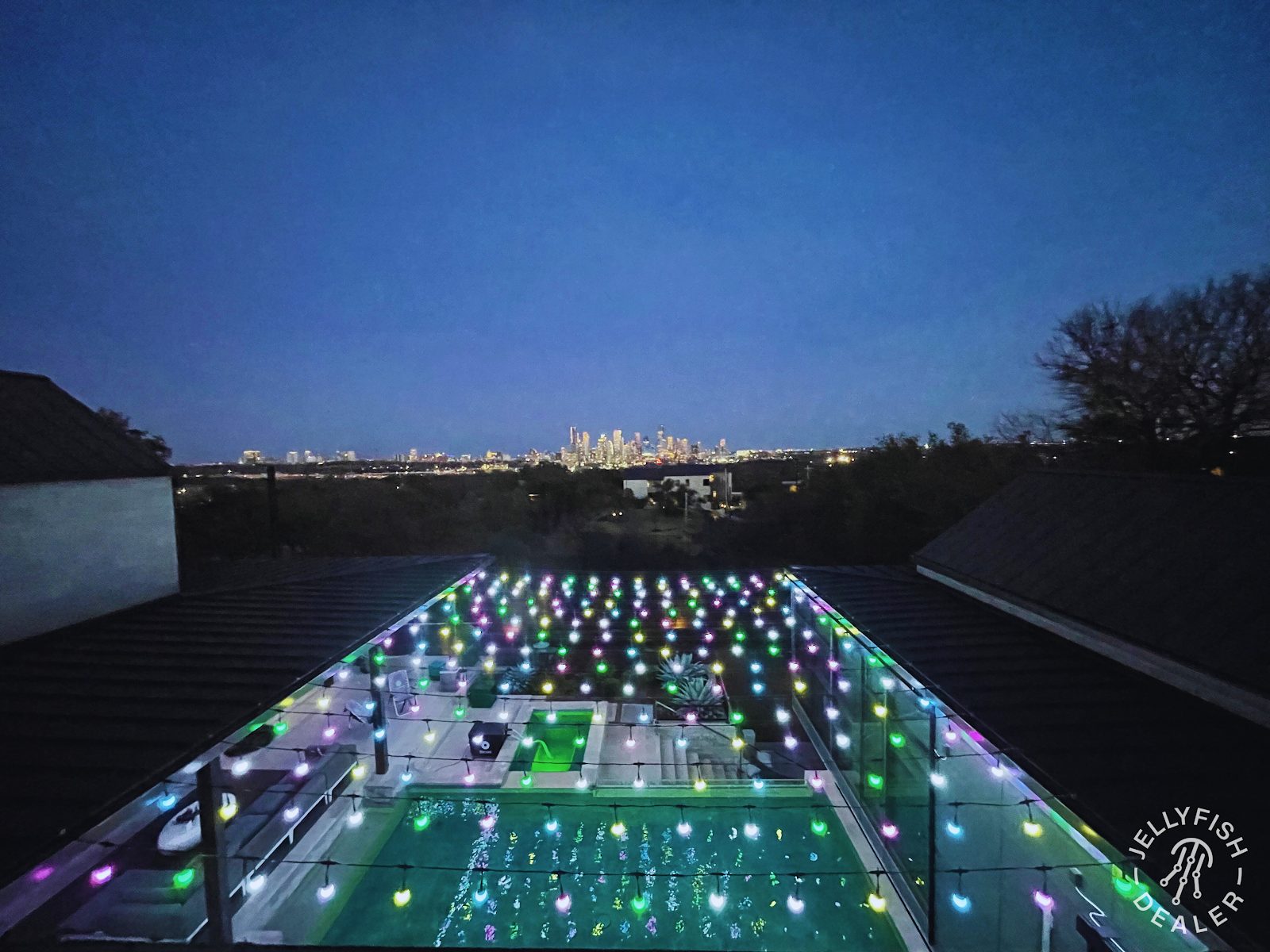
A basic plug-in string light gives you on and off, sometimes with a couple of built-in flash patterns, and nothing else. A dimmable or app-controlled patio system lets you adjust brightness for the moment, brighter for a gathering, dimmer for a quiet evening, without swapping bulbs or fixtures.
Some patio lighting setups pair with the same app used for other outdoor lighting on the property, which means one control point for your whole exterior lighting rather than separate remotes or switches for each zone.
This is worth factoring into your decision even if you plan to start with just the patio, since expanding to match an existing smart system later is easier if the patio lighting was compatible from the start.
Warm white versus color-changing patio lights
Warm white remains the standard choice for patio lighting because it reads as ambiance rather than decoration, which suits everyday dinners and evenings outside better than a rotating color show. Most of the patio installs we do use warm white as the primary setting.
Color-changing patio lights exist and can be useful for parties, holidays, or specific events, but they are a secondary feature for most homeowners rather than the daily setting.
If color-changing capability matters to you, confirm it is part of the specific product line you are considering, since not every patio light system includes it.
- Warm white for nightly ambiance and everyday use
- Color-changing capability for events, holidays, or accent moments
- Dimming for adjusting brightness without changing fixtures
- App or switch control depending on the system
Weatherproofing and build quality to check
Outdoor patio lights need weather-rated connectors and housings, since even a covered patio still sees humidity, temperature swings, and occasional wind-driven rain. Consumer-grade indoor string lights are not built for that exposure and tend to fail faster outdoors.
Connector quality between bulb sockets and the main line matters more than most people expect, since a loose or corroded connector is the most common failure point on a patio string over time.
If you already have a permanent lighting system installed, ask whether the patio lighting product line is designed to hold up the same way, rather than treating it as a disposable seasonal purchase.
Deciding what fits your patio before your quote
Walk your patio or deck and note what you have to mount to: a pergola, posts, an eave, or nothing yet. That single detail shapes most of the rest of the decision, including spacing pattern and whether additional structure is needed.
Think about how you actually use the space, quiet evenings versus regular entertaining, since that affects whether dimming and app control are worth the added feature set for you.
Bringing photos of your patio to a free quote conversation helps us give you a more specific answer than general guidance can.
Frequently asked questions
Do I need a pergola to install patio lights?
No, though a pergola gives the cleanest mounting option. Posts or house-to-post runs work for decks and open patios without an overhead structure, and we can talk through options during a quote.
Are dimmable patio lights worth it over basic plug-in strings?
If you want flexibility between bright entertaining light and a dimmer evening glow, yes. Basic strings only offer on and off, sometimes with a few flash patterns.
Can patio lights match the color of my other outdoor lighting?
Some patio lighting product lines support color-changing and can pair with the same app controlling other zones on your property, though this depends on the specific system.
How long do outdoor patio lights typically last?
It depends heavily on build quality and weatherproofing. Weather-rated connectors and housings hold up significantly longer than consumer-grade indoor string lights used outdoors.
The bottom line
- Mounting structure, pergola, posts, or eave, shapes the rest of your patio lighting decision.
- Spacing should match the size of your patio rather than a generic pattern.
- Dimmable and app-controlled options add flexibility over fixed-brightness strings.
- Warm white suits everyday ambiance, with color-changing as an optional feature.
- Weatherproof connectors and housings matter more outdoors than for indoor lights.
Ready to plan patio lighting for your pergola or deck
We can size a patio lighting layout to your actual space and talk through mounting and control options during a free quote.
Explore Patio Lights