
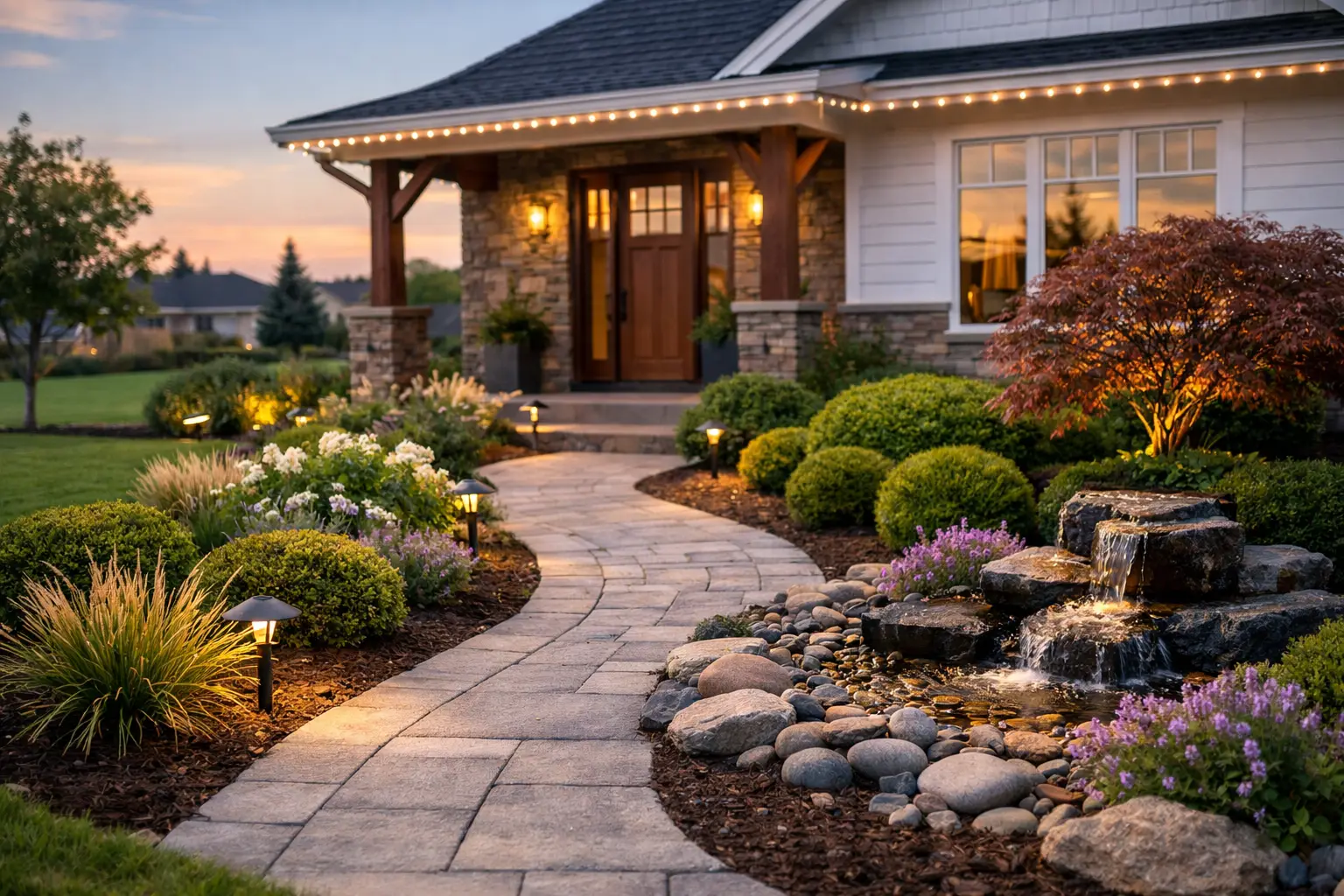
The fastest way to make a home look more expensive is not always a full remodel. Often, it is better landscape design for front yards – the kind that makes the house feel finished, balanced, and cared for before anyone reaches the front door.
That matters for more than looks. A well-planned front yard can improve drainage, make walkways safer, highlight architectural features, and give your property a stronger presence day and night. The best results come from design choices that fit the home, the lot, and the amount of upkeep you actually want to manage.
What good front yard design really does
A strong front yard design creates a clear first impression. It frames the house instead of competing with it. It directs the eye toward the entry. It softens hard edges from the driveway, foundation, and sidewalk while still keeping the space neat and intentional.
Many homeowners start by thinking about plants, but the structure matters first. The layout of beds, the line of the walkway, the height of retaining edges, and the spacing between shrubs all affect whether the yard feels polished or crowded. Good design is not about adding more. It is about making each element earn its place.
There is also a practical side to this. If your front yard is hard to mow, hard to edge, or filled with plants that outgrow the space every season, it will not stay attractive for long. The right plan should look good in spring, summer, fall, and even winter when leaves and flowers are gone.
Start landscape design for front yards with the house
The style of the home should guide the style of the yard. A clean, modern home usually looks better with crisp bed lines, restrained plant choices, and a simpler color palette. A more traditional home can handle layered foundation planting, curved beds, and a softer mix of texture.
Scale is where many front yards go wrong. Small shrubs scattered across a wide lot can make the house feel larger and emptier. Oversized evergreens placed too close to windows can swallow the front elevation. A good design uses plant size, bed depth, and spacing to match the proportions of the home.
Entry points deserve special attention. Your front walk and porch should be obvious, welcoming, and easy to navigate. If visitors are not sure where to go, the design is not doing its job. That can be solved with wider planting beds, better symmetry near the entry, or lighting that draws attention to the front door after sunset.
The best front yards balance softness and structure
Every front yard needs both living material and hardscape. Plants bring color and movement, but they need structure around them. That structure may come from edging, stone borders, retaining walls, a defined walkway, or carefully placed boulders and decorative features.
Too much softness can make a yard feel messy, especially from the street. Too much hardscape can make it feel cold. The right balance depends on the size of the property and the style of the home, but most successful designs use clean lines to organize softer planting.
This is also where grading and drainage come into play. In parts of Northwest Ohio and Southeast Michigan, flat lots and seasonal weather can create trouble spots near foundations or sidewalks. A front yard design should not ignore water movement. Sometimes a bed layout or retaining wall is doing double duty by improving appearance and helping the property handle runoff more effectively.
Choose plants for the look you want and the upkeep you can handle
Plant selection should be honest. If you want a front yard that always looks trimmed and sharp, but you do not want to spend weekends pruning, that affects what belongs in the design.
Evergreens provide year-round structure and keep the yard from looking bare in winter, but they must be sized correctly from the start. Flowering shrubs can add color and seasonal interest, though some require more regular shaping than others. Perennials are great for layering and variety, but they need a plan so the bed does not look patchy once bloom cycles change.
Mulch ties the design together and makes planting beds look finished, but it also has to be maintained. Fresh mulch can dramatically improve curb appeal, yet too much mulch piled around trunks or foundations creates its own problems. Clean edging and proper bed depth do as much for the final appearance as the mulch itself.
A lower-maintenance yard usually relies on a tighter plant palette repeated with purpose. That repetition makes the space feel more upscale and less random. It is one of the simplest ways to create a front yard that looks professionally designed.
Lighting should be part of the design, not an afterthought
One of the biggest missed opportunities in front yards is waiting until the end to think about lighting. A beautiful landscape disappears after dark if it is not illuminated well.
Landscape lighting adds more than visibility. It creates depth, highlights textures, and gives the home a finished look at night. It can wash light across stonework, accent ornamental trees, and guide guests safely along a path. If the house has strong rooflines or architectural details, lighting can reinforce those features instead of leaving them hidden after sunset.
There is a clear difference between a few scattered fixtures and a lighting plan that is integrated with the yard. Placement, beam angle, brightness, and fixture quality all matter. Too much light can feel harsh. Too little can make the effort disappear. The goal is to create contrast and focus without making the front yard look overlit.
For homeowners who want year-round curb appeal, combining landscape improvements with professionally installed permanent outdoor lighting can be especially effective. It gives the property daytime structure and nighttime presence while reducing the hassle of seasonal setup.
Common front yard design mistakes to avoid
The most common mistake is designing only for the first season. Fresh flowers and small shrubs can look great at installation, but if the yard is not planned for mature growth, it quickly becomes overgrown and uneven.
Another issue is trying to include too many focal points. A water feature, ornamental tree, large boulders, colorful annuals, pathway lights, and decorative borders can all look great on their own. Used together without restraint, they fight for attention. Most front yards need one strong focal area and supporting elements around it.
Straight-line beds are not always wrong, and curved beds are not always better. It depends on the architecture and the lot. Curves can soften a space, but if they are forced into a formal home design, they may look out of place. The same goes for symmetry. Some homes benefit from a balanced, formal layout near the entry. Others feel more natural with a looser arrangement.
Finally, do not underestimate maintenance access. If mowing around beds is awkward, if edging lines are too fussy, or if shrubs block windows and walkways, the design becomes frustrating to live with. The best-looking yard is usually one that is also easier to maintain.
When professional landscape design for front yards makes the difference
A professional eye helps most when the yard has multiple jobs to do at once. Maybe you want stronger curb appeal, better drainage, clearer definition around the front walk, and lighting that makes the home stand out at night. Those pieces need to work together.
That is where custom planning matters. A one-size-fits-all approach rarely fits the architecture, grade, and maintenance goals of a specific property. Professional design can also help you phase the project intelligently. You may not need to do everything at once. Sometimes the smartest move is to establish the hardscape and bed layout first, then build out planting and lighting in stages.
For homeowners who want one trusted team to handle both visual upgrades and ongoing care, working with a local company that understands design, installation, and maintenance can save time and protect the investment. That is especially true when the plan includes landscape enhancement and exterior lighting together, as Hamilton Home Accents often sees with homes that need a more complete front-of-house transformation.
A front yard should feel finished, not forced
The best front yards do not look trendy for one season and tired the next. They feel appropriate to the home, easy to live with, and clearly intentional from the curb. That takes more than nice plants. It takes structure, proportion, and smart choices about what deserves attention.
If your front yard currently feels flat, outdated, or harder to maintain than it should be, that is usually a design issue before it is a plant issue. Start with the layout, think through how the space works in every season, and build a plan that adds beauty without adding headaches. A front yard that is done right keeps paying you back every time you pull into the driveway.