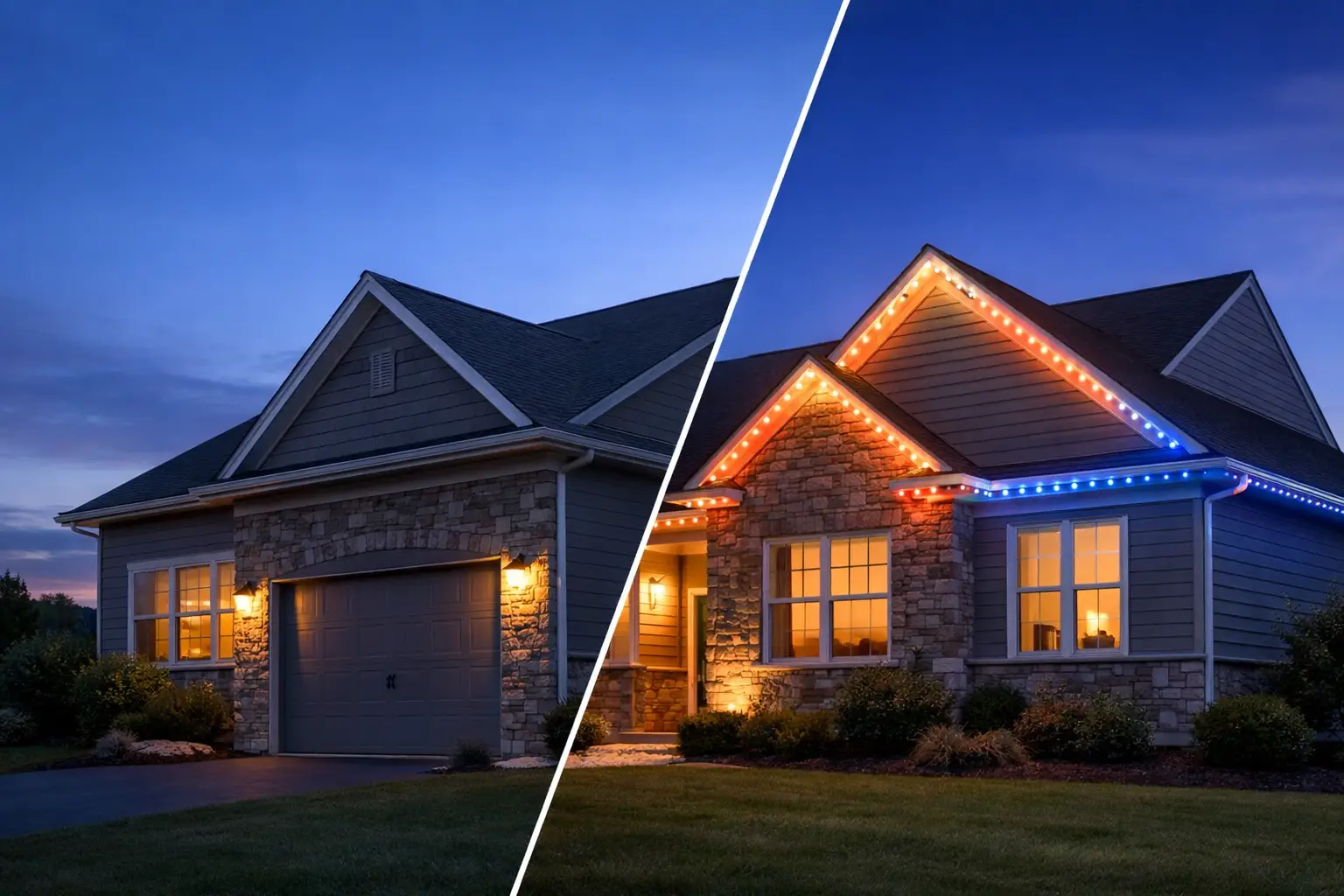
A house can look perfectly well-kept during the day and still disappear at night. That is usually the moment a roofline lighting before after example makes the biggest impression – not because the home suddenly becomes flashy, but because the architecture finally shows up after sunset.
For many homeowners, the “before” is familiar. The roof peaks vanish into the dark, the front entry feels flat, and seasonal decorating means climbing ladders, dealing with clips, and hoping half the strand still works next year. The “after” is not just brighter. It is cleaner, more intentional, and easier to live with every day.
What a roofline lighting before after example really shows
When people hear “before and after,” they often expect a dramatic photo comparison. That matters, but the real difference goes deeper than a single nighttime shot. A good roofline lighting before after example shows how lighting changes the shape, balance, and presence of a property.
Before installation, most homes rely on porch lights, garage sconces, or a floodlight over one corner of the house. Those fixtures do a job, but they do not outline the roofline or highlight the design of the home. Gables, dormers, eaves, and entry points all blend together once the sun goes down.
After professional roofline lighting is installed, the house reads clearly from the street. The eye follows the roof edges, the peaks feel sharper, and the front elevation looks more finished. On a one-story ranch, this can create a stronger horizontal presence. On a two-story home with multiple roof sections, it can add depth and structure that was always there but never fully visible at night.
That difference is one reason permanent lighting has become more than a holiday upgrade. Homeowners want a system that looks polished in December, but they also want something useful in July, on fall game days, and on quiet evenings when they simply want the house to look its best.
Before: where most homes fall short at night
The typical before picture is not ugly. It is just incomplete. The landscaping may be tidy, the siding may be updated, and the front door may be attractive, but nighttime changes how all of that reads.
Without roofline lighting, the top half of the home often fades first. You may still see the garage doors and part of the porch, but the overall silhouette gets lost. That can make a larger home feel smaller from the street, or make a custom exterior look more ordinary than it really is.
There is also the issue of uneven light. A bright coach light near the garage can create one hot spot while the rest of the house remains dark. A floodlight can wash out detail rather than enhance it. Temporary holiday lights solve part of the problem for a few weeks, but they rarely sit as cleanly as a permanent system designed for the home.
For busy homeowners, the practical before picture matters too. Seasonal setup takes time. Storage takes space. Replacing clips, untangling strands, and testing sections every year gets old fast. The before phase is often less about appearance alone and more about hassle.
After: the changes homeowners notice first
The after effect is usually immediate from the curb. The home looks more defined, more welcoming, and more complete. But once homeowners live with the system, they tend to notice a few specific benefits.
The first is consistency. Professionally installed roofline lighting follows the architecture closely, so the result looks intentional instead of improvised. Lines stay clean, corners are handled properly, and the overall effect fits the home rather than competing with it.
The second is flexibility. With permanent systems such as Jellyfish Lighting, the same installation can create a soft warm-white look for everyday curb appeal, team colors for game day, patriotic color themes for national holidays, or full holiday displays without ever dragging bins out of the garage. That is a major shift from a single-purpose seasonal setup.
The third is confidence. A licensed and insured installer who understands exterior design, roofline layout, and product performance helps avoid the patchy look that can happen when lighting is treated like an afterthought. The system should feel like part of the house, not something attached to it at the last minute.
Roofline lighting before after example by home style
A useful roofline lighting before after example depends on the style of the home. The same lighting plan will not produce the best result on every property.
On a traditional suburban two-story home, the best transformation often comes from outlining the main eaves and highlighting front-facing peaks. Before, the house may look dark above the porch line. After, the home feels taller and better proportioned.
On a ranch home, lighting usually works best when it reinforces the long horizontal roof edge and frames the entry. Before, the house may appear low and quiet at night. After, it can look wider, cleaner, and more custom.
On a home with multiple roof heights or architectural details, the key is restraint. More lighting is not always better. A thoughtful after result picks the right lines and leaves room for the design to breathe. If every edge is lit without purpose, the home can feel busy rather than elevated.
Commercial properties see a similar effect. A storefront, office, or small professional building can go from easy to miss at night to memorable and welcoming. That matters for visibility, but it also says something about how the property is maintained.
Why installation quality changes the outcome
People often focus on the product, and the product matters. But the before-and-after gap is shaped just as much by installation quality and design choices.
A custom-fit system should account for roofline angles, fascia condition, visibility from the street, and how the lighting will look in everyday modes, not just on holidays. Color spacing, placement, and control options all affect whether the final look is subtle and premium or distracting and uneven.
This is where local experience matters. Homes in Northwest Ohio and Southeast Michigan deal with changing weather, snow, wind, and long periods of seasonal darkness. A permanent lighting system needs to be installed with durability in mind, not just appearance on day one.
At Hamilton Home Accents, that craftsmanship-first approach is what helps the after photo hold up in real life. A certified installation should not only look great the first week. It should continue performing through the seasons with the kind of finish homeowners expect from a premium exterior upgrade.
It depends: bold statement or everyday elegance
One of the biggest misconceptions about roofline lighting is that it has to look dramatic all the time. It does not. In fact, many homeowners prefer the after look to be understated most of the year.
That is where design conversation matters. Some homeowners want a crisp, warm architectural outline that adds elegance and a little extra visibility at night. Others want the ability to go bold for holidays, birthdays, school spirit, or neighborhood events. A good system can do both, but the setup should match how the property will actually be used.
There are trade-offs. A highly visible color pattern may be fun for special occasions, but it is not the right everyday setting for every neighborhood. On the other hand, a very subtle plan may feel too quiet for homeowners who want the house to stand out. The best after result is not based on trends. It is based on fit.
Is roofline lighting worth it for the before-and-after impact?
If your goal is a visible exterior upgrade with everyday use, roofline lighting often delivers more than people expect. The improvement is not limited to one season, and it is not dependent on a major remodel. You are working with the architecture you already have and making it visible after dark.
For many properties, that means stronger curb appeal, less seasonal hassle, and a better sense of arrival each time you pull into the driveway. It can also complement other exterior work such as landscaping, accent lighting, or patio improvements by helping the entire property feel more cohesive at night.
The strongest before-and-after examples are usually the ones that feel believable. The home still looks like your home, just sharper, more finished, and easier to enjoy year-round.
If you have ever looked at your house after sunset and felt like it should make a better first impression than it does, that is probably your sign to stop imagining the after and start planning for it.